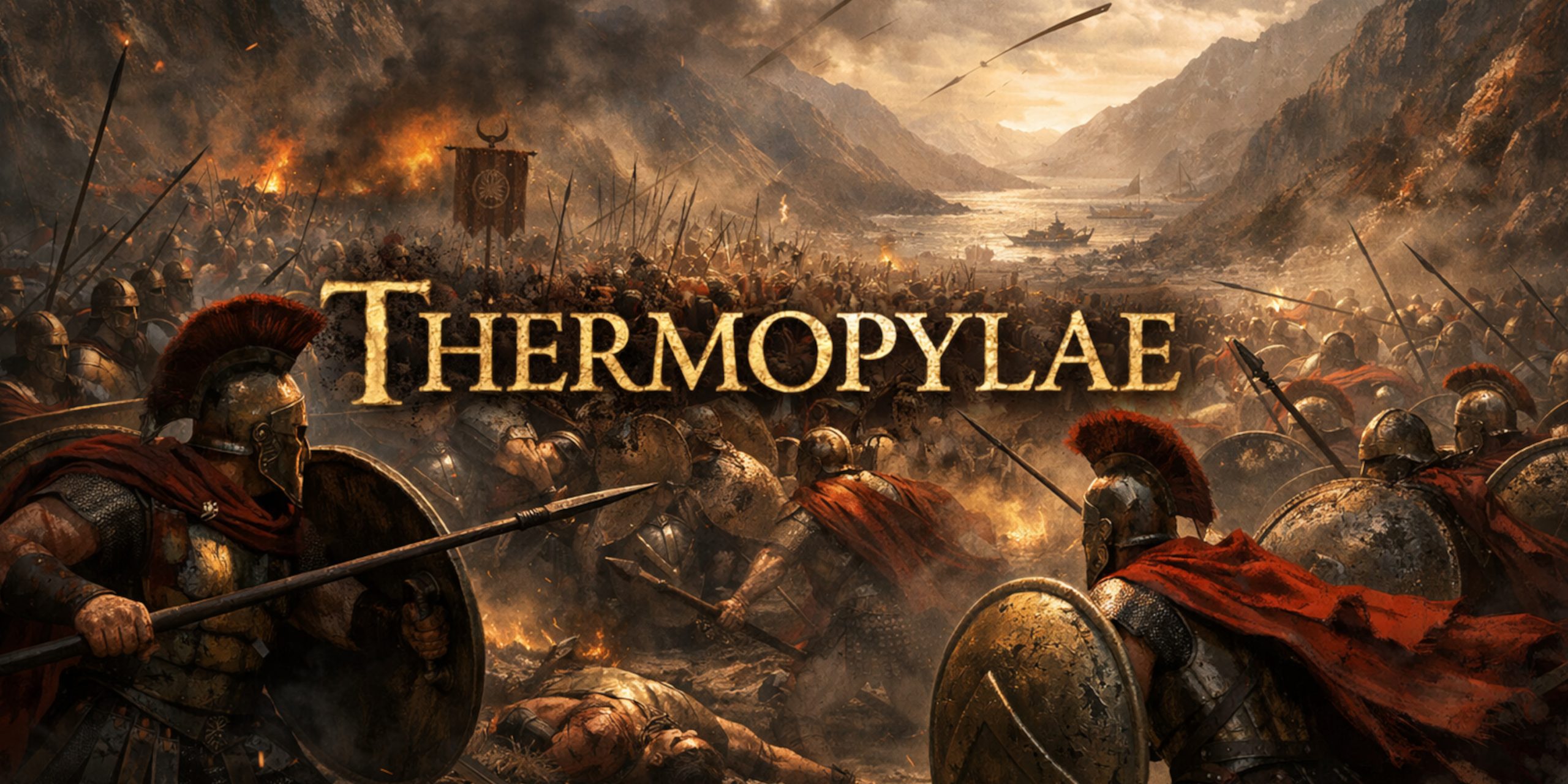
Few battles have lodged themselves in popular imagination quite like Thermopylae. A narrow pass in northern Greece became the stage for a confrontation that was, in military terms, hopeless from the start. A coalition of Greek states stood against the invading army of the Persian king Xerxes I.
The story has been retold endlessly. Spartan warriors in crimson cloaks. Persian archers darkening the sky. A final stand that echoed through centuries of literature and political rhetoric. Yet the reality is both more complicated and, in some ways, more impressive.
Thermopylae was not a simple tale of heroic defeat. It was a calculated delaying action designed to buy time for the Greek alliance. In that sense, it succeeded.
Historical Background
In 490 BC the Persian Empire suffered an embarrassing setback at Marathon. A relatively small Athenian army defeated the invading force of Darius I.
For Persia, the matter was unfinished business. The empire stretched from Anatolia to Central Asia and Egypt. Greece was small, fragmented and irritatingly independent. When Xerxes inherited the throne he prepared a vast invasion designed to crush resistance permanently.
Greek states responded with unusual unity. A defensive strategy emerged that relied on two choke points.
• The naval strait at Artemisium
• The narrow mountain pass of Thermopylae
If both held, the Persian advance could stall. If either failed, the road to central Greece would lie open.
Geography of Thermopylae
Thermopylae means “Hot Gates”, named after the nearby sulphur springs. In antiquity the coastline pressed tightly against steep mountains, leaving a narrow strip of land that could funnel armies into a confined front.
At its narrowest point the pass allowed only a few dozen men to fight abreast. For hoplite infantry fighting in tight formation, this was ideal ground.
For a vast Persian army built around numbers and mobility, it was the worst possible terrain.
Even today historians look at the map and quietly admire the choice.
Forces
Estimating numbers at Thermopylae has long been a historian’s headache. Ancient writers often exaggerated Persian strength for dramatic effect. Modern scholarship tends to be more cautious.
What is clear is that the Persians outnumbered the defenders by a very wide margin.
Greek Coalition
| State | Estimated Troops |
|---|---|
| Sparta | 300 elite hoplites |
| Thespiae | ~700 |
| Thebes | ~400 |
| Arcadian states | ~1,000 |
| Corinth | ~400 |
| Phocis | ~1,000 |
| Various allies | ~2,000 |
Total Greek forces: roughly 6,000 to 7,000 soldiers at the start of the battle.
Sparta contributed only 300 citizens, though each was accompanied by helot attendants who likely fought as light infantry.
Persian Empire
Modern estimates place Xerxes’ army somewhere between 80,000 and 200,000 troops.
The Persian force included:
• Persian infantry
• Median troops
• Archers and light infantry
• Cavalry contingents
• The elite Immortals
The numbers alone made the outcome look inevitable.
Leaders and Command Structure
Greek Commanders
| Leader | State | Role |
|---|---|---|
| Leonidas I | Sparta | Overall commander |
| Demophilus | Thespiae | Thespian contingent leader |
| Leontiades | Thebes | Theban commander |
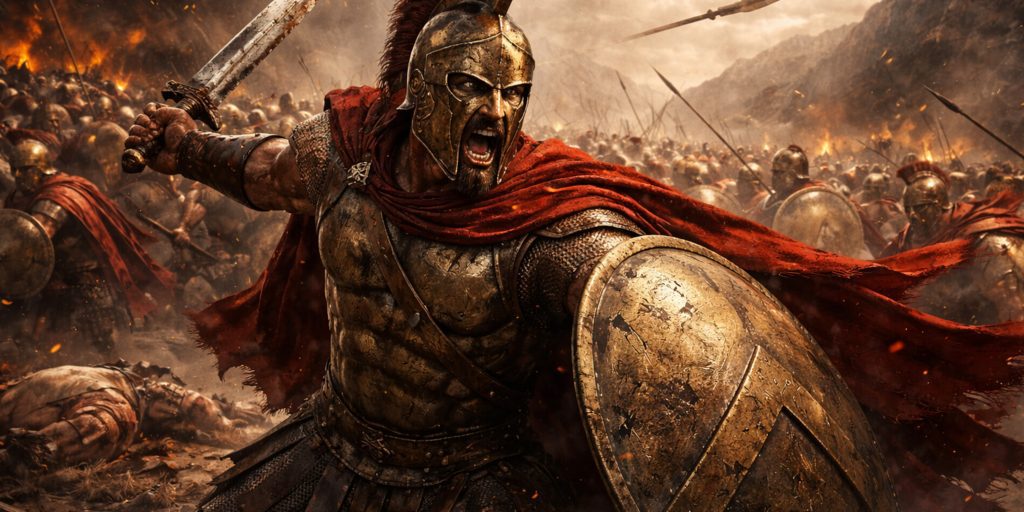
Leonidas was a Spartan king from the Agiad dynasty. His selection of only 300 Spartans was not random. Each man had a living son to carry on the family line, which says a great deal about how this expedition was viewed.
Persian Commanders
| Leader | Role |
|---|---|
| Xerxes I | King of Persia and overall commander |
| Hydarnes | Commander of the Immortals |
| Various satrap generals | Leading regional contingents |
Xerxes personally oversaw the campaign and reportedly watched the fighting from a throne overlooking the battlefield.
Ancient rulers rarely resisted the temptation to turn war into theatre.
Arms and Armour

Thermopylae was essentially a clash between two military systems.
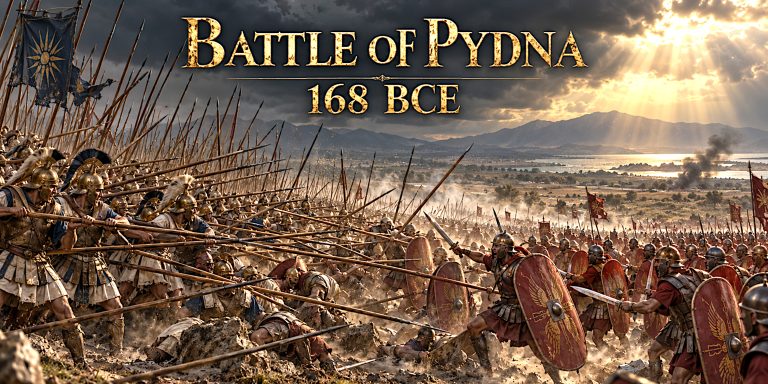
The Greek hoplite phalanx relied on heavy armour, discipline and cohesion. Persian forces emphasised mobility, archery and lighter equipment.
Greek Hoplite Equipment
• Helmet: Bronze Corinthian or Chalcidian types
• Shield: Hoplon, large round shield of wood and bronze
• Body armour: Bronze cuirass or layered linen armour
• Greaves: Bronze shin guards
Primary weapons
• Dory spear, roughly 2 to 3 metres long
• Xiphos sword, a short double edged iron blade used as a secondary weapon
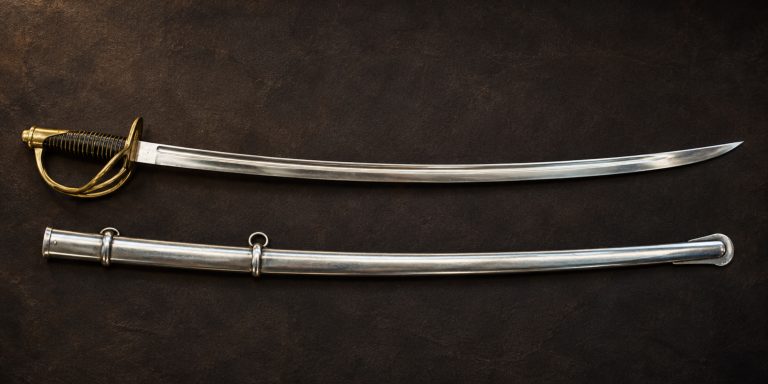
• Kopis sword, a forward curved chopping blade occasionally carried by Greek warriors
The hoplite style favoured close combat. Once the phalanx locked shields and pushed forward, lighter troops could struggle to hold the line.
Persian Equipment
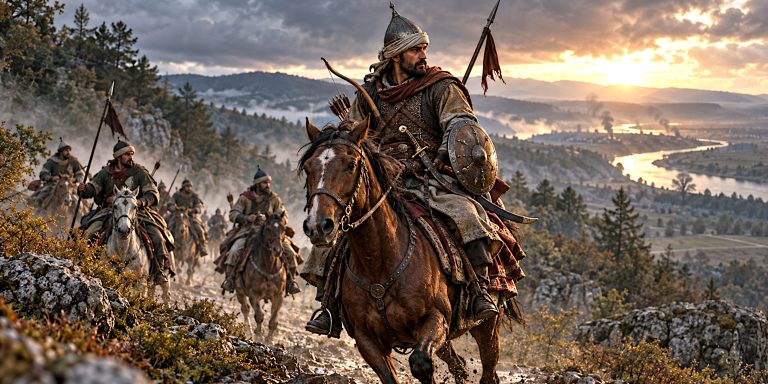
• Helmet: Soft caps or light metal helmets
• Shield: Wicker shield known as a sparabara
• Armour: Quilted or scale armour depending on unit
Primary weapons
• Short spear or javelin
• Composite bow
• Akinakes dagger sword
Persian soldiers were effective fighters, but the narrow pass prevented them from exploiting their numerical advantage or cavalry mobility.
In a cramped corridor, the heavily armoured Greeks had the edge.
The Battle Timeline
Arrival and Standoff
The Greek force occupied Thermopylae and rebuilt an old defensive wall across the narrow pass. Xerxes waited several days before attacking, possibly hoping the defenders would lose their nerve and withdraw.
They did not.
First Day of Combat
Persian infantry advanced in waves. The confined terrain forced them into frontal assaults against the Greek phalanx.
The result was grimly predictable. Persian troops were pushed back repeatedly.
Herodotus describes the fighting as brutal and exhausting.
Second Day
Xerxes committed the Immortals, his elite guard unit. The name carried an intimidating reputation.
The terrain did not care.
The Immortals fared little better than the earlier assaults.
The Betrayal
A local man named Ephialtes revealed a mountain path that allowed Persian troops to outflank the defenders.
Hydarnes led a force along the track during the night. Greek scouts detected the movement but could not prevent it.
Leonidas now faced encirclement.
The Final Stand
Leonidas dismissed most allied contingents and remained with a smaller force.
Those who stayed included:
• The 300 Spartans
• Several hundred Thespians
• The Theban contingent
The last fighting occurred around the hill behind the wall. Leonidas was killed and the remaining defenders fought until overwhelmed.
It was a deliberate sacrifice designed to delay the Persian advance.
Archaeology
Thermopylae has been investigated by archaeologists and historians for more than a century. The landscape has changed considerably due to sediment deposits from nearby rivers, which means the coastline is now much further away.
Key findings include:
• Remains of the Phocian wall used in the defence of the pass
• Arrowheads and weapon fragments discovered in the wider battlefield area
• Geological studies reconstructing the ancient shoreline
Excavations and landscape modelling have helped confirm the plausibility of Herodotus’ account. While some details remain debated, the narrow battlefield described in ancient texts aligns well with geological evidence.
The terrain itself remains the most persuasive witness.
Contemporary Quotes
Much of what we know about Thermopylae comes from the historian Herodotus.
One famous exchange captures the Spartan attitude toward the Persian archers.
“Our arrows will blot out the sun.”
The Spartan Dienekes reportedly replied:
“Then we shall fight in the shade.”
Another moment has Leonidas responding to a Persian demand that the Greeks lay down their weapons.
“Come and take them.”
The phrase became one of the most quoted defiant remarks in military history.
Legacy
Thermopylae did not stop the Persian invasion. Athens was captured and burned later that year.
Yet the stand had profound effects.
First, it delayed the Persian advance and bought time for Greek naval preparations. Soon after, the Greek fleet would win a decisive victory at the Battle of Salamis.
Second, the battle became a powerful symbol of resistance. Greek writers treated it as proof that discipline and courage could defy overwhelming odds.
Finally, Thermopylae shaped how later societies understood sacrifice in war. From Roman historians to modern military academies, the story remains a reference point for defensive warfare and morale.
The Spartans did not win the battle.
They did, however, ensure that people would still be talking about it two and a half millennia later.
Which, from a historian’s point of view, is quite an achievement for three hundred soldiers and a very narrow strip of land.
300
Frank Miller’s graphic novel 300 (published in 1998), and Zack Snyder’s 2006 film adaptation of the same name, are both stylised retellings of the stand of King Leonidas and his 300 Spartan warriors at Thermopylae in 480 BCE. The source material draws heavily from Herodotus’ Histories, though it takes considerable artistic liberties.
Key Elements from History Reflected in 300:
- Leonidas leading 300 Spartans: True, though in reality they were supported by several thousand other Greeks who are mostly absent from the story.
- Persian numerical superiority: Exaggerated in the film but based on Herodotus’ inflated figures.
- The narrow mountain pass: Accurately depicted as the key tactical feature.
- Ephialtes’ betrayal: Historical, though his physical deformity and motivations in the film are fictionalised.
- The Spartan mindset and warrior culture: While stylised, it reflects the ideal of Spartan military ethos.
What’s Fictional or Exaggerated:
- Persian characters like Xerxes as a god-king: He was real but not 9 feet tall or heavily ornamented in such fashion.
- Mythological monsters and mutant warriors: These are pure fantasy.
- Absence of other Greek allies: 300 Spartans were not alone. Thespians, Thebans, and others fought and died alongside them.
- Combat sequences and choreography: Spectacular but more fantasy-action than historical realism.
The film 300 isn’t a documentary, but it channels the mythologised version of Thermopylae: an epic stand against impossible odds, which has echoed through Western literature and political rhetoric for over two millennia.
Watch the documentary: