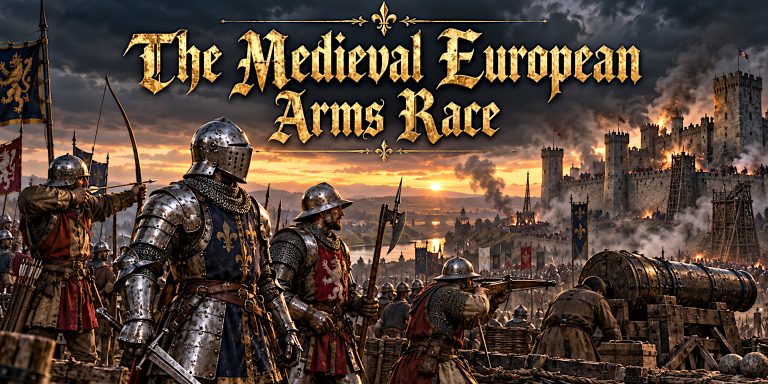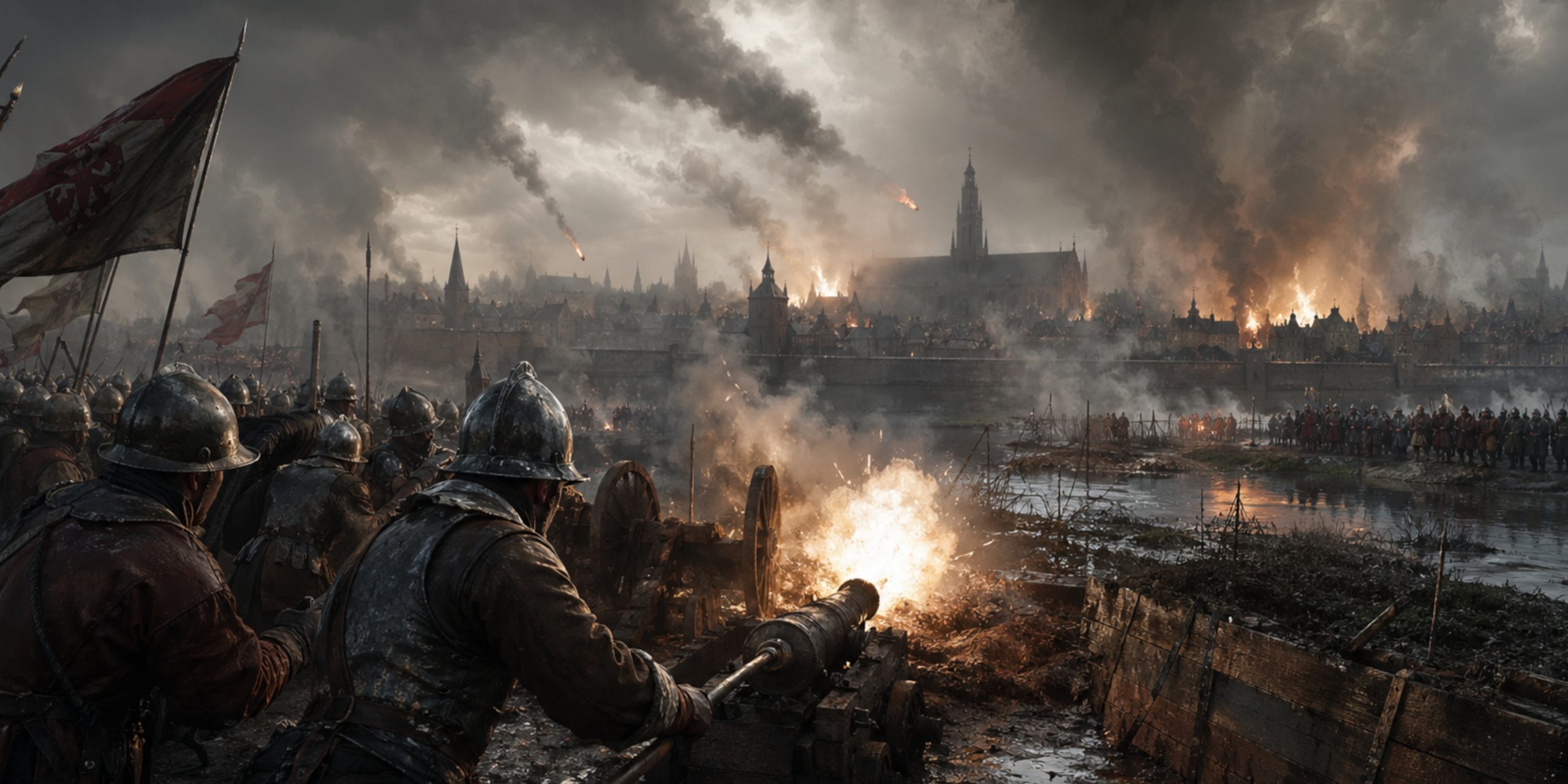
The Siege of Haarlem sits in that corner of history where courage and catastrophe share the same room. Lasting from December 1572 to July 1573, it became one of the defining early struggles of the Dutch Revolt against Spanish rule. Haarlem was not the largest city in the Netherlands, nor the most strategically vital at first glance, yet its resistance turned it into something far more dangerous, a symbol.
And symbols, as it turns out, tend to get punished.
Background and Context
By 1572, the Low Countries were in open rebellion against the Spanish crown under Philip II. Religious tension, taxation, and centralised control had pushed Protestant provinces into revolt. The capture of several cities by rebel forces gave hope that Spanish authority might crumble faster than expected.
Haarlem chose resistance. That decision set the stage for one of the longest and bloodiest sieges of the conflict.
Spanish command understood the risk immediately. If Haarlem held, other cities might follow. If it fell, the lesson would be clear.
Foces
Overview
| Side | Estimated Strength | Notes |
|---|---|---|
| Dutch Rebels (Defenders) | 3,000 to 4,000 soldiers | Reinforced by local militia and civilians |
| Spanish Royal Army (Besiegers) | 10,000 to 30,000 over time | Rotating forces under experienced commanders |
Key Leaders
Dutch Defenders
- Wigbolt Ripperda, military governor
- Kenau Simonsdochter Hasselaer, often associated with civilian resistance, though her exact role is debated
Spanish Forces
- Don Fadrique Álvarez de Toledo, son of the Duke of Alba
- Experienced officers drawn from Spain’s veteran tercios
Composition
Dutch Forces
- Urban militia and trained soldiers
- Civilian volunteers, including women assisting in defence
- Limited cavalry
Spanish Forces
- Tercios, heavily disciplined infantry formations
- Cavalry detachments
- Artillery specialists
The imbalance is obvious. Haarlem was outnumbered and outgunned. What it had instead was stubbornness.
Arms and Armour
Dutch Defenders
- Swords
- Katzbalger, short infantry sword suited for close combat
- Early rapiers, though less common among militia
- Polearms
- Halberds and pikes for wall defence
- Firearms
- Arquebuses and early muskets
- Defensive Equipment
- Mixed armour, often partial, including breastplates and helmets
Spanish Forces
- Swords
- Side swords and early rapiers used by officers and infantry
- Polearms
- Long pikes forming the backbone of tercio formations
- Firearms
- Arquebuses and muskets, deployed in coordinated volleys
- Artillery
- Heavy cannons used to batter Haarlem’s walls
- Armour
- Morion helmets, breastplates, and full infantry harness for elite troops
Observations
Spanish equipment reflected a professional army at the height of European military development. Haarlem’s defenders made do with what they had, which is usually a polite way of saying they improvised under pressure.
The Siege Begins
The Spanish army encircled Haarlem in December 1572. Winter did not help either side, though it certainly made the whole experience more miserable.
Initial assaults focused on testing the city’s defences. Haarlem resisted effectively, launching sorties and counterattacks that surprised Spanish forces. At several points, the defenders inflicted heavy casualties.
It was not supposed to be this difficult.
Battle Timeline
December 1572
- Spanish forces begin the siege
- Initial encirclement and probing attacks
January to February 1573
- Heavy fighting around the walls
- Dutch sorties disrupt Spanish positions
- Severe winter conditions affect both sides
March to April 1573
- Spanish artillery intensifies bombardment
- Supply shortages begin inside Haarlem
- Relief attempts by rebel forces fail
May to June 1573
- Starvation and disease spread within the city
- Spanish forces tighten control
- Morale begins to crack
July 1573
- Haarlem surrenders after seven months
- Spanish reprisals follow
Seven months might not sound extraordinary by medieval standards, but in the context of early modern warfare, it was enough to turn heads across Europe.
Civilian Experience
Life inside Haarlem became steadily unbearable. Food ran out. Horses were eaten, then dogs, then whatever could be scraped together.
Civilians did not simply endure. They participated in defence, carried supplies, and, in some cases, fought. The line between soldier and resident blurred quickly when survival was on the table.
Archaeology
Archaeological work in Haarlem and surrounding areas has revealed:
- Remains of fortifications damaged by artillery fire
- Musket balls and cannon shot embedded in defensive structures
- Personal items, coins, tools, suggesting the strain of prolonged occupation
- Evidence of makeshift repairs to walls and barricades
These finds confirm what written sources suggest, the siege was relentless, and the defenders adapted constantly.
Contemporary Quotes
From Spanish accounts, there is a tone of frustration mixed with reluctant respect:
“They defend themselves like men who have no hope but victory.”
Dutch perspectives, when recorded, lean toward defiance:
“Better to perish free than to live in chains.”
There is a certain predictability in siege rhetoric, but that does not make it insincere.
The Fall of Haarlem
By July 1573, Haarlem could not continue. Starvation and exhaustion had done what artillery could not.
The surrender terms were harsh. Many defenders were executed, including soldiers who had held out for months. Civilians suffered as well, though not to the same extent as in some other Spanish reprisals.
It was not a quiet ending.
Aftermath and Legacy
At first glance, Haarlem’s fall looks like a Spanish victory, and technically it was. The city was taken, the rebellion suppressed locally.
Yet the cost was staggering. Spanish forces lost thousands of men and months of time. The siege proved that Dutch cities could resist effectively, and that resistance would not be quick to extinguish.
In that sense, Haarlem achieved something more valuable than survival. It bought time and demonstrated possibility.
Subsequent sieges, notably at Alkmaar and Leiden, would build on that lesson.
Takeaway
The Siege of Haarlem has a habit of sticking with you. Not because it ended in triumph, but because it did not. It shows a city choosing resistance, knowing the likely outcome, and going ahead anyway.
Historians tend to admire victories. Haarlem invites a different sort of respect.