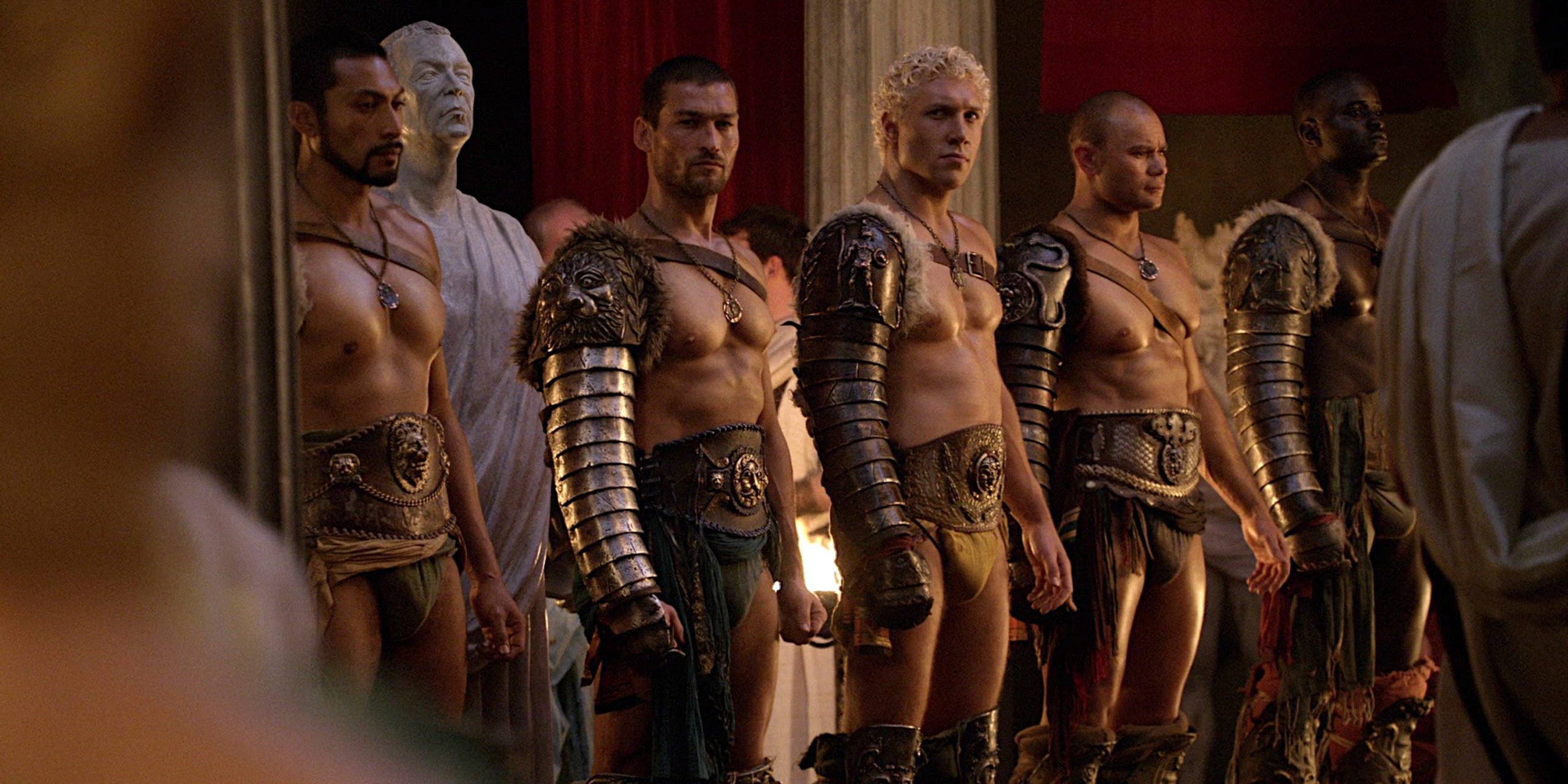
There is a certain kind of confidence in Spartacus dialogue that feels almost reckless. Characters do not just speak, they declare. Threats sound like poetry, insults feel like verdicts, and even quiet moments carry an edge.
Rewatching it now, what stands out is how often a single line does all the work. No long speech needed. Just a few words and suddenly you understand power, fear, loyalty, or the lack of it.
Here are the lines that still land, still sting, and in some cases, still make you pause and think, that was cold.
“I am Spartacus”
It had to be here. Even if you saw it coming, the delivery still hits.
What makes it work is not just the line itself. It is the buildup. The idea that identity becomes a weapon, something shared rather than owned. It turns one man into a movement in a single breath.
Simple. Defiant. Impossible to ignore.
“Once again the gods spread cheeks to ram cock in fucking ass”
This is Spartacus at its most unfiltered. You either laugh, wince, or both.
It captures the tone of the show in a way nothing else quite does. Brutal, crude, but oddly expressive. There is frustration here, and a kind of bitter humour that feels earned rather than thrown in for shock.
It is not elegant. That is the point.
“The gods have no interest in me”

A quieter line, but it carries weight.
This is where the show leans into something more personal. Faith, or the absence of it, becomes a character trait. You start to see Spartacus not just as a fighter, but as someone who has stopped expecting help from anywhere but himself.
There is a kind of clarity in that, even if it is not comforting.
“You kiss my cheek only to finger my ass?”
This is where the show’s dialogue borders on theatrical, almost like a Roman stage play that has had its filter removed.
It works because it is so direct. Betrayal, called out in the bluntest possible way. No metaphor needed. You know exactly what is being said, and more importantly, how angry the speaker is.
There is no subtlety here, just impact.
“Blood demands blood”
Short, sharp, and very Roman in spirit.
This line taps into the cycle that defines much of the series. Revenge is not a choice, it is treated like a law of nature. Once it starts, it does not stop politely.
It is one of those lines that feels ancient, even though it was written for television.
“There is only one way to become champion. Kill them all”
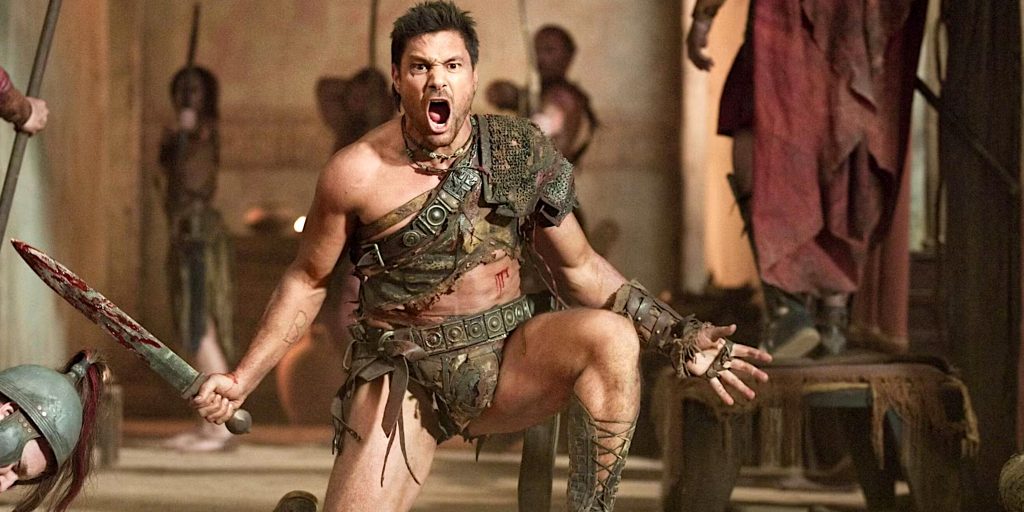
You can almost hear the arena crowd in the background with this one.
It sums up the world of the ludus in a single sentence. No strategy, no nuance. Survival is the only rule that matters.
What stands out is how matter of fact it is. No drama in the delivery, just truth.
“A man must accept his fate, or be destroyed by it”
This feels like it could have been lifted from a classical text.
It reflects the Roman mindset that runs through the series. Control what you can, accept what you cannot, and survive somewhere in between.
There is a cold logic to it that suits the world perfectly.
“I would have you fight beside me again, old friend”
Not every great line in Spartacus is aggressive.
This one lands because of what sits behind it. Shared history, loss, and the kind of loyalty that does not need to be explained. It reminds you that for all the violence, relationships are what give the story weight.
It is quieter, but it lingers longer.
“You stand in the presence of the gods”
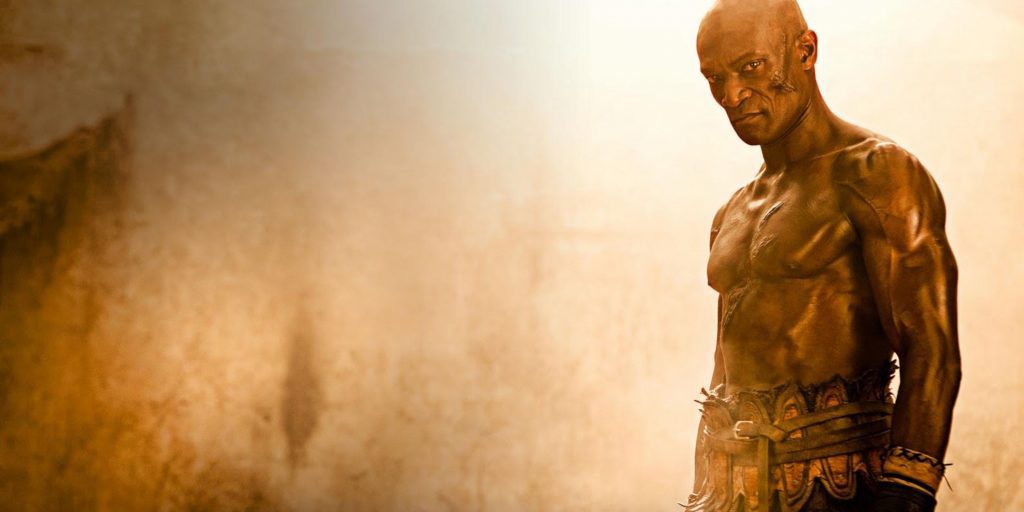
Classic Roman arrogance, delivered without hesitation.
Lines like this show how power is performed as much as it is held. The speaker does not just believe it, they expect everyone else to accept it too.
It is theatrical, but that is exactly what makes it memorable.
Why Spartacus Dialogue Still Works
What keeps these lines alive is not just shock value or clever writing. It is commitment.
Every character speaks like they believe what they are saying is absolute truth. There is no hesitation, no half measures. Even the more outrageous lines feel grounded because the performances sell them completely.
There is also a rhythm to the dialogue. Short bursts, strong imagery, and a refusal to soften anything. It feels closer to myth than everyday speech, which is probably why it sticks.
And honestly, sometimes it is just fun to hear someone say exactly what they mean, with zero concern for how it sounds.
Takeaway
Spartacus never aimed for subtle. It aimed for impact, and when it works, it really works.
The best one-liners cut through everything else. They define characters, drive scenes, and give the show its identity. You might not remember every plot turn, but you will remember how it sounded.
And if nothing else, it is a reminder that sometimes the sharpest writing comes down to knowing when to stop talking.