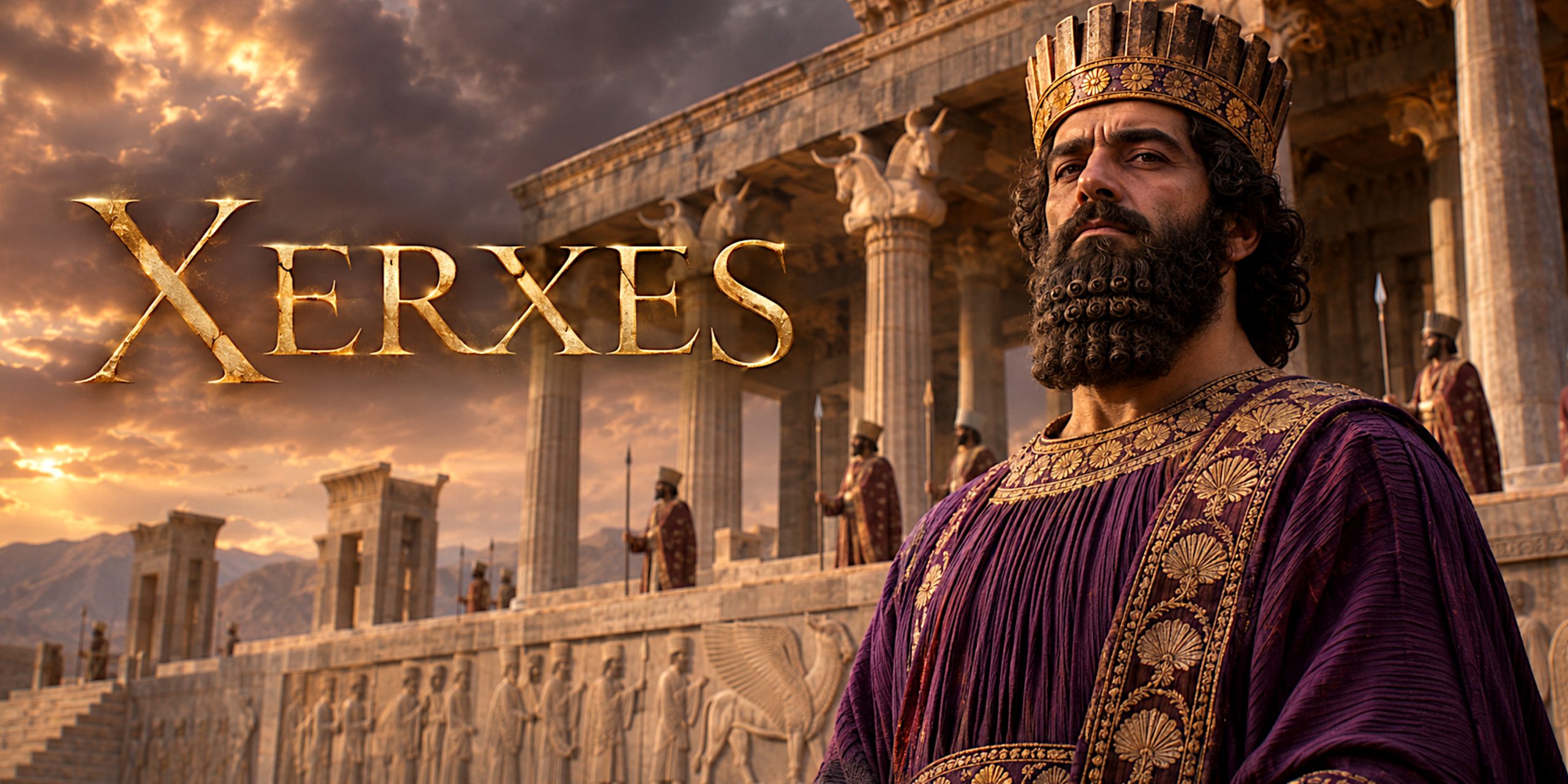
Xerxes I ruled the Achaemenid Persian Empire from 486 to 465 BCE. He inherited a realm stretching from Egypt and the Aegean to Central Asia and the Indus region, yet his reputation has largely been decided by the Greeks who resisted him. Thermopylae, the burning of Athens and Salamis dominate the story. Persepolis, provincial government and two decades of imperial rule usually wait outside.
That imbalance matters. Xerxes was an ambitious conqueror whose invasion brought devastation to Greece, but he was also a dynastic ruler, builder and custodian of an extraordinarily diverse empire. Understanding him requires reading Greek accounts alongside Persian inscriptions and archaeology. Neither the king’s enemies nor his own publicity department had much reason to be modest.
Xerxes I at a glance
| Detail | What we know |
|---|---|
| Reign | 486–465 BCE |
| Dynasty | Achaemenid |
| Father | Darius I |
| Mother | Atossa, daughter of Cyrus the Great |
| Wife | Amestris |
| Successor | His son Artaxerxes I |
| Best-known campaign | Invasion of Greece, 480–479 BCE |
| Major building legacy | Palace and monumental gateways at Persepolis |
His name survives in Old Persian as Xšayāršā, commonly rendered Khshayarsha. “Xerxes” is the familiar Greek form.
How Xerxes became king
Xerxes succeeded Darius in 486 BCE, but his accession was not simply a matter of being the eldest son. Darius had older sons from an earlier marriage. Xerxes’ mother, Atossa, connected him directly to Cyrus the Great, giving him a particularly valuable dynastic claim.
Herodotus describes rival arguments over seniority and royal birth. Xerxes’ own inscription, conventionally called the Harem Inscription, offers a more orderly version: Darius selected him above his other sons, with divine approval.
The two accounts differ in emphasis, but both point towards deliberate selection. Persian kingship depended on family connections, elite support and the reigning monarch’s decision, rather than an uncomplicated rule of inheritance.
Revolts in Egypt and Babylon
Before Xerxes could campaign in Greece, he had to secure important provinces closer to the imperial centre. Egypt had revolted near the end of Darius’ reign, and Xerxes restored Persian control early in his own. Babylonia also rebelled, with cuneiform documents attesting the rival kings Bēl-šimânni and Šamaš-eriba in 484 BCE.
These were serious challenges. Egypt and Babylonia contributed wealth, agricultural resources and strategic depth. Losing either would have damaged the monarchy far more directly than failing to occupy Athens.
The repression should not be softened into a harmless administrative adjustment. Equally, claims that Xerxes destroyed Babylon outright or systematically abolished its religious life go beyond what can safely be established. His much-discussed Daiva Inscription does not name the location of the religious intervention it describes. It cannot simply be treated as a report of the destruction of Babylon’s temples.
Why Xerxes invaded Greece
The expedition continued an existing conflict. Darius had suppressed the Ionian Revolt but failed to defeat Athens at Marathon in 490 BCE. Xerxes inherited both the military problem and the expectation that Persian authority should be obeyed.
Revenge features prominently in Greek explanations. Strategic considerations mattered too: controlling the Aegean and securing the empire’s western approaches offered practical advantages.
Nor was this a united Greece confronting a wholly foreign world. Greek communities served within the Persian Empire, and some mainland states accepted Persian demands or supported the invasion. Others resisted. The political map was considerably messier than the later legend.
Forces, commanders and military preparation
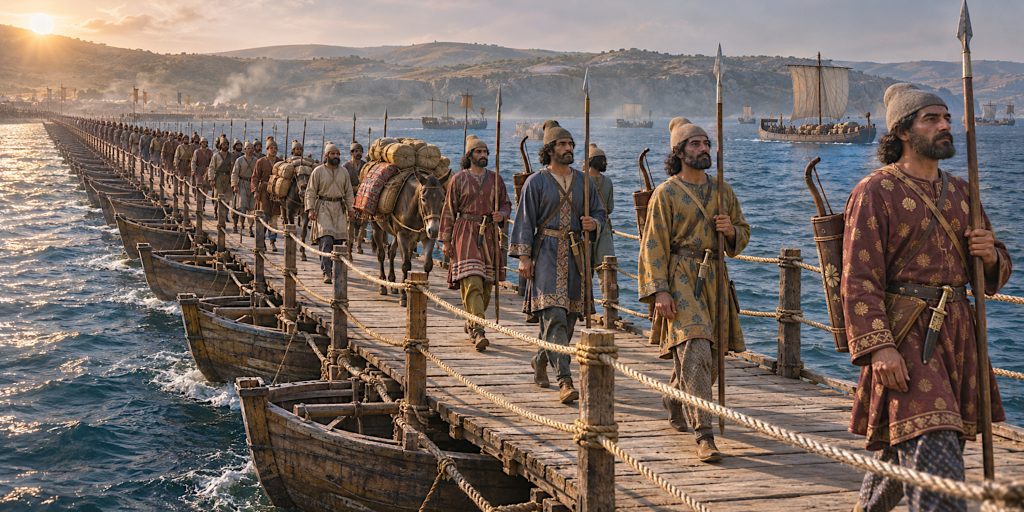
Xerxes assembled a multinational force supported by a fleet drawn from the empire’s maritime subjects. Its strength lay in combining different military traditions and mobilising resources across enormous distances.
| Component | Role in the campaign |
|---|---|
| Persian and Median infantry | Important elements of the land army |
| Royal elite infantry | Guard and assault troops, including the force Herodotus calls the Immortals |
| Cavalry | Reconnaissance, screening and combat on suitable ground |
| Regional contingents | Soldiers with varied equipment and fighting traditions |
| Imperial fleet | Naval combat, transport and support along the coast |
Xerxes held supreme authority. Mardonius became the principal Persian commander left in Greece after the king’s withdrawal. Artemisia of Halicarnassus, a ruler serving on the Persian side, is particularly prominent in Herodotus’ naval narrative.
Ancient army totals are not reliable headcounts. Herodotus’ immense figures should not be reproduced as established fact, and modern estimates remain disputed. The secure conclusion is that this was a major expedition requiring exceptional preparation.
The pontoon bridges across the Hellespont and the canal through the Athos peninsula show the scale of that effort. Such projects required labour, engineering and organised supplies. An army cannot eat a royal title, however impressive it sounds.
Arms and armour in Xerxes’ army
There was no single Persian imperial uniform. Equipment varied by region, wealth, role and military tradition. Court reliefs are valuable evidence, although ceremonial dress should not automatically be read as battlefield kit.
| Equipment | Use and limitations |
|---|---|
| Akinakes | Short, straight, double-edged sidearm associated with Persian and related elites; often described as a short sword or dagger |
| Composite bow | Important missile weapon for Persian infantry and mounted troops |
| Spear | Used by guards, infantry and cavalry in different forms |
| Wicker shield | Provided relatively light protection; not equivalent to a Greek hoplite’s substantial shield |
| Scale armour | Available to some troops; protection was uneven across the army |
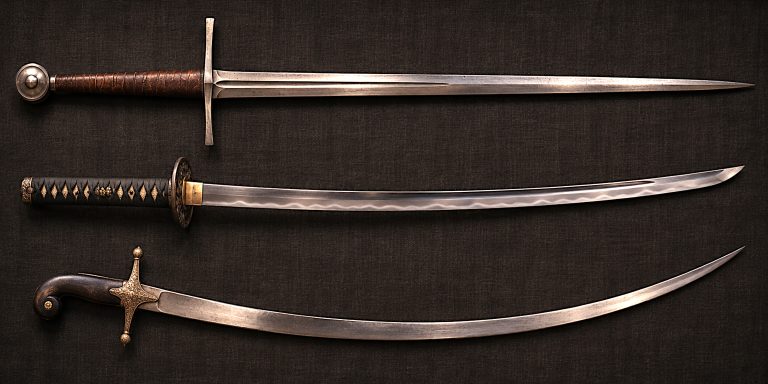
The akinakes deserves particular attention because it is so closely associated with Achaemenid imagery. It was a secondary weapon, not evidence that Persian troops preferred fighting entire battles with short blades.
On the opposing side, Greek hoplites carried thrusting spears and could use the straight, double-edged xiphos as a sidearm. These differences mattered when fighting became close and terrain restricted manoeuvre. They do not support the old caricature of skilful Greeks defeating an untrained crowd.
Thermopylae, Athens and the defeat at Salamis
Thermopylae and the advance south
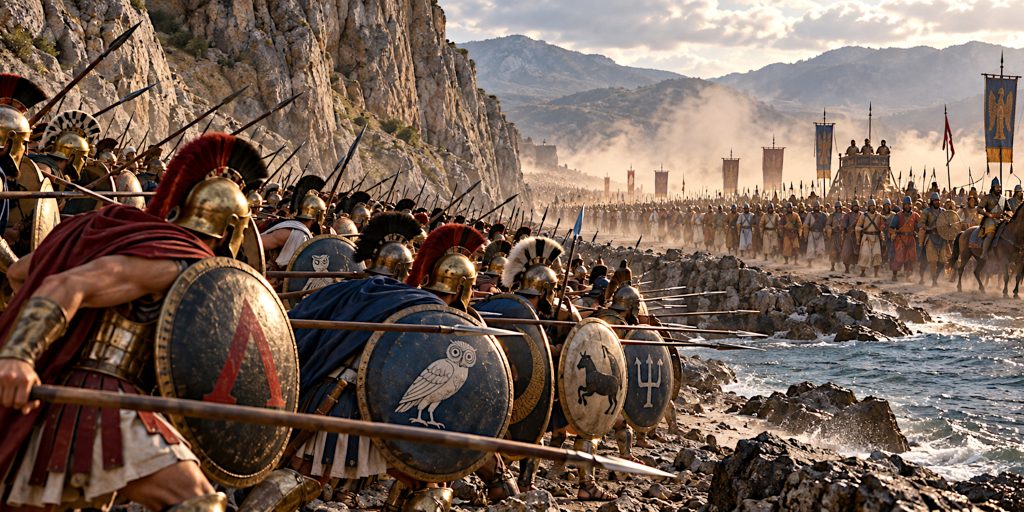
In 480 BCE, Xerxes’ forces broke the Greek defence at Thermopylae after finding a route around the position. The famous last stand has tended to obscure the immediate outcome: Persia won, and the route into central Greece opened.
The naval fighting at Artemisium ended with the Greek fleet withdrawing as the land position became untenable. Persian forces advanced into Attica and captured Athens after most inhabitants had evacuated. Sanctuaries on the Acropolis were burned.
Salamis and the king’s withdrawal
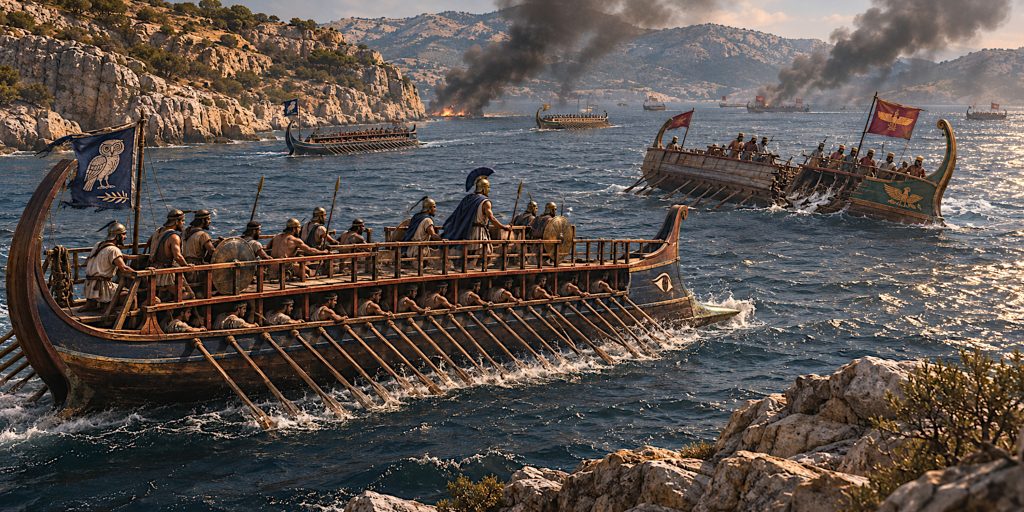
At Salamis, the allied Greek fleet defeated the Persians in confined waters. The battle exposed the danger of committing a large fleet where space, coordination and local conditions favoured its opponents.
Xerxes subsequently returned to Asia, leaving Mardonius to continue the campaign. It is too simple to describe this as the flight of a king whose empire had suddenly collapsed. Substantial Persian forces remained in Greece, and the war continued.
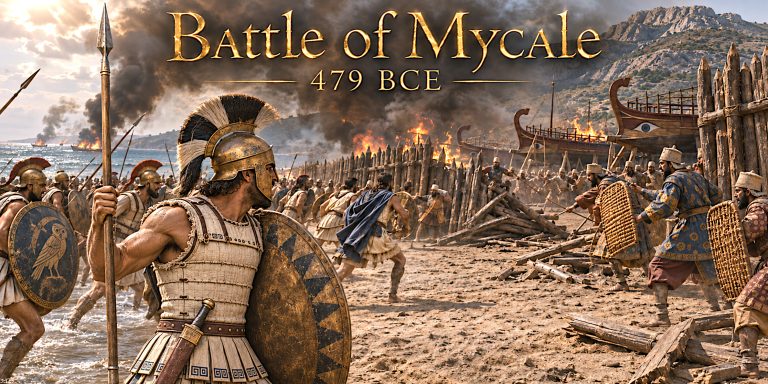
Nevertheless, Salamis was a major strategic failure. Persian resources had not produced the decisive submission Xerxes sought. In 479 BCE, Mardonius was defeated and killed at Plataea, while a Greek victory at Mycale further weakened Persia’s position in the Aegean.
Persepolis and the business of kingship
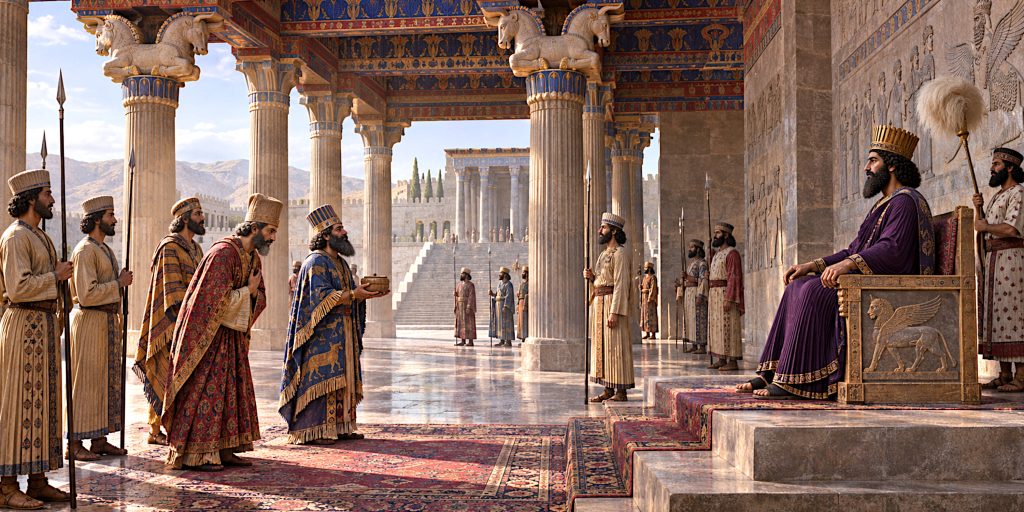
Xerxes’ building works offer a different perspective on his reign. At Persepolis he continued the monumental programme begun by Darius, leaving his name closely associated with the Gate of All Nations and his own palace, the Hadish.
The reliefs present an empire brought into order around the king. Delegations, guards and court attendants appear in carefully arranged processions. This is an image of hierarchy and cooperation, rather than a neutral record of how every subject experienced Persian rule.
Royal inscriptions likewise emphasise legitimate succession and the favour of Ahuramazda. Their repeated formulas can sound monotonous, but repetition was part of the purpose. Across different languages and settings, the message remained recognisable: the king ruled by divine favour and upheld the established order.
What the archaeology tells us
The strongest material evidence for Xerxes concerns royal construction and imperial representation. Persepolis preserves buildings, reliefs and inscriptions that can be compared with the literary accounts. Administrative records from the wider site also reveal a working palace economy behind the monumental display.
In Greece, the Persian destruction of the Athenian Acropolis provides a material counterpart to accounts of the invasion. It does not, by itself, answer every question about the king’s intentions.
The Athos canal is another important case. Archaeological and geophysical investigation supports the existence of the engineering project described by ancient writers. That confirms a practical achievement, rather than merely a picturesque anecdote.
What archaeology cannot give us is an unfiltered portrait of Xerxes’ personality. A royal relief is an official image. A destruction deposit records damage, not the conversation that ordered it.
Was Xerxes really the king who whipped the sea?
Herodotus reports that Xerxes ordered the Hellespont to receive lashes after a storm destroyed his bridges. It is a memorable story, perfectly suited to a narrative about royal arrogance meeting the limits of human power.
It should be presented as something Herodotus reports, rather than an independently verified incident. His work preserves valuable information, but also speeches, moral themes and stories shaped by Greek understandings of Persian monarchy.
The same caution applies in the opposite direction. Persian inscriptions give us Xerxes’ official voice, not his private thoughts. The historian’s task is to compare these competing presentations without mistaking either for an impartial witness.
Xerxes’ death and succession
Xerxes was assassinated in 465 BCE. Classical accounts implicate Artabanus, a senior court figure, but disagree over the sequence of killings and the responsibility of individual princes.
His son Artaxerxes I emerged as king. The uncertainty deserves to remain visible: accounts of palace conspiracies are especially vulnerable to retrospective justification by those who survived them.
The Achaemenid monarchy continued. Xerxes’ death was a dynastic crisis, not the end of Persian imperial power.
Timeline of Xerxes I
| Date | Event |
|---|---|
| 486 BCE | Succeeds Darius I |
| Early reign | Suppresses revolt in Egypt |
| 484 BCE | Babylonian revolts challenge Persian authority |
| 480 BCE | Crosses into Europe and invades Greece |
| 480 BCE | Persian victory at Thermopylae; Athens captured |
| 480 BCE | Persian fleet defeated at Salamis; Xerxes returns to Asia |
| 479 BCE | Persian defeats at Plataea and Mycale |
| Throughout his reign | Continues major royal building projects |
| 465 BCE | Assassinated; succeeded by Artaxerxes I |
How should we judge Xerxes?
Xerxes failed to secure the submission of the Greek states that resisted him. That was a substantial military and political defeat, and no amount of admiration for Persepolis removes it.
Yet judging his entire reign through Salamis leaves most of his empire out of the assessment. His monarchy survived the defeat, his building programme expressed enduring royal ambition, and Persian power remained a central force in the eastern Mediterranean.
I find him most revealing where the sources disagree. To Greek writers he could embody the dangers of unlimited power; in his own inscriptions he stood for legitimate order. The historical Xerxes must be sought between those claims, with room for both imperial achievement and coercion. He needs neither a rehabilitation campaign nor another turn as a theatrical villain.
Sources and further reading
- Herodotus, Histories, Books VII–IX. Principal Greek narrative for the invasion. Book VII, chapters 1–4 concerns succession; chapters 34–35 contains the Hellespont story.
- Xerxes’ XPf inscription. Royal account of his selection as successor and continuation of Darius’ building works.
- Xerxes’ XPh, the Daiva Inscription. Evidence for royal ideology; the location of the intervention it describes remains uncertain.
- Encyclopaedia Iranica, “Daiva”. Discussion of the inscription and the problems with identifying its targets as Babylonian gods.
- Encyclopaedia Iranica, “Army i. Pre-Islamic Iran”. Military organisation, weapons and the limitations of the surviving evidence.
- Encyclopaedia Iranica, “Persepolis”. Archaeology, architecture and the development of the royal complex.
- The Canal of Xerxes: summary of investigations 1991–2001. Research combining geophysical survey and sediment analysis.
- UNESCO, Persepolis. Overview of the surviving Achaemenid monuments.
- Jona Lendering, “Xerxes I”. Chronological overview with links to inscriptions and ancient accounts.
- “The Persian Army in Herodotus”, in The Landmark Herodotus, Appendix O. Discussion of the problems with ancient troop totals.