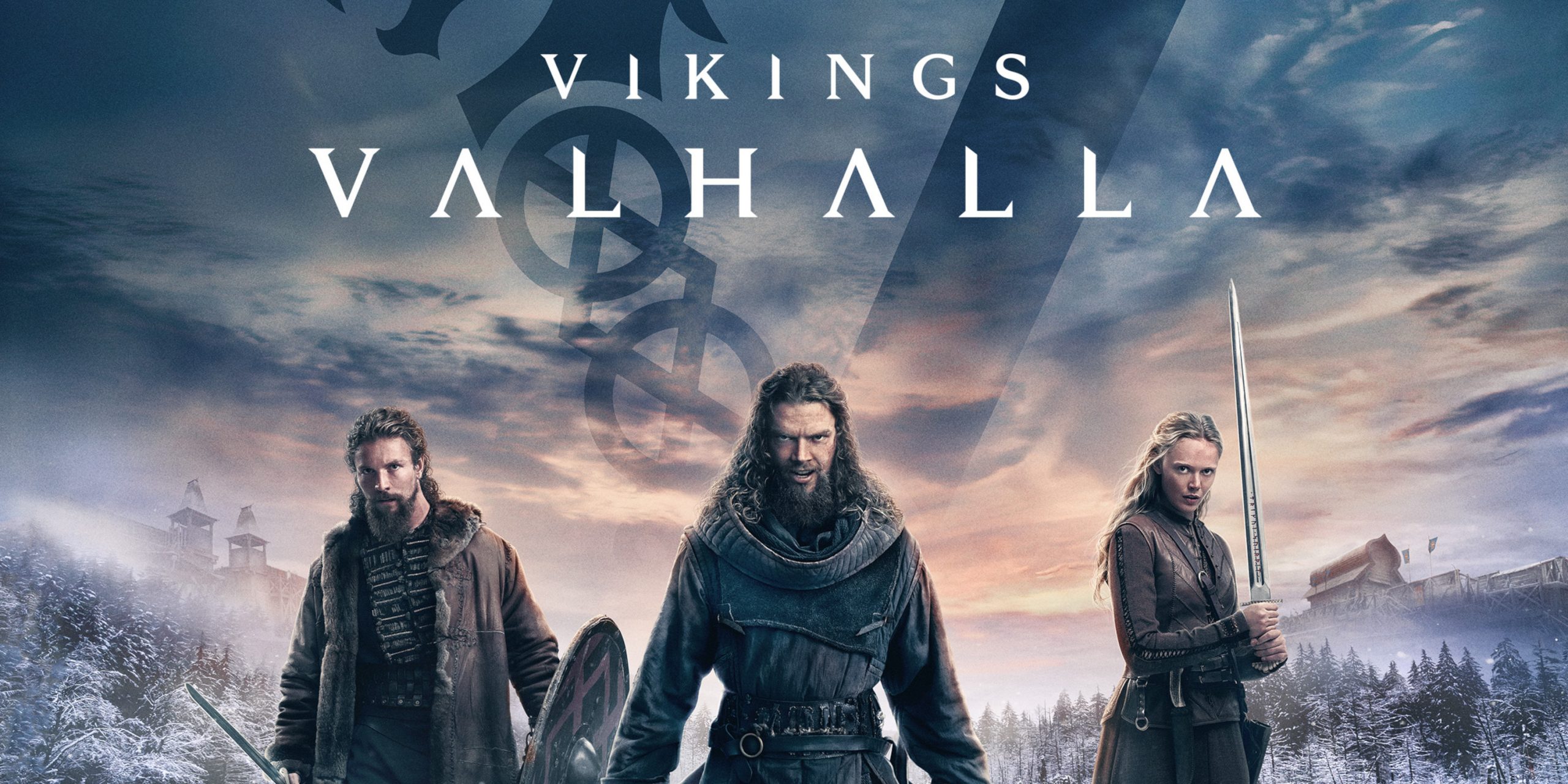
Vikings: Valhalla understands a basic truth about historical television: audiences will forgive a considerable amount of timeline vandalism if the ships look good and the battles have enough weight behind them.
Created by Jeb Stuart, the Netflix series moves the story forward by more than a century from Vikings. Ragnar Lothbrok and his sons have become legends, Christianity is spreading through Scandinavia, and the Viking world is approaching its final great period of conquest.
Across three seasons, the series follows Leif Erikson, Freydís Eiríksdóttir and Harald Sigurdsson through England, Norway, Greenland, Constantinople and the edges of the known world. These were real historical figures, but the show brings them together with all the restraint of someone arranging their favourite warriors on a tabletop.
The history is flexible. The entertainment is considerably stronger.
Vikings: Valhalla at a Glance
| Detail | Information |
|---|---|
| Creator | Jeb Stuart |
| Based on | Vikings, created by Michael Hirst |
| Platform | Netflix |
| Seasons | Three |
| Episodes | 24 |
| Original run | 2022 to 2024 |
| Main cast | Sam Corlett, Frida Gustavsson and Leo Suter |
| Setting | Early 11th century |
| Genre | Historical drama, action and adventure |
| Seven Swords rating | 8 out of 10 |
The third and final season was released in July 2024, completing the planned 24-episode run. All three seasons are available on Netflix. Netflix Tudum
What Is Vikings: Valhalla About?
The series begins in the aftermath of the St Brice’s Day massacre of 1002, when King Æthelred II orders the killing of Danes living in England. King Canute responds by gathering a Viking army to seek revenge.
Into this crisis sail Greenlanders Leif Erikson and his sister Freydís. Leif is a gifted navigator, sailor and reluctant warrior. Freydís arrives in Kattegat seeking vengeance for a personal attack. They soon encounter Harald Sigurdsson, an ambitious Norwegian prince with a talent for surviving catastrophes that he has often helped to create.
Their stories gradually separate:
- Leif becomes increasingly interested in knowledge, exploration and the wider world.
- Freydís emerges as a defender of the traditional Norse faith.
- Harald pursues the Norwegian crown while travelling through the territories of the Rus and Byzantine Empire.
- King Canute, Queen Emma and Earl Godwin navigate the considerably more civilised blood sport of English politics.
The first season concentrates on England and Kattegat. The second expands eastwards, while the third follows Harald and Leif into the Byzantine world before bringing the central characters back towards Scandinavia.
How Does It Compare with the Original Vikings?
Vikings: Valhalla looks and sounds like a continuation of Vikings, but its personality is different.
The original series began as a comparatively intimate story about Ragnar Lothbrok, his family and an isolated community looking west. It gradually grew into an international epic. Valhalla starts at that larger scale. Kings, armies and competing religions are already in motion.
| Element | Vikings | Vikings: Valhalla |
|---|---|---|
| Central focus | Ragnar and his family | Three connected historical figures |
| Historical period | Early to late Viking Age | Final century of the Viking Age |
| Main conflict | Expansion into Western Europe | Control of England and Scandinavia |
| Religious setting | Pagan society encountering Christianity | Christianity becoming dominant |
| Tone | Mystical and character-driven | Faster and more adventure-focused |
| Historical approach | Saga, legend and recorded history | Compressed historical epic |
Valhalla is easier to enter than its predecessor. It moves quickly, explains its political conflicts clearly and wastes little time before introducing the axes. What it lacks is the strange, unpredictable energy that made early Vikings so compelling.
Ragnar could be charming, frightening, curious and deeply unpleasant in the same scene. The heroes of Valhalla are more conventionally heroic. They are enjoyable company, but rarely as dangerous or mysterious.
The Three Main Characters

Leif Erikson
Sam Corlett plays Leif as a thoughtful explorer repeatedly forced into violence. He begins the series uncertain of his place in the world and burdened by the reputation of his father, Erik the Red.
His strongest material concerns the tension between destruction and discovery. Leif is extremely capable in battle, yet his real fascination lies with navigation, engineering and distant lands. The series occasionally pushes this into “medieval scientist” territory, but Corlett sells the curiosity.
Leif’s quieter personality can leave him overshadowed by Harald and Freydís. Even so, he becomes more interesting as grief and experience begin to erode his early idealism.
Freydís Eiríksdóttir
Frida Gustavsson gives the series its most forceful performance. Freydís begins with a personal mission but develops into a spiritual and political leader associated with the survival of Norse paganism.
This version of Freydís has little firm connection to the figure described in the Vinland sagas. The surviving sources offer conflicting portrayals, ranging from formidable courage to calculated violence. The programme uses that uncertainty as permission to build a largely original character.
Gustavsson makes the invention work. Her Freydís is compassionate without becoming soft, devout without being naïve and entirely convincing when someone makes the poor decision to underestimate her.
Harald Sigurdsson
Leo Suter’s Harald is ambitious, charismatic and powered by a seemingly renewable supply of confidence. He wants to become king of Norway, and nearly every choice he makes is shaped by that goal.
Harald is the most naturally entertaining of the three leads. He can negotiate with rulers, charm potential enemies and fight his way through a collapsing battle line. Occasionally, the ease with which he succeeds becomes slightly ridiculous. Then he smiles, makes another terrible political gamble and somehow wins the audience back.
Historically, Harald Sigurdsson became Harald Hardrada, king of Norway and one of the most famous warriors of the 11th century. His death at Stamford Bridge in 1066 is often treated as a symbolic end to the Viking Age. The series finishes long before reaching that final campaign.
Which Season Is Best?
Season One
The opening season is the strongest overall. It has clear momentum, a focused conflict and the most satisfying balance between warfare, politics and character development.
The attack on London Bridge delivers the sort of large-scale action expected from the franchise, while the political struggle involving Canute, Emma, Edmund and Godwin gives the story more texture than endless shield-wall collisions.
The season also handles the division between Christian and pagan Vikings effectively. It does not present the Norse as a single unified culture, which immediately makes the world feel more interesting.
Season Two
Season two is more adventurous but less controlled. Leif and Harald travel east towards Constantinople, while Freydís becomes involved with the pagan settlement of Jomsborg.
The journey introduces unfamiliar landscapes, cultures and trading routes. That wider geographical view is welcome. Popular depictions of Vikings can behave as though the Norse discovered England, raided it repeatedly and then misplaced the rest of the world.
However, the season’s storylines do not carry equal weight. Harald and Leif’s journey has energy and variety, while the Jomsborg material becomes repetitive. Several antagonists feel designed to delay the plot rather than deepen it.
Season Three
The final season moves forward several years and finds Harald and Leif serving in the Byzantine world. The appearance of the Varangian Guard, General George Maniakes and Constantinople gives the programme a grander visual identity.
Freydís, meanwhile, faces new threats to her community and eventually reconnects with her family history through Erik the Red.
Season three contains some of the show’s most interesting locations and ideas. It also has a lot of history to squeeze into eight episodes. The final chapters provide emotional closure, but they stop just as the real lives of Leif and Harald approach their most famous events.
It feels like an ending, although not quite the ending the historical setup appeared to promise.
Battles, Weapons and Armour

The combat is fast, physical and generally easy to follow. Fighters appear to occupy the same battlefield rather than performing separate choreography in front of one another, which is already a victory by modern action standards.
Weapons seen throughout the series include:
- Viking swords with broad, double-edged blades
- Single-edged seaxes
- Spears used both overarm and underarm
- One-handed axes
- Two-handed Dane axes
- Bows and arrows
- Round wooden shields with iron bosses
- Byzantine swords, spears and cavalry equipment
The Viking sword is treated as a prestigious weapon rather than universal equipment, although the programme naturally gives swords to more characters than historical economics probably would have allowed. A good sword required considerable labour and high-quality iron. Spears and axes were more accessible.
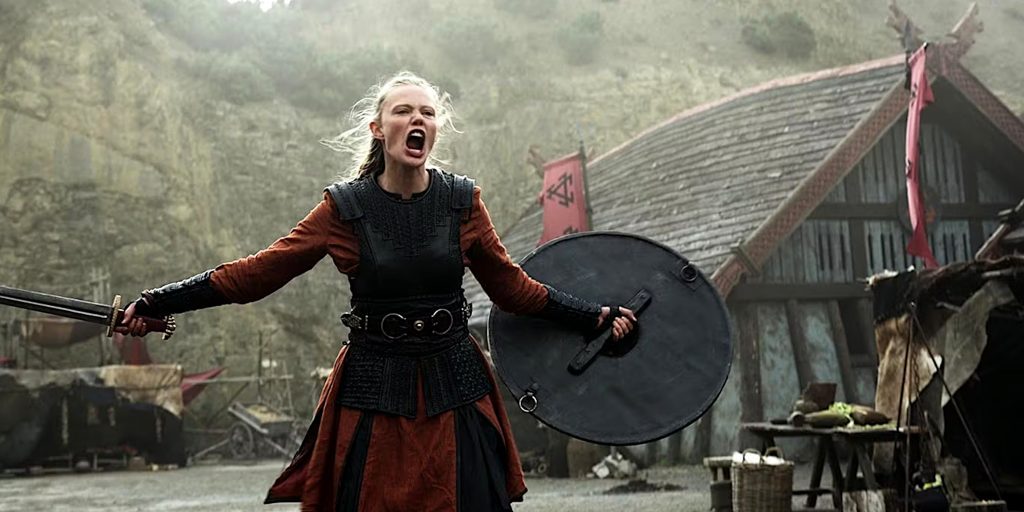
The show’s armour combines mail, helmets, leather and layered textiles. Some pieces are credible interpretations of early medieval equipment. Others belong to the familiar school of television costume design in which every warrior owns a private leatherworker with an unusually generous stud budget.
Shield walls appear frequently, but the battles become more individualistic once the fighting begins. Named characters break formation, seek personal duels and survive situations that would turn an ordinary soldier into an archaeological discovery.
It is historical drama. Main-character armour remains the most effective protection ever devised.
How Historically Accurate Is Vikings: Valhalla?
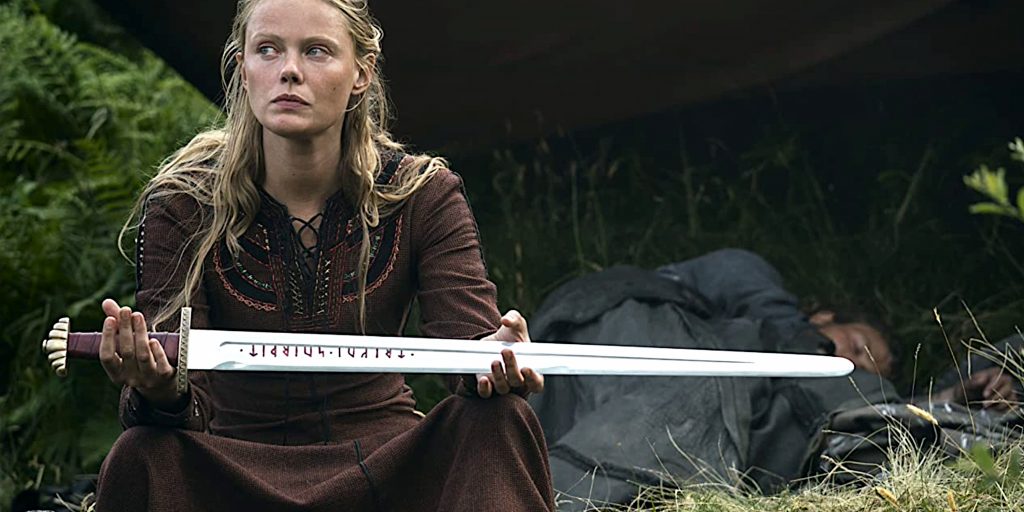
The series uses genuine people, places and political struggles, then compresses decades of history into a single connected narrative.
Leif Erikson, Freydís Eiríksdóttir and Harald Sigurdsson were real figures, but they were not historical companions. Leif probably died while Harald was still a child. Harald’s relationship with Freydís is fictional, as is much of her role as a pagan leader. Smithsonian Magazine
The programme also adjusts events so its characters can participate in them. This includes the fall of London Bridge, Canute’s conquest of England and Harald’s service in the Byzantine Empire.
That does not make the series worthless as historical drama. Several broader themes are well chosen:
- Scandinavian rulers were becoming closely involved in European dynastic politics.
- Christian conversion created political and cultural tension.
- Norse travellers moved through the Rus territories and into Byzantium.
- Scandinavian warriors served in the Varangian Guard.
- England was deeply connected to Denmark and Norway.
- The Viking world was changing rather than suddenly disappearing.
The series is strongest when presenting that transitional atmosphere. Pagan customs survive, Christianity expands, old identities become politically inconvenient, and rulers adopt whichever principle happens to support their claim.
The details should not be treated as a history lesson. The wider direction of travel is more convincing.
Religion and the End of the Viking Age
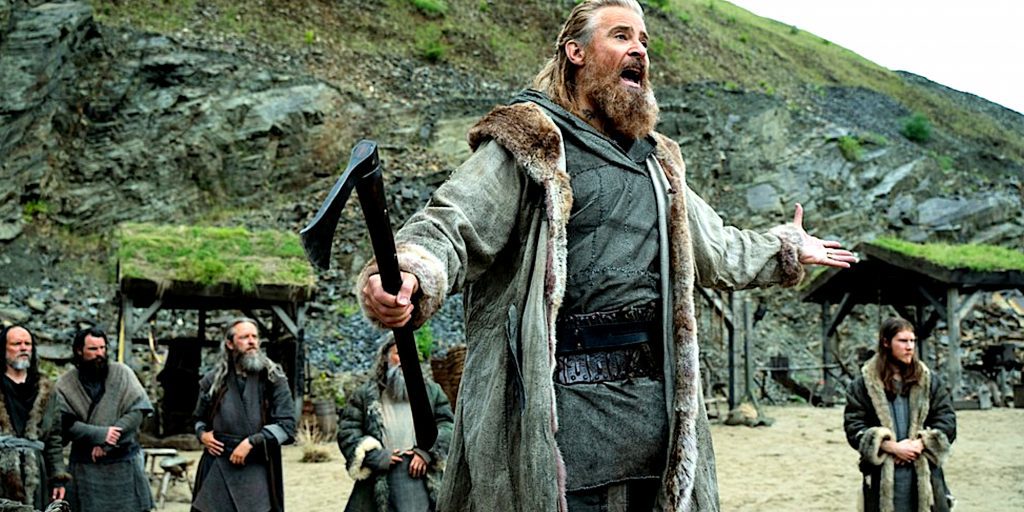
The conflict between Christianity and Norse paganism runs through all three seasons.
Christian Vikings are not presented as culturally identical to their English allies, while pagan characters do not share a single political outlook. Faith can be personal, communal or aggressively useful, depending on who is holding the sword.
Freydís represents continuity with the old gods. Olaf turns Christianity into a justification for power. Canute is more pragmatic, understanding that a kingdom containing different traditions cannot be ruled by permanent religious war.
This is one of the programme’s better choices. Conversion in Scandinavia was neither immediate nor uniform. Political ambition, trade, royal authority and personal belief all played a part. Valhalla simplifies that process, but it avoids treating it as a neat replacement of one belief system by another.
What Vikings: Valhalla Does Well
The production is consistently gorgeous. Irish filming locations provide misty forests, cold coastlines and dramatic valleys, while later journeys give the series a broader visual palette.
Its main strengths include:
- Strong performances from Frida Gustavsson and Leo Suter
- Clear and energetic battle sequences
- A broad view of Viking travel and political influence
- Accessible storytelling
- Effective costume and production design
- Interesting conflicts between pagans and Christians
- A willingness to leave England and Scandinavia behind
- Three compact seasons without an enormous mid-series collapse
Queen Emma and Earl Godwin also deserve particular credit. Laura Berlin gives Emma intelligence and authority, while David Oakes makes Godwin wonderfully difficult to read. Whenever the series returns to English court politics, everyone seems to be having a civil conversation while mentally measuring the curtains for the throne room.
Where the Series Falls Short
Historical compression is not the central problem. Drama frequently rearranges events, and accuracy alone does not guarantee good television.
The more noticeable weaknesses are structural:
- Leif, Harald and Freydís spend too much time apart.
- Some villains are thinly developed.
- Season two loses momentum between its separate storylines.
- Characters occasionally survive through obvious plot protection.
- The dialogue can sound more modern than the setting.
- The final season leaves major historical stories untold.
The show also moves so quickly that losses do not always have time to settle. A character may die, receive a meaningful look and then be overtaken by the next siege, voyage or betrayal.
Its efficiency keeps the series watchable, but emotional weight sometimes gets thrown overboard to improve sailing speed.
Is Vikings: Valhalla Worth Watching?
Yes, particularly if you enjoy historical action and can tolerate a flexible relationship with chronology.
It is more polished than profound, but that should not be mistaken for emptiness. The series has genuine interest in exploration, religious change and the way ambitious people reshape their identities to survive.
Viewers expecting a documentary will spend much of the runtime arguing with the screen. Fans looking for political schemes, sea voyages, dangerous rulers and large men swinging Dane axes should be considerably happier.
You do not need to watch Vikings first. Knowledge of the original adds context to Kattegat and the reputation of Ragnar, but Valhalla introduces its own characters and conflicts clearly.
Seven Swords Verdict
Vikings: Valhalla is a confident historical adventure built from real names, rearranged timelines and extremely photogenic violence.
It never quite reproduces the restless character drama of early Vikings. Its heroes are cleaner, its plotting more conventional and its rough edges carefully prepared for streaming audiences. Yet the series remains energetic, visually impressive and far more geographically curious than many Viking dramas.
Frida Gustavsson gives it conviction, Leo Suter supplies the charm, and Sam Corlett provides a thoughtful centre. Together, they carry a story that treats history as a map rather than a set of rails.
Seven Swords rating: 8 out of 10
Vikings: Valhalla Frequently Asked Questions
Is Vikings: Valhalla a sequel to Vikings?
Yes. It is set more than 100 years after the original series and features a new generation of characters. Ragnar Lothbrok and his sons are remembered as figures from the past.
How many seasons are there?
There are three seasons and 24 episodes. The third season is the final one.
Was Vikings: Valhalla cancelled?
The series concluded with its third season after completing Netflix’s original 24-episode order. Netflix promoted season three as the final season.
Is the series based on a true story?
It is inspired by genuine historical people and events, including Leif Erikson, Harald Hardrada, King Canute and the Viking conquest of England. Their relationships and timelines are heavily fictionalised.
Does the series show the Battle of Stamford Bridge?
No. The story ends before Harald Hardrada’s invasion of England and death at Stamford Bridge in 1066.
Where was Vikings: Valhalla filmed?
Much of the series was filmed in Ireland, including at Ashford Studios in County Wicklow. Some later material was also filmed in Croatia.
Can you watch it without seeing Vikings?
Yes. It shares the same fictional world, but its main story and characters stand independently.