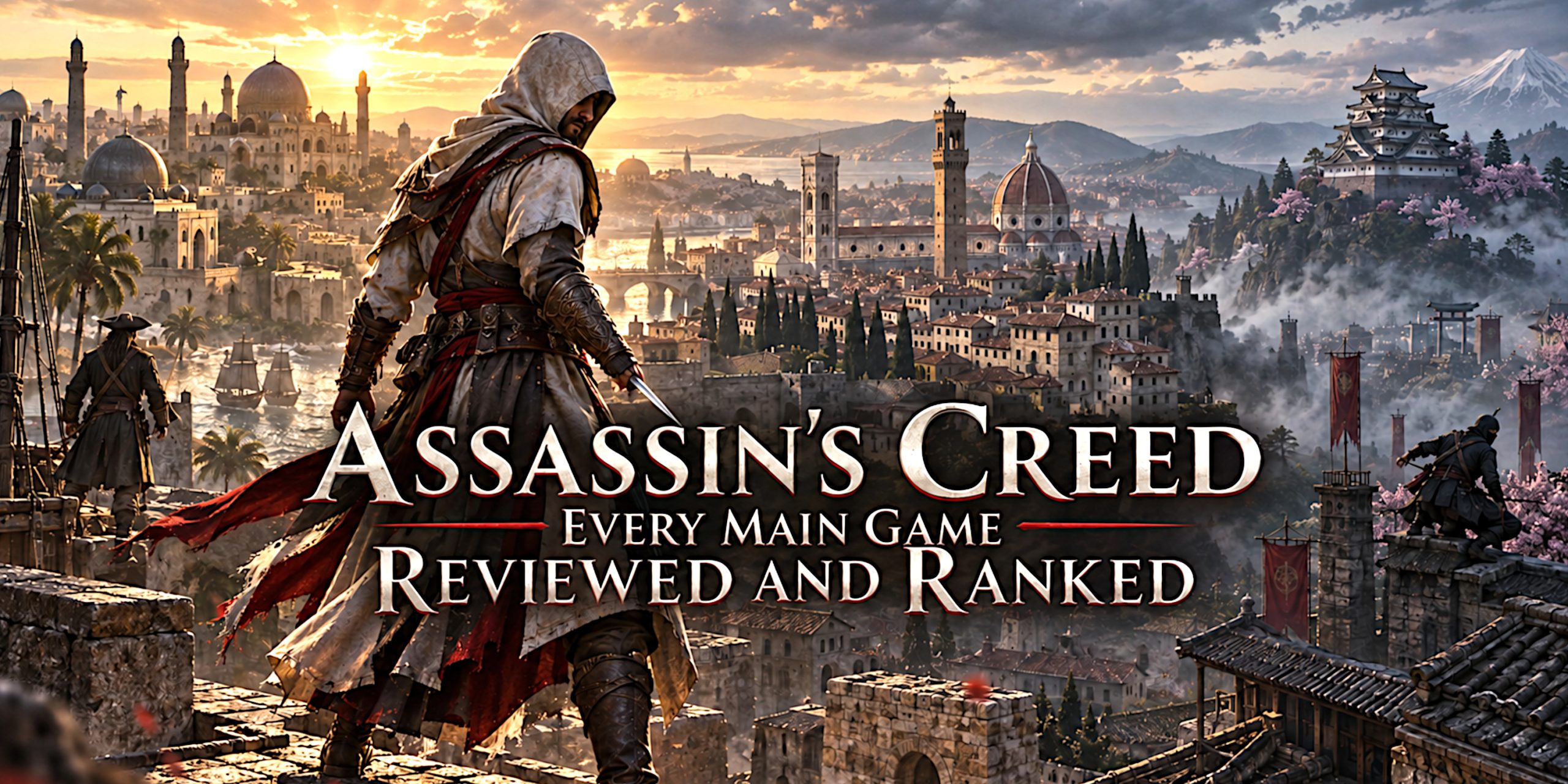
Few game series have treated human history with as much confidence, ambition and cheerful disregard for personal safety as Assassin’s Creed. Since 2007, Ubisoft has taken players from the streets of medieval Jerusalem to Renaissance Florence, revolutionary Paris, Viking England and feudal Japan.
The quality has varied. Some entries changed open-world gaming, while others arrived needing several patches and a quiet lie-down. Yet the central idea remains irresistible: explore a lost world, climb its most important building and jump from it into a suspiciously well-positioned pile of hay.
This guide reviews every main Assassin’s Creed game, explains the wider story and ranks the strongest entries in the series.
Assassin’s Creed Series at a Glance
| Game | Historical setting | Original release |
|---|---|---|
| Assassin’s Creed | Third Crusade | 2007 |
| Assassin’s Creed II | Italian Renaissance | 2009 |
| Brotherhood | Renaissance Rome | 2010 |
| Revelations | Ottoman Constantinople | 2011 |
| Assassin’s Creed III | American Revolution | 2012 |
| Black Flag | Golden Age of Piracy | 2013 |
| Rogue | Seven Years’ War | 2014 |
| Unity | French Revolution | 2014 |
| Syndicate | Victorian London | 2015 |
| Origins | Ptolemaic Egypt | 2017 |
| Odyssey | Peloponnesian War | 2018 |
| Valhalla | Viking Age England | 2020 |
| Mirage | Abbasid Baghdad | 2023 |
| Shadows | Late Sengoku Japan | 2025 |
What Is Assassin’s Creed About?
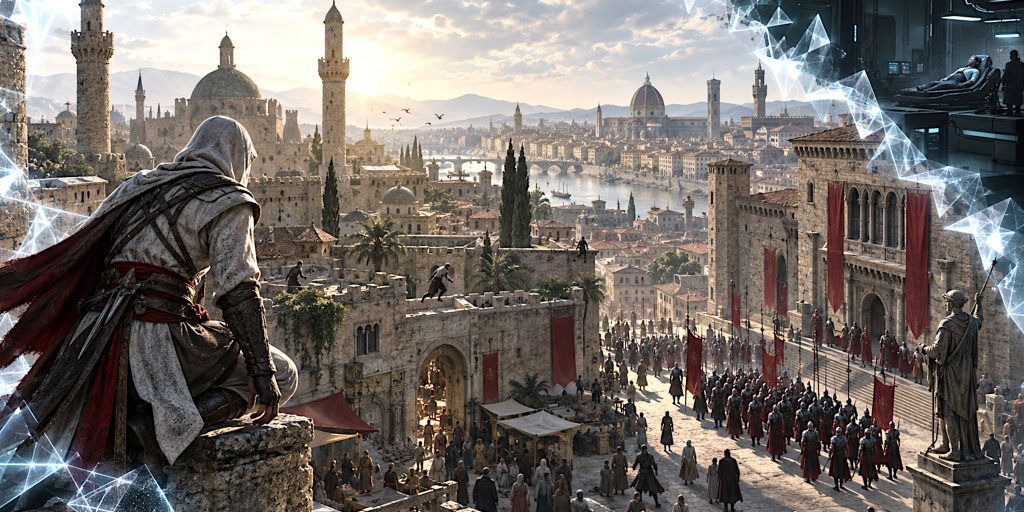
At its heart, Assassin’s Creed is built around a secret conflict between two organisations.
The Assassins defend individual freedom and resist concentrated power. The Templars believe peace can only be secured through order, discipline and control. Both factions claim to be protecting humanity, although their methods often involve an impressive amount of stabbing.
The historical adventures are accessed through the Animus, a machine capable of reconstructing genetic or recorded memories. This allows modern characters to experience the lives of people connected to the Assassins, Templars and mysterious Isu civilisation.
The Isu were an advanced species that existed before humanity became dominant. Their technology survives in objects known as Pieces of Eden. These artefacts can influence minds, project illusions or grant apparently supernatural abilities.
What begins as a relatively grounded conspiracy story gradually expands into mythology, reincarnation, artificial realities and ancient beings with names such as Minerva and Juno. Keeping track of it all eventually becomes a hobby in its own right.
Every Main Assassin’s Creed Game Reviewed
Assassin’s Creed
The original game established the series during the Third Crusade. Altaïr Ibn-La’Ahad hunts nine targets across Jerusalem, Acre and Damascus while slowly questioning the orders of his master, Al Mualim.
Its atmosphere remains excellent. The cities feel severe, dusty and politically dangerous, while Altaïr develops from an arrogant prodigy into a more thoughtful Assassin.
The problem is repetition. Investigations generally involve the same handful of activities before each assassination. Eavesdrop, pickpocket, interrogate, climb a tower and repeat. The concept was stronger than the mission design, but that concept was strong enough to build an entire franchise.
Best feature: The atmosphere and disciplined assassination structure
Main weakness: Repetitive investigations
Historical weapon highlight: Levantine-style straight sword
Assassin’s Creed II
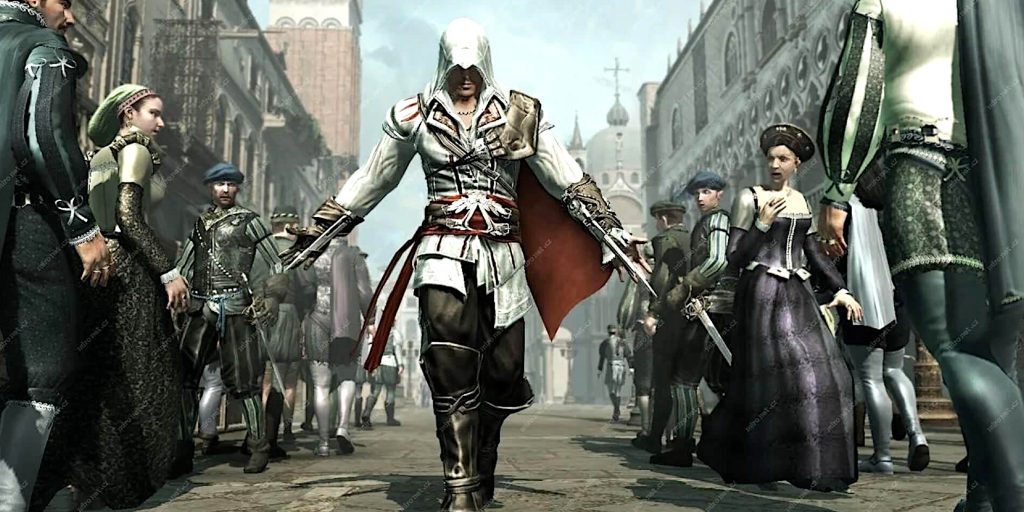
Assassin’s Creed II is where the series fully discovered its personality.
Ezio Auditore begins as a reckless young Florentine and develops into one of gaming’s most memorable protagonists. His story moves through Florence, Venice, Tuscany and the mountains of Romagna, mixing personal revenge with the wider Assassin struggle.
The sequel expands almost everything. Missions are more varied, cities are richer and the equipment system provides better reasons to explore. Leonardo da Vinci supplies Ezio with inventions, upgrades and the sort of patient friendship required when your companion keeps arriving with blood on his expensive sleeves.
The historical liberties are considerable, but the game captures the energy of Renaissance Italy beautifully.
Best feature: Ezio’s character development
Main weakness: Some awkward combat and platforming
Historical weapon highlight: Cinquedea and Renaissance side-swords
Assassin’s Creed Brotherhood
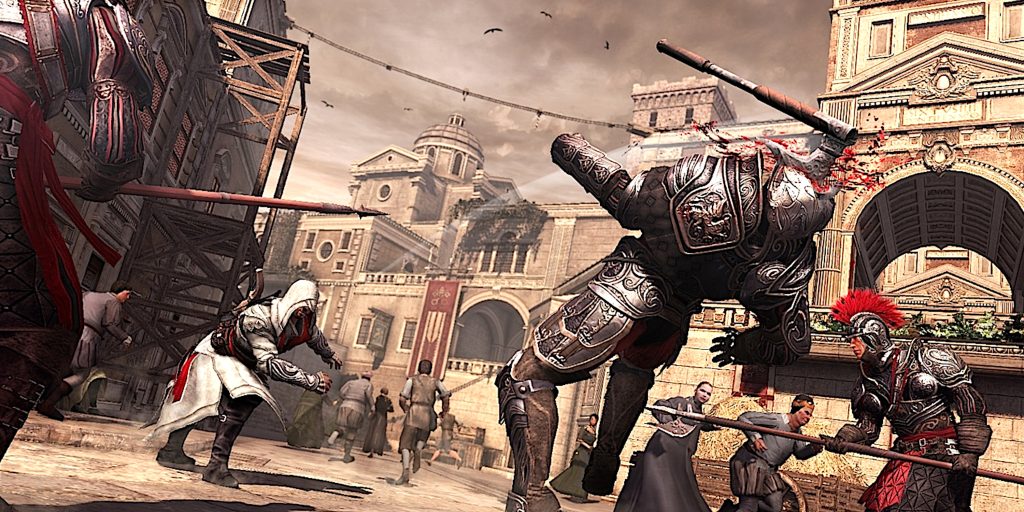
Brotherhood moves Ezio to Rome and turns him from an individual Assassin into the leader of an organisation.
Players can recruit citizens, train them and send them on assignments across Europe. Calling a group of Assassins into a guarded courtyard remains wonderfully satisfying, particularly after spending several minutes pretending to have a clever plan.
Rome is less visually varied than the locations in Assassin’s Creed II, but the city feels more interconnected. Borgia towers, businesses and faction missions give the player a convincing sense of reclaiming territory.
Best feature: Recruiting and commanding Assassins
Main weakness: A less varied setting
Historical weapon highlight: Stiletto and papal guard swords
Assassin’s Creed Revelations
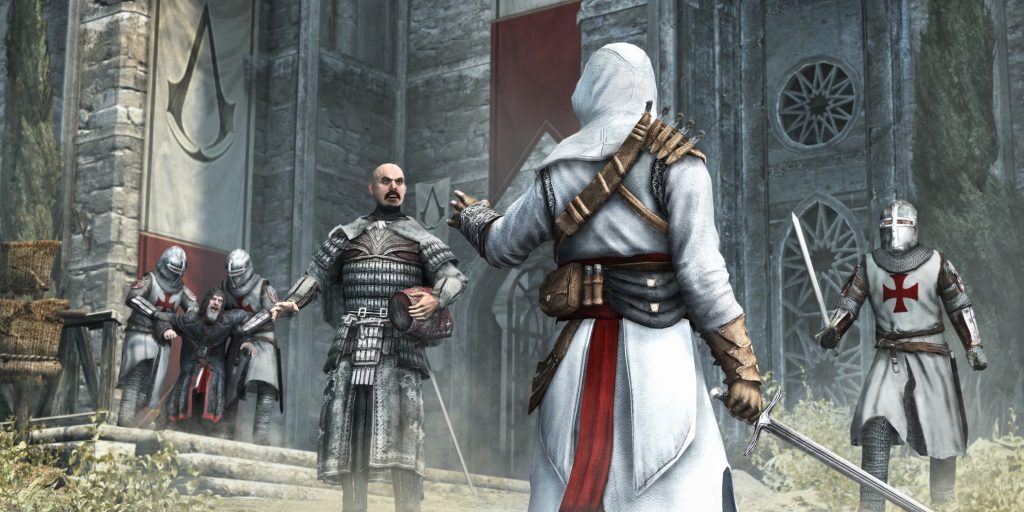
Ezio’s final game takes place in Constantinople during the early 16th century. Older and more reflective, he searches for keys connected to Altaïr and the lost library beneath Masyaf.
The story succeeds because it understands that Ezio cannot remain a youthful adventurer forever. His weariness gives the game an emotional depth rarely found in long-running action franchises.
The hookblade improves movement, while bombs introduce new tactical options. The tower-defence sequences are considerably less beloved. Even master Assassins apparently have to endure an unwanted management minigame.
Best feature: The conclusion of Ezio and Altaïr’s stories
Main weakness: Underdeveloped side systems
Historical weapon highlight: Ottoman kilij
Assassin’s Creed III
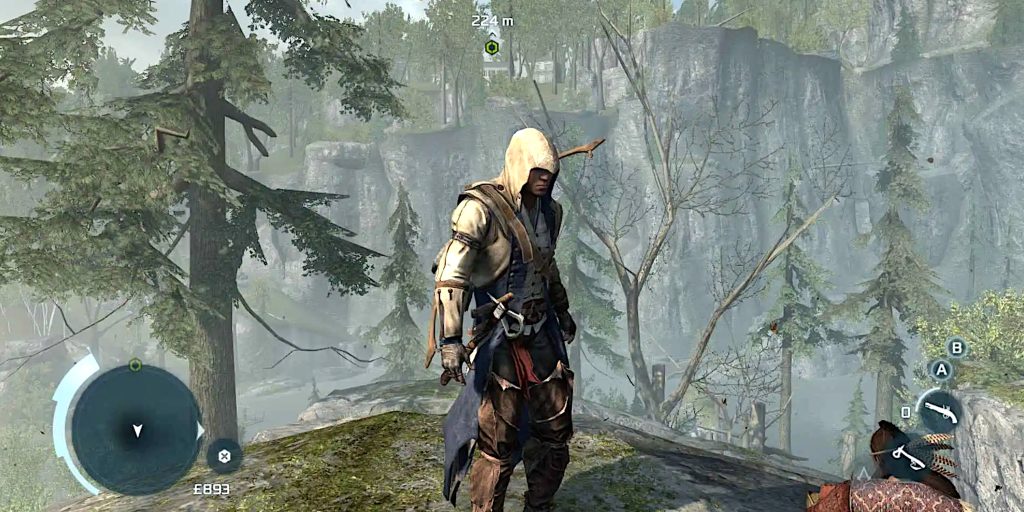
Set during the American Revolution, Assassin’s Creed III follows Ratonhnhaké:ton, better known as Connor Kenway. His position between Mohawk society and the colonial conflict gives the story a more complicated perspective than its patriotic marketing initially suggested.
Connor is serious, stubborn and often unfairly compared with Ezio. He lacks Ezio’s easy charm, but his anger makes sense within a story about dispossession, revolution and broken promises.
The frontier introduces hunting and wilderness movement, while naval missions offer an early version of the system later perfected in Black Flag. Its pacing is uneven, particularly during the long opening, but its ambitions deserve more credit than they usually receive.
Best feature: Frontier movement and brutal combat
Main weakness: Slow introduction
Historical weapon highlight: Hanger sword and tomahawk
Assassin’s Creed IV: Black Flag
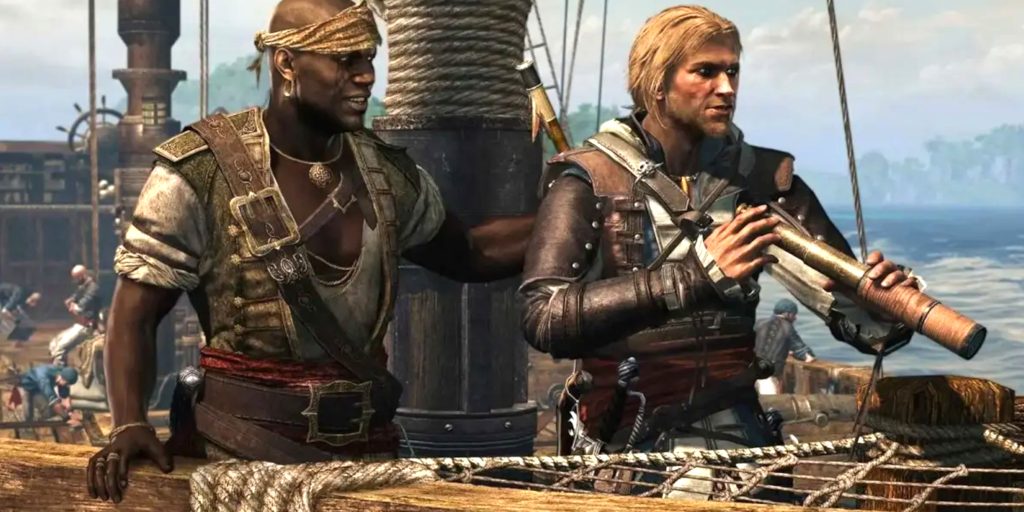
Black Flag is both an excellent Assassin’s Creed game and one of the finest pirate games ever made.
Edward Kenway begins as a privateer chasing wealth rather than ideology. His gradual confrontation with the consequences of his choices gives the story unexpected emotional weight.
Naval exploration is the main attraction. Players can sail across the Caribbean, attack forts, hunt treasure and capture ships while a crew sings sea shanties. The land-based missions are less consistent, especially when another target must be followed at walking speed for what feels like half the Atlantic crossing.
Its combination of freedom, atmosphere and character makes it one of the series’ high points.
Best feature: Naval exploration and combat
Main weakness: Excessive tailing missions
Historical weapon highlight: Naval cutlass
Assassin’s Creed Rogue
Rogue reverses the familiar structure by placing players in the boots of former Assassin Shay Cormac.
After witnessing the destructive consequences of an Assassin mission, Shay defects to the Templars. The idea is fascinating because it challenges the moral certainty surrounding both orders. Unfortunately, the relatively short story does not examine that conflict as deeply as it could.
Its naval systems build upon Black Flag, while the North Atlantic provides a colder and more hostile environment. It is compact, mechanically solid and frequently overlooked.
Best feature: A Templar perspective on the conflict
Main weakness: The story moves too quickly
Historical weapon highlight: Basket-hilted sword
Assassin’s Creed Unity
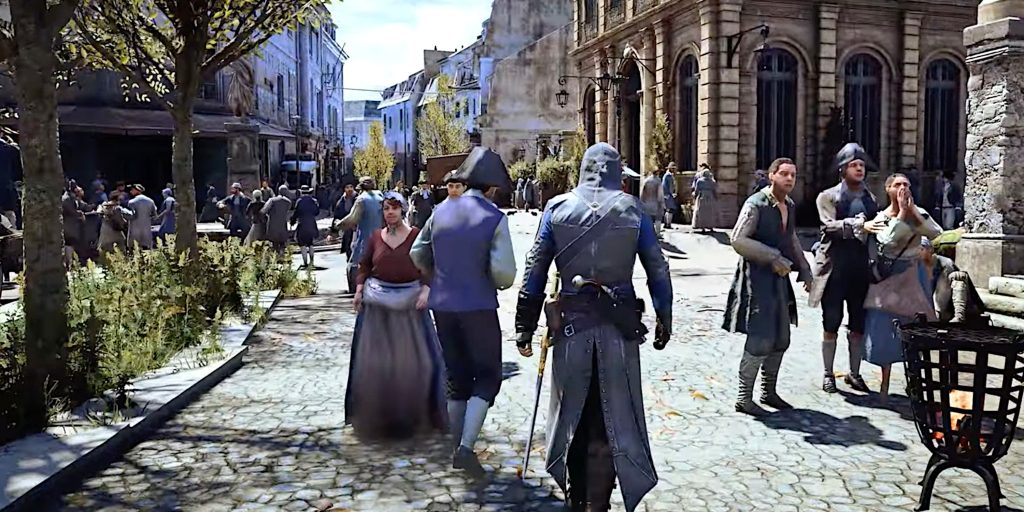
Revolutionary Paris should have been the perfect Assassin’s Creed setting. Dense crowds, political violence, monumental architecture and public executions provide more than enough material.
Visually, Unity remains remarkable. Its recreation of Notre-Dame and the crowded streets of Paris can still compete with much newer games. The redesigned parkour system also gives players greater control over ascending and descending buildings.
Its reputation was badly damaged by a troubled launch filled with technical problems. Many were repaired, revealing a far better game underneath. The main story, however, never uses the French Revolution as effectively as it should.
Best feature: Paris and its parkour routes
Main weakness: A weak connection between the plot and revolution
Historical weapon highlight: French smallsword
Assassin’s Creed Syndicate
Syndicate shifts the action to Victorian London and follows twins Jacob and Evie Frye.
Jacob is impulsive and enjoys building a street gang. Evie is more focused on stealth, investigation and Assassin objectives. Their contrasting approaches create a lighter tone, although Jacob’s habit of accidentally destabilising London becomes rather impressive.
The rope launcher makes traversal faster but reduces the importance of traditional climbing. Combat is energetic, if slightly cartoonish, and the city offers strong recreations of Westminster, Whitechapel and the Thames.
Evie remains one of the series’ most underused protagonists. A full game centred on her methods would have been very welcome.
Best feature: The contrasting Frye twins
Main weakness: Simplified traversal
Historical weapon highlight: Kukri and cane sword
Assassin’s Creed Origins
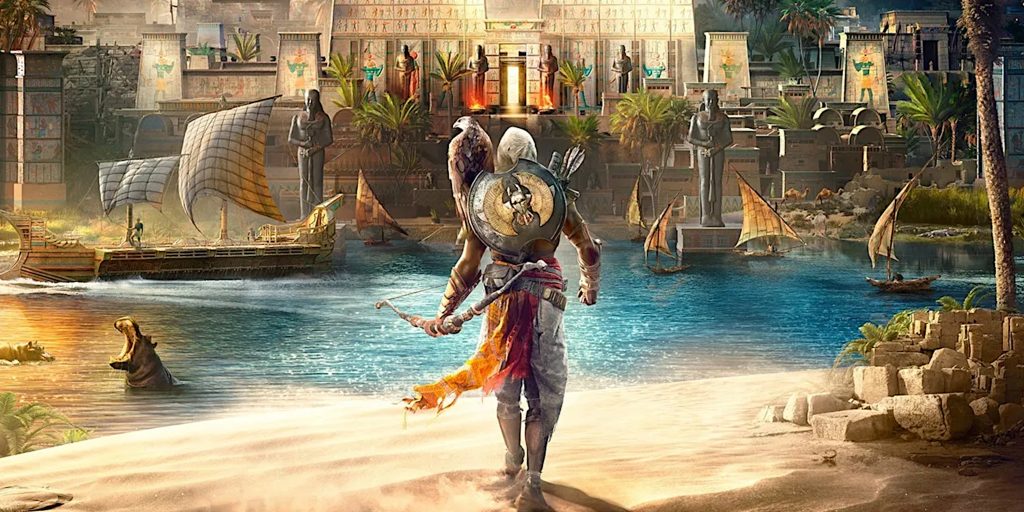
After taking a year away from annual releases, Ubisoft rebuilt the series around a much larger role-playing structure.
Origins follows Bayek of Siwa and Aya during the final years of Ptolemaic Egypt. Their personal tragedy leads towards the foundation of the Hidden Ones, the organisation that eventually becomes the Assassin Brotherhood.
Bayek is warm, dangerous and deeply human. His relationships with children, villagers and grieving families prevent the story from becoming another flat revenge tale.
The enormous world includes Alexandria, Memphis, deserts, temples and tombs. Weapon levels and damage statistics occasionally feel too game-like, but Egypt is constructed with such care that wandering away from the main quest becomes part of the appeal.
Best feature: Bayek and the Egyptian setting
Main weakness: Level-gated progression
Historical weapon highlight: Khopesh
Assassin’s Creed Odyssey
Set during the Peloponnesian War, Odyssey pushes the series much further into action RPG territory.
Players choose either Kassandra or Alexios, although Kassandra is the stronger and more expressive lead. The journey stretches across mainland Greece and the Aegean, with naval travel connecting islands, cities and battlefields.
Dialogue choices and branching quests provide freedom, but the sheer scale can become exhausting. There are only so many forts a person can clear before beginning to sympathise with the guards.
Historically, it is more interested in legendary Greece than strict reconstruction. Mythological creatures and Isu technology move the series towards outright fantasy, but the result is often spectacular.
Best feature: Exploration across the Greek world
Main weakness: Repetitive content across an oversized map
Historical weapon highlight: Xiphos and kopis
Assassin’s Creed Valhalla
Valhalla follows Eivor, a Norse warrior who establishes a settlement in ninth-century England.
The regional story arcs work well individually, presenting local conflicts involving Saxon kings, Viking armies and political alliances. Taken together, however, they create an extremely long campaign. Reaching the ending requires commitment of the kind normally associated with monastic life.
Combat is heavier than in earlier games, with shields, axes, spears and two-handed weapons creating a more physical style. Raids are entertaining, while the settlement provides a welcome sense of home.
The game’s historical world is compelling, although oversized weapons and fantasy armour often look as if they escaped from a different franchise.
Best feature: Regional stories and settlement building
Main weakness: Excessive length
Historical weapon highlight: Carolingian sword
Assassin’s Creed Mirage
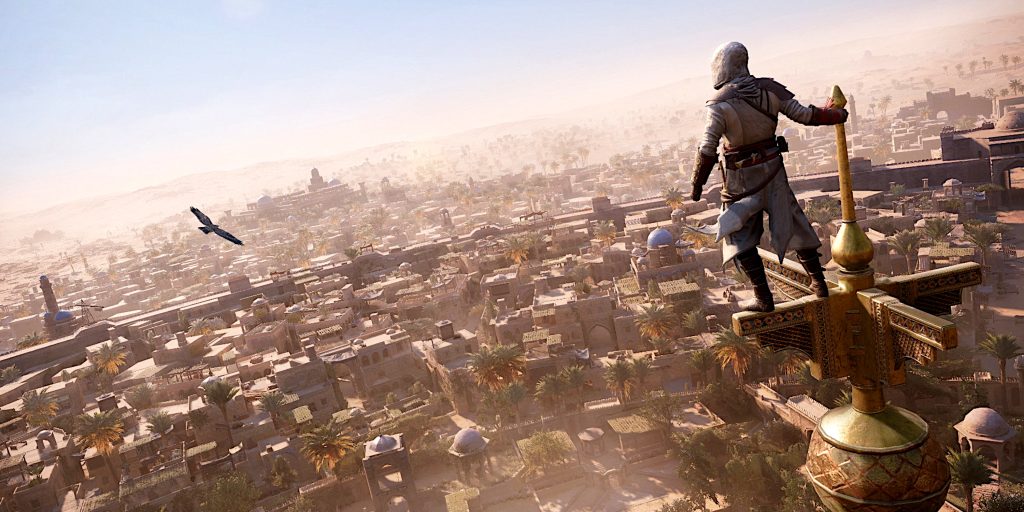
Mirage returns to a smaller map and places greater emphasis on stealth.
The story follows Basim in ninth-century Baghdad, before his appearance in Valhalla. Dense streets, rooftop routes and guarded compounds support a more traditional Assassin experience. Investigations allow players to identify targets and choose an approach rather than charging directly into another equipment check.
Combat is deliberately less dominant, encouraging the use of tools, distractions and careful movement. The result lacks the scale of the RPG trilogy, but that is largely the point. Baghdad feels like a designed city rather than an enormous landscape filled with icons.
Best feature: Focused stealth in a dense urban setting
Main weakness: Limited character development
Historical weapon highlight: Abbasid-era straight sword
Assassin’s Creed Shadows
After years of requests for a Japanese setting, Assassin’s Creed Shadows takes the series to the late Sengoku period.
Its two protagonists support very different approaches. Naoe is a shinobi who relies on stealth, parkour, darkness and the hidden blade. Yasuke is an armoured warrior built for direct combat with weapons including the katana, kanabo, bow and naginata.
Changing seasons and reactive lighting give infiltration more depth. Naoe feels closer to the classic Assassin fantasy, while Yasuke allows players to stop pretending they were going to remain undetected.
The contrast is smart, although switching between two heavily specialised heroes can make the game feel divided between two design traditions. At its best, Shadows brings stealth and open combat together without forcing either protagonist to become a copy of the other.
Best feature: Distinct shinobi and samurai playstyles
Main weakness: The two approaches do not always connect smoothly
Historical weapon highlight: Katana
The Best Assassin’s Creed Games Ranked
| Rank | Game | Why it stands out |
|---|---|---|
| 1 | Assassin’s Creed II | The strongest balance of character, history and adventure |
| 2 | Black Flag | Exceptional exploration, naval combat and atmosphere |
| 3 | Origins | A superb protagonist and transformative Egyptian setting |
| 4 | Brotherhood | The classic formula at its most confident |
| 5 | Odyssey | Huge, colourful and unusually generous with player choice |
| 6 | Shadows | Strong stealth and combat built around two distinct heroes |
| 7 | Unity | The series’ finest city, once its launch problems were repaired |
| 8 | Revelations | An affecting conclusion to Ezio and Altaïr’s stories |
| 9 | Mirage | A welcome return to focused urban assassination |
| 10 | Valhalla | Rich historical atmosphere burdened by excessive scale |
| 11 | Assassin’s Creed III | Ambitious, uneven and more thoughtful than its reputation |
| 12 | Syndicate | Enjoyable London setting with an underused lead in Evie |
| 13 | Rogue | A clever reversal that needed more time |
| 14 | Assassin’s Creed | Historically important, atmospheric and deeply repetitive |
This ranking rewards overall design, historical atmosphere, story and how well each game fulfils its own ambitions. Someone primarily interested in naval combat could reasonably place Black Flag first. A player who wants an enormous RPG may prefer Odyssey. Anyone who misses social stealth will probably treat Mirage with the relief normally reserved for finding the correct platform at a large railway station.
How the Combat Changed
The series can be divided into three broad gameplay eras.
| Era | Games | Main approach |
|---|---|---|
| Classic | AC to Syndicate | Parkour, counters and social stealth |
| RPG | Origins to Valhalla | Levels, loot and ability-driven combat |
| Hybrid | Mirage and Shadows | Renewed stealth with selective RPG systems |
Early combat relied heavily on counters. Once mastered, an Assassin could stand in the middle of a small army and wait for each soldier to attack politely in turn.
Unity attempted to make combat more dangerous through timed parries and tougher enemies. Origins then introduced hitboxes, levels and freely controlled attacks. Odyssey expanded the ability system, while Valhalla added heavier weapons and dual-wielding.
Mirage reduced the player’s strength to make stealth important again. Shadows splits these philosophies between Naoe and Yasuke, making stealth and direct combat separate but equally valid specialities.
The Most Memorable Blades in Assassin’s Creed
The Hidden Blade
The concealed wrist blade is the symbol of the Brotherhood. It allows an Assassin to approach a target in public, strike quickly and disappear into the crowd.
Its design changes throughout the series. Altaïr’s Brotherhood demanded the removal of a finger, while later versions were modified to avoid that rather severe membership requirement.
Altaïr’s Sword
Altaïr’s sword appears as a high-level weapon in several Ezio-era games. Its shape is broadly inspired by medieval European and Levantine straight swords, although its ornate design belongs firmly to fiction.
It represents the connection between Altaïr and Ezio, two Assassins separated by centuries but joined through the records at Masyaf.
The Sword of Eden
The Sword of Eden is an Isu artefact rather than a conventional historical weapon. Different versions or interpretations appear across the wider series.
In Unity, the sword is associated with Jacques de Molay and later passes into the hands of the Templar François-Thomas Germain. Its supernatural abilities place it somewhere between advanced technology and a weaponised light show.
Bayek’s Khopesh
Curved sickle-shaped swords appear frequently in Origins. Historical khopesh weapons belonged primarily to much earlier periods of Egyptian history, making their prominence in the first century BCE questionable.
They look unmistakably Egyptian to a modern audience, which rather explains the decision. Visual recognition won the argument against chronology.
Excalibur
Eivor can obtain Excalibur in Valhalla after completing a lengthy series of challenges. The weapon connects Arthurian tradition with Isu technology, following the franchise’s habit of explaining legends through ancient artefacts.
The historical Arthur, if one existed, would have lived centuries before the classic medieval stories and certainly would not have carried the elaborate fantasy greatsword shown in the game.
How Historically Accurate Is Assassin’s Creed?
The series is best understood as historical fiction built around carefully researched environments.
Its cities, clothing, architecture and political conflicts are often based on extensive consultation and reconstruction. The games can give players a useful sense of how places related to one another and how historical societies presented power.
They should not be treated as documentaries. Timelines are compressed, fictional Assassins are inserted into major events and famous figures are made accessible to the protagonist with suspicious regularity.
The most convincing historical elements tend to include:
- Urban architecture and major monuments
- Clothing silhouettes and regional materials
- Political factions and broad conflicts
- Contemporary trades and social environments
- Reconstructions of damaged or lost buildings
The least reliable elements often include:
- Oversized or incorrectly dated weapons
- Simplified political motivations
- Compressed journeys and historical timelines
- Modern attitudes placed into earlier societies
- Secret organisations influencing almost every major event
The Discovery Tour modes developed for Origins, Odyssey and Valhalla separate educational exploration from combat. These provide additional historical context, although they still use reconstructed worlds shaped by the needs of a game.
Which Assassin’s Creed Game Should You Play First?
The best starting point depends on what you want from the series.
| If you want… | Start with… |
|---|---|
| The classic Assassin experience | Assassin’s Creed II |
| Pirates and naval battles | Black Flag |
| A historical action RPG | Origins |
| A huge world with player choice | Odyssey |
| Focused stealth | Mirage |
| Feudal Japan | Shadows |
| The full modern story | Assassin’s Creed |
New players do not need to complete every release in order. The modern storyline connects the games, but each historical protagonist usually has a story that can be understood independently.
For the cleanest introduction, I would begin with Assassin’s Creed II. It establishes the Brotherhood, Templars, Animus and Pieces of Eden without immediately asking the player to absorb several encyclopaedias of Isu family drama.
Is the Assassin’s Creed Series Still Worth Playing?
Yes, although choosing the right entry matters.
The series has survived because its basic promise remains distinctive. Other games offer stealth, role-playing or open worlds, but few allow players to walk through detailed interpretations of Alexandria, Constantinople, revolutionary Paris or medieval Baghdad.
Its greatest weakness is excess. Maps become cluttered, stories stretch beyond their natural endings and equipment systems occasionally turn famous warriors into collectors of slightly improved trousers.
Yet when Assassin’s Creed concentrates on a strong protagonist within a carefully constructed historical setting, very few franchises can match it. Assassin’s Creed II, Black Flag and Origins represent the series at its best, while Mirage and Shadows show two possible directions for its future.
The Brotherhood may operate in darkness, but Ubisoft has never been especially shy about making more of them.
Further Reading
- Assassin’s Creed franchise overview from Ubisoft
- Official guide to the Assassin’s Creed games in release order
- Assassin’s Creed Shadows official game page
- How Ubisoft developed the early Assassin’s Creed formula