House of the Dragon Season 3 takes HBO’s adaptation of George R. R. Martin’s Fire & Blood into much more adventurous territory.
The broad outline of the Dance of the Dragons remains recognisable. The Battle of the Gullet happens. Jacaerys meets his fate. Criston Cole reaches the Butcher’s Ball. The dragonseeds become increasingly dangerous political players. Westeros continues its impressive collective effort to make every possible bad decision.
But the details have changed considerably.
Season 3 rewrites character motivations, moves major players into different events, expands some relatively minor book figures and substantially alters others. Rhaena’s storyline effectively replaces Nettles, Aegon II follows a different route after King’s Landing, Helaena’s fate receives a much clearer explanation, and the programme makes major alterations around Tumbleton.
Some changes are sensible adaptations of a difficult book. Others fundamentally alter how we understand the Dance.
Here are the biggest differences between House of the Dragon Season 3 and Fire & Blood.
Major spoilers for House of the Dragon Season 3 and Fire & Blood follow.
House of the Dragon Season 3 vs Fire & Blood at a Glance
| Character or Event | Fire & Blood | House of the Dragon Season 3 |
|---|---|---|
| Rhaenyra | Her motives are filtered through hostile and contradictory historians | Her belief in prophecy and Targaryen destiny becomes increasingly explicit |
| Jacaerys | Dies during the Battle of the Gullet | His death is retained, but his role around the battle is expanded |
| Rhaena | Does not claim Sheepstealer | Takes over the Sheepstealer storyline associated with Nettles |
| Nettles | Claims Sheepstealer and becomes closely associated with Daemon | Effectively removed from this part of the story |
| Aegon II | Eventually operates secretly from Dragonstone | His post-King’s Landing journey is substantially rewritten |
| Helaena | Her death is surrounded by competing explanations | The show provides a much more definite chain of events leading to her death |
| Criston Cole | Killed by archers after being refused single combat | Black Aly becomes directly involved in his death |
| Hugh Hammer | Becomes one of the infamous Two Betrayers | His path towards betrayal is significantly altered |
| Ulf White | Betrays Rhaenyra at Tumbleton | His betrayal remains more recognisable |
| Daeron | Clearly identified as Viserys and Alicent’s son | His identity becomes part of a new mystery storyline |
| Sharako Lohar | Survives the Battle of the Gullet | Killed during the television version |
| Prophecy | Largely irrelevant to the political causes of the Dance | Increasingly central to Rhaenyra’s understanding of her rule |
The pattern is pretty clear.
Fire & Blood gives us history.
House of the Dragon wants motives.
First, Fire & Blood Is Not a Conventional Novel
Comparing House of the Dragon with its source material is slightly more complicated than comparing Game of Thrones with A Song of Ice and Fire.
Fire & Blood is written as an in-universe historical chronicle.
We do not sit inside Rhaenyra’s head. We do not hear Daemon’s internal monologue. We do not know exactly what Alicent said behind closed doors.
Instead, Martin gives us historians attempting to reconstruct events from incomplete and frequently contradictory sources.
Grand Maester Munkun says one thing. Septon Eustace says another. Mushroom usually appears shortly afterwards with an explanation involving significantly fewer clothes.
This gives HBO considerable freedom.
The television version can choose one account, combine several accounts or decide that every surviving historian was wrong.
Season 3 uses that freedom aggressively.
Rhaenyra’s Belief in Prophecy Is a Major TV Invention
Rhaenyra’s Season 3 development is one of the most important departures from Fire & Blood.
Book Rhaenyra certainly believes she is the rightful queen. She has been named Viserys’s heir, sworn to by the lords of Westeros and later crowned by her supporters.
The television Rhaenyra increasingly believes something bigger.
Her claim becomes connected to Aegon the Conqueror’s dream, the Prince That Was Promised and the idea that House Targaryen has a special responsibility for the survival of Westeros.
That changes her enormously.
Political legitimacy starts becoming religious conviction.
It also helps explain why the television version becomes increasingly comfortable with Targaryen exceptionalism. If Rhaenyra believes her family is genuinely necessary for humanity’s survival, opposition stops looking like ordinary political resistance.
It starts looking like opposition to destiny.
That is dangerous territory.
And frankly, giving people dragons and then convincing them that history has personally chosen them feels like a design flaw.
Rhaenyra’s Darker Turn Is More Explicit
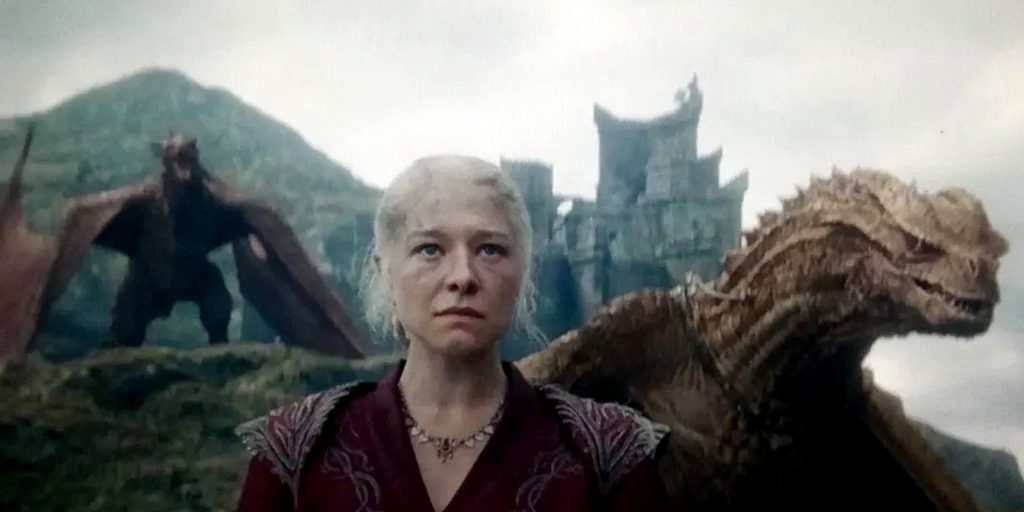
Fire & Blood records increasingly disturbing stories about Rhaenyra as the war progresses.
The problem is that we rarely know precisely what she believed or why she made particular decisions.
Some accounts are also obviously hostile.
The television series cannot hide behind historical uncertainty in the same way. It has to show us Rhaenyra making choices.
Season 3 therefore constructs a clearer psychological progression.
She begins moving from a woman defending an inherited claim towards a ruler increasingly convinced that extraordinary measures are justified by extraordinary circumstances.
That distinction matters.
Rather than suddenly transforming Rhaenyra into a completely different character, the series is building a version of her who can rationalise increasingly severe actions.
For me, that works better.
The frightening version of Rhaenyra is not someone who randomly loses her mind. It is someone who remains convinced she is right.
Jacaerys Still Dies at the Gullet, but His Role Is Expanded
One major book event survives.
Jacaerys Velaryon dies during the Battle of the Gullet.
In Fire & Blood, Jace takes part in the fighting when the Triarchy attacks the Velaryon fleet and the forces around Dragonstone.
The television adaptation preserves his fate while giving considerably more emotional weight to everything surrounding it.
His relationship with Rhaenyra, his insecurities about legitimacy and his concerns about the dragonseeds have all been developed much more thoroughly than they are in Martin’s historical account.
That makes his death hit differently.
Book Jace is an important political and military casualty.
TV Jace is someone we have watched gradually realise that his family’s entire political system contains an awkward contradiction.
The Blacks insist blood matters enormously when defending Rhaenyra’s dynasty.
Then they discover they need more dragonriders and suddenly become remarkably flexible about ancestry.
Jace notices.
Understandably.
The Battle of the Gullet Is Expanded for Television
The Battle of the Gullet is already enormous in Fire & Blood, but HBO turns it into a more character-focused set piece.
The essential strategic situation remains similar.
The Triarchy attacks the Velaryon naval position, threatening Rhaenyra’s control of the waters around Dragonstone and the approaches to King’s Landing.
But the television series places familiar characters much more directly inside the action.
Baela receives a larger combat role, while Corlys and Alyn’s difficult relationship gives the naval side of the battle greater emotional weight.
Sharako Lohar also receives a different fate.
In Fire & Blood, Lohar survives the Gullet.
The television adaptation kills Lohar during the battle.
It is exactly the sort of change television tends to make. A historical commander disappearing back into the wider war is perfectly acceptable in a chronicle.
A television villain standing in the middle of a giant season-opening battle is practically wearing a sign saying, “Something dramatic should happen to me.”
Rhaena Replaces Nettles as Sheepstealer’s Rider
This is one of the biggest changes in the entire adaptation.
In Fire & Blood, Sheepstealer is claimed by Nettles.
Nettles is a young woman of uncertain ancestry who gradually earns the wild dragon’s trust by repeatedly bringing it sheep.
I love this detail.
The Targaryens have centuries of blood magic, ancient Valyrian traditions and theories about dragonlord genetics.
Nettles turns up with lunch.
Her existence raises a fascinating question: does someone actually need Valyrian blood to ride a dragon?
The television series takes the Sheepstealer storyline in another direction.
Rhaena Targaryen assumes the role associated with Nettles.
That is not a small character combination.
Rhaena is unquestionably Targaryen. Nettles’ uncertain ancestry is precisely what makes her interesting.
Removing her therefore changes one of the most intriguing questions surrounding dragonriding.
Changing Nettles Could Completely Alter Daemon’s Story

Nettles matters for another reason.
In Fire & Blood, Daemon and Nettles develop an extremely close relationship while hunting Aemond and Vhagar.
What exactly that relationship represents is deliberately unclear.
Some sources suggest they are lovers.
Others allow for something more paternal.
Martin never gives us a clean answer.
Eventually, Rhaenyra becomes suspicious of Nettles and orders her death. Daemon refuses to carry out the command and helps Nettles escape.
That feeds directly into the final stage of his story.
Replacing Nettles with Rhaena creates an entirely different dynamic.
Rhaena is Daemon’s daughter.
The romantic ambiguity obviously disappears, while any confrontation between Daemon and Rhaenyra over Rhaena would carry a completely different emotional meaning.
This is one change that could ripple right through the ending of Daemon’s arc.
Aegon II’s Journey Is Heavily Rewritten
Aegon’s Season 3 storyline moves substantially away from Fire & Blood.
The book eventually places the wounded king secretly on Dragonstone, where his survival becomes enormously important.
The television series gives him a much more elaborate journey.
That allows the writers to spend more time with Aegon after his catastrophic injuries and political collapse.
It also reflects one of the show’s biggest changes from the source.
Book Aegon is often seen from the outside.
TV Aegon has become one of the programme’s most psychologically exposed characters.
He is still cruel.
He is still selfish.
He has done genuinely horrible things.
But the series is interested in what happens when a young king who desperately wanted validation discovers that his family sees him as expendable.
It is messy, uncomfortable and much more interesting than turning him into Team Green’s designated evil bloke.
Sunfyre’s Return Becomes Much More Emotional
Sunfyre’s survival is enormously important in Fire & Blood.
The television series makes the eventual reunion between Aegon and his dragon considerably more personal.
Both have been horribly injured.
Both have survived circumstances that should probably have killed them.
Both are shadows of the magnificent figures they were earlier in the war.
The visual parallel is hardly subtle, but it works.
Aegon and Sunfyre are effectively broken king and broken dragon.
Their relationship also gives Aegon something approaching genuine affection in a story where most of his human relationships are based on politics, resentment or mutual disappointment.
Dragons remain terrible for urban planning, but surprisingly useful for character development.
Helaena’s Death Is Given a Clearer Cause
Helaena’s fate is another substantial adaptation change.
In Fire & Blood, she dies after falling from a window in Maegor’s Holdfast.
But why?
That is less certain.
Different explanations circulate around her death, and the historical structure deliberately prevents us from knowing exactly what happened.
Season 3 removes much of that uncertainty.
The television series constructs a much clearer sequence leading to Helaena’s death, connecting her psychological state, captivity, prophetic experiences and treatment by those around her.
That changes the meaning of the event.
Book Helaena becomes another mystery swallowed by the historical record.
TV Helaena gets something much closer to a complete tragedy.
Helaena Is Far More Supernatural Than Her Book Counterpart
This difference began before Season 3 but becomes increasingly important.
The television Helaena is a dreamer.
Her strange statements repeatedly anticipate future events, and Season 3 develops her relationship with prophecy even further.
That is not how Fire & Blood presents her.
Book Helaena is beloved by ordinary people and devastated by personal tragedy, but she is not developed as this eerie prophetic figure.
I think this is one of HBO’s better inventions.
There was very little reason to keep Helaena as thinly characterised as she is in the historical account.
Giving her prophetic abilities also creates an interesting contrast with Rhaenyra.
Rhaenyra desperately wants prophecy to give her life meaning.
Helaena actually experiences prophecy and mostly seems to find the whole business exhausting.
Fair enough.
Removing Maelor Has Now Changed the Story
The absence of Maelor Targaryen has been hanging over the adaptation for several seasons.
In Fire & Blood, Aegon and Helaena have three children:
Jaehaerys, Jaehaera and Maelor.
The television series removed Maelor.
That has major consequences.
In the book, Maelor becomes central to the horrific events at Bitterbridge. His death also contributes to the chain of tragedy surrounding Helaena and the collapse of order in King’s Landing.
Without Maelor, those events cannot happen in the same way.
Season 3 therefore confirms that his removal was never merely a convenient reduction in the number of royal children.
It changes cause and effect throughout the later Dance.
This is adaptation butterfly effect in its purest form.
Remove one toddler.
Rewrite half a civil war.
Criston Cole’s Death Is Changed
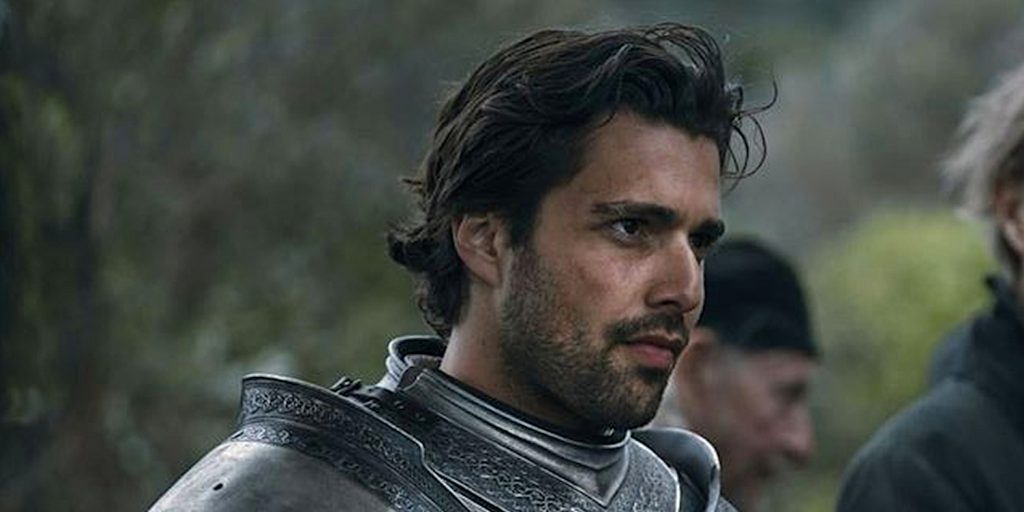
Criston Cole’s death is one of the most memorable moments in Fire & Blood.
His army is trapped near the Butcher’s Ball.
Cole attempts to negotiate and ultimately offers himself in single combat in an effort to save his men.
His enemies refuse.
They are not interested in giving the famous knight an honourable warrior’s ending.
Archers kill him instead.
The television version retains the fundamental idea but changes the execution.
Alysanne “Black Aly” Blackwood becomes directly involved in Cole’s death, personally delivering the arrows that kill him.
It is a more individualised ending.
The theme remains beautifully cruel.
Criston Cole has spent much of his life constructing an identity around knighthood, honour and martial prowess.
When death arrives, nobody agrees to participate in the heroic final duel he probably imagined.
War does not care about his character arc.
Daeron Targaryen Gets an Entirely New Mystery
Daeron is much simpler in Fire & Blood.
He is the youngest son of Viserys I and Alicent Hightower and has been sent to Oldtown, where he serves as a cupbearer and squire.
He later emerges as an important Green dragonrider on Tessarion.
The television adaptation makes his introduction considerably more complicated.
Season 3 turns Daeron’s identity into part of a mystery involving competing claims and uncertainty surrounding who the real prince actually is.
That storyline is an invention of the television series.
It gives Daeron a much more dramatic entrance, but it also delays something Fire & Blood treats as straightforward fact.
Book readers know who Daeron is.
Television viewers are asked to question it.
Tumbleton Is Significantly Different
The First Battle of Tumbleton is one of the crucial turning points in Fire & Blood.
It is where Hugh Hammer and Ulf White earn their infamous nickname.
The Two Betrayers.
Both dragonseeds abandon Rhaenyra’s cause and join the Greens.
Their dragons, Vermithor and Silverwing, dramatically shift the balance of power.
Season 3 changes that dynamic.
Ulf’s movement towards betrayal remains relatively recognisable.
Hugh’s story is much more complicated.
The television series has spent far more time establishing Hugh as an ordinary man shaped by poverty, family tragedy and the consequences of elite warfare.
That makes simply flipping him into a villain much harder.
Season 3 therefore treats Hugh’s position differently from the clean double betrayal recorded in Fire & Blood.
This is a substantial change because Hugh becomes extremely important after Tumbleton.
And when a man riding Vermithor starts developing political ambitions, everyone should probably stop whatever meeting they are in and pay attention.
Hugh Hammer Is Almost a Different Character
Book Hugh is not exactly overflowing with sympathetic characterisation.
He becomes enormously ambitious after gaining control of Vermithor and eventually begins considering whether he should be king himself.
The television adaptation gives him much more groundwork.
We know his family.
We understand his economic circumstances.
We see the cost of the war from his perspective.
His decision to claim a dragon is therefore rooted in an established life rather than simply appearing as another colourful episode from a history book.
That will make whatever the series eventually does with Hugh much more complicated.
If he becomes the arrogant would-be king readers know, the show has to explain how he gets there.
That is much more interesting than simply announcing that dragon ownership has gone to his head.
Although, to be fair, owning Vermithor probably does terrible things to anyone’s humility.
Ulf White Is Also More Developed
Ulf receives similar treatment.
In Fire & Blood, Hugh and Ulf are remembered largely through their eventual betrayal and ambition.
The television series gives Ulf an actual personality before handing him Silverwing.
Unfortunately for almost everyone involved, that personality is Ulf.
His increasing arrogance makes his eventual disloyalty easier to understand.
The show is essentially asking what happens when ordinary men are suddenly given weapons powerful enough to challenge kings.
The answer appears to be:
Nothing sensible.
Alicent Remains Much More Important Than in Fire & Blood
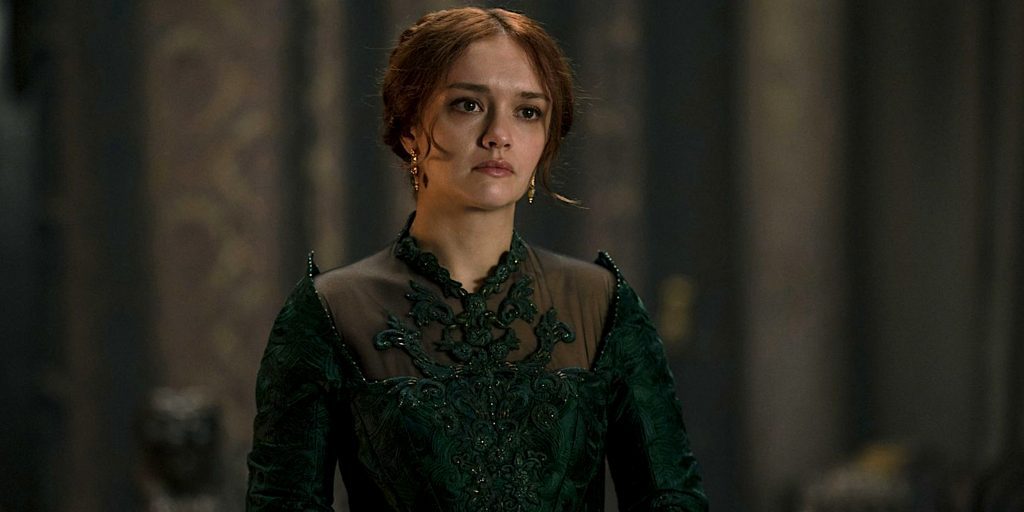
Alicent’s expanded role is not unique to Season 3, but it continues to affect almost every major adaptation decision.
As the Dance progresses in Fire & Blood, military commanders, dragonriders and younger political figures increasingly dominate events.
Alicent remains important, but she is no longer one of the principal engines of the war.
The television series cannot easily do that.
House of the Dragon was built around Rhaenyra and Alicent.
Their friendship, rivalry, resentment and strange inability to completely detach themselves from one another form the emotional foundation of the show.
Season 3 therefore continues finding ways to keep Alicent central.
Sometimes this produces genuinely strong character material.
Sometimes I wonder how many secret conversations two people can have during a continent-wide civil war before somebody improves palace security.
Daemon Is Less Mysterious Than Book Daemon
Daemon remains one of the hardest characters to interpret in Fire & Blood.
His motives are constantly debated.
Did he genuinely support Rhaenyra?
Did he still desire the throne?
What exactly happened between him and Nettles?
Did he know he was going to die when he faced Aemond?
The book refuses to provide definitive answers.
The television series increasingly does.
Daemon’s experiences at Harrenhal already forced him to confront his ambitions, guilt and relationship with Viserys.
Season 3 continues placing his emotional state directly in front of the audience.
That makes him easier to understand.
It also removes some of his historical mystique.
Book Daemon feels like a man who disappeared behind his own legend.
TV Daemon is somebody whose nightmares we have literally watched.
The Winter Wolves Receive More Personality
The Winter Wolves are one of those Fire & Blood ideas that immediately sound as though somebody should make a spin-off about them.
They are older northern warriors who march south to support Rhaenyra.
Many do so knowing they are unlikely to return.
Roderick Dustin, better known as Roddy the Ruin, becomes one of their most memorable commanders.
The television series expands these characters considerably.
Rather than appearing primarily as names attached to battles, they become actual personalities with motives, humour and attitudes towards death.
It is exactly the sort of expansion the adaptation needs.
Martin provides the history.
HBO gets to provide the bloke cheerfully explaining why dying in a southern civil war sounds like an excellent retirement plan.
The Show Makes the War More Personal
This is probably the most important overall difference.
Fire & Blood is fascinated by consequences.
Cities fall.
Armies disappear.
Dragons die.
Lords switch sides.
Children become political bargaining chips.
The television adaptation is more interested in motivation.
Why does Hugh betray Rhaenyra?
Why does Rhaenyra become increasingly authoritarian?
What does Aegon feel after losing almost everything?
What happens to Rhaena when she finally acquires the dragon she has spent her life wanting?
These questions often have no definitive answers in Martin’s book.
Season 3 invents them.
Which Season 3 Changes Work Best?
Helaena’s expanded characterisation remains one of the strongest changes.
She feels like an actual person rather than a tragic name in a royal genealogy.
Aegon’s development also works surprisingly well. The series has managed to make him more understandable without pretending he is secretly a lovely misunderstood chap.
That is a difficult balance.
Expanding Hugh and Ulf is equally sensible. Their later importance means viewers need to understand who they are before their decisions start reshaping the war.
Rhaenyra’s growing belief in prophecy is more divisive.
It provides a coherent explanation for her increasing certainty, but it also shifts the Dance away from pure dynastic politics and towards the supernatural mythology connecting the series to Game of Thrones.
I slightly prefer the political version.
People starting catastrophic wars because they are frightened, ambitious and convinced they deserve power feels horribly believable already.
No magical dream required.
Which Changes Are the Riskiest?
Replacing Nettles with Rhaena remains the biggest gamble.
Nettles is important because she challenges assumptions about dragons, bloodlines and Targaryen exceptionalism.
Rhaena cannot perform quite the same function because she is already a Targaryen.
The change also fundamentally alters Daemon’s later storyline.
Maelor’s removal creates another structural problem because several later events depend upon him.
And Tumbleton is potentially enormous.
Changing Hugh’s betrayal may improve his character arc, but Hugh Hammer becomes one of the most dangerous men in Westeros precisely because he decides possessing a huge dragon gives him the right to demand considerably more than anyone intended.
Mess with that too much and you change the political meaning of the dragonseeds.
Is House of the Dragon Still Faithful to Fire & Blood?
Broadly, yes.
Literally, increasingly not.
The major structure of the Dance remains visible beneath the changes.
The Greens and Blacks are still tearing Westeros apart.
Dragons remain both the ultimate military weapon and a spectacularly effective method of destroying your own dynasty.
Jace still dies at the Gullet.
Criston still reaches the Butcher’s Ball.
Tumbleton still transforms the war.
But Season 3 makes it clear that HBO is no longer interested in simply dramatising Fire & Blood event by event.
It is interpreting it.
That approach makes sense because Martin deliberately wrote the Dance as disputed history.
The question is whether each alteration preserves what made the original event interesting.
Sometimes the answer is yes.
Sometimes I miss Nettles and her sheep.
Takeaway
The biggest difference between Fire & Blood and House of the Dragon remains perspective.
Martin asks us to study the ruins and work out what probably happened.
HBO puts us inside the room while everyone is deciding to create the ruins.
Season 3 pushes that approach further than ever.
Rhaenyra’s prophecy-driven transformation, Rhaena claiming Sheepstealer, Aegon’s rewritten journey, Helaena’s altered fate, Daeron’s new mystery and the changes at Tumbleton all demonstrate that the programme is now comfortable creating its own version of the Dance.
That will annoy some book readers.
Occasionally, I am one of them.
But Fire & Blood was never designed to provide one unquestionable version of events. It is a book about how history gets distorted, mythologised and weaponised.
In a slightly strange way, having two competing versions of the Dance feels rather appropriate.
The maesters would probably argue about both.
Mushroom would claim he was there.