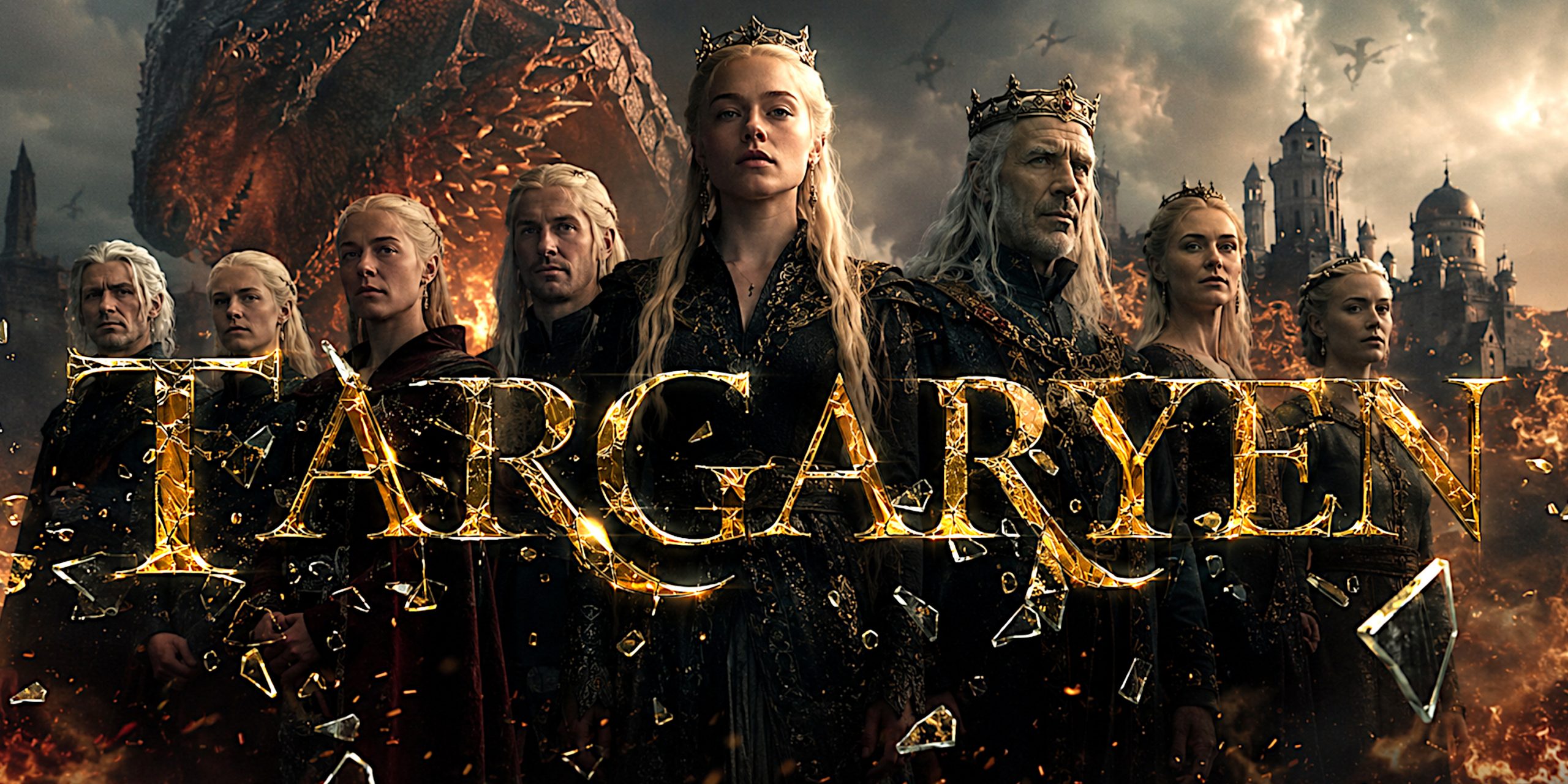
House of the Dragon is essentially what happens when the most powerful family in the world develops a succession problem and nobody suggests mediation.
The Targaryens rule Westeros from the Iron Throne, possess the only meaningful air force on the continent and have spent generations reinforcing their dynasty through marriages that make their family tree look increasingly theoretical. Yet by the time King Viserys I dies, all that power cannot prevent the family splitting into the rival Blacks and Greens.
Understanding who belongs where makes the series considerably easier to follow. It also explains why seemingly personal grudges become matters of national survival.
This guide covers the major Targaryens in HBO’s House of the Dragon, their dragons, relationships and positions in the Dance of the Dragons.
Warning: spoilers for Seasons 1 and 2 follow.
House Targaryen at a Glance
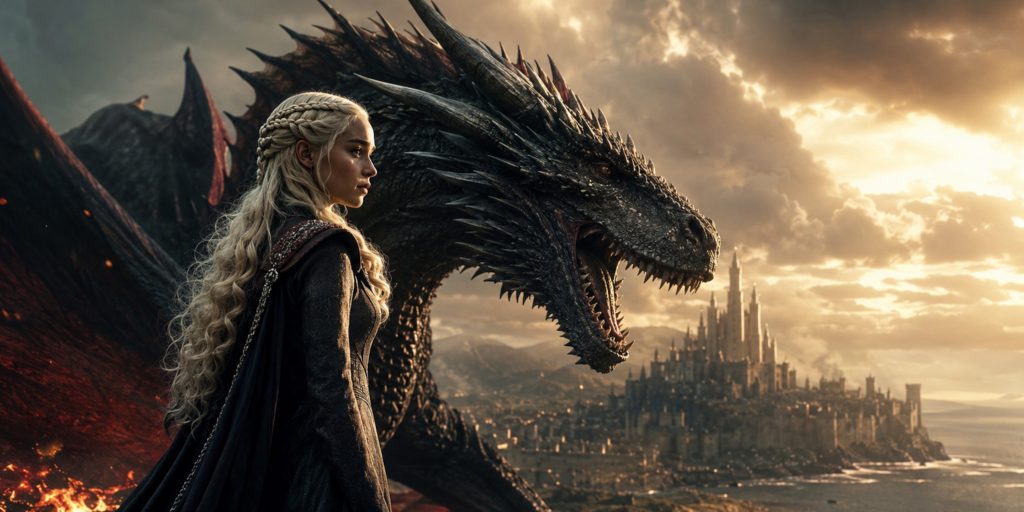
House Targaryen originates from Valyria, the great dragonriding civilisation destroyed by the Doom. The family survived because Aenar Targaryen had moved his household to Dragonstone before the catastrophe.
Generations later, Aegon the Conqueror and his sister-wives Visenya and Rhaenys used their dragons to conquer most of Westeros.
By the period covered in House of the Dragon, the dynasty is approaching the height of its power.
| Detail | House Targaryen |
|---|---|
| Ancestral origin | Valyria |
| Westerosi seat | Dragonstone |
| Royal seat | Red Keep, King’s Landing |
| Sigil | Three-headed red dragon on black |
| Words | Fire and Blood |
| Main source of power | Dragons and royal authority |
| Central conflict | Succession to Viserys I |
| Rival factions | Blacks and Greens |
The tragedy is that almost nobody outside the family is capable of seriously challenging Targaryen rule. So naturally, the Targaryens decide to do it themselves.

King Viserys I Targaryen
Parents: Prince Baelon Targaryen and Princess Alyssa Targaryen
First wife: Queen Aemma Arryn
Second wife: Alicent Hightower
Dragon: Balerion, briefly, before the events of the series
Faction: Technically neither
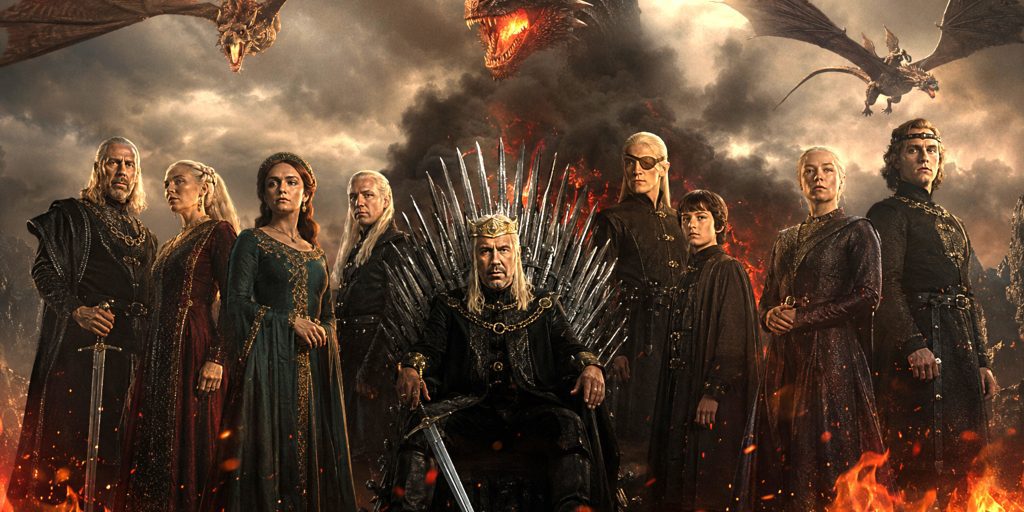
Viserys is the man whose decisions create the political landscape of the entire story.
Chosen as king following the Great Council of 101 AC, he inherits a prosperous and relatively stable realm. Paddy Considine’s version of Viserys is warm, sentimental and genuinely desperate to preserve peace within his family.
Unfortunately, wanting everyone to get along is not the same thing as constructing a succession that can survive your death.
After the death of Aemma and their infant son Baelon, Viserys names his daughter Rhaenyra as heir. He repeatedly maintains that decision even after marrying Alicent Hightower and fathering sons with her.
This creates the central contradiction.
Rhaenyra has the king’s explicit backing, while Aegon possesses the traditional advantage of being the king’s eldest surviving son.
Viserys spends years trying to pretend those two facts can coexist indefinitely. They cannot.
His final dinner with the family is one of the show’s most affecting moments because, briefly, he actually succeeds in bringing them together. Then he dies, and everyone returns to the scheduled programme of grudges, coups and dragons.
Rhaenyra Targaryen
Father: Viserys I
Mother: Aemma Arryn
First husband: Laenor Velaryon
Second husband: Daemon Targaryen
Dragon: Syrax
Faction: Blacks
Rhaenyra is the central figure of the succession crisis.
Viserys names her Princess of Dragonstone and heir to the Iron Throne while she is young. Lords across Westeros swear to uphold her claim.
The problem is that Westerosi politics has a very long memory when tradition is convenient.
Once Viserys fathers Aegon, opponents of Rhaenyra can argue that male-preference succession should place her younger half-brother ahead of her.
Rhaenyra’s position is further complicated by her first three sons, Jacaerys, Lucerys and Joffrey Velaryon. Officially they are Laenor’s children. The series makes it clear that their biological father is Harwin Strong.
Subtle, this is not. Westeros apparently has functioning eyesight.
By Season 2, Rhaenyra is trying to balance her claim to the throne with the terrifying reality of what a full dragon war could do to the realm. That hesitation can look like weakness to her allies, but it is also one of the things that makes her interesting. She understands that winning a civil war may involve destroying the kingdom she wants to rule.
Daemon Targaryen

Brother: Viserys I
Wives: Rhea Royce, Laena Velaryon, Rhaenyra Targaryen
Dragon: Caraxes
Faction: Blacks
Daemon might be the easiest Targaryen to understand if you simply assume he will choose the most dangerous available option.
He is an experienced warrior, former commander of the City Watch, dragonrider and one of the most formidable members of his dynasty.
He is also impulsive, violent and frequently his own worst political adviser.
Daemon initially appears as a possible threat to Rhaenyra’s succession, but eventually becomes her husband and one of the greatest military assets of the Black faction.
His dragon Caraxes, nicknamed the Blood Wyrm, is unusually lean and serpentine. Together, dragon and rider form one of the most experienced combinations involved in the Dance.
Season 2 digs further into Daemon’s psychology at Harrenhal. The swagger remains, but underneath it sits insecurity, resentment and an obsession with his own place in Targaryen history.
He wants power. He also wants recognition. Those are not always the same thing.
Aegon II Targaryen
Father: Viserys I
Mother: Alicent Hightower
Wife: Helaena Targaryen
Dragon: Sunfyre
Faction: Greens
Aegon is the eldest surviving son of Viserys and Alicent, which gives the Greens the foundation of their claim.
He is crowned Aegon II after Viserys dies, directly challenging Rhaenyra.
The television version makes an interesting choice with Aegon. He is frequently appalling, selfish and completely unprepared for kingship, but he is not simply a cardboard villain placed opposite Rhaenyra.
Once crowned, he begins to enjoy the approval and status that have largely been absent from his life. He wants to be taken seriously as king, sometimes with disastrous results.
His relationship with Sunfyre is particularly important. Sunfyre is considered a magnificent dragon and represents something Aegon genuinely possesses independently of crowns, councils and family politics.
Season 2 also makes Aegon’s rivalry with Aemond increasingly significant. Apparently fighting one branch of your family is insufficient when you can develop another feud within your own faction.
Aemond Targaryen
Father: Viserys I
Mother: Alicent Hightower
Dragon: Vhagar
Faction: Greens
If Aegon wears the crown, Aemond often looks like the brother who actually prepared for a war.
As a child he is mocked for not having a dragon. He resolves that problem rather dramatically by claiming Vhagar, the oldest and largest living dragon in Westeros.
The confrontation that follows costs him an eye.
Aemond grows into a disciplined fighter and serious student of Valyrian history. He is ambitious, intelligent and deeply resentful. That combination would already be dangerous without giving him what is effectively a flying medieval strategic bomber.
His pursuit of Lucerys above Storm’s End provides one of the show’s defining moments. Aemond intends to terrorise Luke, but loses control of Vhagar after Arrax attacks her.
Luke’s death demonstrates something House of the Dragon repeatedly stresses: possessing a dragon does not mean possessing absolute control over it.
By Season 2, Aemond has moved far beyond the wounded boy audiences first encountered. He has become one of the most dangerous political and military figures in Westeros.
Helaena Targaryen
Father: Viserys I
Mother: Alicent Hightower
Husband: Aegon II
Dragon: Dreamfyre
Faction: Greens
Helaena is one of the strangest and saddest characters in the series.
She is gentle, detached from much of the political manoeuvring around her and apparently possesses prophetic abilities associated with Targaryen dragon dreams.
Her comments frequently sound like disconnected observations until later events reveal that she was effectively spoiling the plot while everybody else ignored her.
Helaena marries her brother Aegon according to Targaryen dynastic tradition and becomes queen after his coronation.
The murder of her son Jaehaerys during the Blood and Cheese incident places her directly inside the brutality of the civil war. Until then she had largely existed at the edge of the political struggle. Afterwards, there is no edge left.
Daeron Targaryen
Father: Viserys I
Mother: Alicent Hightower
Dragon: Tessarion
Faction: Greens
Daeron is the youngest son of Viserys and Alicent.
His absence from the first two seasons confused viewers familiar with Fire & Blood, but Season 2 confirms that he exists in the television continuity and has been living in Oldtown.
This matters because Daeron is not an insignificant extra branch on the family tree.
In George R. R. Martin’s history, he becomes an important participant in the Dance and rides Tessarion, the Blue Queen.
For viewers moving deeper into the war, Daeron is one of the Targaryens worth remembering.
Jacaerys Velaryon
Mother: Rhaenyra Targaryen
Legal father: Laenor Velaryon
Biological father: Harwin Strong
Dragon: Vermax
Faction: Blacks
Jacaerys, usually called Jace, is Rhaenyra’s eldest son and her heir.
That makes his parentage politically explosive.
Everyone at court knows what the accusation is. Saying it publicly, however, amounts to questioning Rhaenyra’s honour and the legitimacy of the future succession.
Jace develops into one of the more politically capable younger characters. His missions to secure allies demonstrate that dragons alone cannot win the Dance. Armies, castles, marriages and old promises still matter.
He also recognises the fundamental problem facing the Blacks: they have dragons, but not necessarily enough experienced dragonriders.
That leads directly into one of Season 2’s biggest developments.
Lucerys Velaryon
Mother: Rhaenyra Targaryen
Legal father: Laenor Velaryon
Biological father: Harwin Strong
Dragon: Arrax
Faction: Blacks
Lucerys, or Luke, is Rhaenyra’s second son.
His childhood fight with Aemond ends with Aemond losing an eye, creating a hatred that survives into adulthood.
When both young men travel to Storm’s End seeking the support of House Baratheon, Luke finds Aemond already there.
What follows changes the conflict permanently.
Vhagar kills both Arrax and Lucerys above Shipbreaker Bay. Whether Aemond intended murder becomes almost irrelevant once the news reaches Dragonstone.
A succession dispute has become a blood feud.
Joffrey Velaryon
Joffrey is the youngest of Rhaenyra’s three sons from her marriage to Laenor Velaryon, although Harwin Strong is his biological father.
He is still a child during the opening stages of the Dance and therefore plays a much smaller role than Jace or Luke.
His dragon is Tyraxes.
The important point politically is that Joffrey represents another potential continuation of Rhaenyra’s contested Velaryon line.
Baela Targaryen
Father: Daemon Targaryen
Mother: Laena Velaryon
Dragon: Moondancer
Faction: Blacks
Baela is Daemon and Laena’s elder daughter and one of the younger Black dragonriders.
She is spirited, direct and considerably less interested in sitting quietly while older relatives make decisions around her.
Her dragon Moondancer is smaller than monsters such as Vhagar or Vermithor, but size is only one part of dragon warfare. Speed and the nerve of the rider matter too.
Baela’s position also reinforces the alliance between House Targaryen and House Velaryon, which is crucial to Rhaenyra’s cause.
Rhaena Targaryen
Father: Daemon Targaryen
Mother: Laena Velaryon
Faction: Blacks
Rhaena’s story differs from Baela’s because she grows up without a dragon.
In this family, that is rather like being the only person at Christmas who did not receive a phone.
Her lack of a dragon creates an obvious sense of inadequacy, particularly when dragonriding is so closely connected to Targaryen identity and political usefulness.
Season 2 develops her storyline considerably, especially during her time in the Vale, where evidence of a wild dragon offers a potentially significant new direction for the character.
This is also one area where the HBO adaptation begins making notable choices of its own rather than simply reproducing Fire & Blood.
Aegon the Younger and Viserys
Rhaenyra and Daemon have two young sons together:
- Aegon Targaryen, usually called Aegon the Younger
- Viserys Targaryen
They are too young to influence the opening stages of the war, but their existence matters enormously for the future of the dynasty.
They are also unmistakably Targaryen children born from Rhaenyra’s marriage to Daemon, which removes the parentage controversy surrounding her elder sons.
For anyone avoiding future spoilers from Fire & Blood, this is a particularly good point to stop Googling them.
Seriously.
The Blacks vs the Greens
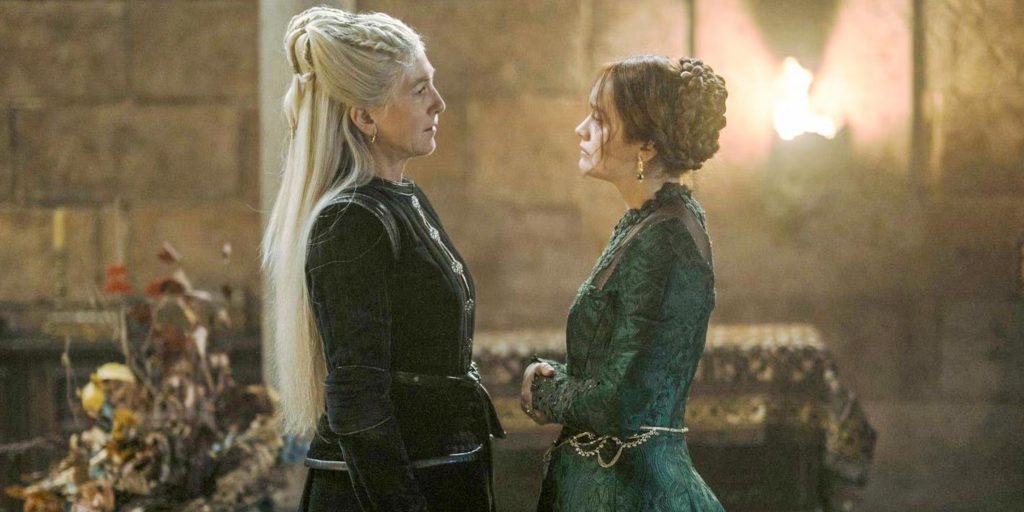
The Dance becomes easier to follow once the family is divided into two broad camps.
| The Blacks | The Greens |
| Rhaenyra Targaryen | Aegon II Targaryen |
| Daemon Targaryen | Aemond Targaryen |
| Jacaerys Velaryon | Helaena Targaryen |
| Joffrey Velaryon | Daeron Targaryen |
| Baela Targaryen | Alicent Hightower |
| Rhaena Targaryen | Criston Cole and Green loyalists |
The names come from colours associated with the rival factions at court.
The Blacks support Rhaenyra’s claim as the heir formally designated by Viserys. The Greens support Aegon II, drawing heavily on the precedent and expectation that a king’s son should inherit ahead of his daughter.
Neither faction sees itself as casually stealing the throne.
That distinction matters. The Dance works dramatically because both camps can construct a political argument for legitimacy, even while individuals within them commit increasingly indefensible acts.
Which Targaryen Has Which Dragon?
Dragons are characters in their own right in House of the Dragon, but they are also strategic assets.
| Targaryen | Dragon | Faction |
| Rhaenyra | Syrax | Black |
| Daemon | Caraxes | Black |
| Jacaerys | Vermax | Black |
| Lucerys | Arrax | Black |
| Joffrey | Tyraxes | Black |
| Baela | Moondancer | Black |
| Aegon II | Sunfyre | Green |
| Helaena | Dreamfyre | Green |
| Aemond | Vhagar | Green |
| Daeron | Tessarion | Green |
Then there are the unclaimed and newly claimed dragons that become increasingly important as the war expands.
This creates the military problem at the heart of Season 2. Having more dragons is useful. Finding people who can actually ride them without becoming lunch is the slightly inconvenient second step.
Why Targaryen Blood Matters
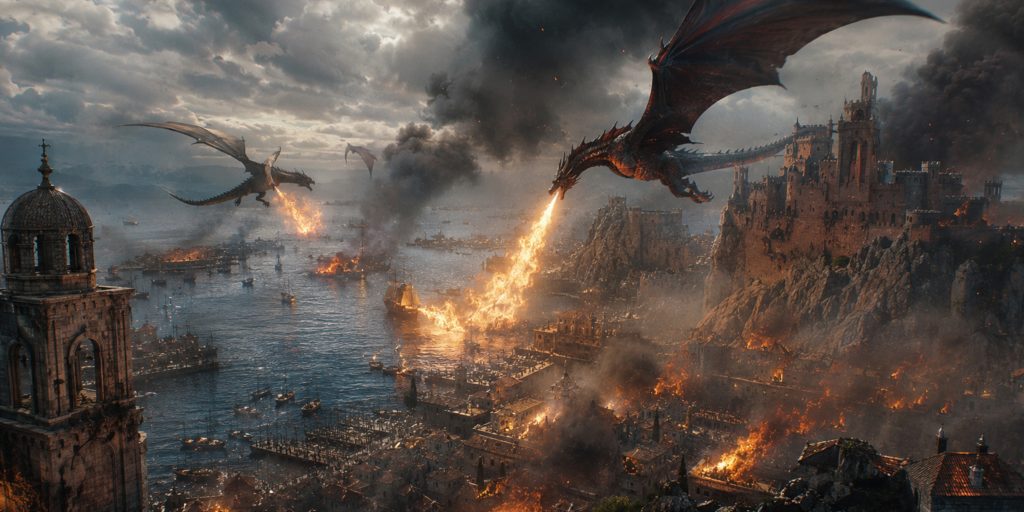
The series repeatedly connects dragonriding with Valyrian ancestry, but deliberately leaves some mystery around exactly how the bond works.
Targaryens maintain close dynastic marriages partly to preserve their Valyrian bloodline. They also present dragonriding almost as evidence of their exceptional status.
Yet the emergence of dragonseeds complicates that idea.
People with illegitimate or distant Valyrian ancestry may also be capable of bonding with dragons. That makes dragonriding more politically dangerous because it suggests the royal family does not possess quite the monopoly it would like everyone to believe it does.
Nothing destabilises an aristocracy quite like discovering the supposedly exclusive family superpower may have been distributed rather more widely.
Why the Targaryens Destroy Themselves
This is what makes House of the Dragon more interesting to me than a straightforward war between heroes and villains.
The Targaryens have almost everything.
They have wealth. They have dragons. They have the Iron Throne. Their major rivals have been subdued for generations. No foreign invader is approaching Westeros with a superior army.
And still the dynasty begins tearing itself apart.
The problem is succession, but beneath that sit deeper issues: gender, legitimacy, personal resentment, dynastic marriage, the enormous political influence of dragons and a royal system in which almost every disagreement ultimately becomes a question of blood.
Viserys leaves behind a family in which two branches believe they have legitimate claims to power.
Once dragons enter that disagreement, compromise becomes considerably harder.
How This Connects to Game of Thrones
House of the Dragon takes place roughly two centuries before Daenerys Targaryen’s story in Game of Thrones.
That distance is important.
The Targaryens we meet here are not exiles dreaming about a lost kingdom. They are the establishment. Their dynasty has ruled Westeros for generations and dragons remain living instruments of royal power.
Watching the Dance therefore changes the way later Targaryen history feels.
The decline of the dynasty was not simply caused by the Mad King or Robert Baratheon’s rebellion. Some of its deepest wounds were inflicted much earlier.
The irony is rather brutal. The family conquered Westeros using dragons, then eventually discovered that dragons work extremely well against other Targaryens too.
Who Is the Most Important Targaryen in House of the Dragon?
Rhaenyra is the obvious answer because the central succession dispute revolves around her claim.
Yet Viserys may be the most consequential.
His decisions create the conditions for the war. Daemon and Aemond provide much of its military danger. Aegon gives the Greens their king. Jace represents the possible continuation of Rhaenyra’s line.
That is part of what makes the series work. Remove almost any major member of this family and the shape of the Dance changes.
There is no single villain sitting behind everything. There is a collection of people making choices inside a political system almost perfectly designed to turn family tension into national catastrophe.
The Seven Swords Takeaway

The Targaryens of House of the Dragon are fascinating because we meet them before they become the half-remembered legends of Game of Thrones.
They are alive, powerful and apparently secure. They ride dragons over a continent ruled from their own throne.
Then inheritance, pride and old grievances begin pulling that power apart.
Rhaenyra and Aegon may be the rival claimants, but the Dance is bigger than either of them. Daemon, Aemond, Helaena, Jace, Baela, Rhaena and the wider family all become trapped inside a conflict where every death creates another reason for revenge.
And that is probably the bleakest joke running through House of the Dragon: the Targaryens spend generations convincing Westeros that nobody can challenge the power of the dragon.
They turn out to be right.
Nobody can, except another dragon.