Witches have been haunting, helping and thoroughly confusing audiences since the earliest years of cinema. They can be fairy-tale villains, suburban mothers, teenage outsiders, superheroes or ancient forces wearing suspiciously expensive robes. The category stretches a long way, but the best screen witches all have one thing in common: once they arrive, everyone else starts reacting to them.
This list ranks the most famous witches in film and television by cultural impact, recognisability, influence and staying power. Raw magical strength matters, but this is not a power ranking. If it were, half the list would become an argument about Wanda Maximoff, and nobody has time to reopen Westview before lunch.
1. The Wicked Witch of the West
Appears in: The Wizard of Oz (1939)
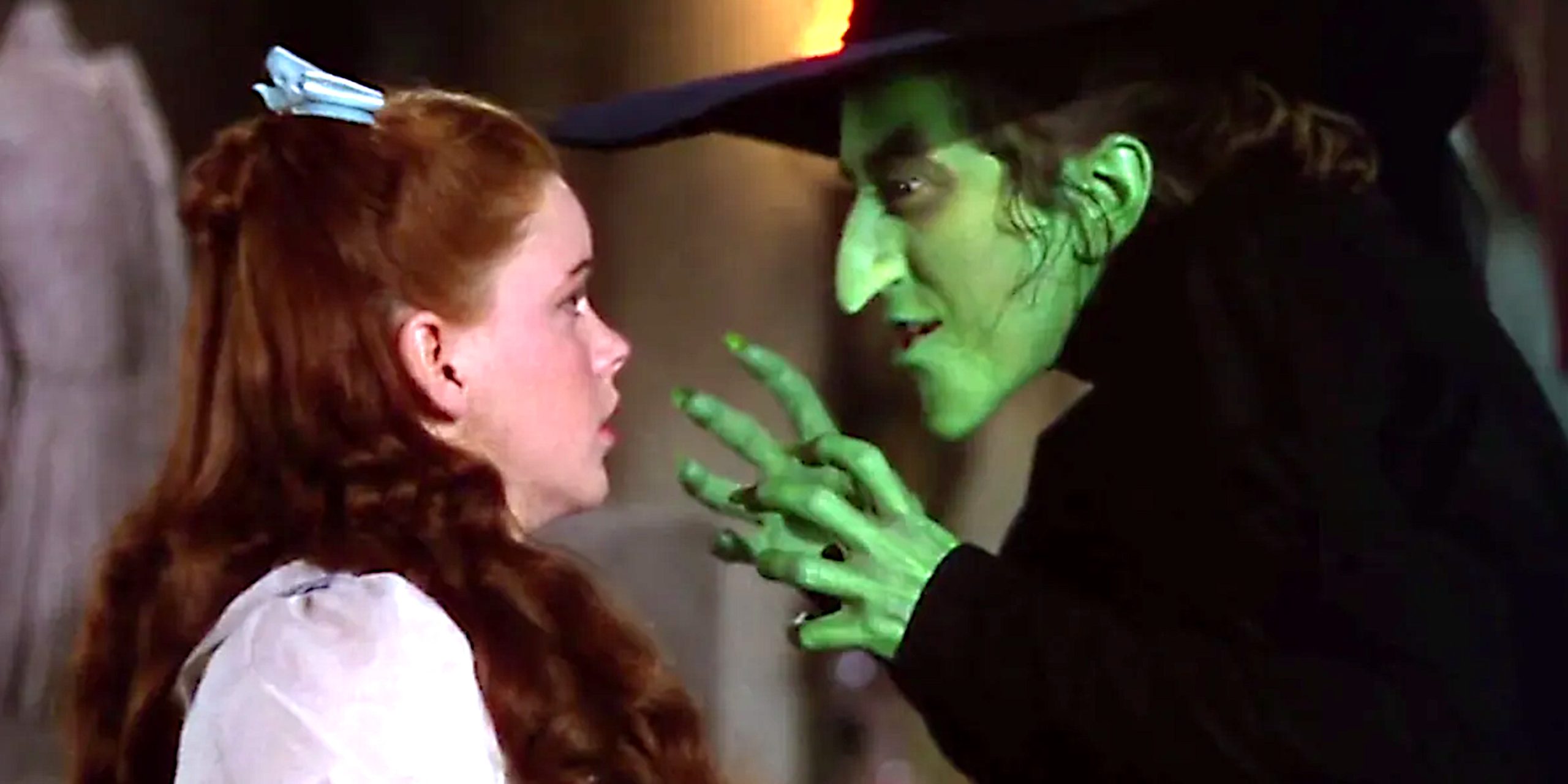
Margaret Hamilton’s Wicked Witch of the West remains the screen witch against whom nearly every later version is measured. The green skin, pointed hat, broomstick and sharp cackle did not invent the popular image of a witch, but they fixed it in the public imagination with remarkable efficiency.
She is frightening without being complicated. Her sister has been killed, her shoes have been taken and Dorothy is standing in the middle of the whole mess looking extremely apologetic. Yet Hamilton’s performance pushes the character beyond a simple fairy-tale obstacle. She enters scenes like bad weather and seems to enjoy every second of it.
The character’s influence is difficult to overstate. Halloween costumes, cartoons and later fantasy villains repeatedly borrow from her silhouette. Even portrayals that reject the wicked-witch stereotype are usually reacting to this one.
Why she is famous: She gave popular culture its definitive visual shorthand for an evil witch.
2. Hermione Granger
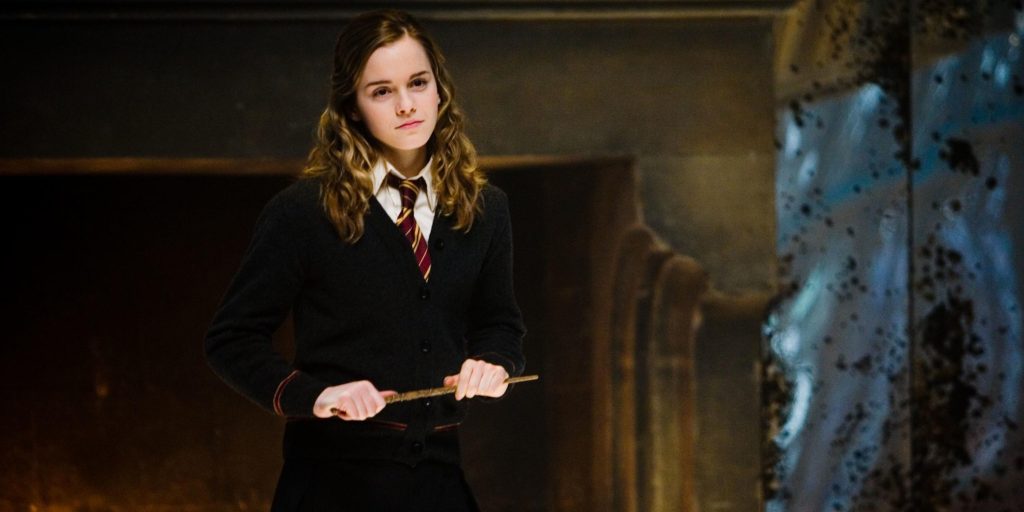
Appears in: The Harry Potter film series (2001–2011)
Hermione Granger changed what a famous screen witch could look like. She is neither a mysterious temptress nor a cackling villain. She is a brilliant, anxious and fiercely principled schoolgirl who treats preparation as a combat skill.
Emma Watson’s Hermione grows from an eager first-year student into the strategic centre of the trio. Harry may carry the prophecy, but Hermione repeatedly supplies the research, spellwork and practical judgement that keep the mission alive. Her magic feels learned rather than vaguely bestowed, which gives her achievements real weight.
She also became a recognisable figure far beyond fantasy fandom. The robes, wand and bushy-haired early look are instantly readable, while her mixture of intellect and moral stubbornness helped create a different kind of aspirational witch.
Why she is famous: She made scholarship, courage and relentless preparation central to modern screen witchcraft.
3. Wanda Maximoff, the Scarlet Witch
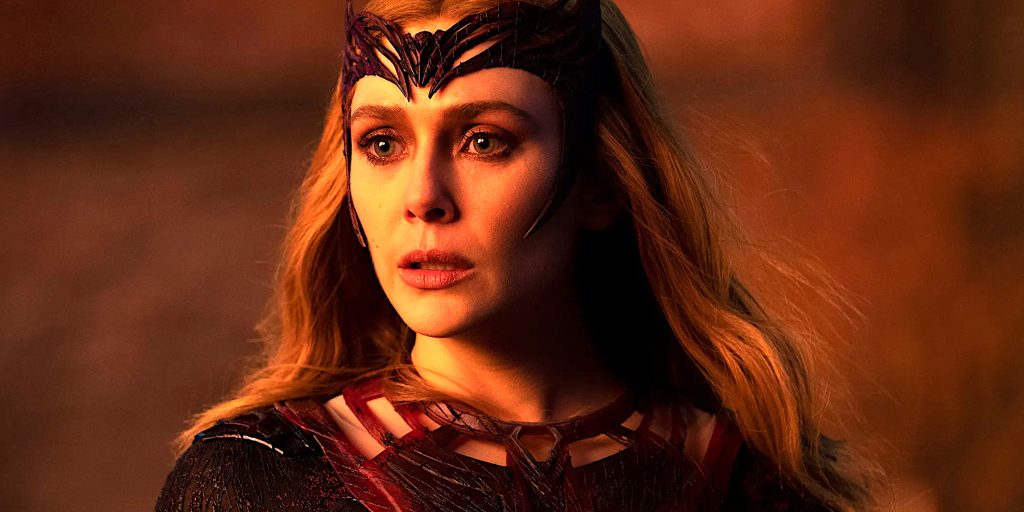
Appears in: The Marvel Cinematic Universe and WandaVision (2021)
Wanda Maximoff began in the Marvel films as a traumatised enhanced fighter and gradually became the Scarlet Witch, a wielder of chaos magic capable of reshaping reality. WandaVision turned that transformation into a strange, intimate study of grief played through decades of television history.
Elizabeth Olsen gives Wanda a vulnerability that makes her frightening precisely because her pain is understandable. Westview is both an expression of devastating loss and an enormous violation committed against innocent people. The series lets those truths coexist, which is far more interesting than pretending immense magical power comes with tidy moral labels.
Her later journey in Doctor Strange in the Multiverse of Madness is more divisive, particularly in how quickly sorrow becomes horror-film villainy. Even so, the Scarlet Witch’s visual identity, red energy and crown have become major parts of twenty-first-century witch imagery.
Why she is famous: She brought witchcraft into superhero spectacle without losing its links to grief, fear and forbidden knowledge.
4. Sabrina Spellman

Appears in: Sabrina the Teenage Witch (1996–2003) and Chilling Adventures of Sabrina (2018–2020)
Sabrina Spellman has managed the unusual feat of becoming famous in two very different television forms. Melissa Joan Hart’s version is bright, funny and built around the weekly catastrophe of a teenager using magic before thinking through the consequences. Kiernan Shipka’s Sabrina lives in a darker world of covens, infernal bargains and increasingly elaborate coats.
The sitcom made witchcraft feel domestic. Spells sat beside school problems, family arguments and Salem the talking cat’s latest scheme. The later series restored danger and ritual to the premise, although it sometimes collected apocalypses with the enthusiasm of someone filling a loyalty card.
Both versions work because Sabrina is caught between worlds. She wants the freedom magic offers while resisting the rules attached to it, whether those rules come from a magical council or the Dark Lord.
Why she is famous: Few characters have done more to make the teenage witch a durable television archetype.
5. The Sanderson Sisters
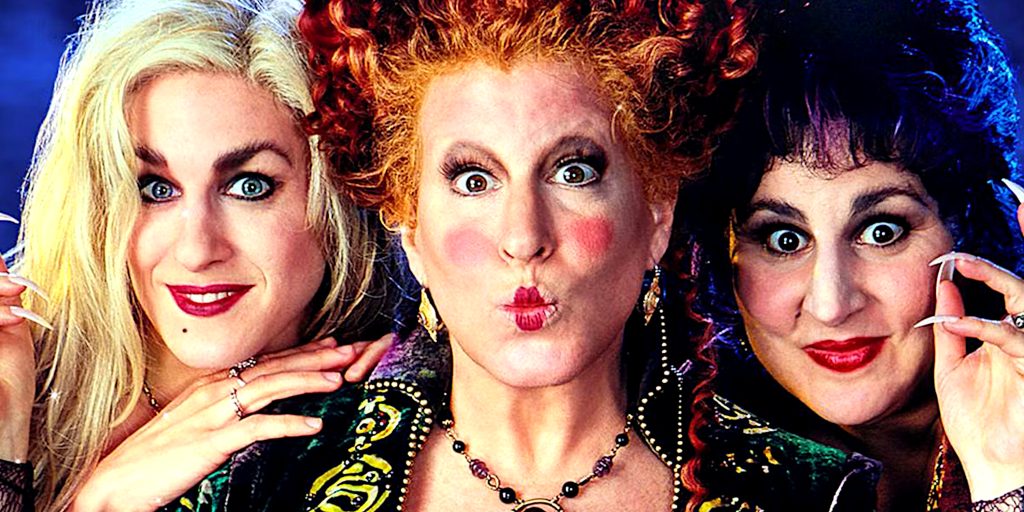
Appear in: Hocus Pocus (1993) and Hocus Pocus 2 (2022)
Winifred, Mary and Sarah Sanderson were not an immediate box-office phenomenon, but television broadcasts and home video turned Hocus Pocus into a seasonal institution. By now, October without the sisters feels administratively incorrect.
Bette Midler’s Winifred leads through vanity and theatrical fury, Kathy Najimy’s Mary supplies odd instincts and physical comedy, and Sarah Jessica Parker’s Sarah drifts through the carnage with unnerving cheerfulness. Together, they are genuinely murderous witches presented with the energy of a dysfunctional stage act.
Their fame rests on that balance between menace and camp. They steal children’s life force, but they also bicker, sing and fail to understand modern roads. The contradiction should collapse the film. Instead, it became the whole appeal.
Why they are famous: They turned a modest 1990s fantasy comedy into one of Halloween’s most persistent rituals.
6. Samantha Stephens

Appears in: Bewitched (1964–1972)
Long before prestige dramas discovered gloomy covens, Samantha Stephens was trying to live quietly in suburban America. Elizabeth Montgomery’s witch could perform extraordinary magic with a twitch of her nose, yet much of Bewitched revolved around her attempt to satisfy her mortal husband Darrin’s preference for an ordinary household.
That premise now carries some rather obvious tensions. Samantha is more capable than nearly everyone around her, but is repeatedly encouraged to suppress her power to protect domestic normality. The show can be read as light fantasy comedy, a satire of conformity or both at once.
Montgomery keeps Samantha warm, poised and quietly amused. Her performance established the friendly television witch as a mainstream lead rather than a monster waiting at the edge of the village.
Why she is famous: Samantha helped move the screen witch from fairy-tale antagonist to charming family protagonist.
7. Willow Rosenberg

Appears in: Buffy the Vampire Slayer (1997–2003)
Willow begins Buffy the Vampire Slayer as a shy, technically gifted student and becomes one of the show’s most powerful characters. Her growth feels earned because magic develops through study, experimentation and escalating confidence. It also comes with consequences.
The series uses Willow’s witchcraft to explore identity, love, control and addiction, although its addiction metaphor becomes clumsy in places. Her relationship with Tara was hugely significant for queer representation on mainstream television, while the Dark Willow arc remains one of the programme’s defining turns.
Alyson Hannigan makes Willow’s warmth and danger feel connected. The qualities that help her protect people, including intelligence, loyalty and emotional intensity, are the same qualities that become destructive when grief removes her restraint.
Why she is famous: Her journey gave television one of its most influential and emotionally complicated modern witches.
8. Maleficent

Appears in: Sleeping Beauty (1959), Maleficent (2014) and Maleficent: Mistress of Evil (2019)
Disney calls Maleficent an evil fairy, so purists may reasonably object to her inclusion. In screen culture, however, she occupies the witch role so completely that leaving her out would feel like a technicality wearing horns.
The animated Maleficent is controlled, elegant and terrifying. She curses an infant after being excluded from a celebration, which is a heroic commitment to taking social rejection badly. Her transformation into a dragon gives the film one of Disney animation’s great villainous climaxes.
Angelina Jolie’s live-action version recasts her as a betrayed protector and gives the famous curse a new emotional context. That revision loses some of the original’s pure menace, but it demonstrates how readily the character can be reinterpreted.
Why she is famous: Her silhouette, voice and dramatic command made her one of fantasy cinema’s defining magical villains.
9. Elphaba

Appears in: Wicked (2024) and its sequel
Elphaba takes the most famous evil witch in cinema and asks who had the power to write her reputation. Originating in Gregory Maguire’s novel and transformed into a stage icon by the musical, she reached an even larger screen audience through Cynthia Erivo’s performance in Wicked.
Her green skin, political awakening and refusal to accept Oz’s official story turn the familiar villain into a persecuted outsider. That does not simply excuse every decision she makes. It reframes the legend around prejudice, propaganda and the cost of resistance.
Erivo plays her with guarded intelligence and emotional force, while “Defying Gravity” supplies the sort of character-defining moment that arrives already aware it will be replayed for decades.
Why she is famous: Elphaba transformed a classic villain into a modern symbol of otherness and defiance.
10. The Grand High Witch
Appears in: The Witches (1990 and 2020)
The Grand High Witch wants to eliminate children, and at no point does she trouble herself with a sympathetic origin story. Anjelica Huston’s performance in the 1990 adaptation of Roald Dahl’s The Witches is especially memorable: glamorous in public, grotesque in private and visibly delighted by her own cruelty.
The hotel meeting scene remains a fine piece of family-film nightmare fuel. Once the assembled witches remove their disguises, the story reveals its central fear: danger may be hiding beneath ordinary adult appearances.
Anne Hathaway’s interpretation in the 2020 film is broader and supported by extensive digital effects. It has its admirers, but Huston’s controlled theatricality and the original film’s practical make-up remain harder to shake.
Why she is famous: She gave children’s cinema one of its most extravagantly terrifying villains.
11. The White Witch
Appears in: The Chronicles of Narnia films (2005–2010)
Jadis, the White Witch, rules Narnia through fear and supernatural winter. Tilda Swinton plays her with chilly restraint, avoiding the obvious temptation to turn every line into a pantomime threat. Her stillness does most of the work.
The character is a tyrant rather than merely a spellcaster. She manipulates Edmund with comfort and status, petrifies opponents and maintains a world in which it is always winter but never Christmas. That last detail remains an exceptionally effective summary of joyless rule.
Her pale costumes and ice-crowned battle appearance gave the film series its strongest villainous imagery. She feels ancient, remote and deeply irritated that anyone else has entered her story.
Why she is famous: She personifies cold authoritarian power in one of fantasy cinema’s most recognisable worlds.
12. The Charmed Ones
Appear in: Charmed (1998–2006) and its 2018 reboot
The Halliwell sisters brought witchcraft into the weekly rhythm of late 1990s television. Prue, Piper and Phoebe, later joined by Paige, balance jobs, relationships and family conflict with demons that have a habit of arriving at deeply inconvenient moments.
The Power of Three makes sisterhood the source of their greatest strength. That concept gave the series an emotional structure beneath its monster-of-the-week plots and increasingly complicated mythology. The show could be melodramatic, and its wardrobe choices occasionally fought their own battle with workplace practicality, but its cultural reach is undeniable.
The reboot introduced a new trio and addressed identity and politics more directly. The original cast remains the best-known version, partly because eight seasons gave viewers so long to live with the family.
Why they are famous: Charmed made the coven a household unit and helped define supernatural television for a generation.
13. Glinda
Appears in: The Wizard of Oz (1939) and Wicked (2024)
Glinda has lived two very different screen lives. Billie Burke’s Good Witch arrives in a pink bubble, offers calm guidance and embodies the benevolent fairy-tale sorceress. Ariana Grande’s version in Wicked is younger, funnier and far more compromised by popularity and privilege.
That contrast has made the character more interesting. The original Glinda represents reassuring goodness, while the newer interpretation examines how a basically decent person can benefit from a harmful system and hesitate when opposing it carries a personal cost.
She remains inseparable from sparkling gowns, polished charm and the question of how much she knew before sending Dorothy down the Yellow Brick Road. Fantasy bureaucracy appears to have had communication problems from the beginning.
Why she is famous: She is the enduring bright counterpart to Oz’s green-skinned witch, now given greater emotional and political depth.
14. Melisandre
Appears in: Game of Thrones (2011–2019)
Melisandre is usually described as a red priestess, but the people of Westeros often perceive her as a witch, and her shadow magic, visions and resurrections make the label understandable. Carice van Houten plays her with unnerving certainty, at least until failed prophecy begins to crack that certainty open.
Her magic never feels cute or convenient. It is religious, bodily and costly. She gives birth to a murderous shadow, burns people as offerings and restores Jon Snow to life without fully understanding why it works.
The character is most compelling when the series examines the danger of certainty. Melisandre commits horrors because she believes history has given her a sacred role. By the end, she helps defeat the dead, but redemption does not erase the victims left behind.
Why she is famous: She brought prophetic, ritualistic witchcraft into one of television’s largest fantasy dramas.
15. The Blair Witch
Appears in: The Blair Witch Project (1999) and related films
The Blair Witch barely appears at all, which is exactly why she belongs here. The Blair Witch Project builds its antagonist through stories, symbols, noises and the growing terror of three filmmakers lost in the woods. The audience never receives a tidy look at the creature responsible.
The film’s early internet marketing blurred fiction and reality with unusual effectiveness. Its rough footage, improvised performances and missing-person framing helped popularise found-footage horror and made the unseen witch feel like a discovered legend rather than a studio invention.
Later instalments attempted to expand the mythology, but explanation is the natural enemy of this particular fear. The first film understands that an audience can create something worse than a production team could comfortably show.
Why she is famous: She proved that a witch could dominate a film without ever stepping clearly into the frame.
16. Fiona Goode and the Witches of Miss Robichaux’s Academy
Appear in: American Horror Story: Coven (2013–2014) and Apocalypse (2018)
American Horror Story: Coven treats witchcraft as inheritance, hierarchy and vicious social competition. Jessica Lange’s Fiona Goode, the reigning Supreme, is glamorous, frightened of ageing and willing to destroy almost anyone who threatens her position.
The season also introduced memorable witches including Cordelia Foxx, Marie Laveau, Madison Montgomery, Queenie and Misty Day. Its version of historical New Orleans is heavily fictionalised, and its use of real figures deserves a critical eye, particularly where spectacle overtakes context.
At its best, however, Coven uses supernatural power to explore rivalry, prejudice, family and the fear of becoming irrelevant. It also understands that a coven full of huge personalities is unlikely to produce a calm committee meeting.
Why they are famous: They returned the coven to the centre of glossy mainstream horror television.
17. Nancy Downs
Appears in: The Craft (1996)
Nancy Downs is the volatile centre of The Craft, a film that gave 1990s teenage witchcraft its own visual language. Fairuza Balk plays her with such ferocity that even her quiet moments seem one insult away from combustion.
Nancy’s hunger for power grows from poverty, abuse and humiliation, which makes her understandable without making her harmless. Once magic gives her the ability to strike back, revenge expands into domination. The film’s warning is not that young women should never have power, but that pain and power can become a dangerous partnership when nobody applies a brake.
The clothes, soundtrack and occult imagery became hugely influential, while the central group helped inspire decades of teenage covens on screen.
Why she is famous: Nancy became the face of rebellious 1990s witch cinema and remains one of its most electric villains.
18. Kiki
Appears in: Kiki’s Delivery Service (1989)
Kiki offers a gentler form of screen witchcraft. In Hayao Miyazaki’s animated film, the thirteen-year-old witch leaves home for a year of independent training and starts a delivery service using her broom. Her greatest struggle is not an evil sorcerer but exhaustion, loneliness and fading confidence.
That makes her story unusually relatable. Magic is part of her identity, yet talent does not protect her from burnout. Her loss of flight feels like a creative block or depressive episode, while her recovery comes through rest, friendship and renewed purpose rather than a secret spell.
Kiki is famous because the film finds wonder in work, independence and ordinary kindness. Also, flying deliveries remain a considerably better business model than most app-based alternatives.
Why she is famous: She made the young witch a symbol of independence, uncertainty and creative resilience.
How Screen Witches Have Changed

Early screen witches were often easy to identify. They were old, ugly, isolated and dangerous, drawing on centuries of folklore and social suspicion. The Wizard of Oz gave that figure a permanent colour scheme. Yet even classic Hollywood offered alternatives, from the romantic magic of I Married a Witch to the domestic comedy of Bewitched.
Later witches increasingly became protagonists. Films and television series used magic to explore adolescence, outsider identity, female ambition, grief and chosen family. Hermione studies it. Willow grows addicted to it. Wanda uses it to avoid loss. Elphaba discovers that being called wicked can be a political act rather than a moral judgement.
The old villain has never disappeared, nor should she. The Grand High Witch and the Blair Witch show how effective the frightening archetype remains. What has changed is the range. A screen witch can now represent almost anything, from authoritarian control to teenage insecurity, which is a healthy amount of work for one pointed hat.
Who Is the Most Famous Witch in Film History?
The Wicked Witch of the West remains the most famous witch created for the screen. Her green face, black hat, broomstick and flying monkeys are recognised even by people who have never watched The Wizard of Oz from beginning to end.
Hermione Granger may be the most famous heroic witch among younger audiences, while the Scarlet Witch has become one of the most visible modern examples through the Marvel Cinematic Universe. Elphaba complicates the question further because she is a revision of the Wicked Witch rather than an entirely separate cultural figure.
If fame means lasting visual recognition across generations, the Wicked Witch still takes the crown. She would probably prefer the broom.
Frequently Asked Questions
Is Maleficent technically a witch?
Disney describes Maleficent as an evil fairy. However, she performs the narrative role of a witch in Sleeping Beauty: she casts a curse, carries a staff, commands dark forces and transforms herself. She is included because of her enormous influence on screen witch imagery.
Is Morticia Addams a witch?
Morticia is sometimes treated as witch-like because of her gothic appearance and the supernatural atmosphere surrounding the Addams family. Most major screen versions do not establish her as a practising witch, so she has not been ranked here.
Who was the first famous television witch?
Samantha Stephens from Bewitched is the clearest early television icon. Earlier witches appeared on television, but Samantha became a long-running lead character and helped normalise the friendly, domestic screen witch.
Which film made witches popular with teenage audiences?
Several productions contributed, but The Craft became a defining teenage witch film of the 1990s. Sabrina the Teenage Witch, Buffy the Vampire Slayer and later the Harry Potter films expanded that appeal across television and cinema.
The Seven Swords Verdict
The Wicked Witch of the West is still the most recognisable witch in screen history, but the most interesting thing about this list is how little the characters resemble one another. Kiki is trying to regain her confidence. Hermione solves problems through study. Melisandre mistakes certainty for wisdom. Wanda turns grief into an entire false reality. The Sanderson sisters mainly turn homicide into musical theatre.
That variety explains why witches remain so useful to filmmakers. Magic makes internal struggles visible. Anger becomes fire, grief changes reality and social exclusion turns into a green-skinned woman flying above a city that has already decided she is wicked.
The best screen witches do more than cast memorable spells. They reveal what their stories fear, admire or refuse to understand about powerful outsiders. Sometimes they also have a talking cat, which rarely hurts.