The Anglo-Saxon fyrd occupies a curious place in English history. It is often imagined as little more than a crowd of frightened farmers handed spears moments before battle. The reality was rather more interesting. The fyrd formed the backbone of England’s military system for centuries and, when properly organised, could field thousands of armed men capable of resisting Viking invasions, Welsh raids and rival English kingdoms.
Like many institutions from early medieval England, the fyrd evolved over time. What existed under the kings of Wessex in the seventh century differed from the army that fought beside Harold Godwinson at Hastings in 1066. Even so, certain principles remained remarkably consistent. Military service was regarded as a duty owed to king and community, rather than a profession.
Modern archaeology, contemporary chronicles and surviving legal codes allow us to reconstruct this remarkable institution with surprising confidence. The picture that emerges is one of organisation rather than chaos, obligation rather than conscription, and men who were expected to know which end of a spear to point at the enemy.
What Was the Fyrd?
The Old English word fyrd simply meant an armed expedition or military force. It referred both to the obligation to serve and to the army itself.
Unlike a permanent standing army, the fyrd consisted of free men called to military service by their local lord or directly by the king. Service was normally temporary and tied to defence of the kingdom, although kings increasingly used the fyrd for offensive campaigns.
Military obligations varied according to wealth and land ownership.
The fyrd included:
- Local landowners
- Farmers holding sufficient land
- Thegns and their retainers
- Wealthier freemen
- Occasionally townsmen and specialists
The poorest members of society were generally exempt because they could neither equip themselves nor leave their families without risking starvation. Medieval governments, surprisingly enough, recognised that dead crops were almost as dangerous as invading Vikings.
Origins of the Fyrd
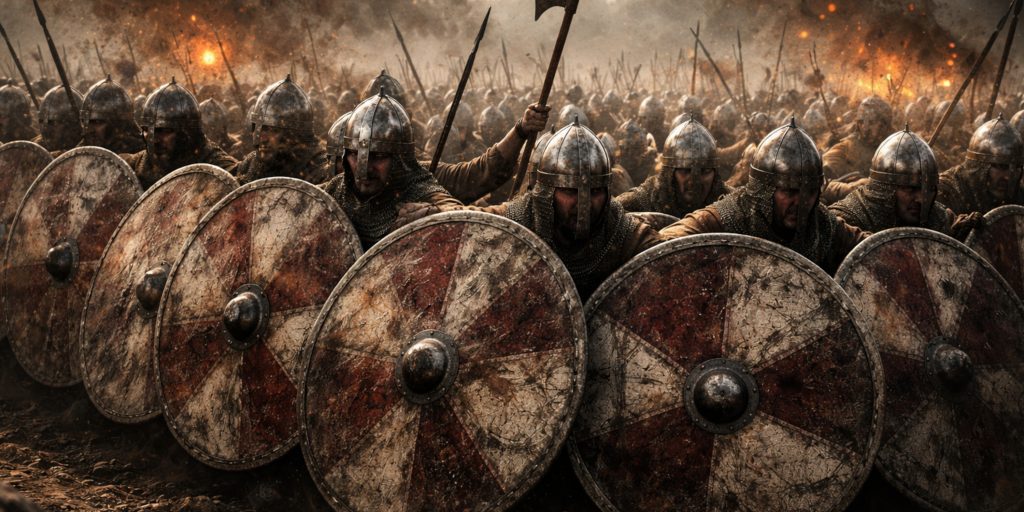
The roots of the fyrd stretch back to the migration period during the fifth and sixth centuries.
Germanic societies traditionally expected every free warrior to fight when summoned. As Anglo-Saxon kingdoms developed, these tribal obligations gradually became formal legal responsibilities.
By the reign of King Ine of Wessex during the late seventh century, laws already referred to military duties and penalties for avoiding service.
King Alfred the Great transformed the system during the ninth century after repeated Viking invasions exposed its weaknesses.
Rather than relying on one enormous seasonal army, Alfred divided military service into rotating contingents. While one force defended the kingdom, another returned home to tend farms.
This innovation made prolonged campaigns possible without destroying the agricultural economy.
How the Fyrd Was Organised
Although often described as a militia, the fyrd possessed a surprisingly sophisticated structure.
Each shire supplied a set number of fighting men according to assessments based on land ownership, particularly the hide system.
Responsibility flowed through local government.
| Level | Responsibility |
|---|---|
| King | Overall command |
| Ealdormen | Regional leadership |
| Sheriffs | Organisation within shires |
| Thegns | Led local contingents |
| Free landholders | Military service |
The best-equipped warriors generally served around their local lord, forming disciplined cores within larger armies.
This mixture of professional leadership and part-time soldiers proved remarkably resilient.
The Select Fyrd
By the tenth and eleventh centuries historians distinguish between two forms of service.
The General Fyrd
This represented the full mobilisation of available manpower during national emergencies.
The Select Fyrd
Sometimes called the select fyrd, this consisted of wealthier and better-equipped warriors capable of campaigning further from home.
These men increasingly resembled professional soldiers and often served alongside the king’s household troops.
Training and Military Service
Military service was not entirely unfamiliar to those called.
Many communities held regular weapon musters.
Young men learned hunting, spear throwing, shield use and basic combat from an early age.
Noble households provided considerably more extensive military education.
Service normally lasted only a limited period.
Long campaigns risked famine if too many farmers remained absent during harvest.
The logistical reality of feeding both armies and civilians shaped Anglo-Saxon warfare just as much as tactics.
Arms and Armour
The equipment of the fyrd varied enormously according to wealth.
Some warriors possessed expensive imported weapons and armour.
Others fought with little more than a spear and shield.
Spears
The spear remained the primary weapon.
Common examples include:
- Leaf-shaped spearheads
- Broad cutting spears
- Narrow thrusting spears
- Winged spears among wealthier warriors
Spears offered excellent reach and required relatively little training.
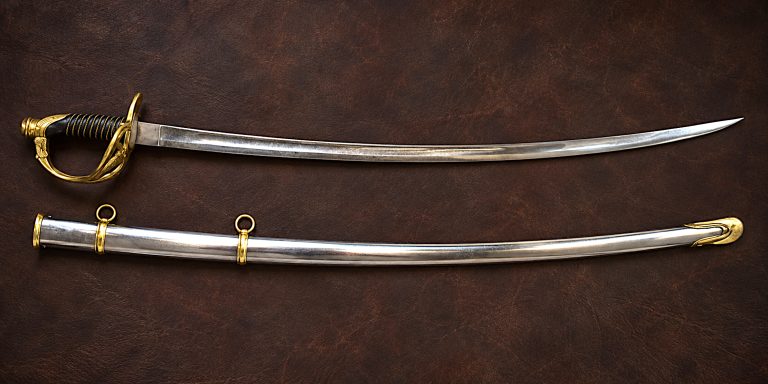
Swords
Swords remained prestigious possessions rather than standard issue.
Types likely carried by members of the fyrd included:
- Pattern-welded Anglo-Saxon swords from the seventh to ninth centuries
- Carolingian swords, imported or copied in England
- Ulfberht swords, exceptionally high-quality Frankish blades occasionally found in England
- Late Viking Age swords, often classified under Petersen typology, widely used during the tenth and eleventh centuries
A sword represented wealth and social standing as much as battlefield practicality.
Many members of the fyrd probably never owned one.
Seaxes
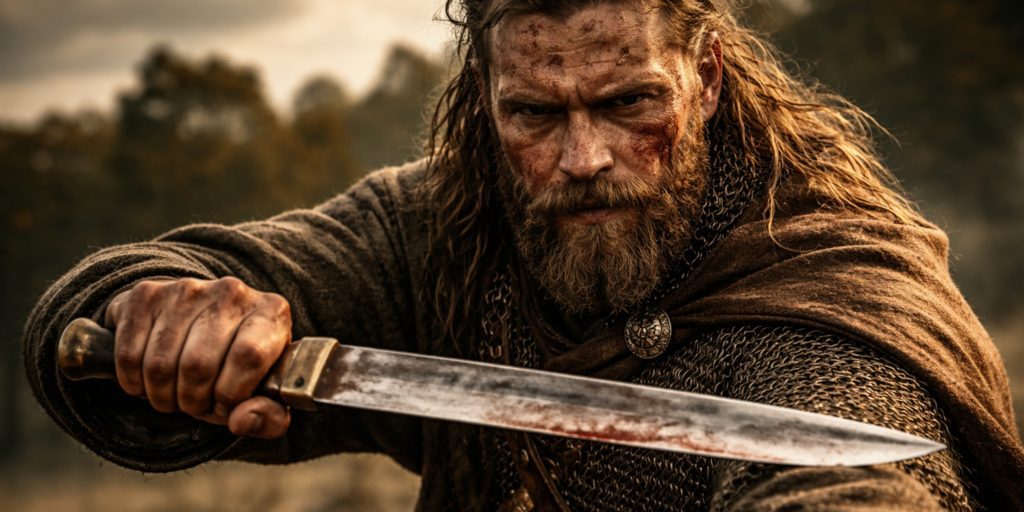
The seax remained common throughout much of the Anglo-Saxon period.
These single-edged blades served both domestic and military purposes.
Long seaxes could function as formidable fighting weapons.
Axes
Axes ranged from simple woodworking tools pressed into service to specialised war axes.
By the eleventh century, Danish influence encouraged wider use of heavier axes.
Shields
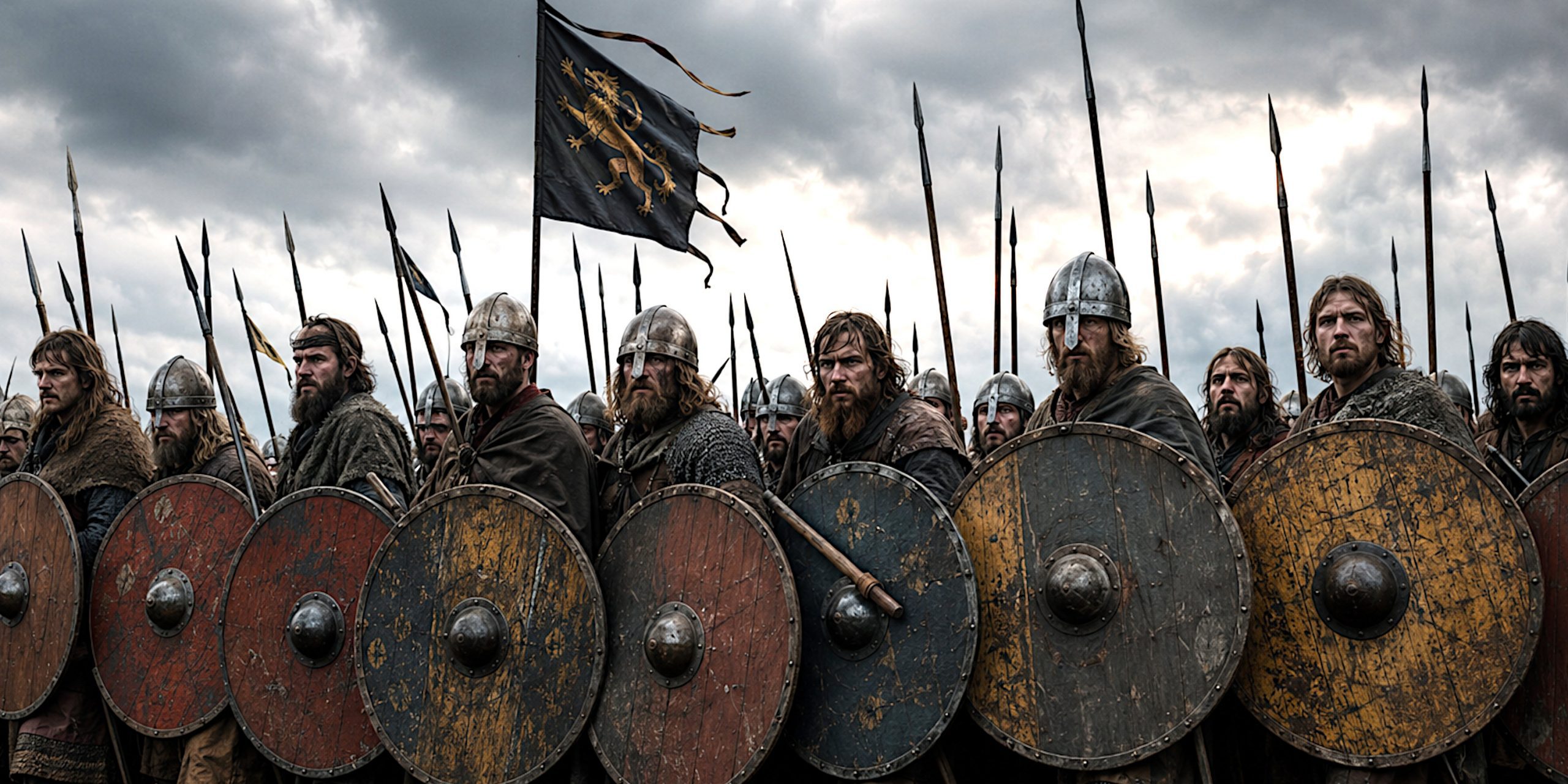
Round wooden shields dominated.
Typical features included:
- Lime or poplar construction
- Iron boss
- Leather covering
- Painted decoration
- Diameter between 75 and 95 centimetres
Shield walls depended upon these overlapping defences.
Helmets
Helmets remained expensive.
Examples include:
- Spangenhelms
- Ridge helmets
- Conical helmets with nasal guards by the eleventh century
Most ordinary warriors probably fought bareheaded or wearing padded caps.
Body Armour
Protection varied greatly.
Common forms included:
- Quilted or padded garments
- Leather protection
- Mail shirts among wealthier warriors
- Mail coifs in the late Anglo-Saxon period
Mail remained a luxury.
Even kings valued good mail highly.
Tactics on the Battlefield
The shield wall defined Anglo-Saxon warfare.
Rows of overlapping shields formed dense defensive lines supported by projecting spears.
Discipline mattered far more than individual heroics.
Battles frequently became contests of endurance.
The side maintaining formation longest usually prevailed.
Once a shield wall broke, events often deteriorated rapidly into pursuit and slaughter.
Anyone expecting cinematic sword duels would probably have been disappointed. Most combat involved shoving, stabbing and trying very hard not to become the unfortunate fellow lying underneath everyone else.
Famous Battles Involving the Fyrd
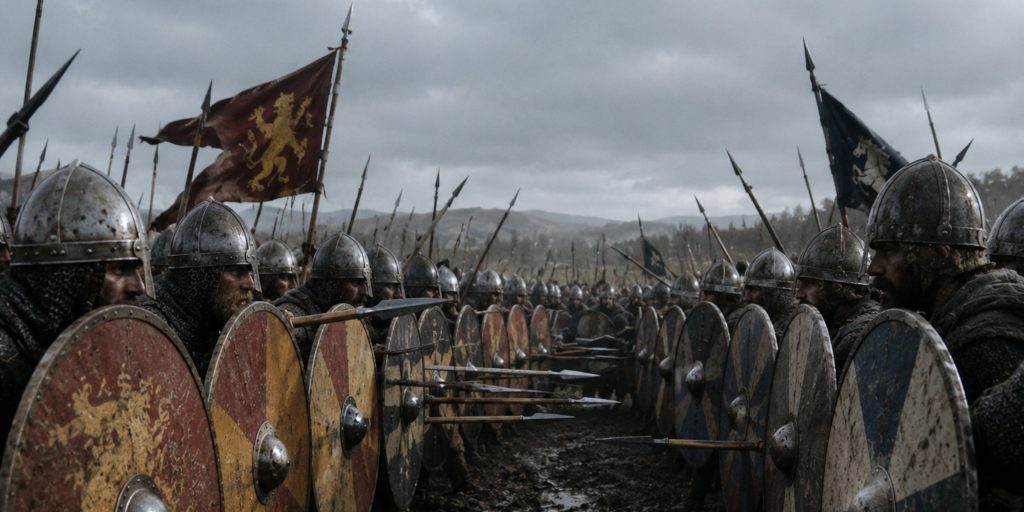
The fyrd fought in many defining moments of English history.
Notable examples include:
- Battle of Ashdown (871)
- Battle of Edington (878)
- Battle of Maldon (991)
- Battle of Assandun (1016)
- Battle of Stamford Bridge (1066)
- Battle of Hastings (1066)
At Hastings, much of Harold II’s army consisted of experienced members of the fyrd fighting beside the professional housecarls.
Despite eventual defeat, the English army resisted repeated Norman assaults for much of the day.
Archaeology
Archaeology has transformed our understanding of the fyrd.
Important discoveries include:
The Staffordshire Hoard
The remarkable collection demonstrates the extraordinary craftsmanship associated with elite Anglo-Saxon weaponry.
Many decorative sword fittings probably originated from high-status military equipment.
Sutton Hoo
Although predating the mature fyrd system, Sutton Hoo reveals the martial culture from which later military organisation developed.
The famous helmet remains one of the finest surviving examples of early medieval armour.
Battle of Maldon Finds
Excavations around the battlefield have uncovered weapon fragments consistent with late Anglo-Saxon warfare.
Spearheads and Shields
Hundreds of excavated spearheads across England confirm that the spear remained the dominant battlefield weapon.
Iron shield bosses appear regularly in Anglo-Saxon cemeteries.
Defensive Burhs
Alfred’s fortified towns survive in impressive archaeological detail.
These formed essential components of the military reforms supporting the fyrd.
Contemporary Accounts
Several contemporary writers describe the fyrd and its campaigns.
The Anglo-Saxon Chronicle frequently records armies being summoned.
“Then King Alfred gathered his force.”
Its entries consistently demonstrate the ability of kings to raise substantial armies across England.
Writing in the eighth century, the Venerable Bede observed the military responsibilities of Anglo-Saxon rulers.
“The king led his army.”
Although brief, such references confirm that military leadership formed an expected royal duty.
The poem The Battle of Maldon offers perhaps the most vivid literary portrayal of warriors serving within the Anglo-Saxon military tradition.
It celebrates loyalty even in defeat.
“Mind must be the firmer, heart the keener.”
The line remains one of the most famous expressions of Anglo-Saxon courage.
Strengths and Weaknesses
Strengths
- Large manpower reserves
- Strong local organisation
- Excellent defensive capability
- Flexible regional mobilisation
- Deep ties between military service and community
Weaknesses
- Limited campaigning season
- Uneven quality of equipment
- Variable experience
- Agricultural commitments restricted long operations
- Dependent upon effective leadership
The Norman Conquest and the End of the Fyrd
Following 1066, William the Conqueror gradually replaced the Anglo-Saxon military system.
Feudal obligations increasingly superseded the traditional fyrd.
Military service became tied to knight service and land tenure under Norman law.
Elements of local militia survived for centuries, but the classic Anglo-Saxon fyrd disappeared.
Its influence, however, endured.
Later English militias, county levies and even concepts of civic military obligation owed something to this earlier institution.
Legacy
The fyrd helped preserve England during one of the most turbulent periods in its history.
Without Alfred’s reforms and the willingness of ordinary communities to fulfil military obligations, Viking conquest might have followed a very different course.
Modern scholarship increasingly rejects the old image of an ineffective peasant mob.
Instead, the fyrd appears as a practical military institution adapted to the economic realities of early medieval England. It was never intended to replace professional warriors. Rather, it complemented them, allowing kings to raise armies on a scale few contemporary kingdoms could match.
For historians, the fyrd serves as a reminder that medieval warfare depended as much upon administration, logistics and community obligation as it did upon famous kings or gleaming swords. Those swords certainly attract museum visitors, and rightly so, but they were only one part of a much larger machine that defended Anglo-Saxon England for almost six centuries.
Frequently Asked Questions
What was the Anglo-Saxon fyrd?
The fyrd was England’s military levy, consisting of free men obliged to serve in defence of their kingdom when summoned by the king or local authorities.
Did every man have to serve?
No. Service usually fell upon free landholders and wealthier members of society. The poorest were often exempt because they could not afford military equipment.
What weapons did the fyrd use?
Most carried spears and round shields. Wealthier warriors owned pattern-welded Anglo-Saxon swords, Carolingian swords, Ulfberht swords, seaxes, mail armour and helmets.
Was the fyrd professional?
Most members served part time, although experienced warriors and the king’s household troops provided professional leadership.
When did the fyrd disappear?
The traditional fyrd gradually declined after the Norman Conquest of 1066 as feudal military service replaced Anglo-Saxon obligations.