Tokugawa Ieyasu spent much of his life surrounded by men who appeared more powerful, more daring and considerably more dramatic. Most of them died before he did.
Born Matsudaira Takechiyo in 1543, Ieyasu endured a childhood shaped by hostage politics, survived a ruinous defeat by Takeda Shingen, navigated alliances with Oda Nobunaga and Toyotomi Hideyoshi, and finally emerged as the dominant ruler of Japan. His victory at Sekigahara in 1600 laid the foundations of the Tokugawa shogunate, a military government that endured until 1868.
Describing him simply as patient is tempting, but inadequate. Ieyasu could wait when waiting suited him. He could also campaign aggressively, break promises, arrange political marriages and punish opposition with considerable severity. Patience was one weapon in a very well-stocked armoury.
Tokugawa Ieyasu at a Glance
| Detail | Information |
|---|---|
| Born | 31 January 1543, Okazaki Castle, Mikawa Province |
| Birth name | Matsudaira Takechiyo |
| Later names | Matsudaira Motoyasu, Matsudaira Ieyasu, Tokugawa Ieyasu |
| Clan | Matsudaira, later Tokugawa |
| Father | Matsudaira Hirotada |
| Mother | Odai-no-kata |
| Principal wife | Lady Tsukiyama |
| Political wife | Asahi no Kata, sister of Toyotomi Hideyoshi |
| Major allies | Oda Nobunaga, later Toyotomi Hideyoshi |
| Principal rivals | Takeda Shingen, Ishida Mitsunari, Toyotomi Hideyori |
| Defining victory | Battle of Sekigahara, 1600 |
| Appointed shōgun | 1603 |
| Retired as shōgun | 1605, while retaining effective authority |
| Died | 1 June 1616 |
| Posthumous identity | Tōshō Daigongen |
| Historical importance | Founder of the Tokugawa shogunate |
Early Life in a Divided Japan

Ieyasu was born at Okazaki Castle in Mikawa Province, part of modern Aichi Prefecture. His father, Matsudaira Hirotada, controlled a relatively small and vulnerable territory between the powerful Oda clan to the west and the Imagawa clan to the east.
This was not an age in which a small lord could rely upon good intentions and sturdy walls. The Sengoku period was defined by unstable alliances, local warfare and ambitious daimyō competing for land, retainers and influence.
Ieyasu’s parents separated while he was still a child because their respective families supported opposing political factions. His father sought protection from Imagawa Yoshimoto and agreed to send his young heir to the Imagawa as a hostage.
During the journey, Takechiyo was seized by men connected to the Oda. He was held by the Oda for several years before eventually being transferred to the Imagawa following negotiations between the rival clans.
The word “hostage” can give the impression of a child chained in a cellar. Elite hostages were generally treated according to their rank, educated and incorporated into the political household of their captors. Even so, their lives depended upon the behaviour of distant relatives. It was an education in power that no sensible parent would now recommend.
Ieyasu’s childhood taught him several lessons that remained visible throughout his career:
- Alliances lasted only while they remained useful
- Family members could become political currency
- Survival might require submission before independence
- A weak lord needed information as much as soldiers
- Loyalty could be encouraged, purchased or coerced
Service Under the Imagawa
As a young man, Ieyasu came of age under Imagawa authority and took the name Matsudaira Motoyasu. He married Lady Tsukiyama, a relative of Imagawa Yoshimoto, and began his military career as an Imagawa subordinate.
His first recorded campaigns were fought against the Oda. At the Battle of Okehazama in 1560, Motoyasu was operating on behalf of the Imagawa and successfully delivered supplies to the besieged fortress of Ōdaka.
The wider campaign ended disastrously for his masters. Oda Nobunaga launched a surprise attack and killed Imagawa Yoshimoto. The Imagawa position in western Mikawa began to collapse almost immediately.
Motoyasu returned to Okazaki Castle and gradually separated himself from Imagawa control. By 1562 he had reached an understanding with Nobunaga, although the precise date and formal nature of the so-called Kiyosu Alliance remain debated.
This was a remarkable reversal. The young Matsudaira lord who had fought for the Imagawa now aligned himself with the man responsible for their destruction. Sentiment had very little room at the negotiating table.
The Mikawa Ikkō-ikki

Ieyasu’s independence was nearly destroyed by rebellion within his own territory.
Between 1563 and 1564, adherents of the Jōdo Shinshū Buddhist movement rose against his authority in Mikawa. Several important Matsudaira retainers joined the rebels, forcing Ieyasu to fight men who had previously served his family.
The uprising revealed how limited a daimyō’s authority could be. Religious communities possessed fortified temples, armed supporters and economic privileges. Loyalty to a sect or local network could outweigh loyalty to a lord.
Ieyasu defeated the rebellion and dismantled much of its organised power in Mikawa. He later allowed some former enemies to return to his service, an example of the calculated flexibility that became one of his strengths.
He did not forgive because forgiveness was morally uplifting. He forgave when experienced soldiers were useful.
Becoming Tokugawa Ieyasu
In 1566 or 1567, Matsudaira Ieyasu adopted the surname Tokugawa and claimed descent from the prestigious Minamoto lineage. This genealogical claim was politically convenient and historically uncertain.
The new name helped elevate him beyond the status of a provincial Matsudaira lord. Court titles and ancestry mattered because military authority in Japan still benefited from recognition by the imperial establishment.
By the late 1560s, Ieyasu had consolidated control over Mikawa and expanded into neighbouring Tōtōmi Province. His lands placed him directly in the path of Takeda Shingen, one of the most formidable commanders of the age.
Mikatagahara: Ieyasu’s Most Important Defeat
In 1572, Takeda Shingen invaded Tokugawa territory during a wider campaign against Oda Nobunaga.
Ieyasu confronted the Takeda army near Mikatagahara in January 1573. His forces were heavily defeated. Tokugawa troops broke, retainers died protecting their lord, and Ieyasu escaped to Hamamatsu Castle.
Later stories claim that he ordered a portrait of himself to be painted after the defeat, showing him anxious and humbled so that he would remember the cost of recklessness. The famous image traditionally associated with this story probably does not support the legend as neatly as popular history suggests.
What is beyond doubt is that Mikatagahara mattered. Ieyasu had challenged a stronger enemy in unfavourable circumstances and nearly lost everything. He survived partly because Shingen did not continue directly against Hamamatsu and died during the following campaign.
I have always found this defeat more revealing than many of Ieyasu’s victories. Sekigahara shows what he could do when years of political preparation had tilted the board in his favour. Mikatagahara shows what happened when he allowed courage to outrun judgement.
Alliance with Oda Nobunaga
For roughly two decades, Ieyasu remained an important ally of Oda Nobunaga. The relationship allowed Ieyasu to expand eastwards while Nobunaga concentrated upon central Japan.
Their alliance was strengthened through marriage. Ieyasu’s eldest son, Matsudaira Nobuyasu, married Nobunaga’s daughter Tokuhime.
The arrangement ended in tragedy. In 1579, Lady Tsukiyama was executed and Nobuyasu was ordered to commit seppuku. Traditional accounts suggest that Nobunaga demanded these deaths after accusations of treason or contact with the Takeda. Modern historians have questioned how directly Nobunaga was responsible and whether internal Tokugawa politics played a greater part.
Whatever the precise circumstances, Ieyasu sanctioned the destruction of his wife and heir. It is difficult to reconcile this episode with the comforting image of the wise old statesman. Nor should we try. Sengoku politics was brutal, but individual decisions still belonged to the people who made them.
The Battle of Nagashino
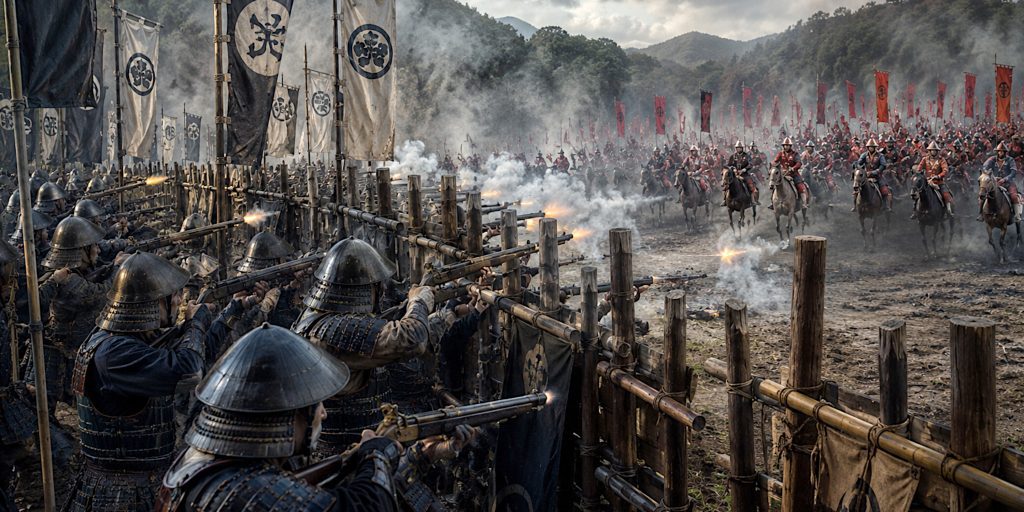
In 1575, Tokugawa and Oda forces defeated the Takeda army at Nagashino. The battle is famous for the use of matchlock arquebuses behind defensive fieldworks.
Older accounts often present Nagashino as a simple contest between modern firearms and obsolete cavalry charges. The reality was more complicated. The Takeda army contained substantial infantry forces, while the allied victory depended upon terrain, fortifications, disciplined troops and combined arms rather than firearms alone.
Ieyasu’s role was nevertheless significant. Nagashino helped weaken the Takeda and protected Tokugawa territory. In 1582, following the destruction of the Takeda clan, Ieyasu acquired control of Suruga Province and absorbed many former Takeda warriors into his own military organisation.
He was perfectly willing to employ men who had recently tried to kill him. This was sensible administration, provided everyone remembered who now issued the orders.
The Death of Nobunaga and the Rise of Hideyoshi
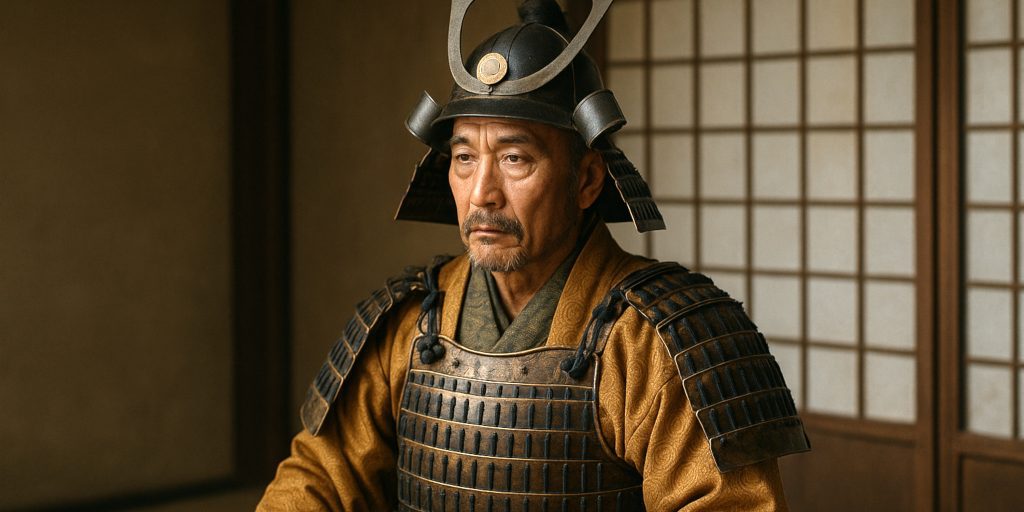
Oda Nobunaga was killed during the Honnō-ji Incident in 1582, when his retainer Akechi Mitsuhide rebelled against him.
Ieyasu was travelling near Sakai with only a limited escort. He escaped through Iga Province and returned to Mikawa. The journey later became one of the most celebrated episodes in his life, assisted by retainers traditionally associated with figures such as Hattori Hanzō.
Nobunaga’s death created a struggle over his territories and political legacy. Toyotomi Hideyoshi moved rapidly, defeated Mitsuhide and became the leading figure among Nobunaga’s former commanders.
Ieyasu resisted Hideyoshi at the campaigns of Komaki and Nagakute in 1584. Tokugawa troops achieved an important local victory at Nagakute, but neither side secured a decisive overall result.
The conflict ended through negotiation. Hideyoshi possessed greater resources, while Ieyasu had shown that defeating him would be expensive. The two men reached an accommodation sealed through marriage and hostage exchanges.
Ieyasu eventually acknowledged Hideyoshi’s supremacy. Once again, he accepted a subordinate position without surrendering his long-term ambitions.
Transfer to the Kantō
After Hideyoshi defeated the Hōjō clan in 1590, he transferred Ieyasu away from his established provinces and granted him extensive lands in the Kantō region.
The move may have been intended to weaken him. Ieyasu was separated from his old power base and given responsibility for territories requiring considerable reorganisation. Yet the transfer also provided him with a vast and productive domain.
He established his headquarters at Edo, then a comparatively modest settlement surrounded by wetlands and waterways. Edo would grow into the political centre of the Tokugawa regime and eventually become Tokyo.
Ieyasu surveyed land, organised retainers, improved roads and developed the castle town. His ability to convert an apparent setback into a stronger territorial base was among his greatest political talents.
During Hideyoshi’s invasions of Korea, Ieyasu avoided committing his own army overseas. This preserved his soldiers and finances while several potential rivals expended resources in a destructive and ultimately unsuccessful war.
Whether this reflected extraordinary foresight or fortunate positioning is open to debate. Historians must occasionally permit luck into the room, however much great men’s biographies dislike it.
The Road to Sekigahara
Toyotomi Hideyoshi died in 1598, leaving his young son Hideyori as heir. Governance was entrusted to councils of senior lords and administrators, but the arrangement was inherently unstable.
Ieyasu was one of the Five Great Elders appointed to protect the succession. He soon began strengthening his position through marriage alliances and political agreements, some of which violated restrictions established by Hideyoshi.
Opposition coalesced around Ishida Mitsunari, a skilled administrator with enemies among several military daimyō. The resulting struggle was not a simple contest between Tokugawa and Toyotomi. Many commanders who had served Hideyoshi supported Ieyasu, while others joined Mitsunari’s Western Army.
Ieyasu’s strength lay in exploiting these divisions. He negotiated secretly with Western commanders, offered rewards and cultivated uncertainty within the opposing coalition.
The Battle of Sekigahara
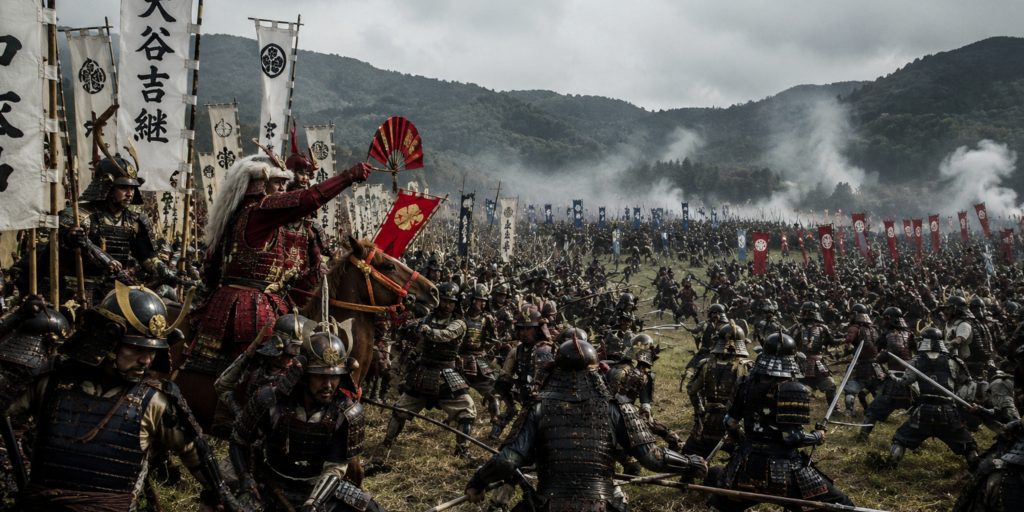
The decisive battle was fought on 21 October 1600 in a valley around Sekigahara.
The armies were large by the standards of the period, although precise numbers remain disputed. Rain had soaked the ground before the battle, and mist initially limited visibility.
Ieyasu’s Eastern Army attacked positions held by the Western coalition. Fighting remained bitter and uncertain for several hours. The Western Army occupied potentially strong ground, but several of its contingents either remained inactive or changed sides.
Kobayakawa Hideaki’s eventual intervention against the Western position was crucial. Other commanders followed, and Mitsunari’s army collapsed.
Sekigahara was not won by patience alone. Ieyasu had assembled a broad coalition, exploited personal grievances and encouraged defections before battle began. His political campaign shaped the military outcome.
After the victory, Ieyasu ordered the execution of Ishida Mitsunari, Konishi Yukinaga and Ankokuji Ekei. He confiscated or reduced the domains of many opponents and rewarded his supporters with land.
The redistribution of territory allowed him to reshape Japan’s political geography. Reliable Tokugawa retainers received strategically important domains, while potentially dangerous daimyō were often placed farther from Edo.
Shōgun and Founder of a Dynasty

In 1603, Emperor Go-Yōzei appointed Ieyasu as shōgun. The title gave formal expression to authority he already exercised.
He resigned the office in 1605 in favour of his son, Tokugawa Hidetada. This was not retirement in the modern sense. Ieyasu continued to direct major policy from Sunpu while establishing hereditary succession during his own lifetime.
The arrangement sent a clear message. Tokugawa government would not depend upon the life of one elderly warlord.
The political system he helped create is often called the bakuhan system, combining authority from the shogunate with the continued administration of individual domains by daimyō. It was neither a modern centralised state nor a loose collection of independent territories.
The Tokugawa family controlled major cities, mines, ports and productive lands. Daimyō retained local authority but operated within a political order dominated by the shogunate.
How Ieyasu Controlled the Daimyō
Ieyasu divided daimyō broadly according to their relationship with the Tokugawa:
| Group | Position |
|---|---|
| Shinpan | Tokugawa relatives |
| Fudai | Hereditary Tokugawa retainers and long-standing allies |
| Tozama | “Outside” lords who submitted later, often around Sekigahara |
Fudai lords were commonly placed in strategically important positions and became central to shogunal government. Some tozama daimyō retained extremely wealthy domains, but their location and political access could be carefully managed.
The mature system of compulsory alternate attendance, known as sankin-kōtai, was developed and formalised after Ieyasu’s lifetime. He helped establish the political practices from which it grew, but it would be misleading to credit him with every feature of later Tokugawa rule.
The same caution applies to Japan’s policy of maritime restriction. Ieyasu did not close Japan. He encouraged trade with the Portuguese, Spanish, Dutch, English, Chinese and Koreans. The more comprehensive restrictions later associated with sakoku were introduced under his successors.
Relations with Europeans

Ieyasu showed considerable interest in overseas commerce and foreign technology. He permitted missionary activity at times, but Christianity increasingly appeared to the Tokugawa leadership as a possible challenge to political authority.
One of the most remarkable foreigners in his service was the English navigator William Adams, who reached Japan aboard the Dutch ship Liefde in 1600. Adams became an adviser, received land and was known in Japan as Miura Anjin.
In a surviving letter, Adams described his first meeting with Ieyasu:
“He viewed me well, and seemed to be wonderfully favourable.”
Ieyasu questioned Adams about Europe, navigation, religion and international rivalry. Adams helped build Western-style ships and contributed to English and Dutch commercial access.
In 1613, however, the shogunate issued an edict suppressing Christianity. Missionaries were expelled and Japanese Christians faced increasing persecution. The harsher machinery of Tokugawa religious control developed later, but the change in direction was already clear before Ieyasu’s death.
His approach to Europeans was practical rather than admiring or instinctively hostile. Ships, weapons, pilots and trade were useful. Independent religious loyalties were rather less welcome.
The Siege of Osaka
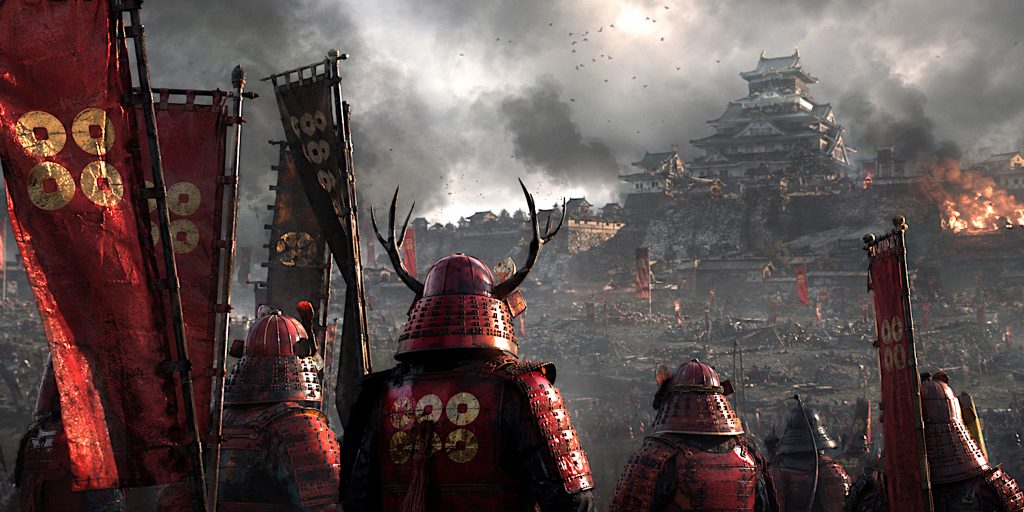
The survival of Toyotomi Hideyori at Osaka Castle remained the greatest threat to Tokugawa supremacy.
By 1614, Osaka had become a gathering place for rōnin, displaced warriors and opponents of Tokugawa rule. A dispute over an inscription on a temple bell at Hōkō-ji provided Ieyasu with a political pretext for confrontation.
The Winter Campaign of 1614 culminated in the siege of Osaka Castle. The fortress resisted Tokugawa attacks, aided by formidable defences and commanders such as Sanada Yukimura, more properly known as Sanada Nobushige.
Negotiations produced a peace settlement, after which the outer defences and moats of the castle were filled or demolished. When hostilities resumed in 1615, Osaka was far more vulnerable.
The Summer Campaign ended with the destruction of the Toyotomi forces. Hideyori and his mother, Yodo-dono, died within the castle. Hideyori’s young son Kunimatsu was captured and executed.
The extinction of the Toyotomi line removed the final credible dynastic challenge to Tokugawa rule. It was effective, ruthless and entirely in keeping with the political realities of the age.
Arms and Armour
Ieyasu lived through a transformation in Japanese warfare. Mounted archery and traditional bladed weapons remained important, but armies increasingly relied upon massed infantry, long spears and matchlock firearms.
| Equipment | Role and significance |
|---|---|
| Tachi | A long sword worn suspended edge-down, particularly with armour and in formal military contexts |
| Uchigatana | A sword worn thrust through the sash, edge-up, increasingly common during the late medieval period |
| Wakizashi or koshigatana | A shorter sidearm used alongside a longer sword |
| Yari | Spear used extensively by samurai and ashigaru infantry |
| Yumi | Asymmetrical Japanese bow, still important despite the growth of firearms |
| Tanegashima teppō | Matchlock arquebus used in coordinated infantry warfare |
| Tōsei gusoku | “Modern armour” designed for the conditions of sixteenth-century warfare |
| Kabuto | Helmet, often fitted with a distinctive crest for identification and display |
| Jinbaori | Surcoat worn over armour, sometimes made from imported fabrics |
Ieyasu owned numerous swords, suits of armour and military objects. Some were functional equipment, while others carried political, ceremonial or diplomatic value.
It is safer not to imagine him perpetually equipped with the fully standardised Edo-period daishō of katana and wakizashi. Sword terminology and wearing practices changed over his lifetime. Portraits and surviving objects show that tachi-style swords, uchigatana and shorter companion blades all belonged to the military culture of his age.
Ieyasu’s Surviving Armour
Several suits of armour are traditionally associated with Ieyasu. Among the best known is the Shida gusoku, preserved at Kunōzan Tōshō-gū. Its helmet carries a distinctive fern-like crest, giving the armour its name.
Other surviving or traditionally attributed sets include gold-lacquered armour and armour influenced by European forms. Nanban-style armour incorporated elements inspired by imported European cuirasses and helmets. Such equipment reflected Japan’s contact with Portuguese and other overseas traders rather than a wholesale rejection of Japanese armour-making.
Ieyasu is often described as preferring practical armour without ostentation. That may broadly suit his cultivated reputation, but his material world was hardly austere. Armour, swords, clothing, tea utensils and imported objects communicated status and authority. Even apparent simplicity could be expensive.
Ieyasu’s Swords
Ieyasu was an enthusiastic collector and patron of swords. Important blades passed into Tokugawa possession through inheritance, gifts, confiscations and political exchange.
Swords in his collection included works by celebrated smiths and blades connected with earlier warrior families. Their significance extended beyond fighting:
- Famous swords conveyed legitimate warrior ancestry
- Gifts of blades created obligations between lords
- Ownership linked the Tokugawa to prestigious earlier regimes
- Sword appraisal helped establish cultural authority
- Heirlooms could reinforce relationships within the Tokugawa family
Some blades associated with Ieyasu are preserved in the Tokugawa Art Museum and shrine collections. As with many famous weapons, provenance must be treated carefully. Later tradition had a habit of attaching celebrated names to exceptional objects. An old sword apparently felt undressed without a famous warlord somewhere in its biography.
Military Record
| Date | Campaign or battle | Ieyasu’s role and result |
|---|---|---|
| 1558 | Siege of Terabe | Early action while serving the Imagawa |
| 1560 | Okehazama campaign | Supported the Imagawa and supplied Ōdaka |
| 1563 to 1564 | Mikawa Ikkō-ikki | Defeated a dangerous internal rebellion |
| 1570 | Battle of Anegawa | Fought alongside Oda Nobunaga |
| 1573 | Battle of Mikatagahara | Heavily defeated by Takeda Shingen |
| 1575 | Battle of Nagashino | Allied victory over the Takeda |
| 1584 | Komaki and Nagakute | Opposed Hideyoshi and won a notable local victory |
| 1590 | Odawara campaign | Served under Hideyoshi against the Hōjō |
| 1600 | Battle of Sekigahara | Defeated the Western coalition |
| 1614 | Osaka Winter Campaign | Besieged Toyotomi Hideyori |
| 1615 | Osaka Summer Campaign | Destroyed the remaining Toyotomi resistance |
Was Ieyasu a Great Battlefield Commander?
Ieyasu was experienced, resilient and capable of decisive action, but claims that he was an unbeatable tactical genius should be approached with care.
He suffered serious defeats. At Mikatagahara he badly misjudged the situation. During the Osaka campaigns, Tokugawa numerical superiority did not prevent fierce resistance or local setbacks.
His greatest strengths lay elsewhere:
- Preserving his forces when rivals exhausted theirs
- Integrating former enemies into his army
- Maintaining a durable retainer network
- Using marriages and hostages as political instruments
- Selecting defensible territorial bases
- Gathering intelligence and negotiating defections
- Turning victory into permanent administrative control
Sekigahara was his masterpiece because the battlefield result emerged from political work undertaken long before the first shots were fired.
Family, Wives and Succession
Ieyasu fathered numerous children by his wives and concubines. These relationships formed part of a wider dynastic strategy.
His second surviving son, Hidetada, became the second Tokugawa shōgun. Three younger sons established the major collateral houses of Owari, Kii and Mito, collectively known as the gosanke. These families could supply a successor if the direct shogunal line failed.
Women within Ieyasu’s household participated in political networks, managed residences, arranged relationships and bore heirs whose status could reshape the succession. They are frequently reduced to names in family trees, which is convenient for tidy political history and rather less satisfactory for understanding how dynasties actually functioned.
Lady Saigō, the mother of Hidetada, became particularly important to Tokugawa lineage. Lady Acha also acted as a trusted political intermediary and participated in negotiations during the Osaka campaigns.
Ieyasu’s family policy was effective, but it was not gentle. The deaths of Lady Tsukiyama and Nobuyasu remain among the darkest episodes of his life.
Government, Law and Social Order
Following the fall of Osaka, the Tokugawa government issued regulations for the military houses, commonly known as the Buke shohatto. These rules sought to control castle construction, marriages, alliances and the conduct of daimyō.
The imperial court and aristocracy were also regulated through separate legislation. The emperor remained a vital source of cultural and ceremonial legitimacy, but effective political and military authority rested with the shogunate.
Ieyasu did not personally create every institution later associated with Tokugawa Japan. Much was refined under Hidetada, Iemitsu and subsequent shōguns. His achievement was to make a hereditary Tokugawa order politically credible and difficult to challenge.
The peace that followed brought considerable benefits, including urban growth, expanded commerce and cultural development. It also rested upon social hierarchy, surveillance, restrictions on movement and the suppression of political opposition. Stability is rarely an innocent word in the history of government.
Religion and Deification
Ieyasu supported Buddhist institutions, particularly those associated with the Jōdo school, while also patronising Shinto shrines and using religious authority for political purposes.
After his death, he was enshrined as Tōshō Daigongen, a divine protector associated with the “Great Gongen, Light of the East”. This posthumous identity connected the founder of the regime with the sacred protection of Japan and the Tokugawa house.
His first burial took place at Kunōzan. The magnificent Nikkō Tōshō-gū complex later became the principal centre of his cult. Whether his physical remains were transferred from Kunōzan to Nikkō is still debated.
The deification of Ieyasu was not merely an expression of grief or reverence. It strengthened the political legitimacy of his descendants. The founder of the dynasty became a guardian of the dynasty, which was administratively very efficient of him.
Death
Ieyasu died in 1616, less than a year after the destruction of the Toyotomi at Osaka.
Popular tradition claims that his final illness followed a meal involving sea bream tempura. Modern medical speculation has suggested stomach cancer or another serious internal illness, but the evidence does not allow a certain diagnosis.
The tempura story is memorable largely because history enjoys blaming dinner whenever medicine cannot provide a definitive answer.
At the time of his death, Ieyasu had achieved what had eluded generations of warriors. The major military opposition had been destroyed, succession had passed to an adult son, and the Tokugawa family controlled the machinery of national government.
The Famous “Three Unifiers” Poem
A later tradition compares Nobunaga, Hideyoshi and Ieyasu through their responses to a cuckoo that refuses to sing:
- Nobunaga would kill the bird
- Hideyoshi would persuade it to sing
- Ieyasu would wait until it sang
The verse neatly captures their popular reputations: Nobunaga as destructive, Hideyoshi as resourceful and Ieyasu as patient.
It is not a contemporary psychological report. It is a later piece of historical characterisation, memorable because it compresses complicated careers into three good lines. Historians are professionally suspicious of anything quite that convenient.
Did Ieyasu Write the “Life Is Like a Long Journey” Maxim?
A famous text attributed to Ieyasu begins with the idea that life resembles a long journey made while carrying a heavy burden. It praises patience, restraint and acceptance of hardship.
The passage suits Ieyasu’s later reputation remarkably well, perhaps too well. Its attribution is doubtful, and it should not be presented confidently as a statement written or spoken by him.
The text remains valuable as part of the way later generations remembered Ieyasu. It tells us a great deal about his cultivated image, though not necessarily his exact words.
Personality and Interests
Ieyasu was more than a soldier and administrator. Surviving accounts and collections associate him with several interests:
- Falconry and hunting
- Medicine and medicinal compounds
- Sword collecting and appraisal
- Tea culture
- Books and printing
- Navigation and foreign trade
- Military equipment
- Chinese political and philosophical texts
His interest in medicine may have encouraged a degree of self-treatment during his final illness. Confidence is useful in a ruler, although less so when he begins prescribing for himself.
He could display restraint, generosity and curiosity, but he was also suspicious and capable of extreme severity. His personality should not be flattened into either benevolent wisdom or cold calculation. He had lived since childhood in a political culture where hesitation could destroy a family. That experience shaped him, though it does not absolve every choice he made.
Archaeology and the Material Evidence
Archaeology has expanded our understanding of the landscapes in which Ieyasu exercised power.
Excavations at Sunpu Castle have revealed major stone walls, moats, drainage features and elements belonging to different phases of construction. These discoveries demonstrate the scale of Ieyasu’s later residence and the resources invested in making Sunpu a political centre.
Work at Edo Castle and throughout modern Tokyo has recovered ceramics, roof tiles, defensive structures and urban remains associated with the growth of the Tokugawa capital. Much of the early city lies beneath one of the largest modern urban areas in the world, which does make excavation mildly inconvenient.
Battlefield archaeology at Sekigahara has been more challenging. Later agriculture, road construction and modern development have altered the landscape, while written accounts disagree over the positions of certain commanders. Archaeological investigation, terrain analysis and documentary research continue to test familiar reconstructions of the battle.
Material evidence connected with Ieyasu includes:
- Surviving castle foundations and stonework
- Armour and weapons with Tokugawa provenance
- Letters and administrative documents
- Imported clocks, textiles and European objects
- Ceramics and tea utensils
- Shrine buildings and ritual objects
- Seals, banners and heraldic equipment
- Urban remains from Edo and Sunpu
Where to See Artefacts Connected with Ieyasu
Kunōzan Tōshō-gū Museum
Kunōzan preserves objects traditionally associated with Ieyasu, including armour, weapons, clothing and personal possessions. It is also the site of his original burial.
Nikkō Tōshō-gū
The elaborate shrine complex at Nikkō became the principal centre of Ieyasu’s posthumous cult. Its architecture reflects how Tokugawa authority was expressed through religion, ceremony and display.
Tokugawa Art Museum, Nagoya
The museum holds treasures inherited by the Owari branch of the Tokugawa family, including swords, armour, manuscripts, furnishings and ceremonial objects.
Okazaki Castle
Reconstructed Okazaki Castle stands at Ieyasu’s birthplace. The site and museum explore the Matsudaira background and his rise from Mikawa lord to national ruler.
Sunpu Castle Park
The surviving moats, reconstructed structures and excavated remains help explain Ieyasu’s later headquarters and the political importance of Sunpu.
Edo Castle
Much of the former castle site lies within the Tokyo Imperial Palace grounds. Surviving moats, walls and gates preserve elements of the Tokugawa capital developed from Ieyasu’s original base.
Sekigahara Battlefield
The battlefield landscape contains monuments, reconstructed positions and museum interpretation. Visitors should remember that some traditional unit placements remain debated.
Tokugawa Ieyasu in Popular Culture
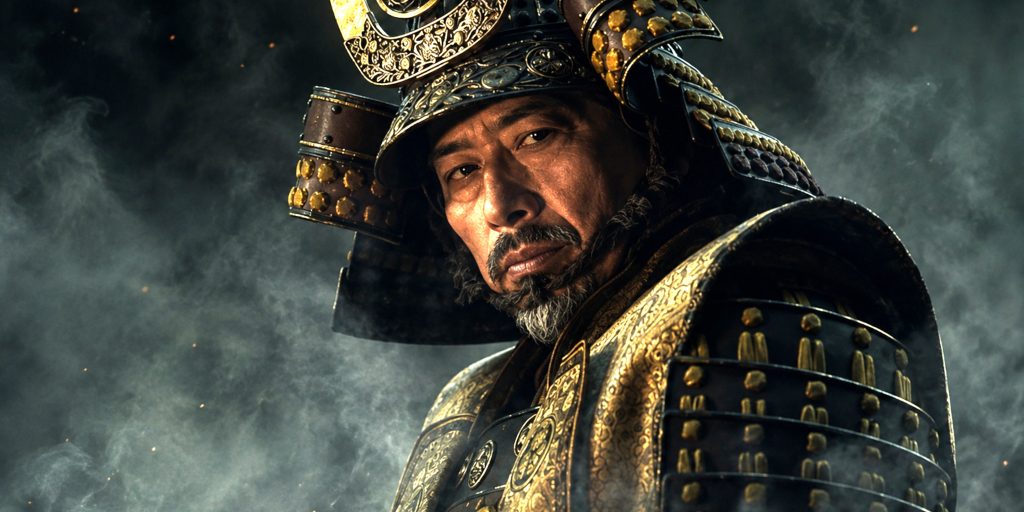
Ieyasu appears in novels, television dramas, films, manga and games. He is frequently portrayed as the patient survivor among Japan’s three unifiers.
James Clavell’s fictional Lord Toranaga in Shōgun was heavily inspired by Ieyasu, while the character John Blackthorne draws upon William Adams. The story captures parts of the political atmosphere surrounding Ieyasu’s rise, but it remains historical fiction.
Games often make him a master strategist, an elderly statesman or a heavily armoured battlefield commander. These portrayals reflect his reputation, though the real Ieyasu spent as much time managing land, marriages, correspondence and difficult allies as he did swinging a sword.
Administrative competence is admittedly harder to animate.
How Should Tokugawa Ieyasu Be Judged?
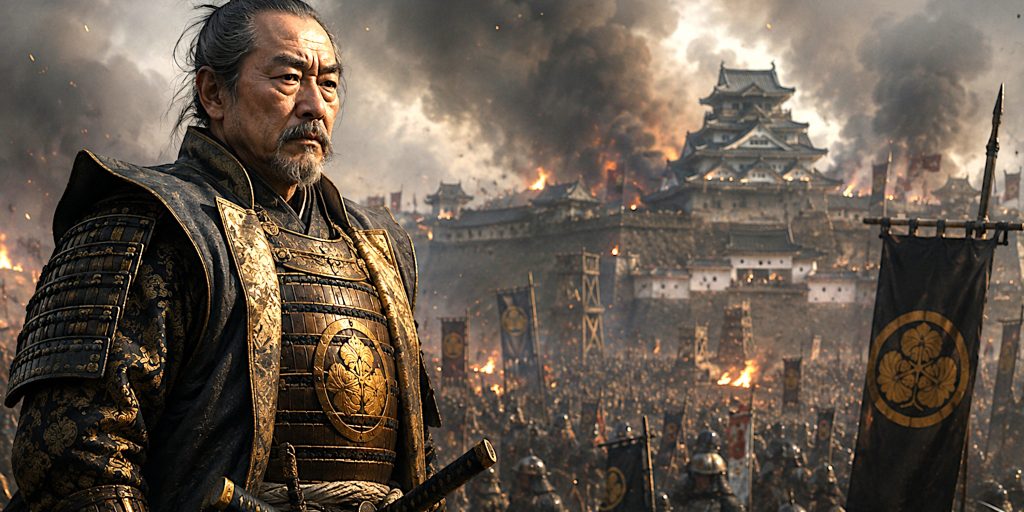
Ieyasu brought an end to the political instability of the Sengoku period, but he did so through warfare, confiscation, coercion and the destruction of rival families. The peace established by the Tokugawa benefited millions of people, yet it also secured the privileged position of a military elite.
He was not the sole unifier of Japan. Nobunaga broke many of the old regional powers, while Hideyoshi brought most of the country under a single political authority. Ieyasu inherited, adapted and ultimately surpassed their work.
His particular genius lay in building for succession. Nobunaga’s regime fractured after his assassination. Hideyoshi’s authority did not survive his death in a form capable of protecting his heir. Ieyasu transferred the title of shōgun to Hidetada while he was still alive, eliminated the remaining Toyotomi threat and gave the Tokugawa family a durable network of territory and retainers.
Personally, I find him easier to respect than to admire. His discipline, political intelligence and resilience were extraordinary. So was his capacity to place power above family and mercy. That tension is precisely what makes him worth studying.
Tokugawa Ieyasu did not merely win Japan. He created a system capable of keeping it.