The Battle of Sekigahara, fought on 21 October 1600, stands among the most decisive battles in world history. It was not simply another clash between rival samurai armies. It determined who would rule Japan for more than two and a half centuries and brought an end to decades of civil war known as the Sengoku period.
Thousands of warriors marched into the mist-covered valley of Sekigahara believing they were fighting for honour, loyalty or survival. Many instead discovered that politics, hesitation and outright betrayal would shape the outcome far more than personal courage.
As a military historian, Sekigahara never ceases to fascinate me because it demonstrates that even the finest battlefield tactics can be overturned by human uncertainty. Brilliant generals can prepare every formation imaginable, yet everything may depend upon whether one ambitious daimyo decides to move his troops before lunchtime.
Quick Facts
| Date | 21 October 1600 |
| Location | Sekigahara, Gifu Prefecture, Japan |
| Conflict | Sengoku Period |
| Result | Decisive Tokugawa victory |
| Tokugawa Commander | Tokugawa Ieyasu |
| Western Commander | Ishida Mitsunari |
| Estimated Combatants | Around 160,000 |
| Duration | Approximately six hours |
| Significance | Opened the path to the Tokugawa Shogunate |
Background
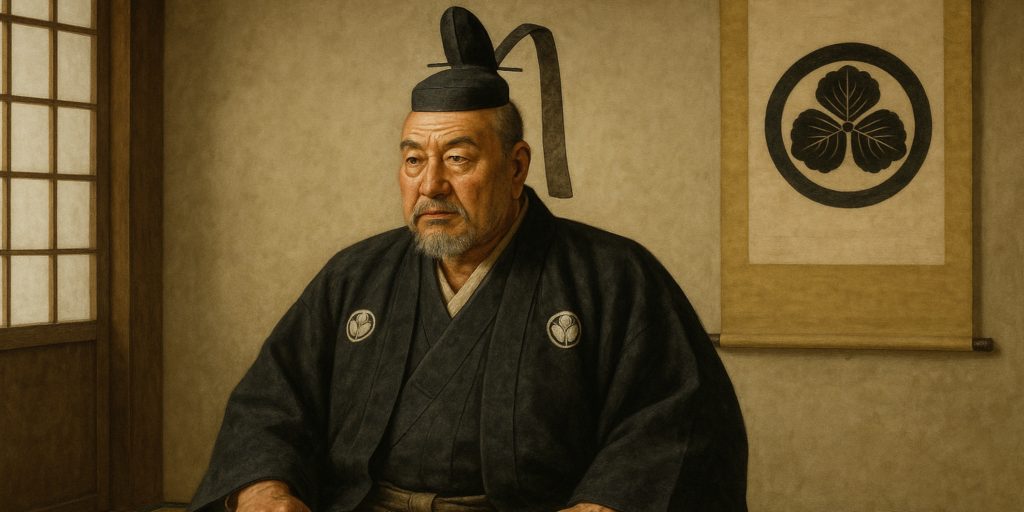
The death of Toyotomi Hideyoshi in 1598 created a dangerous political vacuum.
Hideyoshi had succeeded in unifying much of Japan after generations of warfare but his designated heir, Toyotomi Hideyori, was still a young child. To preserve the Toyotomi legacy, a Council of Five Elders governed until Hideyori reached adulthood.
The arrangement looked sensible on paper. Reality proved rather different.
Among the five elders stood Tokugawa Ieyasu, already the most powerful daimyo in eastern Japan. His growing influence alarmed many senior lords, particularly Ishida Mitsunari, a talented administrator and loyal supporter of the Toyotomi family.
Political disputes quickly escalated into military alliances.
Japan effectively divided into two competing coalitions.
The Eastern Army
- Tokugawa Ieyasu
- Allied eastern daimyo
- Experienced veterans from previous campaigns
The Western Army
- Ishida Mitsunari
- Loyal Toyotomi supporters
- Several powerful western clans
- Daimyo with uncertain loyalties
Both sides knew compromise was becoming impossible.
Why Sekigahara?
Sekigahara occupied one of the most important strategic crossroads in central Japan.
Several major roads linking Kyoto, Osaka and eastern Japan converged here. Any army attempting to move between these regions had little choice but to pass through the valley.
The landscape also offered commanding hills overlooking open farmland.
Whoever controlled these heights possessed a considerable tactical advantage.
Ironically, many of those hills later became occupied by commanders who never fully committed to either side.
Forces
Eastern Army
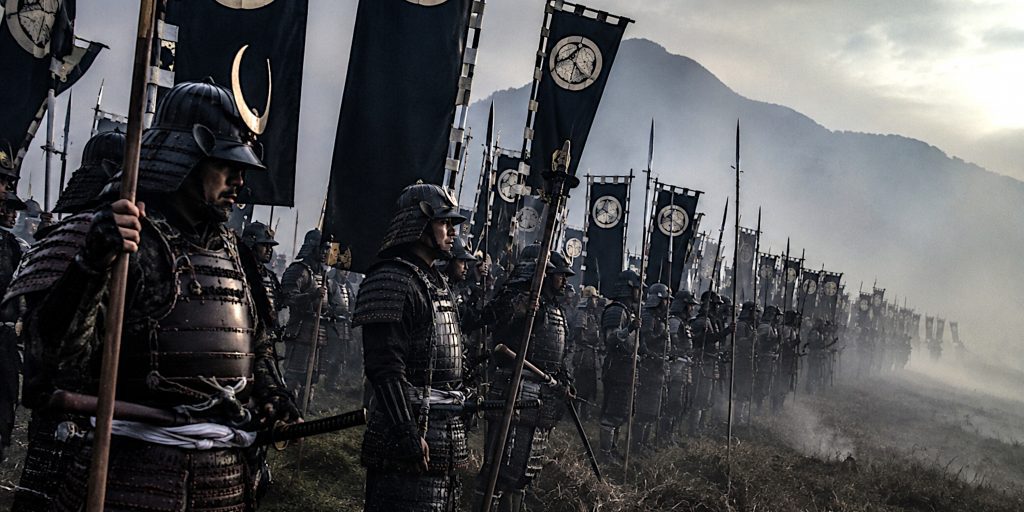
| Commander | Estimated Strength |
|---|---|
| Tokugawa Ieyasu | 74,000 to 75,000 |
| Ii Naomasa | 3,600 |
| Honda Tadakatsu | 500 to 1,000 elite retainers |
| Fukushima Masanori | 6,000 |
| Kuroda Nagamasa | 5,400 |
| Hosokawa Tadaoki | 5,000 |
| Date Masamune | Arrived too late to participate |
Western Army
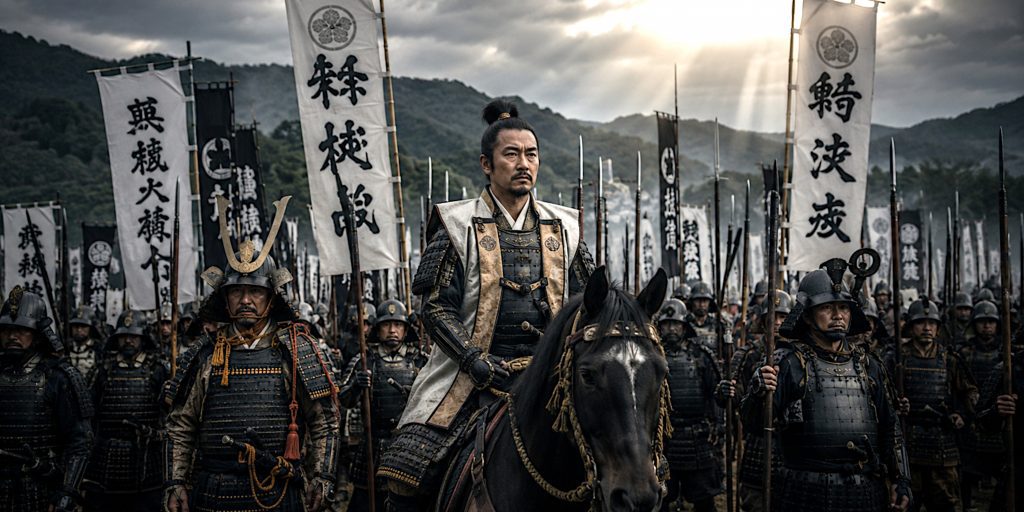
| Commander | Estimated Strength |
|---|---|
| Ishida Mitsunari | Around 82,000 |
| Ukita Hideie | 17,000 |
| Ōtani Yoshitsugu | 4,500 to 5,000 |
| Konishi Yukinaga | 6,000 |
| Shimazu Yoshihiro | 1,500 to 2,000 |
| Kobayakawa Hideaki | Around 15,000 |
Although the Western Army possessed slightly greater numbers on paper, several contingents never actively fought.
This distinction would prove decisive.
Leaders
Tokugawa Ieyasu
Tokugawa was patient, politically ruthless and remarkably calm under pressure.
Rather than relying solely upon battlefield brilliance, he spent years building alliances through marriages, diplomacy and calculated promises. By the morning of Sekigahara he had already won part of the battle without drawing a sword.
Ishida Mitsunari
Mitsunari was intelligent, loyal and administratively gifted.
Unfortunately, he lacked the personal charisma enjoyed by many rival daimyo. Several commanders respected his integrity while privately disliking him, an unfortunate combination when asking people to risk their lives.
Kobayakawa Hideaki
No commander has attracted more historical debate.
Positioned on Mount Matsuo with around 15,000 men, Hideaki hesitated for hours before eventually attacking the Western Army.
His decision transformed the battle.
Whether he acted from ambition, fear or careful calculation remains debated today.
Battlefield Timeline
| Time | Event |
|---|---|
| Before dawn | Dense fog covers Sekigahara valley |
| Around 8:00 am | Fighting begins as fog lifts |
| Morning | Heavy combat between central formations |
| Late morning | Fierce fighting around Mount Nangū |
| Noon | Tokugawa pressures hesitant allies |
| Early afternoon | Kobayakawa attacks Western flank |
| Shortly afterwards | Additional defections follow |
| Mid afternoon | Western Army collapses |
| Late afternoon | Ishida Mitsunari flees battlefield |
The Battle
Morning fog initially concealed both armies.
As visibility improved, arquebuses opened fire while advancing ashigaru closed with spears.
Ukita Hideie’s division fought exceptionally well and inflicted heavy casualties upon the Eastern Army. At several moments the battle appeared evenly balanced.
Then came the moment historians still debate.
Kobayakawa Hideaki remained motionless upon Mount Matsuo despite repeated requests to join the fighting.
Tokugawa reportedly ordered arquebusiers to fire upon Hideaki’s position, forcing the hesitant commander to reveal his intentions.
Hideaki finally charged downhill.
Unfortunately for Mitsunari, the charge struck fellow Western troops commanded by Ōtani Yoshitsugu.
Several additional commanders immediately followed Hideaki’s example.
The Western line disintegrated.
Once cohesion vanished, even brave resistance became futile.
Sekigahara changed from an organised battle into a rout.
Tactics and Military Analysis
Tokugawa’s greatest achievement occurred before the battle even began.
He cultivated uncertainty among opposing commanders, encouraging defections months in advance. Rather than seeking overwhelming tactical superiority, he weakened enemy morale and loyalty.
The Western Army suffered from divided leadership.
Although several excellent generals served Mitsunari, there was no universally accepted supreme battlefield commander capable of directing every contingent.
The battlefield itself encouraged defensive deployment upon surrounding hills, yet hesitation prevented these advantages from being exploited effectively.
Sekigahara ultimately illustrates an enduring military principle.
Unity of command often outweighs numerical superiority.
Arms and Armour
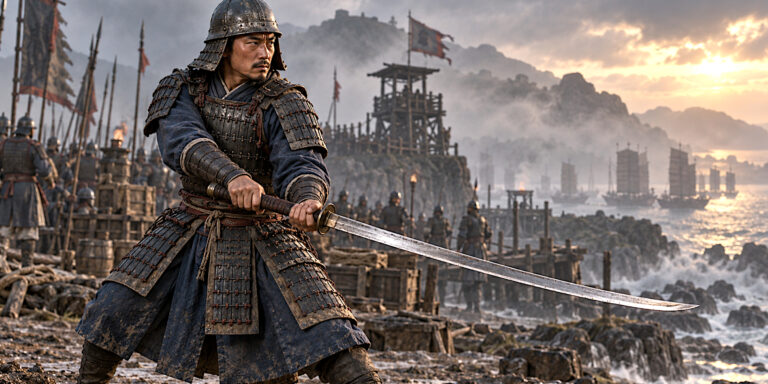
Japanese warfare at the beginning of the seventeenth century combined traditional samurai weapons with increasingly widespread firearms.
Swords
The sword remained an important battlefield sidearm rather than the primary killing weapon.
Common types included:
Elite commanders frequently carried finely forged blades produced by renowned schools such as Bizen, Mino and Sōshū.
Many surviving swords associated with Sekigahara became treasured heirlooms rather than battlefield relics.
Polearms
Most infantry relied upon:
- Yari spears
- Naginata
- Long pikes
The yari dominated close combat and allowed disciplined ashigaru formations to withstand cavalry attacks.
Missile Weapons
- Matchlock arquebuses (Tanegashima)
- Yumi longbows
- Limited artillery
Japanese arquebusiers were among the most experienced firearm troops in Asia by 1600, following decades of adaptation after Portuguese firearms arrived in the sixteenth century.
Armour
Typical armour included:
- Tosei gusoku plate armour
- Kabuto helmets
- Menpō face masks
- Sode shoulder guards
- Kusazuri skirt protection
Many suits combined lacquered iron plates with silk lacing, producing armour that was both protective and surprisingly flexible.
Archaeology
Unlike many medieval European battlefields, Sekigahara has remained comparatively difficult to investigate archaeologically.
Centuries of agriculture have disturbed much of the original landscape.
Nevertheless, excavations and surveys have recovered:
- Matchlock bullets
- Arrowheads
- Ceramic fragments
- Armour fittings
- Horse equipment
- Camp remains
Researchers have also combined archaeological evidence with surviving military maps, contemporary documents and terrain analysis to reconstruct troop movements with increasing accuracy.
Modern technology, including LiDAR and landscape modelling, continues to improve our understanding of the battlefield despite extensive later development.
Casualties
Precise figures remain uncertain.
Most historians estimate:
| Army | Estimated Losses |
|---|---|
| Eastern Army | Around 4,000 to 7,000 |
| Western Army | Around 30,000 to 40,000 killed, captured or dispersed |
Several defeated commanders later committed seppuku while others were executed after capture.
Ishida Mitsunari himself was eventually captured and executed in Kyoto.
Contemporary Accounts
The battle survives through numerous Japanese chronicles and eyewitness records.
Tokugawa Ieyasu is often credited with observing:
“After victory, tighten the cords of your helmet.”
The phrase became symbolic of remaining vigilant after success rather than becoming complacent.
The Tokugawa Jikki and various clan records describe the confusion created by shifting loyalties and emphasise the importance of preparation long before the battle itself.
European Jesuit observers also recorded the political consequences of the conflict, recognising that Japan had entered a new era under Tokugawa authority.
Legacy
Sekigahara reshaped Japanese history.
Within three years Tokugawa Ieyasu became Shogun.
His descendants established the Tokugawa Shogunate, which ruled Japan until 1868.
The following period became known as the Edo era.
Relative peace replaced generations of civil war.
Castles expanded, commerce flourished and Japanese culture experienced remarkable growth. Samurai increasingly became administrators rather than full-time warriors, a transformation that would have surprised many men who fought through the fog at Sekigahara.
Few battles have altered the political future of an entire nation so completely.
Visiting the Battlefield Today
Sekigahara remains one of Japan’s finest preserved historic battlefields.
Visitors can explore:
- Sekigahara Battlefield Memorial Museum
- Mount Matsuo
- Ishida Mitsunari’s command post
- Tokugawa Ieyasu’s headquarters
- Memorial monuments marking major troop positions
- Walking trails across much of the battlefield
Interpretation boards and reconstructed maps make it surprisingly easy to visualise how the battle unfolded across the valley.
Frequently Asked Questions
Why was the Battle of Sekigahara fought?
The battle decided who would control Japan following the death of Toyotomi Hideyoshi and the collapse of political unity.
Who won?
Tokugawa Ieyasu achieved a decisive victory.
Why is Kobayakawa Hideaki famous?
His decision to betray the Western Army at a critical moment helped determine the outcome of the battle.
How many soldiers fought?
Most estimates suggest between 150,000 and 170,000 combatants, making it one of the largest battles ever fought on Japanese soil.
Why is Sekigahara important?
The victory enabled Tokugawa Ieyasu to establish the Tokugawa Shogunate, beginning more than 260 years of relative peace and political stability in Japan.
Takeaway
Sekigahara deserves its reputation as Japan’s decisive battle. It combined political intrigue, careful strategy, disciplined armies and a single moment of hesitation that altered the course of a nation. While popular culture often celebrates heroic sword duels, the reality is both more complex and, in my view, more interesting. This was a contest won through preparation, diplomacy and an acute understanding of human nature.
There is also a useful reminder buried beneath the armour and banners. Battles are rarely decided by the loudest charge or the sharpest blade. Sometimes they hinge upon one commander standing on a hillside, looking down through the morning mist, wondering which side history will remember him for. Few decisions have ever carried heavier consequences.