The Sword of Wounding is one of those Dungeons & Dragons magic weapons that sounds considerably nastier than its relatively restrained rules text might suggest. There are no exploding heads, fountains of theatrical blood or absurd damage rolls. Instead, it does something more unpleasant: it leaves wounds that refuse to behave themselves.
In Dungeons & Dragons 5th Edition, the Sword of Wounding is a rare magic weapon built around persistent injury. Hit a creature with it and you can inflict a wound that continues to deal necrotic damage until the victim manages to stop the bleeding.
Mechanically, that makes it an interesting weapon rather than an automatically brilliant one. It can be effective against durable enemies, particularly when a fight lasts several rounds, but its damage takes time to accumulate. In a game where adventurers have an alarming habit of killing things before complicated plans have properly started, that matters.
For players who enjoy weapons with a slightly sinister identity, however, the Sword of Wounding has plenty going for it.
Sword of Wounding at a Glance
| Feature | Sword of Wounding |
|---|---|
| Item type | Magic weapon |
| Rarity | Rare |
| Attunement | Required |
| Core effect | Inflicts persistent wounds |
| Damage type | Necrotic |
| Best against | High-hit-point enemies and longer encounters |
| Main limitation | Damage builds gradually |
| Typical users | Fighters, paladins, rangers, martial clerics and other weapon-focused characters |
| Theme | Supernatural wounds that resist ordinary healing |
The Sword of Wounding is particularly suited to characters who expect to remain engaged with the same enemy for several rounds.
Against a minor creature that is going to die almost immediately, its special ability is rather wasted. Against the enormous monstrosity currently occupying most of the battle map, things become more interesting.
How the Sword of Wounding Works in D&D 5e
When you hit a creature with an attack using the Sword of Wounding, you can use the weapon’s magical property to inflict a wound.
At the beginning of each of the wounded creature’s turns, it takes 1d4 necrotic damage for every wound currently affecting it.
The effect can therefore become progressively more dangerous.
A single wound produces modest additional damage. Multiple wounds can turn into an increasingly irritating problem for the target.
The creature is not necessarily stuck with those wounds forever. It can attempt to end them, while magical healing can also remove them under the appropriate circumstances.
That creates the weapon’s central tactical idea:
Keep landing hits and make the enemy deal with the consequences.
It is essentially magical attrition delivered with a sword.
Why Multiple Wounds Matter
The Sword of Wounding becomes more interesting when its effect is applied repeatedly.
| Active wounds | Necrotic damage at start of target’s turn |
| 1 | 1d4 |
| 2 | 2d4 |
| 3 | 3d4 |
| 4 | 4d4 |
| 5 | 5d4 |
This means characters capable of making several attacks can potentially build pressure quickly.
A fighter is an obvious candidate. Extra Attack gives the character more opportunities to apply wounds, while abilities that increase the number of attacks can accelerate the process.
The important word here is potentially.
The Sword of Wounding does not simply hand you enormous damage. Attacks still need to connect, the enemy can attempt to remove the wounds, and the encounter needs to last long enough for repeated necrotic damage to matter.
That final point is easy to underestimate.
Is the Sword of Wounding Actually Good?
Yes, although it is more situational than its wonderfully unpleasant name suggests.
Its strength lies in sustained pressure rather than immediate burst damage.
Where it performs well
- Boss encounters
- Creatures with large hit-point pools
- Enemies that are difficult to eliminate quickly
- Characters with multiple attacks
- Parties built around prolonged melee combat
- Encounters where forcing an enemy to spend actions has tactical value
Where it performs poorly
- Weak enemies
- Very short encounters
- Situations where burst damage is more important than sustained damage
- Characters who attack infrequently
- Enemies that can efficiently deal with the wounds
If your party routinely destroys an enemy within a round or two, the Sword of Wounding may barely get started.
If the creature is still standing five rounds later and everyone is beginning to reconsider their life choices, the weapon starts looking much better.
Damage Potential
The attraction of the weapon comes from cumulative damage.
Imagine a target carrying three wounds. At the beginning of its turn, it suffers 3d4 necrotic damage.
If those wounds survive until its next turn, the damage occurs again.
That makes duration enormously important.
The Sword of Wounding therefore behaves differently from a conventional magical sword that simply adds damage to every successful strike. A straightforward bonus is immediately useful. Wounding asks you to invest in the fight and wait for the return.
This is why comparing the weapon purely by damage-per-hit can be misleading.
The Action Economy Is Part of the Weapon
One of the more interesting aspects of the Sword of Wounding is that damage is not its only potential contribution.
A creature trying to deal with its wounds may need to spend resources or actions that could otherwise have been used against the party.
That matters.
D&D combat is heavily influenced by action economy. If four adventurers can take substantially more meaningful actions than a single monster, the monster is usually having a dreadful afternoon.
Anything that forces an enemy to choose between attacking and dealing with an ongoing problem can therefore have value beyond the raw damage numbers.
Of course, this depends heavily on the encounter and how the Dungeon Master runs the creature. Intelligent opponents may respond differently from animals, undead or creatures operating almost entirely on instinct.
Best Classes for a Sword of Wounding
Fighter
Probably the most natural user.
Fighters combine strong weapon proficiency with multiple attacks, giving them repeated opportunities to establish wounds. Higher-level fighters become particularly suitable because of their increasingly impressive attack output.
Paladin
A Sword of Wounding can work nicely for a melee-focused paladin.
The interesting contrast is between immediate burst damage from Divine Smite and the sword’s slower attritional damage. Against an important enemy, combining both can make the paladin thoroughly unpopular.
Ranger
Melee rangers can make effective use of the weapon, especially when concentrating attacks on one substantial target.
The Sword of Wounding fits the hunter mentality rather well too. The prey has been struck, the wound is worsening, and running away is becoming an increasingly theoretical solution.
Barbarian
A barbarian can certainly use the weapon effectively, particularly when staying locked onto a single opponent.
The mechanical synergy is less elaborate than with some other builds, but “hit it repeatedly with the cursed-looking sword” remains a surprisingly durable tactical philosophy.
Martial Clerics and Other Builds
Any character capable of making reliable melee weapon attacks can potentially benefit.
The bigger question is opportunity cost. Attunement slots are valuable, particularly as characters accumulate more magical equipment. A Sword of Wounding that seemed excellent at one level may eventually face some rather brutal competition.
Sword of Wounding Versus Other Magic Swords
| Weapon | Main strength | Combat style |
| Sword of Wounding | Persistent necrotic damage | Attrition |
| Flame Tongue | Strong additional damage | Direct offence |
| Frost Brand | Damage plus defensive utility | Balanced |
| Vorpal Sword | Extreme offensive potential | High-level burst |
| Defender | Flexible attack and defence | Defensive |
| Sword of Sharpness | Powerful cutting attacks | Direct offence |
The Sword of Wounding occupies a fairly distinctive niche.
A Flame Tongue is much easier to understand. Hit enemy, enemy receives additional fire damage, everyone continues with their day.
The Sword of Wounding is more conditional. Its value changes according to enemy durability, combat length and how successfully wounds accumulate.
That makes it less universally powerful but arguably more interesting.
Sword of Wounding Versus Flame Tongue
This is a particularly useful comparison because the two weapons encourage very different approaches.
A Flame Tongue provides substantial additional fire damage when activated. Its benefit arrives immediately whenever attacks land.
The Sword of Wounding asks for patience.
For ordinary encounters, I would generally prefer the consistency of a Flame Tongue. Immediate damage helps remove enemies from combat, which prevents them from taking future actions.
Against a large boss with a mountain of hit points, however, Wounding becomes more attractive.
There is also the question of resistance. Fire is a commonly resisted damage type among certain monsters, while necrotic damage has its own problematic opponents.
As ever in D&D, the objectively superior weapon has an annoying habit of depending on what is currently trying to eat you.
Can the Sword of Wounding Kill a Creature After You Stop Attacking?
Potentially, yes.
If wounds remain active, their necrotic damage continues to occur at the beginning of the affected creature’s turns.
This creates one of the weapon’s more entertaining possibilities. You can stop actively attacking a creature and still have previously inflicted wounds contributing damage.
That does not mean the sword is some guaranteed delayed execution device. The creature has methods of ending the effect.
Still, there is something wonderfully grim about watching an enemy survive the initial attack only to realise the sword has left behind a problem.
Does Wounding Stop Regeneration?
This is an important point because older versions of D&D gave weapons of wounding somewhat different identities.
In 5e, players should be careful about importing assumptions from previous editions.
The modern Sword of Wounding focuses on its defined wound mechanic and necrotic damage. It should not automatically be treated as a universal anti-regeneration weapon unless another rule or creature interaction specifically creates that outcome.
This is a recurring hazard with D&D magic items. A veteran player remembers what an item did twenty years ago and confidently explains it to the table.
The rulebook then quietly ruins the story.
Sword of Wounding Across D&D Editions
The concept predates Fifth Edition.
Weapons associated with supernatural bleeding and wounds appeared in earlier versions of Dungeons & Dragons, although their precise mechanics changed as the game’s combat system evolved.
Earlier editions often placed greater mechanical emphasis on effects such as persistent injury, hit-point loss or interfering with healing and regeneration.
Fifth Edition streamlined the concept.
Rather than requiring an elaborate injury subsystem, the weapon creates a clearly defined ongoing damage effect that can stack through repeated wounds.
That makes it easier to run at the table while preserving the original fantasy: this is a blade whose injuries are unnaturally difficult to close.
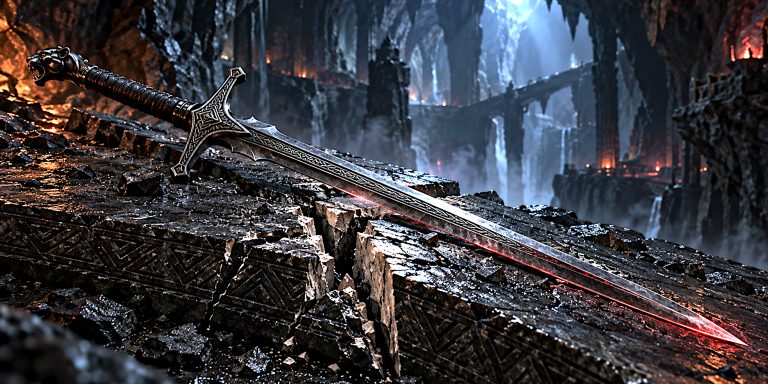
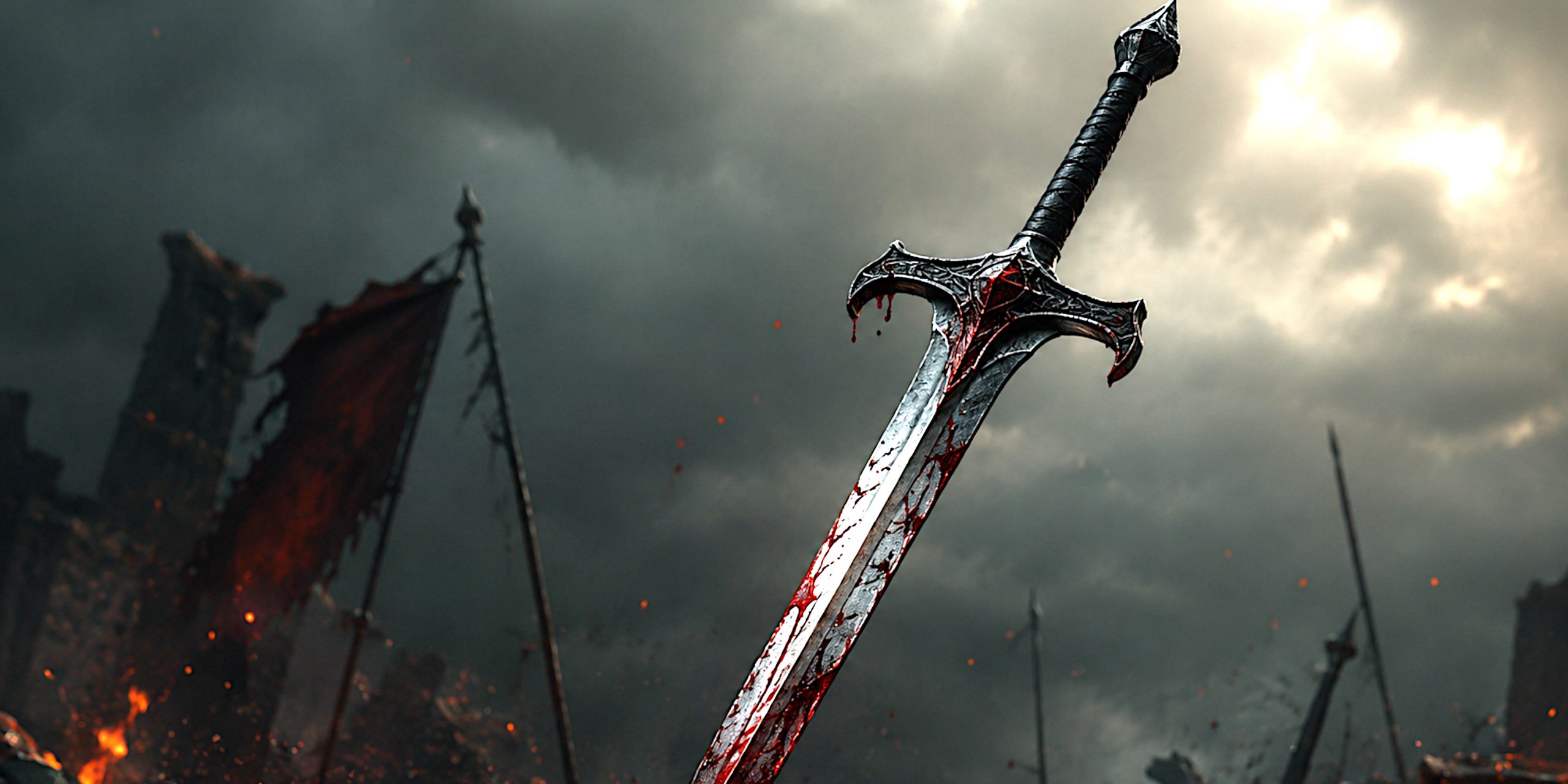
What Does a Sword of Wounding Look Like?
The rules do not require every Sword of Wounding to share one appearance.
That gives Dungeon Masters considerable freedom.
I would avoid making it obviously evil unless the campaign specifically calls for that. A weapon does not need black smoke, screaming skulls and seventeen spikes to communicate menace.
A Sword of Wounding could be:
- A beautifully preserved knightly longsword with an unnaturally dark edge
- An ancient elven blade whose cuts refuse to heal
- A chipped military sword recovered from a forgotten battlefield
- A ceremonial weapon carrying a blood curse
- A plain-looking sword that becomes cold when drawn
- A blade forged from an unknown reddish metal
- A weapon marked with tiny runes representing every previous victim
The restrained versions are often creepier.
Imagine finding an otherwise ordinary sword in an old tomb, using it in combat and only gradually discovering that wounds caused by it behave differently.
Much better than having “CURSED OBJECT” effectively written across the pommel.
Using a Sword of Wounding as a Dungeon Master
The weapon can be more than loot.
Its effect provides an easy foundation for history.
Perhaps the blade belonged to an executioner whose victims cursed the weapon. Perhaps it was forged specifically to fight creatures famous for recovering from injuries. Perhaps several generations of warriors have carried it, each leaving another inscription somewhere along the blade.
You can also make the weapon’s reputation precede it.
NPCs might recognise the sword.
A healer could react badly to seeing the wounds it produces. An old soldier might know the weapon from a previous war. A noble family may insist that it belongs to them.
Suddenly a rare magic item becomes part of the campaign rather than another line on the character sheet.
That is generally where D&D weapons become memorable.
Good Character Concepts for the Sword
The mechanics naturally suit aggressive martial characters, but the theme can support considerably more interesting ideas.
A righteous paladin might dislike using a weapon that inflicts unnatural suffering but consider it necessary against a particular enemy.
A fighter could inherit the sword without understanding what it does.
A ranger might carry it specifically for hunting monsters that are notoriously difficult to kill.
A morally questionable mercenary may simply appreciate efficiency.
My favourite version would be a fundamentally decent character carrying a weapon with a dreadful reputation. There is far more roleplaying potential in “I know what this sword does and I’m not entirely comfortable with it” than another hero enthusiastically waving around the Blade of Obviously Evil Things.
Advantages and Disadvantages
| Advantages | Disadvantages |
| Persistent additional damage | Requires time to reach its potential |
| Wounds can accumulate | Less useful against weak enemies |
| Necrotic damage has useful match-ups | Some creatures resist necrotic damage |
| Excellent thematic identity | Requires attunement |
| Rewards focusing on one enemy | Competes with stronger magic weapons |
| Can create tactical pressure | Performance depends heavily on encounter length |
The Sword of Wounding is therefore neither useless nor secretly broken.
It is a specialised weapon.
And specialised weapons tend to become much more interesting when players understand what they are actually specialised for.
Is the Sword of Wounding Worth Attuning To?
At the point where a rare magic weapon first becomes available, quite possibly.
The calculation changes later.
Attunement creates competition between magic items, and high-level characters can accumulate some extremely powerful equipment. Eventually, the Sword of Wounding may struggle to justify its place against weapons providing stronger attack bonuses, larger immediate damage increases or powerful defensive abilities.
For a martial character regularly fighting durable enemies, however, it can remain useful.
I would judge it less by theoretical maximum damage and more by the campaign.
Are your combats long?
Do bosses survive several rounds?
Can your character reliably make multiple attacks?
Do enemies frequently resist your alternative damage types?
If several answers are yes, the sword becomes considerably more attractive.
The Sword of Wounding in Baldur’s Gate and D&D Video Games
Players searching for the Sword of Wounding often encounter information from tabletop D&D alongside material from D&D-derived video games.
Be careful here.
Magic items can change substantially when adapted into games. Developers frequently alter damage, activation conditions, rarity or secondary effects to fit a different combat system.
A tabletop description should therefore not automatically be applied to a similarly named weapon appearing in a computer game.
The same principle applies between D&D editions.
Always check which ruleset the item belongs to before constructing an entire character around it. Discovering that your glorious build depends on rules from 1995 is character building of a different sort.
Why the Sword of Wounding Works as a Fantasy Weapon
I like the Sword of Wounding because its magic is understandable.
It does not need an enormous mythology to explain why it is frightening.
A normal sword cuts you.
This sword cuts you and the wound will not close properly.
That is enough.
The idea also has roots in much older fantasy traditions surrounding cursed blades, poisoned weapons and injuries that resist healing. Legendary weapons are frequently dangerous because their wounds possess qualities beyond ordinary physical trauma.
D&D translates that old idea into a straightforward combat mechanic.
The result is a weapon that feels supernatural without needing to fire lightning across the room.
Sometimes the sword can simply be horrible at being a sword.
That works perfectly well.
Frequently Asked Questions
Is the Sword of Wounding a rare magic item?
Yes. In D&D 5e, the Sword of Wounding is a rare magic weapon.
Does a Sword of Wounding require attunement?
Yes.
What damage do its wounds cause?
Its supernatural wounds cause necrotic damage.
Can multiple wounds stack?
Yes. Multiple active wounds increase the amount of necrotic damage suffered by the target.
Is Sword of Wounding better than Flame Tongue?
Usually not for straightforward immediate damage. Sword of Wounding becomes more competitive during longer encounters where its persistent wounds have time to accumulate.
Which class is best with it?
Fighters are particularly well suited because they can make multiple attacks, although paladins, rangers, barbarians and other martial characters can use it effectively.
Is it good against bosses?
Boss-style encounters are arguably its best environment because enemies with large hit-point pools tend to survive long enough for persistent damage to matter.
Does it prevent all healing?
No. Players should use the specific rules governing wounds rather than assuming the weapon completely prevents healing.
Final Verdict
The Sword of Wounding occupies an interesting middle ground in D&D 5e.
It is powerful enough to matter without being the sort of magic weapon that immediately reorganises an entire campaign around whoever owns it. Its strength comes from sustained combat, repeated attacks and concentrating pressure on a durable target.
There are stronger weapons for immediate damage. There are considerably stronger weapons at higher levels.
But the Sword of Wounding has personality.
It rewards a slightly different way of thinking about combat, gives Dungeon Masters plenty of room for storytelling and carries an appropriately nasty supernatural concept without becoming cartoonishly evil.
Against a goblin, it is excessive paperwork.
Against the campaign villain with several hundred hit points, suddenly everyone is paying attention.