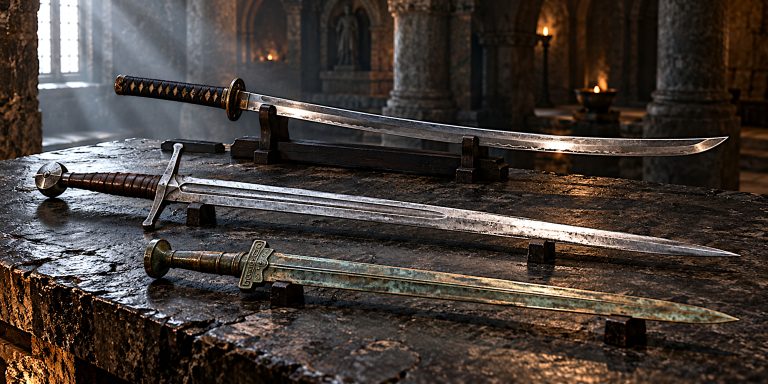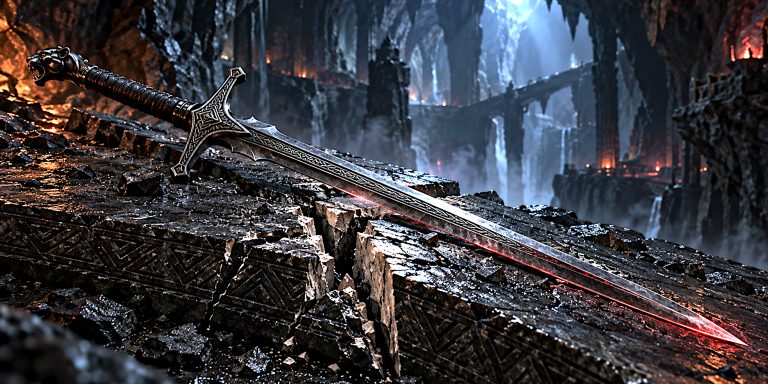
A sword in Dungeons & Dragons is rarely just a piece of equipment. The great ones come with histories, strange powers, ancient rivalries, and occasionally a personality that causes more trouble than the monster you were originally fighting.
A +1 longsword might help you survive.
A legendary sword gives the Dungeon Master several new ways to ruin your afternoon.
Across decades of tabletop campaigns, novels, and video games, certain blades have become part of D&D history. These weapons are ranked by their lore, influence, power, and the simple question every player secretly asks:
Would I risk my character’s entire future just to swing this thing once?
Probably.
20. Flame Tongue
The Classic Burning Blade
A sword covered in magical fire is one of fantasy’s most reliable ideas.
Flame Tongue has appeared throughout D&D history because it understands the assignment perfectly. It is simple, effective, and looks incredible in a hero’s hand.
Why It Stands Out
- Extra fire damage
- Classic magical weapon design
- Useful throughout campaigns
- One of D&D’s most recognisable enchanted swords
It may not corrupt kingdoms or challenge gods, but sometimes setting monsters on fire is enough.
19. Sword Of Wounding
The Blade That Refuses To Let A Fight End
The Sword of Wounding is a cruel weapon because it attacks more than armour.
Its magic creates injuries that continue damaging opponents, making it particularly dangerous during long battles.
Why It Stands Out
- Strong against durable enemies
- Long D&D history
- Great for aggressive fighters
- Simple but effective design
Not every legendary sword needs a dramatic speech.
Some just need to be a nightmare to fight against.
18. Sword Of Sharpness
The Sword That Takes Cutting Seriously
The Sword of Sharpness has been feared across multiple editions of D&D.
Older versions became infamous for their ability to sever limbs, creating some unforgettable moments around the table.
Why It Stands Out
- Famous critical hit effects
- Classic magical weapon
- Brutal combat identity
- Popular across editions
Sometimes a sword’s personality can simply be “very sharp.”
Fair enough.
17. Defender
The Thinking Warrior’s Weapon
The Defender rewards players who understand that staying alive is also a strategy.
Its magic allows power to shift between offence and defence, making it one of the most flexible swords in D&D.
Why It Stands Out
- Tactical combat choices
- Excellent defensive ability
- Useful for experienced players
- Great knightly fantasy
Charging directly into danger is fun.
Surviving afterwards is better.
16. Dragon Slayer
The Original Monster Hunter Sword
Few ideas are more connected to fantasy than a warrior facing a dragon with a legendary blade.
The Dragon Slayer delivers exactly what the name promises.
Why It Stands Out
- Extra effectiveness against dragons
- Classic heroic theme
- Works in almost any campaign
- Perfect fantasy storytelling
Dragons get wings, claws, magic, and fire.
Heroes get one very specific sword.
Seems reasonable.
15. Frost Brand
The Frozen Legendary Blade
Frost Brand is the colder cousin of Flame Tongue and one of D&D’s longest-running magical swords.
Its ability to resist fire makes it especially valuable against some of the game’s deadliest creatures.
Why It Stands Out
- Iconic magical appearance
- Fire resistance
- Cold-based abilities
- Strong adventure utility
Walking into a dragon fight carrying one feels like someone finally read the survival guide.
14. Moonblade
The Sword That Decides If You Are Worthy
Moonblades are among the most personal weapons in D&D.
These ancient elven swords are passed through generations, collecting history and power with every worthy wielder.
The awkward part?
The sword gets a vote.
Why It Stands Out
- Important elven lore
- Unique magical development
- Strong roleplaying potential
- Deep Forgotten Realms connections
Being rejected by a sword has to hurt.
13. Luck Blade
The Weapon That Can Rewrite A Campaign
The Luck Blade sounds useful.
Then someone mentions it can contain wishes.
Suddenly everyone at the table starts paying attention.
Why It Stands Out
- Access to Wish magic
- Massive storytelling potential
- Powerful magical benefits
- Famous across editions
A dragon can destroy a village.
A badly worded wish can make the Dungeon Master question everything.
12. Dawnbringer
The Hopeful Sword In The Darkness
Dawnbringer from Out of the Abyss is unusual because it breaks the trend of terrifying sentient weapons.
It is a magical sun blade that actually wants to help.
A shocking concept.
Why It Stands Out
- Sentient personality
- Radiant magic
- Strong story value
- Memorable campaign role
A talking sword that is not plotting against everyone deserves some respect.
11. Hazirawn
The Dark Greatsword With A Voice
Hazirawn from Tyranny of Dragons is powerful, dangerous, and intelligent.
Naturally, that combination should worry everyone.
The blade offers incredible strength but also brings the classic question:
Are you using the weapon, or is the weapon using you?
Why It Stands Out
- Sentient greatsword
- Necrotic power
- Strong Forgotten Realms lore
- Excellent roleplaying possibilities
Power always comes with small print.
Magical swords have a lot of small print.
10. Twinkle
Drizzt’s Defensive Masterpiece
Twinkle is one of the famous blades wielded by Drizzt Do’Urden, one of D&D’s most recognisable characters.
Unlike many legendary swords built around destruction, Twinkle represents precision, defence, and skill.
Why It Stands Out
- Connected to Drizzt Do’Urden
- Iconic Forgotten Realms weapon
- Defensive magical abilities
- Huge novel legacy
Not every great sword needs overwhelming power.
Sometimes the wielder makes the legend.
9. Icingdeath
The Dragon’s Treasure Turned Hero’s Blade
The companion blade to Twinkle, Icingdeath was discovered after Drizzt defeated the white dragon Ingeloakastimizilian.
Yes, that dragon name is why fantasy readers deserve pronunciation guides.
This frost-themed scimitar became one of Forgotten Realms’ most recognisable weapons.
Why It Stands Out
- Famous Drizzt weapon
- Strong connection to dragon lore
- Fire protection abilities
- Legendary novel history
Few swords have a better origin story.
8. Khazid’hea
The Cutter With Ambition
Khazid’hea, meaning “Cutter”, is one of the most fascinating sentient swords in Forgotten Realms.
The weapon does not simply want a wielder.
It wants the best wielder.
Confidence is clearly not a problem.
Why It Stands Out
- Intelligent weapon
- Strong personality
- Major Forgotten Realms appearances
- Unique motivations
Most warriors choose their sword.
Khazid’hea prefers to interview candidates.
7. Carsomyr
The Legendary Holy Avenger Of Baldur’s Gate
Carsomyr became famous through Baldur’s Gate II as the ultimate paladin weapon.
This mighty two-handed sword represents everything players love about righteous fantasy heroes.
Why It Stands Out
- Iconic video game weapon
- Anti-magic abilities
- Paladin connection
- Huge D&D gaming legacy
Finding Carsomyr is basically the game telling your paladin:
“Congratulations. Things are about to get serious.”
6. Vorpal Sword
The Blade Of Perfect Strikes
The Vorpal Sword is one of the most famous magical weapons in D&D history.
Its legendary ability to deliver devastating finishing blows created countless unforgettable dice moments.
Why It Stands Out
- Classic D&D item
- Famous critical effects
- Instantly recognisable
- Legendary fantasy reputation
Everyone loves dramatic dice rolls.
Except the monster.
5. Sword Of Zariel
The Celestial Sword Of Transformation
The Sword of Zariel is not simply a weapon.
It is a turning point.
Featured in Baldur’s Gate: Descent into Avernus, claiming the blade can completely transform a character.
Why It Stands Out
- Major campaign importance
- Celestial magic
- Character-changing abilities
- Powerful story connection
Some swords improve your character sheet.
This one changes your character.
4. Holy Avenger
The Ultimate Paladin Sword
The Holy Avenger is one of Dungeons & Dragons’ most iconic weapons.
Since the earliest editions, it has represented the perfect fantasy of the champion standing against darkness.
No curses.
No evil whispers.
No soul hunger.
Just a legendary blade built for heroes.
Why It Stands Out
- Historic D&D weapon
- Ultimate paladin sword
- Strong magical protection
- Powerful against evil creatures
Sometimes being good actually does unlock the best gear.
3. Sword Of Kas
The Weapon That Betrayed Vecna
Few swords have shaped D&D history like the Sword of Kas.
The legendary blade was wielded by Kas the Bloody-Handed, whose betrayal of Vecna became one of the game’s defining stories.
Why It Stands Out
- Major Vecna connection
- Sentient artefact
- Dark legendary history
- Huge influence on D&D lore
A sword involved in betraying one of fantasy’s greatest villains deserves respect.
Probably from a safe distance.
2. Crenshinibon
The Crystal Shard Of Corruption
Crenshinibon is not a conventional sword, but its influence over Forgotten Realms history earns it recognition among D&D’s greatest magical artefacts.
This sentient creation manipulates, corrupts, and empowers those who seek control over it.
Why It Stands Out
- Major Forgotten Realms artefact
- Powerful sentience
- Legendary story impact
- Dark magical influence
The most dangerous weapons are not always the ones that cut deepest.
1. Blackrazor
The Greatest Sword In Dungeons & Dragons
Blackrazor is the perfect example of why legendary weapons in D&D are unforgettable.
Introduced in White Plume Mountain, this sentient blade offers incredible power at a terrifying cost.
It consumes souls.
It grants strength.
It also makes everyone wonder if carrying it is actually a good idea.
Which usually means an adventurer has already picked it up.
Why It Stands Out
- One of D&D’s most famous swords
- Classic adventure history
- Powerful sentient weapon
- Dark fantasy appeal
- Creates incredible stories
Blackrazor is not just a sword.
It is a decision.
And in Dungeons & Dragons, questionable decisions are where the best adventures begin.