While most fighting franchises focus on fists, kicks and superpowers, Soulcalibur built its identity around something far more satisfying: weapons that genuinely feel different. Swinging a colossal zweihander feels nothing like fencing with a rapier or dancing around opponents with twin blades. Every fight becomes a clash of fighting styles rather than simply another variation of punches.
That idea helped Soulcalibur carve out its own place alongside genre giants like Street Fighter, Tekken and Mortal Kombat. Across more than two decades, the series has produced unforgettable characters, stunning stages and some of the smoothest 3D combat ever created.
Even after all these years, there is still something oddly magical about hearing the announcer declare, “Transcending history and the world, a tale of souls and swords eternally retold.”
What Is Soulcalibur?
Soulcalibur is a 3D weapon-based fighting game series developed by Bandai Namco. Set within a fantasy version of the late sixteenth century, the games revolve around two mythical swords.

- Soul Edge, an evil cursed blade that corrupts those who wield it.
- Soul Calibur, its holy counterpart created to oppose the darkness.
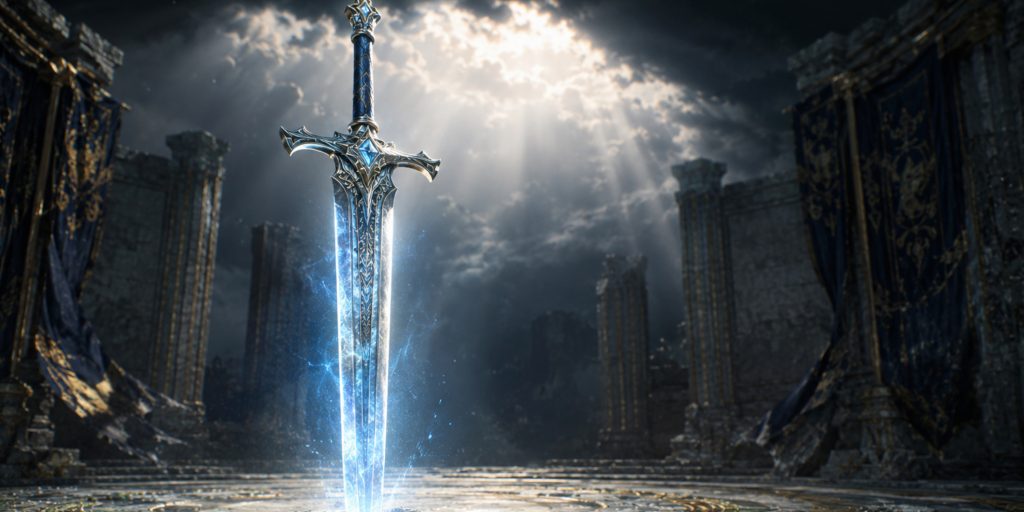
Rather than telling disconnected stories, nearly every game expands this ongoing struggle, introducing warriors from around the world who are drawn into the conflict for their own reasons.
The result is a surprisingly rich fantasy universe that blends historical inspiration with mythology, supernatural forces and just enough anime-style drama to keep things entertaining.
The Evolution of the Series
Soul Edge (1995)
Everything began with Soul Edge, released in arcades before arriving on the original PlayStation.
Although rough by modern standards, it introduced many ideas that would define the franchise:
- Weapon-based combat
- Eight-way movement
- Character-specific fighting styles
- Cinematic weapon clashes
Its soundtrack and opening movie became fan favourites almost immediately.
Soulcalibur (1998)
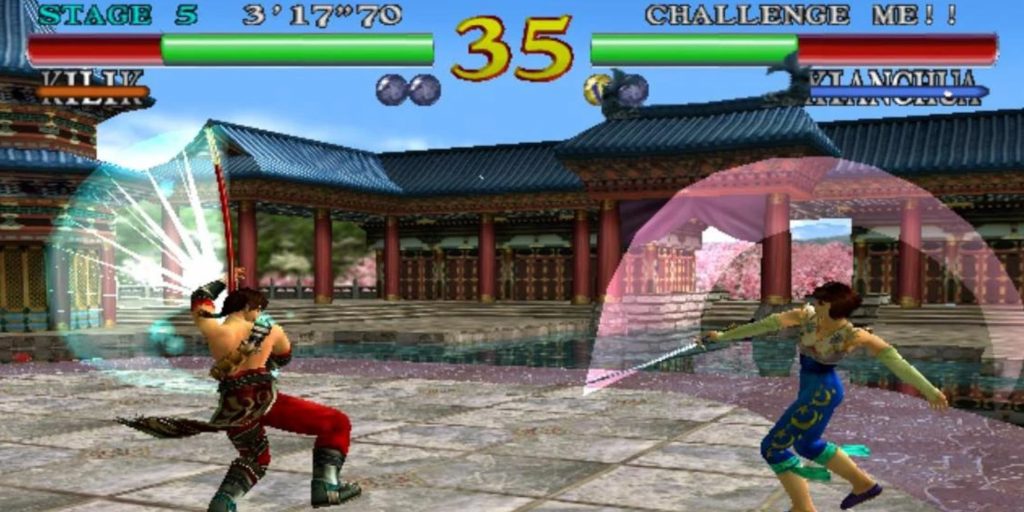
Many fans still consider Soulcalibur one of the greatest fighting games ever made.
Its Dreamcast release looked remarkably close to the arcade version while expanding almost every aspect of the game.
Key improvements included:
- Sharper graphics
- More responsive controls
- Better balance
- Mission Battle mode
- Expanded character roster
At a time when home consoles often received compromised arcade ports, Soulcalibur somehow managed to improve upon the original.
Soulcalibur II (2002)
If there is one entry that introduced millions of players to the franchise, this was it.
It refined the combat while adding one feature that generated enormous excitement: exclusive guest characters.
Each console received its own legendary fighter.
| Platform | Guest Character |
|---|---|
| GameCube | Link |
| PlayStation 2 | Heihachi Mishima |
| Xbox | Spawn |
Link’s inclusion became especially iconic, introducing many Nintendo players to the series.
The gameplay also became deeper without becoming intimidating, striking a balance that remains difficult for fighting games to achieve.
Soulcalibur III (2005)
This instalment leaned heavily into single-player content.
Highlights included:
- Create-a-Character
- Chronicles of the Sword
- Expanded lore
- Large roster
- New fighting styles
For players who rarely ventured online, this game could easily provide hundreds of hours of content.
Soulcalibur IV (2008)
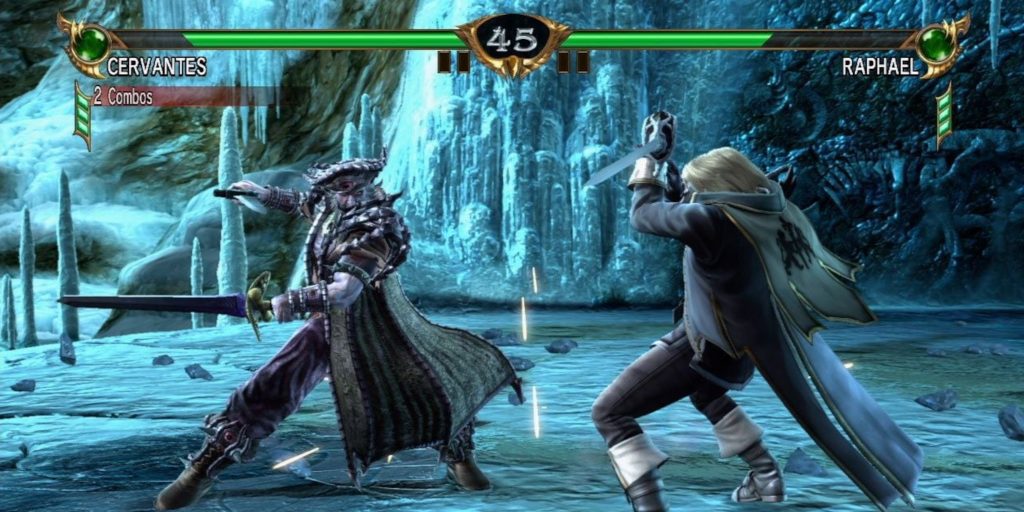
Released during the PlayStation 3 and Xbox 360 generation, Soulcalibur IV pushed visuals dramatically forward.
Its biggest talking point, however, was another pair of guest characters.
- Darth Vader
- Yoda
Watching medieval warriors duel with lightsabers should have felt ridiculous.
Oddly enough, it somehow worked.
Soulcalibur V (2012)
This sequel jumped the timeline forward, introducing a younger generation of fighters.
While the combat remained excellent, replacing several classic characters divided long-time fans.
The online systems improved considerably, but many players missed the familiar faces that had defined earlier entries.
Soulcalibur VI (2018)
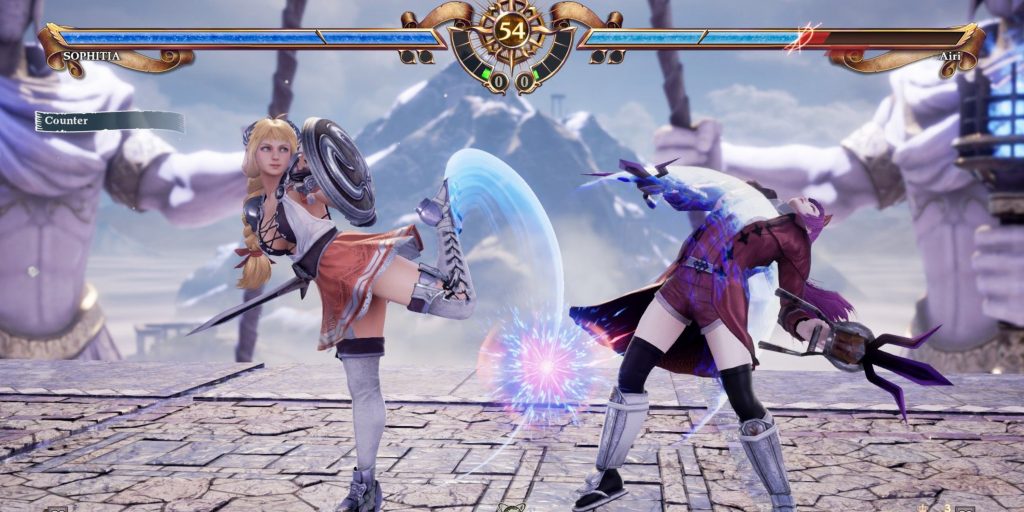
Rather than continuing the previous timeline, Soulcalibur VI effectively rebooted the story.
It revisited the events of the original games while modernising nearly every mechanic.
New additions included:
- Reversal Edge
- Soul Charge enhancements
- Cinematic attacks
- Extensive character customisation
- Improved online play
The game also welcomed another famous guest.
- Geralt of Rivia from The Witcher
His combat style fit the series remarkably well, feeling like a natural addition rather than a marketing crossover.
The Core Gameplay
What separates Soulcalibur from other fighting games is how every weapon changes the rhythm of battle.
Instead of everyone operating within similar ranges, every fighter controls space differently.
Fast swords dominate close engagements.
Polearms control distance.
Axes hit like freight trains but leave openings.
Whips frustrate opponents from surprising angles.
The eight-way movement system allows players to sidestep attacks naturally, creating a sense of freedom that many other fighting games still struggle to match.
Positioning matters almost as much as timing.
The Most Iconic Characters
The series has built one of the strongest casts in fighting games.
Mitsurugi
A wandering samurai obsessed with becoming stronger.
Simple to learn, endlessly satisfying to master.
Sophitia
One of the franchise’s central heroes, combining graceful movement with divine power.
Nightmare
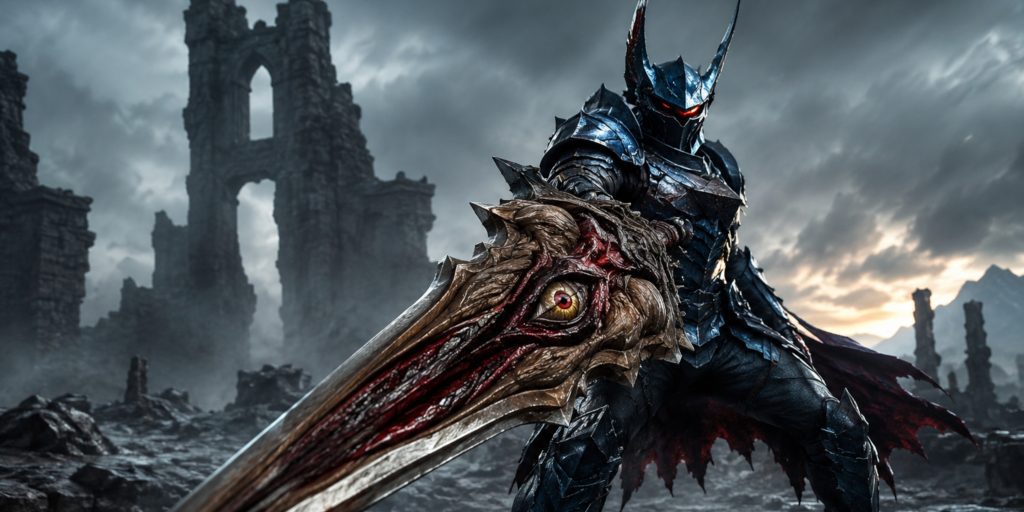
The terrifying armour possessed by Soul Edge.
His enormous sword remains one of gaming’s most recognisable weapons.
Siegfried
A tragic knight constantly battling his own past.
His rivalry with Nightmare forms the emotional centre of much of the series.
Ivy Valentine
Elegant, dangerous and impossible to mistake for anyone else.
Her transforming snake sword creates one of the most technically demanding movesets in the franchise.
Taki
A ninja whose speed and relentless pressure make her one of the fastest fighters on the roster.
Kilik
Using a bo staff, Kilik became one of the defining faces of the series during its most successful years.
Why Soulcalibur Still Feels Different
Many fighting franchises eventually become increasingly complex.
Soulcalibur certainly has depth, but it also feels approachable.
New players can pick up a character and immediately understand what makes them unique.
Veterans, meanwhile, spend years mastering spacing, frame advantage, movement and matchup knowledge.
That accessibility has always been one of the series’ greatest strengths.
Guest Characters That Became Gaming History
Crossovers became one of Soulcalibur’s defining traditions.
Some of the most memorable include:
| Character | Origin |
|---|---|
| Link | The Legend of Zelda |
| Spawn | Spawn |
| Heihachi Mishima | Tekken |
| Darth Vader | Star Wars |
| Yoda | Star Wars |
| Ezio Auditore | Assassin’s Creed |
| Geralt of Rivia | The Witcher |
| 2B | NieR: Automata |
Unlike many crossover appearances, most of these guests genuinely suited the weapon-focused combat system.
Competitive Scene
Although Soulcalibur has never reached the competitive heights of Street Fighter or Tekken, it has maintained a passionate tournament community for decades.
Competitive play rewards:
- Strong movement
- Ring positioning
- Matchup knowledge
- Punishment timing
- Excellent spacing
Ring Outs remain one of the series’ defining mechanics.
Even a player with full health can lose instantly after one perfectly timed launch near the arena edge.
It is dramatic, occasionally heartbreaking and always entertaining to watch.
Why Fans Still Love the Series
Few fighting games balance style and substance as effectively.
Every weapon carries personality.
Every arena feels memorable.
Every soundtrack sounds like it belongs in an epic fantasy adventure.
There is also a certain confidence in Soulcalibur’s identity. It has never tried to imitate other fighting games. It knows exactly what it wants to be, and that consistency has earned lasting loyalty from fans.
Even if you have not touched the series for years, returning often feels surprisingly natural. A few rounds in and suddenly you are trying one more match… then another… then wondering how it became two in the morning.
The Future of Soulcalibur
Since the release of Soulcalibur VI, fans have eagerly awaited news of the next instalment.
Bandai Namco has continued supporting the franchise through downloadable content and competitive events, demonstrating that interest remains strong. The series still has a loyal global community, and its unique weapon-focused gameplay fills a niche that few other fighting games attempt.
Whenever the next chapter arrives, expectations will be high. Players will be hoping for refined online play, an expanded roster, deeper customisation and another memorable story centred around the eternal struggle between Soul Edge and Soul Calibur.
Given the franchise’s history of reinvention, there is every reason to believe that the tale of souls and swords is far from over.
Takeaway
Soulcalibur occupies a unique place in fighting game history. It combines technical depth with cinematic spectacle, historical inspiration with fantasy, and accessible controls with genuine competitive complexity.
Many franchises have come and gone since Soul Edge first appeared in arcades, yet Soulcalibur continues to stand apart because it understands a simple truth. Weapons change everything. Every duel feels personal, every victory feels earned, and every perfectly timed Ring Out has the power to make even experienced players shout at the screen.
For a series built around legendary swords, that feels entirely appropriate.