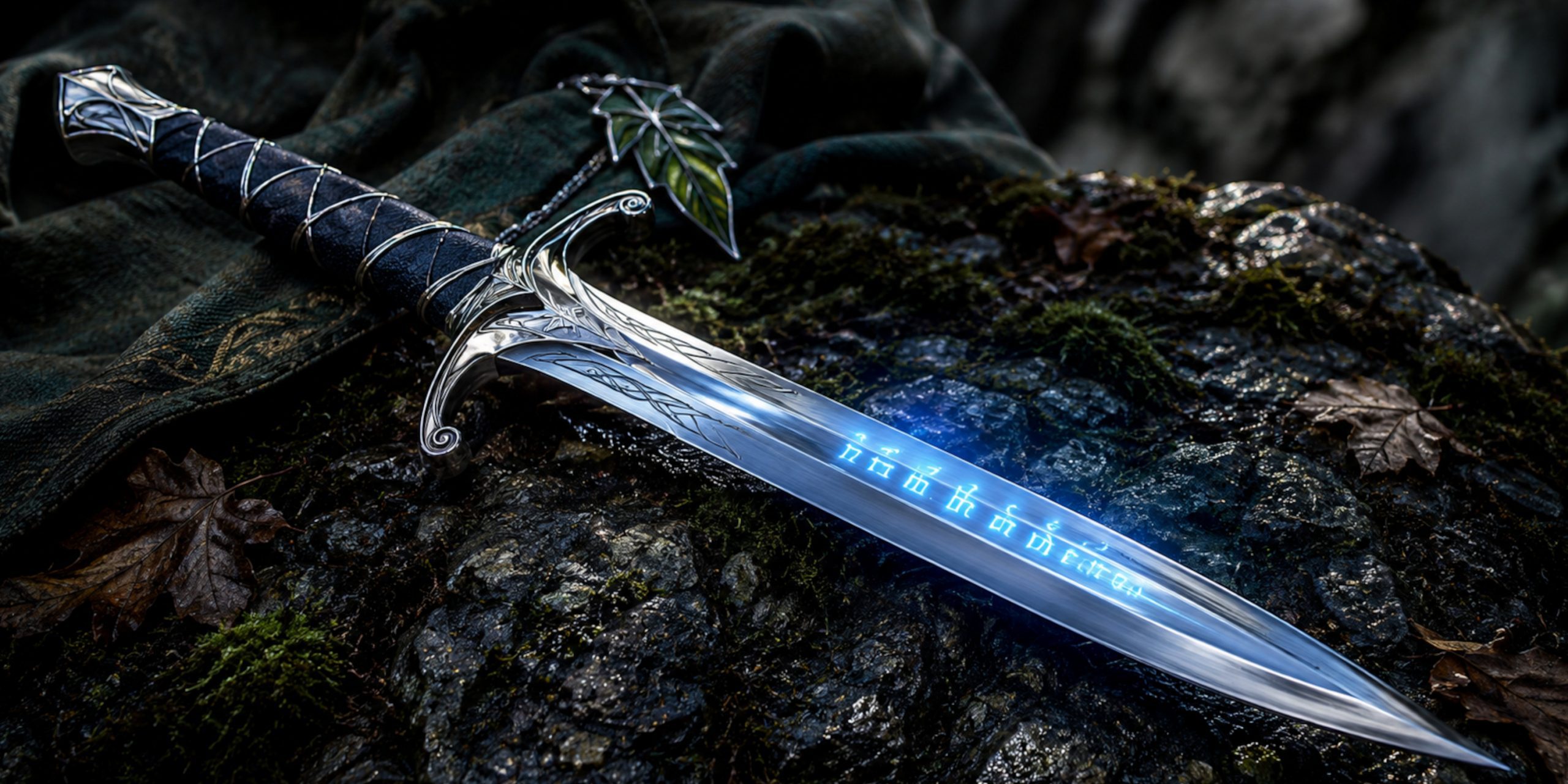
It is not the biggest sword in Middle-earth. It does not shatter mountains or summon lightning from the heavens. Compared to weapons like Glamdring or Andúril, Sting almost feels… modest.
That is exactly why it stands out.
A blade made for an Elf becomes a longsword in the hands of a Hobbit. Throughout both The Hobbit and The Lord of the Rings, Sting quietly proves that courage has very little to do with size. Honestly, it might be the greatest underdog weapon ever written.
Let’s take a closer look at one of Tolkien’s most iconic swords.
What Is Sting?
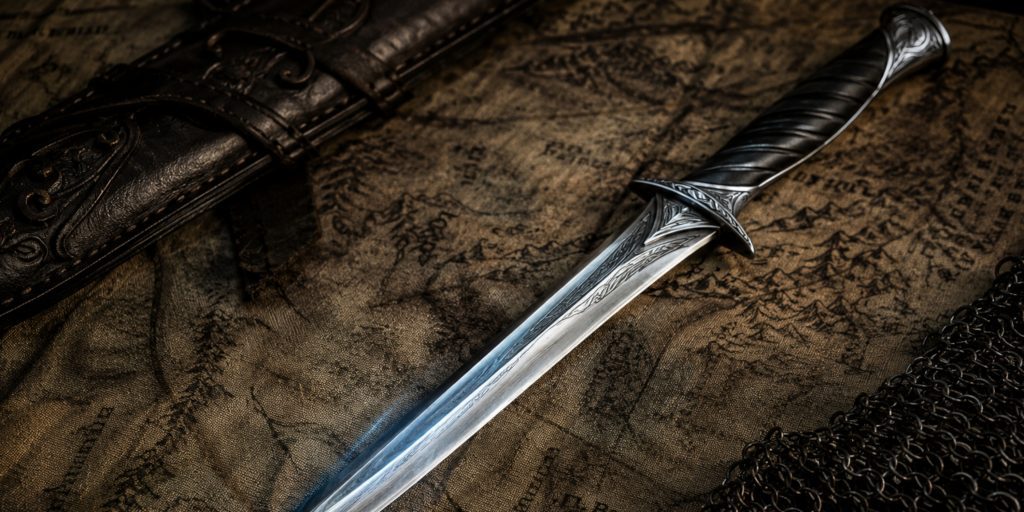
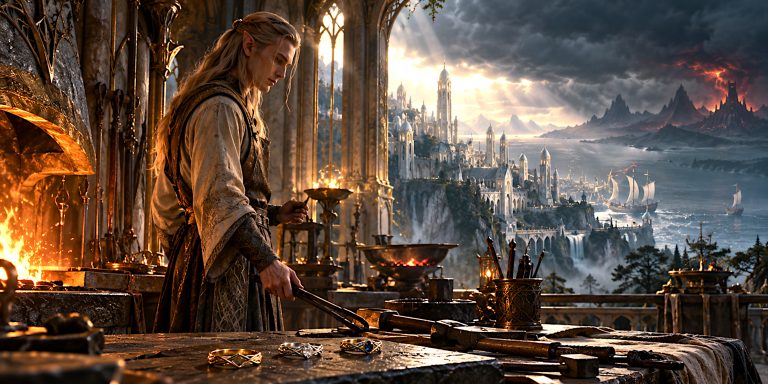
Sting is an ancient Elven short sword forged during the First Age by the Elves of Gondolin, one of the greatest hidden cities ever built in Middle-earth.
Although originally intended as a dagger or knife for an Elf, its proportions make it a perfectly balanced sword for Hobbits such as Bilbo Baggins and later Frodo Baggins.
Unlike many fantasy weapons that rely on overwhelming magical powers, Sting’s reputation comes from reliability, craftsmanship and the extraordinary people who carried it.
Sting at a Glance
| Feature | Details |
|---|---|
| Weapon Type | Elven short sword |
| Original Owner | Unknown Elf of Gondolin |
| Forged | First Age |
| Material | High-quality Elven steel |
| Length | Roughly dagger-sized for Elves, sword-sized for Hobbits |
| Special Ability | Glows blue when Orcs are nearby |
| Famous Owners | Bilbo Baggins, Frodo Baggins |
| First Appearance | The Hobbit |
The Discovery of Sting
Bilbo discovers Sting during the adventure with Thorin Oakenshield’s company.
While exploring the trolls’ cave after the three trolls are defeated, the company uncovers a cache of ancient weapons. Gandalf claims Glamdring, Thorin takes Orcrist, and Bilbo finds the small Elven blade that would eventually become Sting.
At first glance, Bilbo barely appreciates what he has found. It simply looks like a finely crafted knife.
Turns out it is one of the greatest archaeological finds in Middle-earth. Imagine picking up an old pocket knife at a car boot sale only to discover it belonged to King Arthur.
Why Is It Called Sting?
The sword receives its name after Bilbo’s encounter with the giant spiders of Mirkwood.
Using the blade to escape and defeat the spiders, Bilbo finally begins believing in his own courage.
He declares:
“I will give you a name.”
The name Sting perfectly captures its purpose.
Small.
Sharp.
Unexpectedly painful.
It also marks an important moment in Bilbo’s personal journey. Before this point he mostly reacts to danger. After naming the sword, he begins actively confronting it.
The Powers of Sting
Unlike many magical fantasy weapons, Sting possesses only a handful of supernatural qualities.
Blue Glow
The blade glows with a blue light whenever Orcs or Goblins are close.
This warning often provides valuable seconds before an ambush.
Its glow also creates an intimidating effect against enemies who recognise ancient Elven craftsmanship.
Exceptional Sharpness
Sting slices through rope, webbing and armour with remarkable ease.
Whether cutting through the giant spiders’ webs or helping Frodo survive Shelob’s lair, its edge remains consistently deadly.
Elven Craftsmanship
The greatest strength of Sting is simply how well it was made.
Weapons from Gondolin represented the pinnacle of First Age metallurgy. Even thousands of years later, Sting remains perfectly usable without showing significant signs of deterioration.
Sting in The Hobbit
The sword becomes central to Bilbo’s transformation.
Some of its most memorable moments include:
- Escaping the giant spiders of Mirkwood
- Killing multiple spiders
- Helping rescue the captured dwarves
- Giving Bilbo confidence during increasingly dangerous encounters
- Becoming a visible symbol of Bilbo’s growth
By the time the adventure ends, Sting has become inseparable from Bilbo’s identity.
Sting in The Lord of the Rings
Bilbo later gifts Sting to Frodo before the Fellowship leaves Rivendell.
It continues to play a vital role throughout the journey to Mordor.
Some of its defining moments include:
- Warning the Fellowship of approaching Orcs
- Helping Frodo survive countless encounters
- Fighting Shelob inside her dark tunnels
- Remaining one of Frodo’s few dependable companions throughout the quest
Interestingly, Sting almost feels like another member of the Fellowship.
It never speaks.
It never has its own storyline.
Yet every time it appears, something important is about to happen.
The Symbolism Behind Sting
Tolkien rarely writes weapons as simple tools.
Sting represents several recurring themes.
Small Heroes Can Change History
The sword is physically tiny compared to most legendary weapons.
That mirrors Bilbo and Frodo themselves.
Neither possesses the strength of Aragorn or Boromir, yet both ultimately shape the fate of Middle-earth.
Ancient Wisdom
The blade connects the Third Age with the legendary past of Gondolin.
Whenever Sting appears, readers are reminded that Middle-earth is built upon thousands of years of forgotten history.
Hope in Darkness
Its blue glow literally brings light into dangerous places.
That symbolism becomes especially powerful in Shelob’s tunnels, where even a faint light represents survival.
How Does Sting Compare with Other Famous Tolkien Swords?
| Sword | Owner | Strength |
| Sting | Bilbo, Frodo | Precision, warning against Orcs |
| Glamdring | Gandalf | Ancient royal sword of Gondolin |
| Orcrist | Thorin Oakenshield | Deadly against Orcs |
| Andúril | Aragorn | Symbol of kingship and destiny |
Sting lacks the prestige of Andúril or Glamdring, but it arguably spends more time actively influencing the central narrative than almost any other weapon.
Could Sting Really Exist?
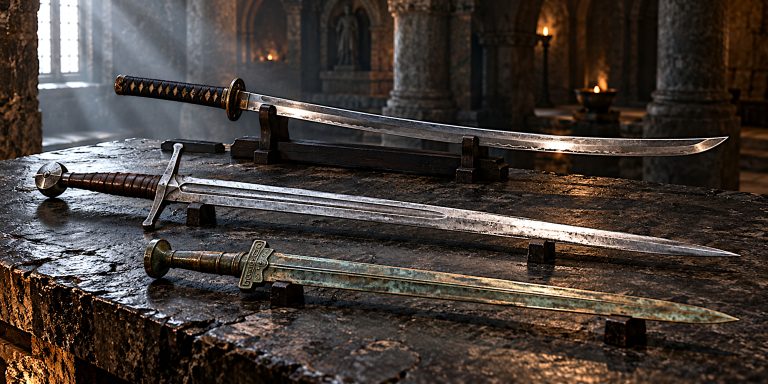
From a historical perspective, Sting resembles a long fighting knife or short sword.
Comparable historical weapons include:
- Roman pugiones
- Medieval bollock daggers
- Baselards
- Long hunting knives
- Large seaxes
Its dimensions would make it practical for close combat while remaining light enough for quick movement.
The glowing blade is firmly fantasy, although every reader secretly wishes museums had one hidden in storage somewhere.
Sting in Peter Jackson’s Films
The film adaptations remain largely faithful to Tolkien’s description.
Designed by Weta Workshop, Sting features elegant flowing Elven lines, intricate engravings and a polished leaf-shaped blade that reflects its Gondolin origins.
Its blue glow became one of the most visually recognisable magical effects in both trilogies, instantly signalling danger without a single word being spoken.
The prop has since become one of the most recognisable fantasy swords ever created.
Collecting Sting Replicas
Sting remains one of the most reproduced fantasy swords available today.
Popular replica options include:
- Official United Cutlery licensed versions
- High-end collector editions
- Display replicas
- Functional custom reproductions from independent smiths
Collectors generally look for:
- Accurate Elven engravings
- Proper blade proportions
- Matching wooden display plaque
- Licensed authenticity
Limited editions often appreciate in value, particularly discontinued licensed releases.
Frequently Asked Questions
Who forged Sting?
The exact smith is unknown, but Sting was crafted by the Elves of Gondolin during the First Age.
Why does Sting glow blue?
The blade glows whenever Orcs or Goblins are nearby, acting as an early warning.
Was Sting originally a dagger?
Yes. For an Elf it functioned as a knife or dagger, but for Hobbits it served as a perfectly sized sword.
Who owned Sting?
Bilbo Baggins first claimed Sting before passing it to Frodo Baggins, who carried it throughout the War of the Ring.
Is Sting stronger than Andúril?
Not in terms of symbolism or prestige. However, Sting arguably sees more practical use across Tolkien’s stories and repeatedly proves indispensable.