Few fantasy shows looked at mythology with the same fearless confidence as Xena: Warrior Princess. The series took ancient legends, threw them into a blender with action cinema, philosophy, romance and the occasional deeply questionable disguise, then somehow made it work.
The gods of Xena are not distant beings watching from golden clouds. They argue, scheme, fall in love, make terrible decisions and regularly discover that annoying a former warlord with a chakram is a career limiting move.
Across six seasons, the show explored Greek mythology, Norse legends, spiritual movements and its own original ideas about divine power. Some gods became villains, others became unlikely allies, and a few were simply immortal beings trying to survive a changing world.
The Greek Gods of Olympus
The Olympian gods form the backbone of Xena’s mythology. They are powerful, dramatic and extremely human in their flaws.
Rather than portraying them as perfect beings, the series leans into the ancient Greek idea that gods could be jealous, passionate, petty and unpredictable. Immortality apparently does not come with emotional maturity.
Ares: God of War
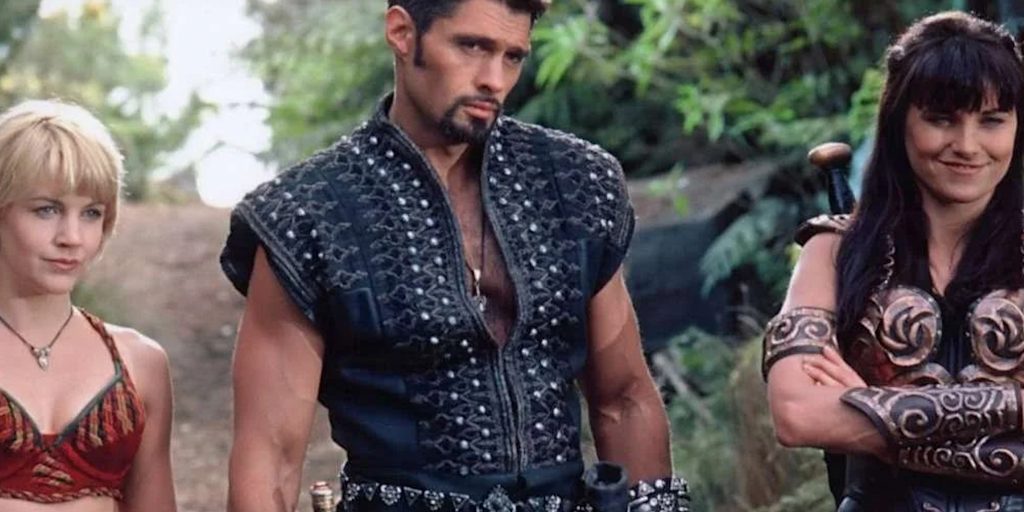
Ares is the most important god in Xena’s story. Played by Kevin Smith, he became one of the show’s defining characters thanks to a mix of menace, charm and complicated loyalty.
Domain: War, conflict, violence
First appearance: Season 1
Inspired by: Greek mythology
Ares represents everything Xena is trying to escape. During her years as a warlord, he saw her as his perfect warrior and spent much of the series trying to bring her back to her darker instincts.
Yet Ares is not written as a simple villain. His feelings for Xena create one of the show’s most interesting relationships. He manipulates her, challenges her and occasionally protects her.
His greatest moments include:
- Tempting Xena with power and conquest
- Fighting against other gods
- Sacrificing his immortality to save Xena and Gabrielle
- Becoming vulnerable as a mortal
Ares works because he genuinely believes Xena is extraordinary. Unfortunately, his version of supporting someone usually involves swords, armies and a few ruined villages.
Aphrodite: Goddess of Love
Aphrodite could have easily been a one-note joke character, but Xena gave her surprising emotional depth.
Domain: Love, beauty, desire
Inspired by: Greek mythology
At first she appears vain and obsessed with attention, but over time she becomes one of the kinder Olympians. Her friendship with Gabrielle reveals a more thoughtful side beneath the glitter and chaos.
Important storylines:
- Protecting love and creativity
- Helping Gabrielle
- Struggling after the fall of Olympus
- Building a friendship with mortals
Aphrodite might arrive like a walking party explosion, but she often proves she understands humanity better than many of the “serious” gods.
Zeus: King of the Gods
Zeus appears as the ruler of Olympus and father of many gods, including Hercules.
Domain: Sky, thunder, kingship
Like his mythological counterpart, Zeus is powerful but deeply flawed. In the Xenaverse, his fear of losing control drives many of his choices.
His biggest role comes during the prophecy surrounding Xena’s daughter Eve, where the Olympians believe the child will bring their destruction.
Rather than adapting to change, Zeus tries to stop destiny. As usual in mythology, fighting prophecy goes about as well as expected.
Hera: Queen of Olympus
Hera is more prominent in Hercules: The Legendary Journeys, but her influence carries into the shared universe.
Domain: Marriage, queenship, family
She begins as a major antagonist, particularly against Hercules, due to Zeus’ betrayals. Later stories explore a more complicated side to her, moving beyond simple revenge.
Hades: God of the Underworld
Unlike many versions of Hades in modern fiction, Xena does not always present him as evil.
Domain: Death and the Underworld
Hades is more like an administrator of the afterlife. He maintains order among the dead rather than simply causing suffering.
His appearances explore:
- Judgement after death
- Lost souls
- The balance between life and the afterlife
Being the god of the dead is not cheerful work, but someone has to handle the paperwork.
Poseidon: God of the Sea
Poseidon appears early in the series as one of the most visually memorable gods.
Domain: Oceans, storms, earthquakes
His enormous water-based form highlights how powerful the gods can be when compared with ordinary humans. Although not as central as Ares, he helps establish the scale of divine forces in Xena’s world.
Discord: Goddess of Chaos
Discord is one of the younger gods introduced in the series.
Domain: Conflict, disruption, chaos
She often works alongside Ares but lacks his patience and strategic thinking. Her impulsive nature makes her dangerous, especially when she sees violence as entertainment.
Deimos: God of Terror
Deimos brings a more chaotic energy to Olympus.
Domain: Fear and terror
He is unpredictable, aggressive and frequently involved in divine schemes. Like several younger gods, he represents the decline of Olympus, where power exists without much wisdom behind it.
The Twilight of the Gods
One of the biggest arcs in Xena: Warrior Princess is the fall of the Olympian gods.
The birth of Xena’s daughter Eve signals a prophecy that the old gods will lose their dominance. Terrified of becoming irrelevant, many Olympians attempt to destroy Eve.
This leads to a brutal conflict where Xena gains the power to kill gods.
Major gods who fall include:
- Zeus
- Poseidon
- Hades
- Hephaestus
- Discord
- Deimos
- Artemis
- Athena
The storyline represents a major shift in the series. Physical strength is no longer the ultimate power. Faith, change and human choice begin replacing the rule of ancient gods.
Athena: Goddess of Wisdom and Warfare
Athena becomes one of Xena’s most dangerous opponents.
Domain: Wisdom, strategy, warfare
Unlike Ares, Athena does not rely on emotion. She is intelligent, organised and genuinely believes she is protecting the future of Olympus.
Her conflict with Xena is fascinating because both characters understand strategy. Athena is not foolish. She simply cannot accept that the age of the Olympians may be ending.
Artemis: Goddess of the Hunt
Artemis is connected to the Amazons, making her important to Gabrielle’s journey.
Domain: Hunting, wilderness, warriors
Her role highlights the relationship between mortals and gods. The Amazons respect Artemis, but the series repeatedly asks whether people should depend on divine figures or choose their own path.
Hephaestus: God of the Forge
Hephaestus represents craftsmanship and creation.
Domain: Blacksmithing, metalworking, invention
While not one of the central gods, his presence connects the series to the legendary weapons and artefacts of Greek mythology.
Cupid: God of Love
Cupid appears mainly through the lighter fantasy side of the Xenaverse.
Domain: Romance and attraction
His stories usually involve magical confusion, emotional lessons and the kind of romantic disasters that only happen when gods decide they are relationship experts.
Gods Beyond Greece
One of the boldest choices in Xena was expanding beyond Greek mythology. The series eventually created a world where different pantheons and belief systems existed alongside each other.
Odin and the Norse Gods
The Norse episodes explore Xena’s past and her connection with Odin.
Domain: Wisdom, magic, war
The show adapts elements from Norse mythology including:
- Odin
- Valkyries
- Valhalla
- The Rheingold legend
These episodes reveal another chapter from Xena’s darker years, showing how far her influence reached before she became a hero.
The Archangels and the God of Light
Later seasons introduce a more spiritual conflict involving angels, demons and a single powerful divine force.
Characters connected to this storyline include:
- Eli
- Michael
- Lucifer
These episodes move away from traditional mythology and explore ideas of redemption, forgiveness and sacrifice.
Eli’s teachings become especially important because they challenge the violent world Xena has always known.
Dahak: The Dark God
Dahak is one of the darkest supernatural forces in the series.
Domain: Evil, destruction, corruption
Unlike the Olympians, who behave like flawed humans with too much power, Dahak feels genuinely alien and dangerous.
His influence leads to some of the show’s most serious moments, particularly involving Gabrielle and Hope.
The Hindu Deities
The series also includes stories inspired by Hindu traditions, including encounters involving Krishna.
These episodes are among the more debated parts of the show because they mix real religious figures with fantasy storytelling. They remain important because they show the writers’ ambition to create a larger mythological universe.
The Most Powerful Gods in Xena Ranked
Dahak
A cosmic threat who operates beyond the normal limits of the Olympians.
The God of Light
Presented as a force capable of replacing the old divine order.
Zeus
The traditional ruler of Olympus with enormous power.
Ares
A master manipulator and warrior who remains dangerous even without immortality.
Athena
Possibly the smartest Olympian opponent Xena ever faced.
Odin
A powerful god whose knowledge and magic place him above many immortals.
Why the Gods Made Xena Different
The gods of Xena: Warrior Princess were never just magical opponents waiting for a fight scene. They represented temptation, fear, love, ambition and change.
The series constantly asked an interesting question: should humanity follow powerful beings simply because they are powerful?
Xena’s answer was usually delivered with a sword, a chakram and a look that suggested someone was about to have a very bad afternoon.
The gods shaped her journey, but they never controlled it. That is what made the Warrior Princess different. She challenged monsters, armies and even heaven itself while proving that redemption was not something granted by the gods.
It was something earned.