There is something oddly magnetic about Richard III. He is manipulative, ruthless, and responsible for some of Shakespeare’s darkest moments. Yet audiences keep finding themselves drawn to him. Perhaps that is the challenge and the appeal of the role. Richard is a villain who somehow convinces us to stay in the room and hear him out.
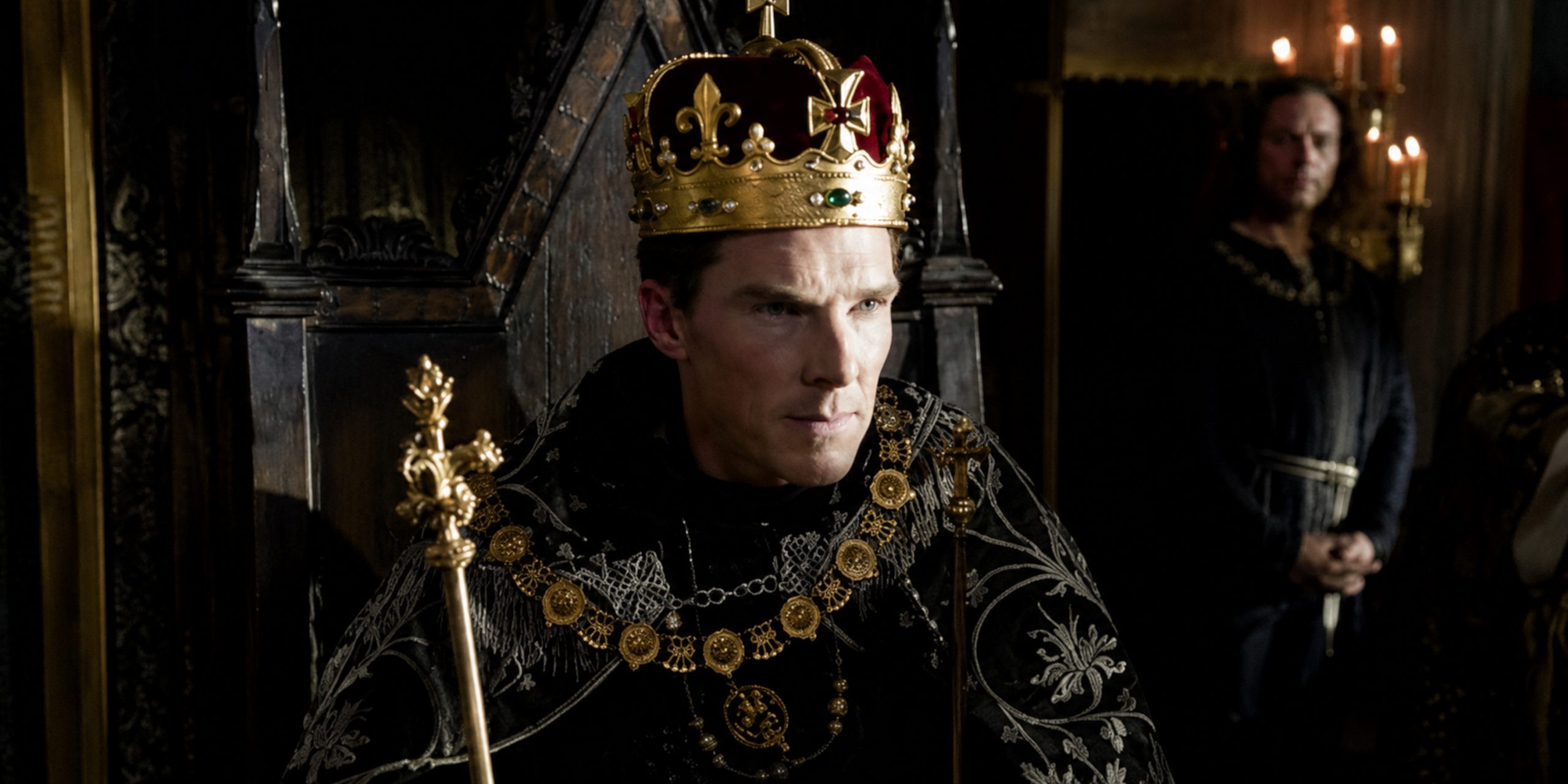
When Benedict Cumberbatch took on Richard III in The Hollow Crown: The Wars of the Roses, he inherited one of the most demanding roles in English drama. The result was a performance that felt intelligent, unsettling, and surprisingly human.
For viewers discovering Shakespeare through television, Cumberbatch’s Richard became one of the defining interpretations of the character in the modern era.
Who Is Richard III?
Richard III is the central figure of Shakespeare’s play of the same name. Based loosely on the historical King Richard III of England, Shakespeare presents him as an ambitious nobleman who schemes, manipulates, and murders his way to the throne.
The play begins with one of the most famous openings in literature:
“Now is the winter of our discontent…”
From the outset, Richard speaks directly to the audience. He tells us exactly what he intends to do. There is no mystery. The fascination comes from watching him succeed.
Historically, Richard III remains one of England’s most controversial monarchs. Shakespeare’s version, however, was written more than a century after Richard’s death and under a Tudor dynasty that benefited from portraying him as a tyrant.
The real Richard and Shakespeare’s Richard are not necessarily the same person.
Benedict Cumberbatch’s Interpretation
Cumberbatch approached the role with a mixture of charm, intelligence, and menace.
Rather than portraying Richard as a snarling monster, he presented him as someone acutely aware of his own limitations and resentments. His Richard understands how others perceive him and weaponises those perceptions.
The performance often feels less like watching a medieval king and more like observing a brilliant political operator who happens to live in the fifteenth century.
One aspect that stands out is how conversational Cumberbatch makes Richard’s soliloquies feel. Instead of declaiming Shakespearean verse from a theatrical distance, he speaks directly to viewers almost as though he is sharing confidential information.
It creates an uncomfortable relationship between Richard and the audience.
You know he is lying.
You know he is dangerous.
Yet you keep listening.
Richard’s Physicality
Shakespeare famously describes Richard as physically deformed, and productions have interpreted this in many different ways.
Cumberbatch’s Richard possesses a curved spine and uneven posture, but the portrayal avoids reducing the character to his disability. Instead, the physical condition becomes part of Richard’s psychological armour.
He notices every glance.
He anticipates every insult.
He assumes rejection before it arrives.
That simmering resentment becomes one of the driving forces behind his actions.
What makes the performance particularly effective is that Richard’s physical limitations never make him appear weak. If anything, Cumberbatch’s Richard often seems sharper and more alert than everyone around him.
How He Manipulates Everyone Around Him
Richard’s greatest weapon is not a sword.
It is persuasion.
Throughout the story he successfully manipulates:
- His brothers
- The royal court
- Noble families
- Political allies
- Potential enemies
- The public
One of the most extraordinary examples comes when he woos Lady Anne.
At this point Richard has effectively destroyed her family and is directly responsible for the death of her husband.
Yet through a combination of confidence, psychological pressure, and calculated vulnerability, he convinces her to marry him.
Even reading the scene today feels almost absurd.
Watching Cumberbatch perform it somehow makes it believable.
That is perhaps the greatest compliment any actor can receive when playing Richard III.
Richard’s Descent Into Isolation
One reason Richard III remains such a compelling tragedy is that success never brings Richard happiness.
As he accumulates power, he steadily loses trust, friendship, and loyalty.
Early in the story he is energetic and witty.
By the final act he appears haunted.
The ghosts of his victims visit him before the Battle of Bosworth, creating one of Shakespeare’s most powerful psychological sequences.
Cumberbatch captures this shift brilliantly. The confidence that carried Richard through the first half of the story gradually erodes.
For the first time, the man who always had complete control begins to doubt himself.
The Battle of Bosworth
The climax of Richard III arrives at the Battle of Bosworth Field in 1485.
Historically, the battle ended the Wars of the Roses and brought the Tudor dynasty to power.
In Shakespeare’s version, it becomes a moral reckoning.
Richard’s famous cry:
“A horse! A horse! My kingdom for a horse!”
is often misunderstood as comic desperation.
In reality, it represents the collapse of everything Richard spent the entire play trying to achieve.
He gained a kingdom through manipulation and violence.
Now he would trade that kingdom for the simplest chance at survival.
Cumberbatch delivers the moment with genuine desperation rather than theatrical exaggeration, making it feel surprisingly tragic.
How Accurate Is Shakespeare’s Richard?
This is where things become complicated.
Modern historians increasingly question Shakespeare’s depiction of Richard III.
Evidence suggests the historical king may not have been the monstrous villain portrayed in Tudor-era accounts.
Some historians argue that:
- Richard was an effective administrator.
- Certain crimes attributed to him remain unproven.
- Tudor writers had political reasons to damage his reputation.
- His physical condition was exaggerated for dramatic effect.
The discovery of Richard III’s remains beneath a car park in Leicester in 2012 reignited public interest in the king and prompted fresh debate about his legacy.
As a result, many modern productions, including Cumberbatch’s, tend to present Richard as more complex than purely evil.
Why Benedict Cumberbatch Was Well Suited to the Role
Looking back, the casting makes perfect sense.
Many of Cumberbatch’s most memorable characters share qualities with Richard:
- Exceptional intelligence
- Social isolation
- Sharp wit
- Emotional repression
- An ability to dominate a scene through dialogue
What separates Richard from characters like Sherlock Holmes is the absence of moral restraint.
Richard uses his intelligence not to solve problems but to create them.
Cumberbatch understands that distinction and never tries to make Richard sympathetic in a simplistic way.
Instead, he makes him understandable.
That is far more interesting.
How His Performance Compares to Other Richards
Every generation seems to produce its own notable Richard III.
Performances by actors such as Laurence Olivier, Ian McKellen, and Mark Rylance have each offered different interpretations.
Olivier leaned into theatrical grandeur.
McKellen famously placed Richard within a fascist-inspired twentieth-century setting.
Rylance emphasised psychological complexity and vulnerability.
Cumberbatch sits somewhere between these approaches. His Richard is theatrical enough to honour Shakespeare while remaining grounded enough for television audiences.
The result feels modern without losing the poetry.
Why the Performance Still Resonates
Part of Richard III’s enduring appeal comes from its exploration of power.
Richard understands how institutions work.
He understands how appearances shape reality.
Most importantly, he understands how easily people can be manipulated when ambition enters the equation.
Those themes feel remarkably contemporary.
Cumberbatch’s performance recognises this. He never treats Richard as a relic of medieval history. Instead, he presents him as the sort of charismatic, dangerous figure who could emerge in almost any era.
That makes the story feel less comfortable and far more relevant.
Final Thoughts
Benedict Cumberbatch’s Richard III succeeds because it avoids easy answers.
The character is neither a misunderstood hero nor a cartoon villain. He is ambitious, clever, wounded, manipulative, and ultimately self-destructive.
Shakespeare created one of literature’s most unforgettable antagonists, and Cumberbatch brought him to life with intelligence and restraint.
Watching his performance, I found myself repeatedly caught between admiration and revulsion. Richard is the kind of character who makes you question why you are still rooting for him halfway through the story.
Then you remember.
You are not rooting for him.
You are simply unable to look away.
For a Richard III, that is probably the highest compliment possible.