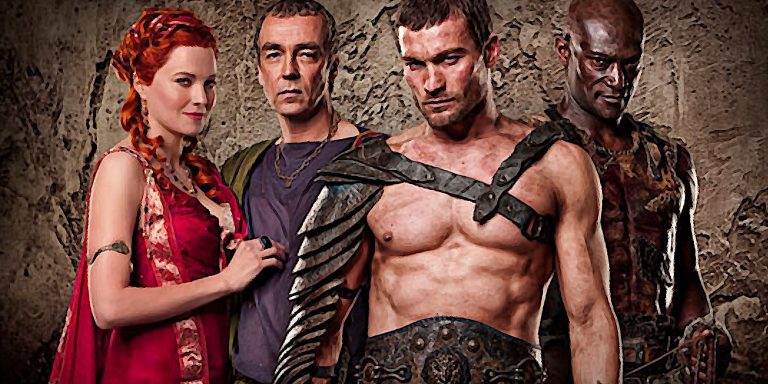
Among the many warriors who carved their names into the chaos of Spartacus, Saxa stands apart. She is wild, fearless, brutally honest, and probably the last person you would want angry at you while holding a sword.
Played by Ellen Hollman, Saxa became one of the show’s most memorable rebels despite not being one of the original gladiators from the House of Batiatus. She brought a completely different energy to the rebellion: unpredictable, fiercely independent, and driven by the kind of survival instinct that comes from a lifetime of hardship.
While Spartacus often focuses on legendary male warriors like Spartacus, Crixus, and Gannicus, Saxa proves that the rebellion was not built by gladiators alone.
Who Was Saxa in Spartacus?
Saxa appears in Spartacus: Vengeance and Spartacus: War of the Damned as a Germanic warrior who joins the growing slave uprising against Rome.
Unlike many characters who are gradually pushed into rebellion, Saxa arrives already hardened. She has experienced slavery, violence, and oppression, but she refuses to let those things define her as a victim.
Her defining traits include:
- Fierce loyalty to those she respects
- A love of battle and freedom
- A rebellious personality
- Confidence bordering on recklessness
- A sharp sense of humour
- Complete refusal to follow Roman expectations
She is not written as a polished heroic figure. That is actually what makes her interesting. Saxa drinks, fights, jokes, loves, and argues with the same intensity. She feels like someone who truly believes every day of freedom could be her last.
Given the survival rate of characters in Spartacus, that attitude is fairly understandable.
Was Saxa a Real Historical Person?
Unlike Spartacus himself, Saxa is not recorded as a confirmed historical figure from the Third Servile War.
The real rebellion of Spartacus from 73 to 71 BCE involved tens of thousands of escaped slaves from many backgrounds, including Celts, Germans, Thracians, and Greeks. Ancient sources mostly focused on major leaders such as Spartacus, Crixus, Oenomaus, Castus, and Gannicus.
Many ordinary rebels, including female fighters, were not named.
Saxa represents the kind of person who likely existed within the revolt: someone from outside Rome’s borders who was enslaved, escaped, and fought for survival.
Saxa’s Germanic Background
One of the most distinctive things about Saxa is her Germanic identity.
During the late Roman Republic, Germanic tribes lived beyond Rome’s northern frontiers. Conflict, raids, trade, and slavery meant many people from these regions ended up within Roman territory.
The show uses Saxa’s background to make her stand apart from Roman society. She is portrayed as:
- Less concerned with Roman traditions
- More direct in speech and behaviour
- Fiercely attached to personal freedom
- Comfortable with physical hardship
Of course, Spartacus exaggerates everything for dramatic effect. This is a world where nearly every conversation sounds like someone is preparing a battle speech. Still, Saxa’s outsider status gives her a strong identity among the rebels.
Saxa’s Fighting Style and Weapons
Saxa’s fighting style perfectly matches her personality: fast, aggressive, and slightly terrifying.
She is not a defensive fighter waiting for opportunities. She attacks first and trusts her instincts.
Her combat style includes:
- Dual wielding blades
- Rapid close-range attacks
- Acrobatics and movement
- Surprise strikes
- Improvised battlefield tactics
Compared with the trained gladiators, Saxa fights with less discipline but huge amounts of ferocity.
Characters like Crixus rely on gladiatorial technique and strength. Gannicus combines skill with natural talent. Saxa brings raw aggression and unpredictability.
Basically, if a Roman soldier saw her sprinting towards them with two blades, reconsidering their career choices would be reasonable.
Saxa and Gannicus: A Complicated Relationship

One of Saxa’s most important relationships is with Gannicus.
Their connection works because they share similar personalities. Both are warriors who value freedom, pleasure, and living without chains. Neither is particularly interested in pretending to be something they are not.
Their relationship begins casually but develops into genuine affection and respect.
However, Gannicus eventually develops feelings for Sibyl, creating tension between them. What makes Saxa interesting is that she is not reduced to jealousy. She remains loyal to the rebellion and continues fighting beside those she cares about.
She may be wounded emotionally, but she does not allow heartbreak to weaken her.
Friendship with Naevia
Saxa’s friendship with Naevia is another important part of her character.
After everything Naevia suffers under Roman captivity, Saxa becomes one of the people who supports her transformation into a fighter.
Their bond is built through:
- Shared trauma
- Training
- Fighting together
- Mutual hatred of Roman cruelty
Their friendship also shows a softer side to Saxa. Beneath the sarcasm and violence, she genuinely protects those she considers family.
She just happens to express affection with a lot more stabbing than most people.
Saxa During the Slave Rebellion
As Spartacus’ army grows, Saxa becomes one of the rebellion’s most capable fighters.
She participates in major moments including:
- Attacks against Roman forces
- Raids for supplies
- Defence of rebel positions
- The final campaign against Crassus
She is never interested in becoming a political leader. Saxa’s role is much simpler: protect her people and fight anyone trying to put chains back on them.
That simplicity makes her one of the rebellion’s most believable characters.
Saxa’s Death Explained
Saxa dies during the final battles against the Roman army commanded by Marcus Licinius Crassus.
Her death is brutal, emotional, and fitting for the character. She falls in combat after fighting until the very end, refusing to surrender even when defeat becomes inevitable.
Her final moments reinforce everything the character represented:
- Defiance against Rome
- Loyalty to her companions
- Choosing death over slavery
- Freedom at any cost
In a series famous for dramatic deaths, Saxa’s ending stands out because she never betrays who she is.
Saxa Compared to Other Spartacus Warriors
| Character | Fighting Style | Main Strength |
|---|---|---|
| Saxa | Fast dual-blade combat | Speed and aggression |
| Spartacus | Tactical swordsmanship | Leadership and adaptability |
| Crixus | Heavy gladiator combat | Strength and determination |
| Gannicus | Fluid sword technique | Natural skill and confidence |
| Agron | Aggressive melee fighting | Loyalty and endurance |
| Naevia | Developing warrior style | Resilience |
Saxa may not be the strongest fighter in the rebellion, but she is among the most fearless.
Why Saxa Became a Fan Favourite
Saxa works because she feels completely authentic within the brutal world of Spartacus.
She is not trying to become a legend. She is not chasing glory or power. She simply wants to live freely after having that freedom stolen from her.
Fans remember her because she brings:
- Humour
- Chaos
- Confidence
- Emotional honesty
- Memorable battle scenes
She is a reminder that the rebellion was not only about famous generals and battlefield strategies. It was also about thousands of people who decided that even a dangerous freedom was better than a comfortable cage.
Takeaway
Saxa is one of Spartacus’ strongest original characters because she represents the spirit of rebellion in its purest form.
She is messy, fearless, loyal, and occasionally a complete nightmare for anyone standing too close with a Roman accent. The series never tries to make her perfect, which is exactly why she works.
In a story filled with warriors searching for honour, revenge, and destiny, Saxa fights for something beautifully simple.
Her own life belongs to her.