Few rulers have altered the course of military history quite like Gustavus Adolphus. Admired by allies and feared by enemies, the Swedish king transformed a relatively small northern kingdom into one of Europe’s great military powers. His campaigns during the Thirty Years’ War reshaped battlefield tactics, influenced generations of commanders and earned him the enduring nickname, The Lion of the North.
Military historians often search for moments when warfare truly changes. Gustavus provides one of those moments. He did not invent every idea credited to him, but he combined organisation, mobility, discipline and firepower with remarkable effectiveness. Like all great commanders, he was both a product of his age and someone capable of pushing beyond its limits.
His death at Lützen in 1632 froze his reputation in time. He became both a national hero and almost a mythical military genius. The reality is perhaps even more impressive.
Who Was Gustavus Adolphus?
Gustavus Adolphus was born on 9 December 1594, the eldest son of Charles IX of Sweden and Christina of Holstein-Gottorp.
He inherited the Swedish throne in 1611 at only sixteen years of age. Sweden was surrounded by powerful rivals and engaged in conflicts with Denmark-Norway, Russia and the Polish-Lithuanian Commonwealth. Few observers would have predicted that within two decades Sweden would become one of Europe’s dominant military powers.
His reign lasted until his death during the Battle of Lützen on 16 November 1632.
Quick Facts
| Detail | Information |
|---|---|
| Full Name | Gustav II Adolf |
| Born | 9 December 1594 |
| Died | 16 November 1632 |
| Reign | 1611 to 1632 |
| Dynasty | House of Vasa |
| Nickname | The Lion of the North |
| Famous For | Military reforms, Thirty Years’ War, Swedish Empire |
Early Life and Education
Unlike many princes whose education focused largely on court etiquette, Gustavus received extensive instruction in languages, politics, military affairs and administration.
He reportedly spoke several languages including Swedish, German, Latin and French, while also understanding Polish and Italian.
By the time he became king he already possessed practical military experience. Sweden’s constant wars meant that leadership could not remain theoretical for long.
His early reign became an apprenticeship in survival.
Building a Military Superpower
Perhaps Gustavus Adolphus’ greatest achievement was not winning battles.
It was creating an army capable of consistently winning them.
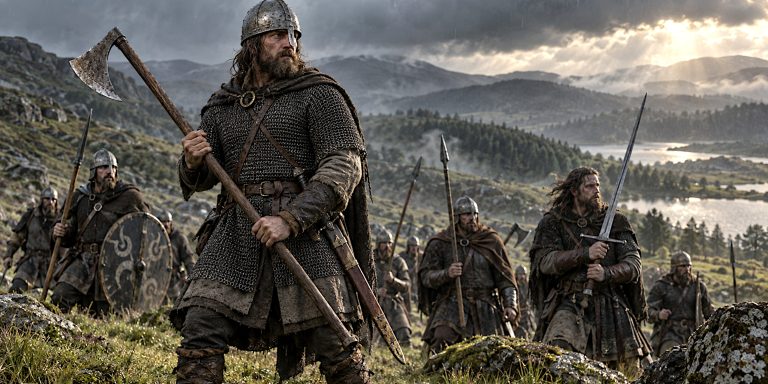
Before his reforms, many European armies relied heavily on large formations of mercenaries whose loyalty often extended only as far as their wages.
Gustavus developed a far more integrated military system.
His reforms included:
- Permanent national recruitment
- Improved officer training
- Better battlefield discipline
- Standardised equipment
- Smaller, more flexible formations
- Close cooperation between infantry, cavalry and artillery
- Faster battlefield communication
These innovations produced an army that moved faster and reacted more effectively than many opponents.
Military Acumen
Many historians consider Gustavus among history’s greatest battlefield commanders.
His strengths included:
- Outstanding strategic planning
- Excellent logistics
- Flexible battlefield tactics
- Strong leadership from the front
- Effective use of artillery
- Rapid exploitation of enemy mistakes
Unlike commanders who remained safely behind their lines, Gustavus frequently placed himself where the fighting was fiercest.
This inspired his troops but carried obvious risks.
Eventually those risks caught up with him.
Major Battles
Kalmar War (1611 to 1613)
Although Sweden suffered setbacks against Denmark, Gustavus gained valuable military experience that influenced later reforms.
Ingrian War (1610 to 1617)
Victory over Russia secured Sweden’s eastern frontier and expanded its Baltic influence.
Polish-Swedish War
The long conflict against Sigismund III became Gustavus’ military laboratory.
Notable engagements included:
- Battle of Wallhof (1626)
- Battle of Dirschau (1627)
- Battle of Gniew
- Campaigns across Livonia and Prussia
These wars allowed Gustavus to refine his combined arms tactics.
Battle of Breitenfeld (1631)
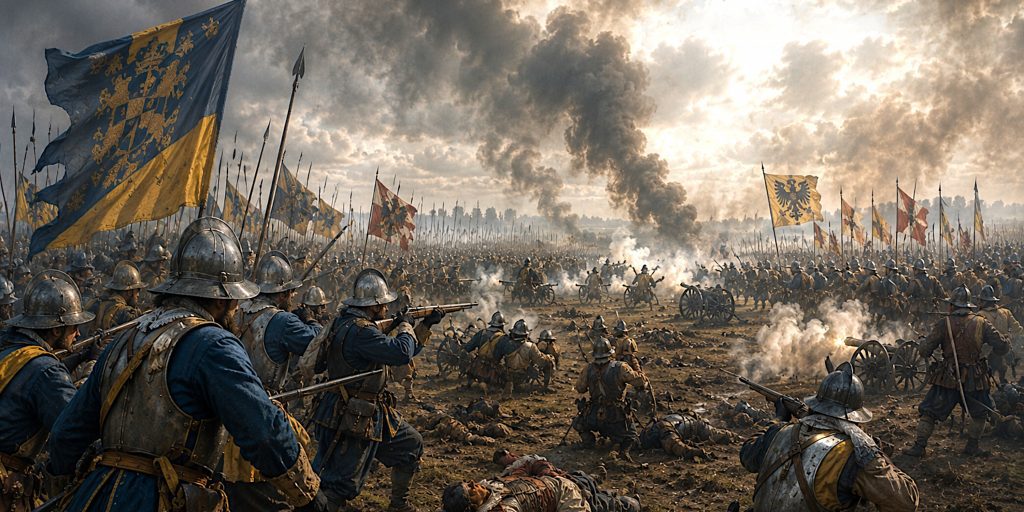
Breitenfeld remains one of history’s decisive military victories.
The Swedish army defeated the experienced Imperial forces commanded by Count Tilly.
The battle demonstrated:
- Superior artillery deployment
- Flexible infantry formations
- Aggressive cavalry tactics
- Effective battlefield coordination
Many historians regard Breitenfeld as one of the defining victories of the Thirty Years’ War.
Battle of Rain (1632)
Again Gustavus defeated Tilly, who was mortally wounded during the fighting.
Swedish dominance appeared unstoppable.
Battle of Lützen (1632)
Lützen produced one of military history’s great ironies.
The Swedish army won.
Its king did not survive.
Caught in thick fog and separated from his escort, Gustavus rode directly into enemy cavalry. Wounded several times, he was killed before his body was later recovered by Swedish troops.
His death transformed him into a legend.
Major Campaigns
| Campaign | Years | Outcome |
|---|---|---|
| Kalmar War | 1611 to 1613 | Danish victory but valuable experience |
| Ingrian War | 1610 to 1617 | Swedish success |
| Polish Campaigns | 1621 to 1629 | Swedish territorial gains |
| Thirty Years’ War | 1630 to 1632 | Major Protestant victories |
Arms and Armour
Gustavus believed equipment should support mobility rather than burden soldiers unnecessarily.
Gustavus Adolphus
He likely wore:
- High quality cuirass
- Steel backplate
- Open-faced cavalry helmet
- Leather riding boots
- Buff coat beneath armour
- Steel gauntlets
His battlefield equipment reflected practicality over extravagance.
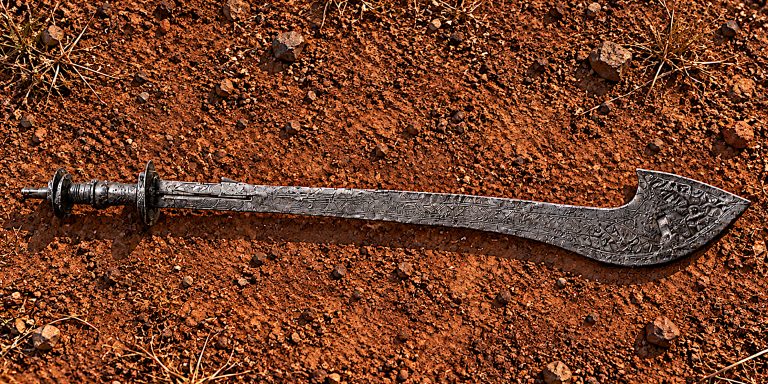
Swords Used
Several sword types appeared throughout his armies.
| Sword | Users |
|---|---|
| Basket-hilted broadsword | Officers and cavalry |
| Military rapier | Officers |
| Walloon sword | Heavy cavalry |
| Backsword | Swedish cavalry |
| Sabres | Light cavalry and allied troops |
The Walloon sword became especially associated with Swedish cavalry and would remain influential across Europe.
Firearms
Swedish troops used:
- Matchlock muskets
- Flintlock weapons in limited numbers
- Pistols
- Carbines
Gustavus reduced musket weight so infantry could fire without cumbersome rests.
Small improvements like this often produced enormous tactical advantages.
Artillery
His artillery reforms became famous.
They included:
- Lighter bronze cannon
- Horse-drawn mobile artillery
- Faster deployment
- Standardised calibres
- Greater battlefield flexibility
Instead of treating artillery as static siege equipment, Gustavus integrated it directly into battlefield manoeuvre.
Leadership Style
Gustavus inspired remarkable loyalty.
He shared hardships with his soldiers, rode into combat personally and maintained high standards of discipline.
He demanded professionalism but also rewarded competence.
Modern commanders might recognise much of his philosophy.
Although they would probably avoid personally charging into enemy cavalry.
Politics and Religion
His intervention in the Thirty Years’ War combined strategic necessity with religious conviction.
As a Lutheran ruler, Gustavus presented himself as the defender of Protestant Europe.
Yet politics remained equally important.
Swedish control of the Baltic and prevention of Habsburg dominance were major strategic goals.
Idealism and national interest often marched together.
Personality
Contemporary accounts describe Gustavus as:
- Charismatic
- Energetic
- Courageous
- Intelligent
- Curious
- Deeply religious
- Hard working
He possessed considerable personal magnetism.
Soldiers followed him not simply because he was king, but because they believed he would lead them to victory.
Contemporary Views
Holy Roman Emperor Ferdinand II reportedly described Gustavus as:
“The Snow King.”
The nickname was intended as an insult, suggesting the northern monarch would melt away in Germany.
History was not especially kind to that prediction.
After Breitenfeld, few were laughing.
German Protestant observers praised Gustavus as a liberator.
Swedish chroniclers portrayed him as a divinely appointed ruler defending Protestant Europe.
Death at Lützen
On 16 November 1632, thick fog covered the battlefield.
Separated from his escort, Gustavus advanced too far into Imperial lines.
He received multiple gunshot wounds before being killed by enemy cavalry.
His horse returned riderless.
His body, stripped by soldiers before recovery, became one of the most mourned royal corpses in European history.
Archaeology and Latest Discoveries
Archaeology has significantly improved understanding of Gustavus’ campaigns.
Recent work includes:
Battlefield Archaeology at Lützen
Metal detecting surveys have recovered:
- Musket balls
- Pistol ammunition
- Sword fragments
- Horse equipment
- Armour fittings
- Uniform fittings
Distribution mapping has helped reconstruct troop movements with remarkable precision.
Mass Grave Investigations
Human remains linked to the Thirty Years’ War have provided insights into:
- Battlefield injuries
- Medical treatment
- Nutrition
- Disease
- Soldier demographics
The evidence confirms the extraordinary violence of seventeenth century warfare.
Swedish Military Sites
Excavations of Swedish camps continue to reveal:
- Buttons
- Coins
- Musket tools
- Cooking equipment
- Personal possessions
These discoveries remind us that armies consisted not only of generals but thousands of ordinary people enduring harsh conditions.
Surviving Artefacts
Several important objects connected with Gustavus Adolphus survive.
Notable examples include:
- Royal armour preserved in Stockholm
- Ceremonial weapons
- Battle standards
- Military correspondence
- Contemporary portraits
- Personal documents
- Coins minted during his reign
Many of these pieces remain remarkably well preserved.
Where to See Artefacts
Visitors interested in Gustavus Adolphus should consider:
- The Royal Armoury in Stockholm, which preserves royal weapons, armour and regalia.
- The Swedish Army Museum in Stockholm, containing extensive collections from Sweden’s military history.
- Uppsala Cathedral, where Gustavus Adolphus is buried.
- The Lützen battlefield memorial in Germany.
- Museums throughout northern Germany displaying artefacts recovered from Thirty Years’ War battlefields.
Legacy
Few commanders have left such a lasting influence.
His military reforms shaped armies across Europe for generations.
Frederick the Great studied his campaigns.
Napoleon admired aspects of his operational thinking.
Modern military academies still examine Breitenfeld and Lützen.
His greatest achievement may not have been any individual victory.
It was proving that discipline, organisation, mobility and intelligent command could overcome larger, more cumbersome armies.
That lesson remains relevant nearly four centuries later.
As a Historian, My View
Some military reputations become inflated with time. Legends have a habit of polishing rough edges until every commander appears flawless.
Gustavus Adolphus largely survives serious scrutiny.
His victories were real. His reforms genuinely transformed warfare. His mistakes, particularly his willingness to expose himself in combat, were equally real.
There is something oddly fitting about his end. A king who insisted on leading from the front ultimately paid the same price as countless soldiers under his command. Romantic? Perhaps. Sensible? Almost certainly not.
Yet history rarely remembers cautious heroes.
It remembers those who changed the rules of the game.
Gustavus Adolphus unquestionably did.