The Rings of Power arrived with a price tag so large that discussing the actual television sometimes felt optional. Before viewers could decide whether they liked Galadriel, they were being asked whether she looked sufficiently expensive.
Behind those headlines is a more interesting production story. Amazon acquired valuable television rights, assembled a vast creative workforce and attempted to turn Tolkien’s Second Age into an ongoing drama. It also had to work within an agreement that did not include unrestricted access to his entire mythology.
Understanding those decisions helps explain the show’s ambition and some of its awkward compromises. It does not require treating every adaptation choice as either a crime against literature or an inspired breakthrough.
How Much Did The Rings of Power Cost?

The most widely reported first-season production figure is approximately US$465 million, separate from the reported US$250 million rights deal. The production estimate emerged in 2021, when New Zealand minister Stuart Nash put expected spending at NZ$650 million.
There is an important qualification. Executive producer Lindsey Weber subsequently disputed the headline production figure, saying the actual amount was lower. The reported estimate also included startup costs for assets intended to support later seasons.
| Expense | Reported figure | What it means |
|---|---|---|
| Television rights | About US$250 million | The rights agreement, rather than filming |
| First-season production | About US$465 million | A widely cited estimate disputed by Weber |
| Marketing | Separate expenditure | Should not be silently included in the production figure |
The rights and production figures describe different expenses, while neither provides a complete public account of Amazon’s final net costs.
Dividing US$465 million by eight episodes produces a memorable headline. It does not establish what each episode individually cost, particularly when the total includes development of reusable production assets.
Calling the series extraordinarily expensive is reasonable. Treating every repeated dollar figure as settled accounting is less convincing.
What Did the Production Budget Pay For?
Fantasy production involves much more than adding a digital castle behind an actor.
Sets need constructing, costumes need making and entire cultures need recognisable visual identities. A Dwarven interior should feel different from an Elven workshop before anyone explains where we are.
Weber described the challenge as preparing multiple worlds to film at the same time, each with clothing and objects that appeared to belong to its inhabitants. Making those environments feel old and lived in required substantial planning and craft.
That is where I find the production most interesting. A convincing room needs more than impressive walls. Its furniture, clothes and tools should suggest people who existed before the camera arrived.
The budget creates the opportunity to achieve that. Whether a scene uses those resources well remains a creative judgement. There is no department that can order another twenty minutes of emotional investment.
Who Made The Rings of Power?

J.D. Payne and Patrick McKay lead the series as showrunners. Their responsibilities sit alongside the work of producers, directors and department heads who translate the scripts into a filmable production.
Some of the key first-season contributors included:
| Contributor | Role | Contribution |
|---|---|---|
| J.D. Payne and Patrick McKay | Showrunners | Overall storytelling and creative direction |
| Lindsey Weber | Executive producer | Production leadership |
| J.A. Bayona | Director and executive producer | The opening episodes and early visual approach |
| Wayne Che Yip | Director | First-season episode direction |
| Charlotte Brändström | Director | First-season episode direction |
| Ramsey Avery | Production designer | Physical environments and visual design |
| Kate Hawley | Costume designer | Clothing and cultural identities |
| Ron Ames | Producer and VFX producer | Visual-effects production |
| Bear McCreary | Composer | The dramatic score |
Amazon’s production coverage identifies the principal craft contributors, while Avery’s portfolio credits the first-season directing team. These are season-specific roles, rather than an assumption that every department remained unchanged throughout production. Ramsey Avery Design
For season three, Amazon continues to identify Payne and McKay as showrunners, with Weber and Brändström among the executive producers. Brändström also has an executive producer-director credit.
Reducing the production to two writers and a billionaire misses the people responsible for much of what viewers actually see.
Who Composed the Music?
Howard Shore composed the main title theme. Bear McCreary composed the series score. Shore’s involvement did not mean that he returned to score every episode.
It is an easy distinction to lose because Shore’s music is so closely associated with Peter Jackson’s films.
For me, music is one of the clearest ways fantasy can make its geography feel meaningful. Different places need emotional identities, rather than another wide shot accompanied by a general sense of expensive destiny.
A strong musical theme can make returning to a location feel like returning to somewhere we know. That matters in a series asking viewers to follow several societies, conflicts and journeys at once.
What Tolkien Material Could Amazon Use?
In a 2022 interview, Payne identified the licensed source material as The Hobbit, The Lord of the Rings and its appendices. He said the agreement did not include general adaptation rights to The Silmarillion, Unfinished Tales or The History of Middle-earth.
That distinction matters because a writer adapting a historical outline has a different task from one adapting a fully dramatised novel. Knowing that a kingdom falls does not provide every conversation, relationship or decision leading to its destruction.
However, the showrunners’ public explanation is not a published copy of the contract. It cannot settle every question about an individual reference or separately approved detail.
The useful description is that Amazon acquired substantial but limited rights. It did not buy unrestricted access to everything Tolkien wrote.
Who Has Creative Control?
Creative control involves several kinds of authority.
The showrunners lead the storytelling. Amazon commissions and finances the production. The Tolkien Estate has an oversight role connected to the underlying material and rights.
In 2019, Tolkien scholar and early project consultant Tom Shippey described the estate as retaining veto power over Tolkien-related matters. In a later interview, Weber confirmed close collaboration with the estate and identified Simon Tolkien as a consultant.
Neither statement gives the public a complete account of internal approvals. Without specific evidence, we cannot reliably blame or credit a particular executive for an individual scene.
Estate involvement also does not make an adaptation equivalent to Tolkien’s own writing. Approval, interpretation and authorship are different things.
That leaves room for a perfectly reasonable position: understanding that a decision passed through the production’s approval process while still thinking it was a poor decision.
Why Did the Show Change Tolkien’s Timeline?

The series compresses events separated by long stretches of Tolkien’s Second Age into a more concentrated dramatic timeline. The showrunners discussed that approach before the first season’s release.
The television logic is understandable. Elves can remain present across centuries, while human characters cannot. A more literal chronology would require substantial cast changes or a different structure.
Compression has costs, though. Long political developments become immediate conflicts. Generations become relationships between people who can occupy the same scene. The audience gains continuity while losing some sense of historical distance.
I can see the appeal of keeping viewers attached to a continuing cast. I also think the passing of time is part of what makes Tolkien’s world moving.
This was a storytelling choice with consequences. A limited rights agreement does not, by itself, explain every change to chronology or character.
Why Did Production Move From New Zealand to the UK?
Season one was filmed in New Zealand. Amazon announced in August 2021 that production would move to the UK for season two, presenting the relocation as part of its wider investment in British production.
Bray Film Studios became a production home for the second season, and Amazon acquired the studio in 2024.
The relocation changed the production base, including the facilities, workforce and landscapes available to the team.
It should not automatically be presented as proof that the series became cheaper or more authentically Tolkien. Tolkien’s connection to England gives British locations an obvious appeal, but that does not establish the reasoning behind a corporate production decision.
A woodland can look wonderfully appropriate on screen without having attended the meeting about studio capacity.
Where Does the Production Stand Now?
As of 5 November 2026, Amazon lists season three for a Prime Video premiere on 11 November 2026. Payne and McKay remain the showrunners. aboutamazon.com
That makes descriptions of season two as still being filmed outdated.
When discussing the series’ future, it is also useful to distinguish the creators’ intended overall story from confirmed production and release announcements. A long-term plan describes ambition. Individual season announcements tell us what has actually been commissioned, produced or scheduled.
Does the Budget Make The Rings of Power Better?
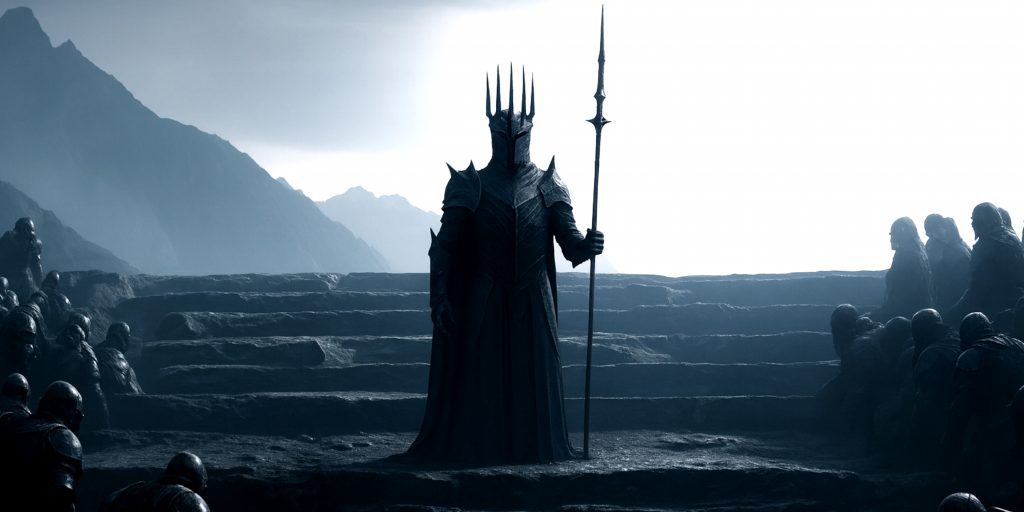
The budget gives the series room for elaborate environments, extensive effects and detailed craft. Those are meaningful advantages.
It cannot settle whether the pacing works, whether a relationship feels convincing or whether a departure from Tolkien improves the drama. Those questions need to be judged scene by scene.
My interest is strongest when the resources support something specific: a place with a recognisable culture, a performance given room to breathe, or a small object carrying real dramatic weight.
Middle-earth can accommodate a spectacular skyline. It still needs us to care about someone standing beneath it.
Frequently Asked Questions
Did the first season cost a billion dollars?
The widely reported production estimate was approximately US$465 million, with a separate reported US$250 million rights deal. Neither supports describing first-season production alone as a confirmed billion-dollar expense.
Did Amazon buy The Silmarillion?
The showrunners said in 2022 that their agreement did not include general adaptation rights to The Silmarillion. Vanity Fair
Does the Tolkien Estate write the show?
Payne and McKay lead the series. Public interviews describe estate oversight and consultation, rather than the estate acting as the writing team.
Who composed The Rings of Power music?
Howard Shore composed the main title theme. Bear McCreary composed the series score.
Watch the trailer: