There are few ideas in weapon history more romantic, or more stubborn, than the claim that the katana was folded a thousand times and could slice through anything short of a mountain. Popular culture has spent decades polishing that image into something almost supernatural. Films, games and television tend to present the Japanese sword as if it were forged by monks under a waterfall while thunder rolled overhead.
The reality is more interesting. Folded steel was not magic, nor was it pointless theatre. It was a practical answer to a very real problem. Japanese swordsmiths were often working with poor quality iron sand and inconsistent steel. Folding the metal helped turn awkward, impure material into a blade that was reliable, flexible and sharp.
The katana deserves admiration, though perhaps not for the reasons people often think. The true story is less about miracle metal and more about extraordinary craftsmanship. A swordsmith with limited materials managed to produce a weapon that was both elegant and brutally effective. Frankly, that may be more impressive than the myths.
What Is Folded Steel?
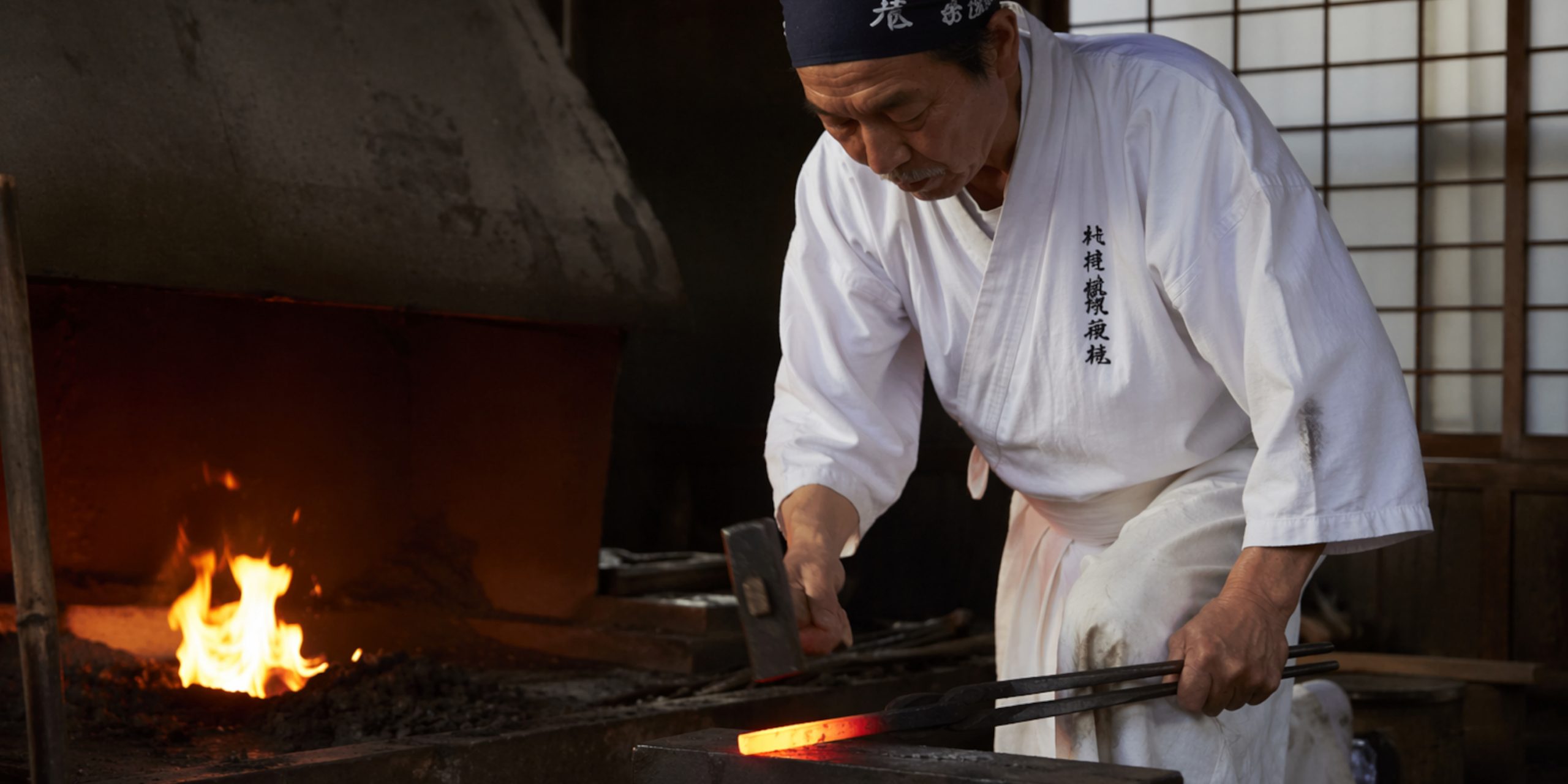
Folded steel is exactly what it sounds like. A swordsmith heated a billet of steel, hammered it flat, folded it back on itself, then hammered it again. This process was repeated several times.
Each fold doubled the number of layers inside the steel. Ten folds could create over a thousand layers. Fifteen folds could produce more than 30,000. By the time people begin speaking of a katana folded a million times, the mathematics has usually escaped into the countryside and refused to come back.
The purpose of folding was not to make the blade stronger through sheer layer count. The folding process had three main functions:
- To distribute carbon more evenly through the steel
- To remove impurities and slag
- To create a more consistent and workable material
Japanese swordsmiths called the refined steel tamahagane. This steel was made in a clay furnace known as a tatara, using iron sand rather than large deposits of ore.
Why Japanese Swordsmiths Needed to Fold Steel
Japan did not have the same access to rich iron ore deposits that existed in parts of Europe, India or the Middle East. The raw material available to Japanese smiths often contained impurities and inconsistent carbon content.
Some pieces of steel coming from the tatara furnace were hard and brittle. Others were soft and weak. If a smith simply forged these lumps into a blade without refinement, the result could be disappointing, or worse, dangerous.
Folding helped solve this problem.
By repeatedly heating and hammering the steel, the smith blended high-carbon and low-carbon areas together. Impurities were driven out. The steel became more uniform and easier to shape.
In this sense, folding was a practical necessity. It was not done because Japanese swordsmiths believed layers possessed mystical properties. They were craftsmen dealing with difficult materials in the best way they knew.
A swordsmith from the Edo period, quoted in old forging manuals, described the process quite plainly:
“The steel must be folded until its impurities are gone and its nature becomes one.”
That is a far less dramatic statement than “folded ten thousand times beneath the full moon”, though it has the advantage of being true.
How Many Times Was a Katana Actually Folded?
One of the most common claims is that a katana was folded hundreds or even thousands of times. This is misleading.
Most traditional Japanese blades were folded somewhere between 10 and 16 times.
Because each fold doubles the layers, this still produced thousands of layers within the finished blade.
| Number of Folds | Approximate Layers |
|---|---|
| 8 folds | 256 layers |
| 10 folds | 1,024 layers |
| 12 folds | 4,096 layers |
| 15 folds | 32,768 layers |
Beyond this point, further folding could actually make the steel worse.
Too much folding burned away carbon and weakened the metal. A blade folded excessively could become soft and lose its cutting ability. Experienced swordsmiths knew when to stop.
The notion of a katana folded a million times belongs more to martial arts forums and late-night documentaries than to historical swordsmithing.
The Visible Grain of Folded Steel
One of the most distinctive features of a traditionally made katana is the visible pattern in the steel. This grain is known as hada.
The hada appears because the folded layers are revealed during polishing. Different schools of swordsmithing produced different patterns:
- Itame hada, resembling wood grain
- Mokume hada, resembling swirling burl wood
- Masame hada, with long straight lines
- Ayasugi hada, with wave-like patterns
These patterns were admired not simply for their beauty, but because they showed the quality of the forging. A clean, even hada suggested the smith had folded and welded the steel properly.
To an experienced collector or historian, looking at the grain of a blade is rather like reading a fingerprint. It can reveal the school, region and sometimes even the individual smith.
Was Folded Steel Better Than European Steel?
This is where the conversation often becomes unnecessarily dramatic. There is a persistent idea that folded Japanese steel was vastly superior to European sword steel. The evidence does not support that.
European smiths often had access to better raw iron and more advanced blast furnaces, particularly by the late medieval period. Because their steel was already more consistent, they usually did not need to fold it as extensively.
A good medieval European longsword and a good katana were both excellent weapons, but they were designed for different forms of combat.
The katana excelled at delivering sharp cuts against lightly armoured opponents. European swords often needed to cope with mail, plate armour and different battlefield conditions.
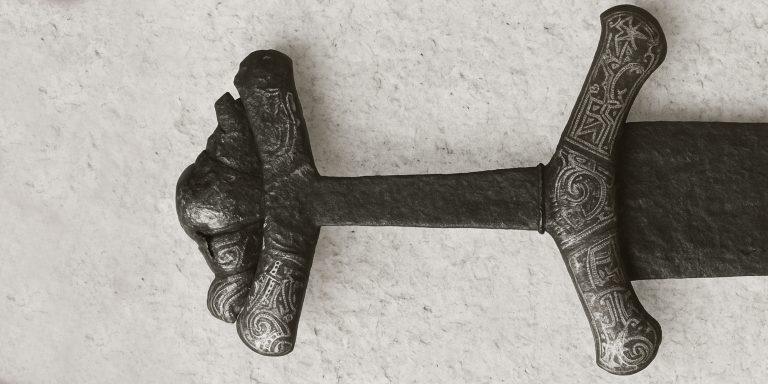
In fact, many European blades were made from pattern-welded or refined steel using techniques that were not entirely unlike folding. Viking swords, Migration Period blades and some later medieval weapons all show evidence of layered construction.
The difference is not that one civilisation discovered a secret while the other did not. Both were solving the same problem in slightly different ways.
A 16th-century Portuguese visitor to Japan, writing about Japanese swords, observed:
“Their swords cut marvellously, and are made with great skill.”
That was genuine praise, though notably he did not add that they could cleave a castle gate in half.
The Combination of Hard and Soft Steel
The real brilliance of the katana was not simply the folding process. It was the way Japanese smiths combined different kinds of steel within one blade.
Most traditional katana were made using a hard outer jacket wrapped around a softer core.
The harder steel gave the blade a keen edge. The softer steel inside helped absorb shock and reduced the chance of the blade snapping.
This technique is known by several names depending on the exact construction, including kobuse and sanmai.
The result was a sword that could remain sharp while still retaining a degree of flexibility.
The blade was then differentially hardened. The smith coated the spine with a thicker layer of clay and the edge with a thinner layer. When the blade was quenched, the edge cooled more quickly and became harder, while the spine remained softer.
This produced the famous hamon, the visible temper line running along the blade.
The hamon was not merely decorative. It was evidence of the sword’s structure and treatment.
Contemporary Views of Japanese Swords
Japanese swords gained an impressive reputation both within Japan and abroad.
During the Edo period, the swordsmith Suishinshi Masahide wrote:
“The sword is the soul of the samurai.”
The phrase has been repeated endlessly since, often with varying wording, but it reflects how deeply swords were woven into samurai identity.
Another early account, from the English sailor William Adams in the early 17th century, noted:
“The weapons they carry are excellently made and very sharp.”
These contemporary observations focus on craftsmanship and sharpness. They do not describe supernatural qualities. People of the time admired Japanese swords because they were fine weapons, not because they believed they could cut through steel armour, musket barrels or the laws of physics.
Common Myths About Folded Steel
Myth: Folding Makes the Blade Incredibly Strong
Folding alone does not create a stronger blade. Its main purpose was to refine poor quality steel.
If modern, high-quality steel were folded repeatedly, it would usually gain little or no benefit.
Myth: More Folds Always Mean a Better Sword
Too many folds can damage the steel. A skilled smith folded the blade only as much as necessary.
Myth: The Katana Was the Greatest Sword Ever Made
The katana was an outstanding weapon, but there is no single “greatest” sword in history. Weapons are products of their environment.
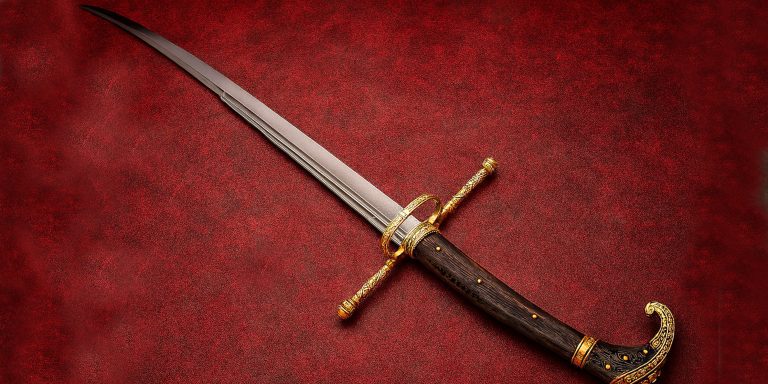
A katana, a longsword, a shamshir and a tulwar each reflect different forms of warfare and different priorities.
Myth: Folded Steel Creates a Blade That Can Cut Through Anything
No historical sword could cut effortlessly through armour, another sword, or a rifle barrel. Such claims belong to fiction.
Even the finest katana could chip, bend or break if used improperly.
Samurai manuals often stressed control and technique precisely because the sword was not indestructible.
Would Folding Matter in a Modern Sword?
Modern steel is far more consistent than the steel available to medieval Japanese smiths. Because of this, folding is no longer necessary in functional terms.
A modern sword made from good tool steel or spring steel can be stronger and more durable than a traditionally folded katana.
That said, many modern swordsmiths still fold steel because they wish to preserve the traditional methods and appearance. The hada created by folding remains beautiful, and there is undeniable value in keeping the craft alive.
Watching a traditional smith fold and forge steel is one of those rare experiences that makes you appreciate just how much patience human beings can possess when they are not being asked to queue at a railway station.
Takeaway
The truth about folded steel is both simpler and more impressive than the myths.
Japanese swordsmiths folded steel because they had to. The raw material available to them was inconsistent and often poor. Through folding, layering and extraordinary skill, they transformed that material into some of the finest blades of their age.
The katana was not unbeatable, nor was it forged from magical metal. Its greatness lies in the intelligence of its design and the craftsmanship behind it.
Perhaps that is the real lesson. The katana was not extraordinary because it broke the rules of metallurgy. It was extraordinary because its makers understood those rules remarkably well.