There are fantasy cities that feel grand, ancient and untouchable. Then there is King’s Landing, a city that somehow smells like ambition, smoke, fish, politics, betrayal, wine and poor drainage all at once.
It was never the prettiest city in Westeros. Oldtown had history. Braavos had style. Winterfell had dignity. King’s Landing had riots, corruption, secret tunnels and at least one king who thought wildfire was basically a personality trait.
Yet somehow, this chaotic mess became the beating heart of the Seven Kingdoms.
The history of King’s Landing is really the history of power in Westeros. Every ruler who sat the Iron Throne shaped the city, damaged it, expanded it or nearly burned it to ash. Sometimes all four in one reign.
So, what do we actually know about the rise and fall of Westeros’ capital?
Before King’s Landing, Aegon’s Landing
King’s Landing did not begin as an ancient royal city. It began as a military camp.
When Aegon I Targaryen launched his conquest of Westeros, he landed at the mouth of the Blackwater Rush with his sisters, his armies and three dragons that made negotiation feel slightly optional.
At the time, the area had no major city. There were small fishing communities and local settlements, but nothing close to the scale of Oldtown or Lannisport.
Aegon built a wooden fort on Aegon’s High Hill. That simple fort became the foundation of the future capital. It was strategically placed for trade, naval movement and communication with much of Westeros. More importantly, it sat near the centre of the newly conquered kingdoms.
Turns out dragons are excellent urban planners.
As merchants, blacksmiths, sailors and opportunists flooded into the area, the settlement grew rapidly. Inns appeared. Markets formed. Flea Bottom emerged as a dense and deeply questionable district almost immediately, which honestly feels historically accurate.
The city was eventually named King’s Landing because that was literally where the king landed. Medieval naming conventions were not always subtle.
The Construction of the Red Keep
If the Iron Throne symbolised Targaryen power, the Red Keep symbolised Targaryen paranoia.
Construction began during Aegon’s reign and continued under his successors. The castle was designed to dominate the city physically and politically. Massive walls overlooked Blackwater Bay while hidden tunnels and secret passages ran beneath the structure.
The most infamous architect involved in its construction was Maegor the Cruel. Naturally, he responded to concerns about secrecy by executing many of the builders after completion.
A deeply concerning management strategy, admittedly effective for confidentiality.
The Red Keep became home to:
- The Iron Throne
- The royal apartments
- The Small Council chambers
- The royal sept before Baelor
- Hidden passages later used for spying, assassinations and escape
Over time, the Red Keep became less a palace and more a pressure cooker where dynasties slowly destroyed themselves indoors.
The Iron Throne and the Growth of Royal Power
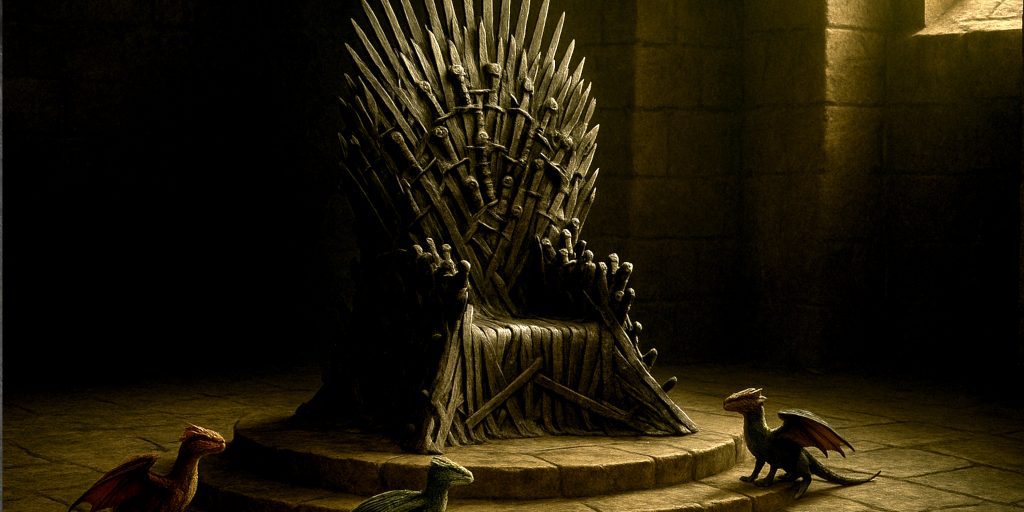
The Iron Throne was forged from the swords of Aegon’s defeated enemies, melted together with dragonfire.
It also looked profoundly uncomfortable.
That was intentional. Aegon reportedly believed a king should never sit easily.
As the Targaryen dynasty expanded its authority, King’s Landing transformed from a rough military settlement into the political centre of Westeros. Roads spread outward from the capital. Trade increased. Noble houses established residences in the city.
The population exploded.
With growth came familiar problems:
- Crime
- Disease
- Corruption
- Food shortages
- Political factions
- Mob violence
King’s Landing became one of the richest cities in Westeros, but also one of the least stable. It often felt like civilisation held together with candle wax and threats.
Maegor the Cruel and the City of Fear
Few rulers shaped King’s Landing through terror quite like Maegor I Targaryen.
His reign was brutal even by Westerosi standards, which is saying something in a continent where wedding receptions occasionally become war crimes.
Maegor strengthened the Red Keep, suppressed religious uprisings and used violence to crush opposition. Public executions became common. Fear became central to royal authority.
During his reign, the city learned a recurring lesson in Westerosi history:
A strong ruler can hold King’s Landing together through force, but the resentment never disappears. It just waits.
The Great Sept of Baelor
King’s Landing gained one of its most iconic landmarks under Baelor I Targaryen.
The Great Sept of Baelor became the religious heart of the Seven Kingdoms. Massive white marble domes towered over the city and gave King’s Landing a rare sense of grandeur beyond military power.
Baelor himself was deeply devout, though arguably to an alarming degree.
His reign strengthened the Faith of the Seven considerably, creating tensions between religious authority and royal authority that would haunt later kings.
Centuries later, the Sept became the site of one of the most devastating moments in Westerosi history when wildfire destroyed it entirely.
More on that deeply normal political disagreement later.
The Dance of the Dragons and Civil War
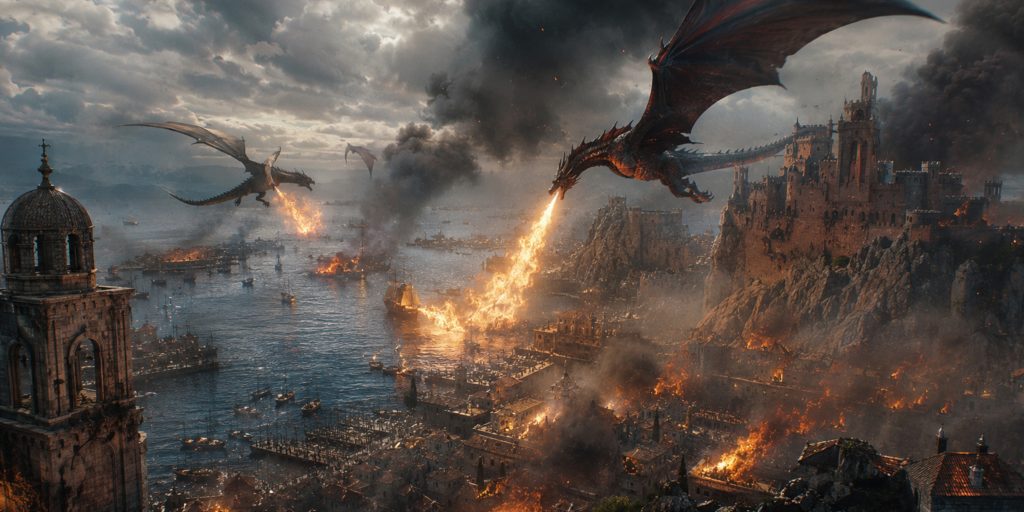
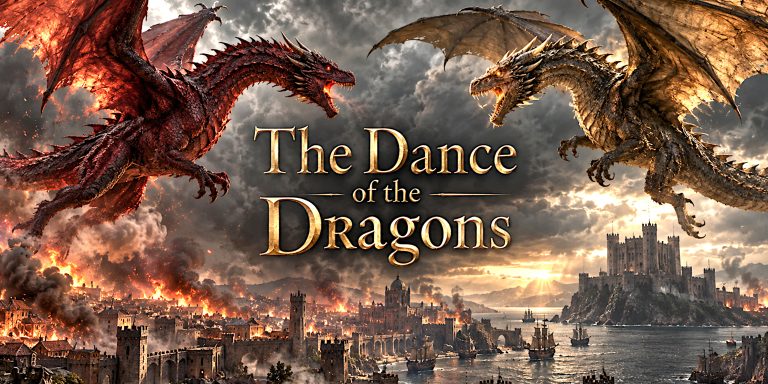
The Dance of the Dragons nearly destroyed both the Targaryen dynasty and King’s Landing itself.
The civil war erupted between supporters of Rhaenyra Targaryen and Aegon II Targaryen over succession to the Iron Throne.
King’s Landing changed hands multiple times during the conflict.
The city suffered from:
- Rioting
- Famine
- Political purges
- Dragon attacks
- Economic collapse
One of the most catastrophic moments came during the Storming of the Dragonpit, when mobs killed several dragons inside the city itself.
That event permanently weakened House Targaryen.
For all their power, dragons could not protect rulers from fear, hunger and public fury. King’s Landing had become too large, too angry and too unstable to control cleanly.
The Blackfyre Era and Political Intrigue
Following the Dance, King’s Landing entered a long phase of political instability.
The Blackfyre Rebellions created generations of paranoia within the capital. Rival claimants, noble conspiracies and succession crises became almost routine.
This was also the period where court politics in King’s Landing became exceptionally dangerous. Spies, poisonings and secret alliances flourished.
Frankly, if someone offered you wine in the Red Keep, declining politely was probably the healthiest decision available.
The Mad King and the Wildfire Plot
The reign of Aerys II Targaryen pushed King’s Landing toward catastrophe.
As paranoia consumed the Mad King, he became increasingly isolated and unstable. He feared betrayal everywhere. Executions multiplied. Trust collapsed entirely within the royal court.
Most dangerously, Aerys secretly stored caches of wildfire beneath the city.
His final plan was horrifyingly simple:
If he could not keep King’s Landing, he would burn it.
That decision would have killed hundreds of thousands.
The only reason the city survived was because Jaime Lannister killed the king before the order could be carried out.
Which created one of the great ironies of Westeros. The man remembered as the Kingslayer may also have saved the entire capital.
Robert Baratheon’s Reign and a Rotten Peace
Under Robert Baratheon, King’s Landing enjoyed relative peace.
At least on the surface.
The city became wealthier and more politically connected, but corruption spread through nearly every institution. Debt ballooned. Noble rivalries intensified. The Small Council often felt less like a governing body and more like a group project designed by people who actively disliked one another.
The capital also became increasingly dependent on the Lannisters financially.
By the beginning of A Game of Thrones, King’s Landing was already unstable beneath the glamour.
Then things became significantly worse.
The War of the Five Kings
King’s Landing during the War of the Five Kings was tense, violent and deeply unpredictable.
Food shortages triggered riots. Political executions became public spectacles. Tyrion Lannister organised the city’s defence during the Battle of the Blackwater while wildfire once again nearly consumed the capital.
The Battle of the Blackwater demonstrated something important about King’s Landing.
Its greatest strength was geography.
Its greatest weakness was the people inside it.
The city could survive armies. It struggled far more with panic, hunger and factionalism.
Cersei Lannister and the Destruction of the Sept
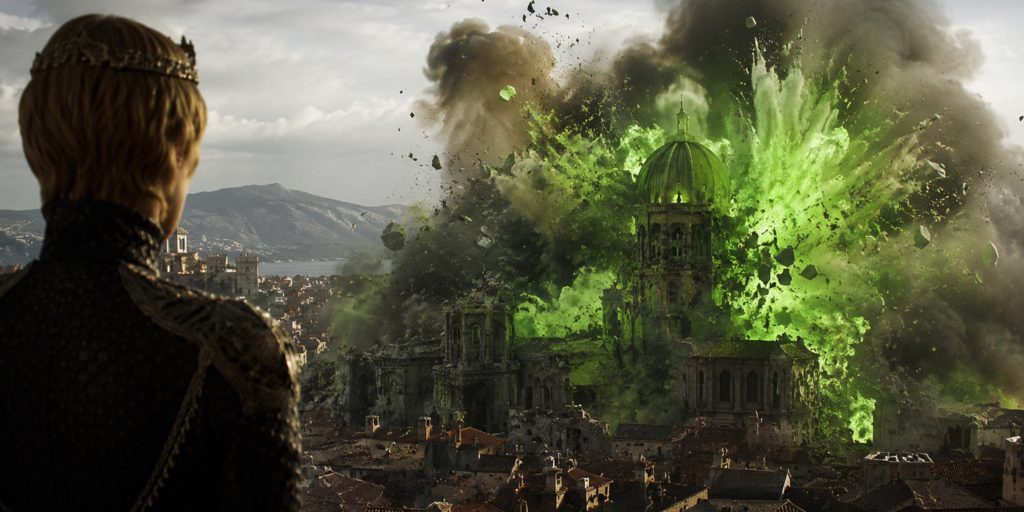
The destruction of the Great Sept of Baelor remains one of the defining moments in King’s Landing history.
Cersei Lannister used hidden wildfire caches to obliterate the Sept along with many of her enemies.
The explosion destroyed:
- The Faith Militant leadership
- Major nobles
- Political rivals
- Centuries of religious history
It also shattered the illusion that King’s Landing still operated within any moral or political boundaries.
After that moment, fear ruled the city more openly than ever.
And honestly, if you lived in King’s Landing at that point, moving literally anywhere else in Westeros probably felt reasonable.
Even Harrenhal starts looking charming eventually.
Daenerys Targaryen and the Fall of King’s Landing
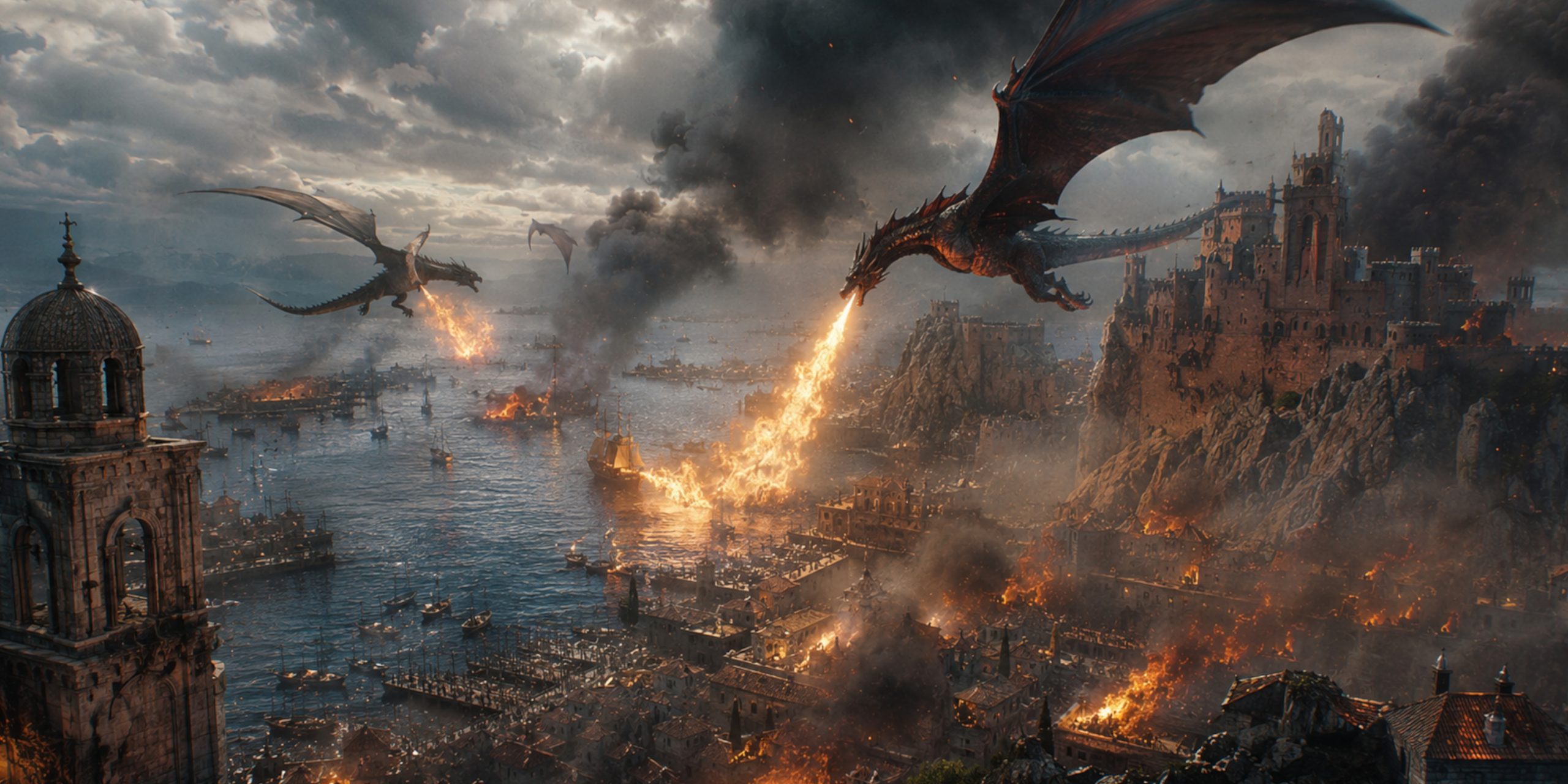
The final destruction of King’s Landing came during the assault by Daenerys Targaryen.
Despite the city’s surrender, dragonfire devastated entire districts. Civilians died in enormous numbers. Buildings collapsed across the capital.
The Iron Throne itself was eventually melted by Drogon.
Which feels strangely fitting.
King’s Landing had always been built on conquest, fear and unstable ambition. Its destruction was not sudden. In many ways, the city had been heading toward catastrophe since Aegon first landed on its shores.
The dragons simply finished the job dramatically.
What Made King’s Landing So Important?
King’s Landing mattered because it concentrated everything Westeros valued and feared into one place.
It controlled:
- The Iron Throne
- Royal administration
- Trade routes
- Naval access
- Noble politics
- Religious influence
But it also reflected every weakness in the realm.
When rulers were competent, the city thrived.
When rulers failed, the city descended into chaos frighteningly quickly.
Unlike fantasy capitals that feel timeless and orderly, King’s Landing always felt fragile. That fragility made it believable. The city behaved less like a perfect medieval capital and more like an overgrown political machine held together through money, intimidation and luck.
Sometimes mostly luck.
The Legacy of King’s Landing
King’s Landing remains one of fantasy’s most memorable cities because it feels alive in all the worst ways.
It is crowded, dangerous, layered with history and permanently shaped by violence. Every alley feels like something terrible probably happened there at least once.
George R. R. Martin created a capital that reflected the reality of power rather than the fantasy of it. Kings rarely ruled comfortably. Dynasties collapsed. Crowds rioted. Religion clashed with politics. Wealth sat beside desperate poverty.
And somewhere in the middle of it all sat the Iron Throne, quietly ruining everybody’s lives.
That, honestly, may be the most historically accurate part of the entire story.