Piracy has always had a curious habit of producing both fierce loyalties and spectacular betrayals. One moment two captains were sharing rum, gunpowder and stolen silver, the next they were pointing pistols at each other over who had pinched the better hat.
The popular image of pirates suggests a brotherhood united against kings, merchants and the navy. The reality was far messier. Pirate crews formed alliances because they needed strength, extra guns and a few more cutlasses when the odds looked grim. Rivalries were equally common, often driven by greed, pride, old grudges or the uncomfortable fact that two men with enormous egos rarely fit easily aboard one ship.
What follows are the best-known alliances and rivalries from the great age of piracy, roughly between the late seventeenth and early eighteenth centuries. Some were successful, some disastrous, and several ended exactly as one might expect when ambitious criminals tried to work together.
Why Pirate Alliances Mattered
Pirates rarely operated entirely alone. A single ship could be outgunned by a naval frigate or a well-armed merchantman. Two or three ships together could surround prey, share supplies and overwhelm resistance.
Alliances were useful because they allowed pirates to:
- Combine crews and firepower
- Repair damaged ships more easily
- Share information about shipping routes
- Trade supplies, powder and prisoners
- Intimidate merchants through sheer numbers
A pirate flotilla could become alarmingly powerful. During the height of the “Flying Gang” at Nassau, pirate captains worked together closely enough that the Bahamas briefly resembled a floating criminal republic with very poor standards of town planning.
Blackbeard and Stede Bonnet
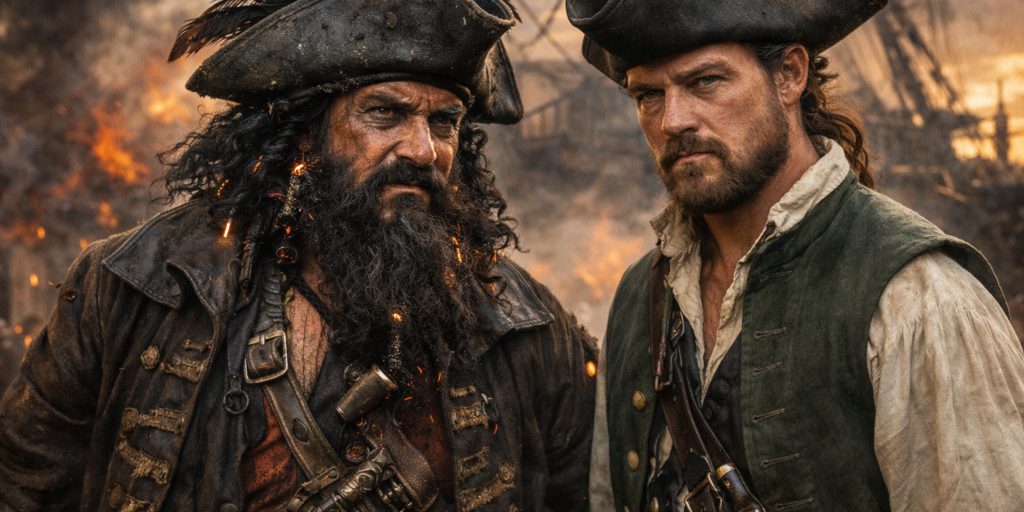
Perhaps the most famous pirate partnership was that between Edward Teach, better known as Blackbeard, and the unlikely gentleman pirate Stede Bonnet.
Bonnet had begun his career in piracy in 1717 after abandoning his Barbados plantation, his family and, according to some accounts, a marriage that had become rather less enjoyable than he had hoped. Few men in history have reacted to domestic unhappiness by buying a sloop and declaring war on the Atlantic, but Bonnet was not a conventional thinker.
Unfortunately, he was also not much of a pirate.
When Bonnet met Blackbeard in the Caribbean, Blackbeard quickly took effective control of Bonnet’s ship, the Revenge. Bonnet remained captain in name, but Blackbeard commanded the operation.
The arrangement suited both men:
- Blackbeard gained another ship and crew
- Bonnet gained a far more experienced leader
- Together they became much more dangerous to merchant shipping
Their alliance reached its peak in 1718 during the blockade of Charleston, when Blackbeard’s squadron terrorised the harbour and seized several vessels.
Yet the friendship was never equal. Blackbeard appears to have regarded Bonnet with a mixture of amusement and utility. Bonnet, for his part, seems to have admired Blackbeard, perhaps a little too much.
Their partnership ended badly when Blackbeard abandoned Bonnet and several of his men on a small island after taking most of the plunder. It was an unusually harsh betrayal, even by pirate standards, which is rather like saying a shark has poor table manners.
Contemporary Quote
“Major Bonnet was with him, but had no command.”
This observation, written by Captain Charles Johnson in A General History of the Pyrates, neatly captures the imbalance between the two men.
Blackbeard and Charles Vane: Allies Turned Rivals
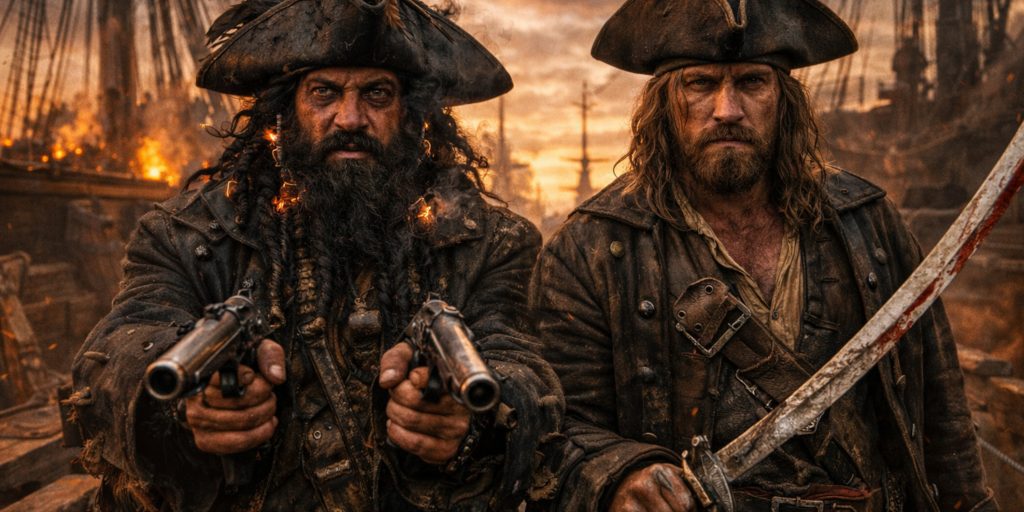
Blackbeard and Charles Vane initially operated within the same pirate circles around Nassau. Both were members of the loose confederation of pirates that flourished in the Bahamas after the War of the Spanish Succession.
For a time, they worked alongside one another and occasionally shared information and support. Yet the relationship soon deteriorated.
The problem was simple. Blackbeard and Vane were both powerful, ambitious captains with strong personalities and no particular talent for compromise.
Charles Vane was notorious for his stubbornness. He refused royal pardons, distrusted authority and quarrelled with almost everyone around him. Blackbeard, by contrast, was more calculating. He accepted a pardon when it suited him, then quietly returned to piracy shortly afterwards.
The split became obvious in 1718 when Vane refused to submit to Governor Woodes Rogers and sailed away from Nassau. Blackbeard chose a more cautious path.
There is no evidence that the two ever fought directly at sea, but they became bitter rivals in influence and reputation. Each represented a different kind of pirate:
- Vane, the uncompromising rebel
- Blackbeard, the opportunist
Contemporary Quote
“Vane declared he would never surrender whilst there was a ship left to sail.”
The remark was recorded by contemporaries and reveals exactly why Vane found it so difficult to keep allies for very long.
Bartholomew Roberts and Walter Kennedy
Bartholomew Roberts, often called “Black Bart”, was among the most successful pirates in history. He captured hundreds of ships and commanded an impressively disciplined pirate fleet.
One of his closest associates was Walter Kennedy, who served under him for several years.
At first the relationship appeared strong. Kennedy was trusted and experienced, and Roberts relied upon him during major operations along the African coast and in the Caribbean.
Then Kennedy betrayed him.
In 1719, while Roberts was ashore, Kennedy sailed away with one of the ships and much of the treasure. Roberts was furious. He denounced Kennedy in terms so colourful that even eighteenth-century chroniclers, who were rarely shy about such matters, struggled to keep up.
The betrayal damaged Roberts deeply because Kennedy had been more than a subordinate. He had been a friend.
Afterwards, Roberts became more suspicious and severe. Pirate alliances often depended on trust, but trust was notoriously difficult to maintain among men whose careers involved theft.
Contemporary Quote
“Kennedy had basely run away with the prize and all the money.”
This line from Johnson’s account leaves little doubt about Roberts’s opinion of his former ally.
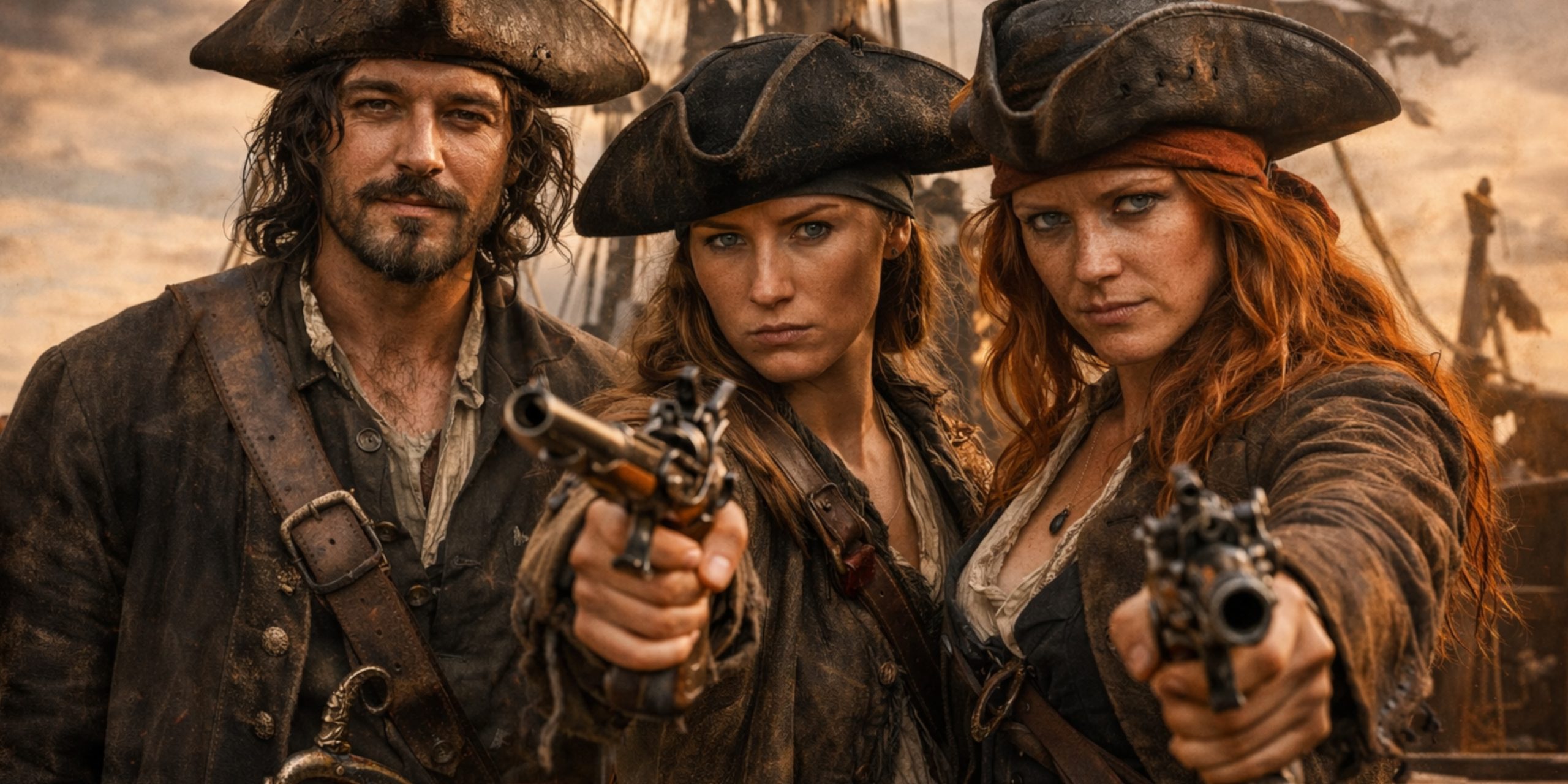
Anne Bonny, Mary Read and “Calico Jack” Rackham
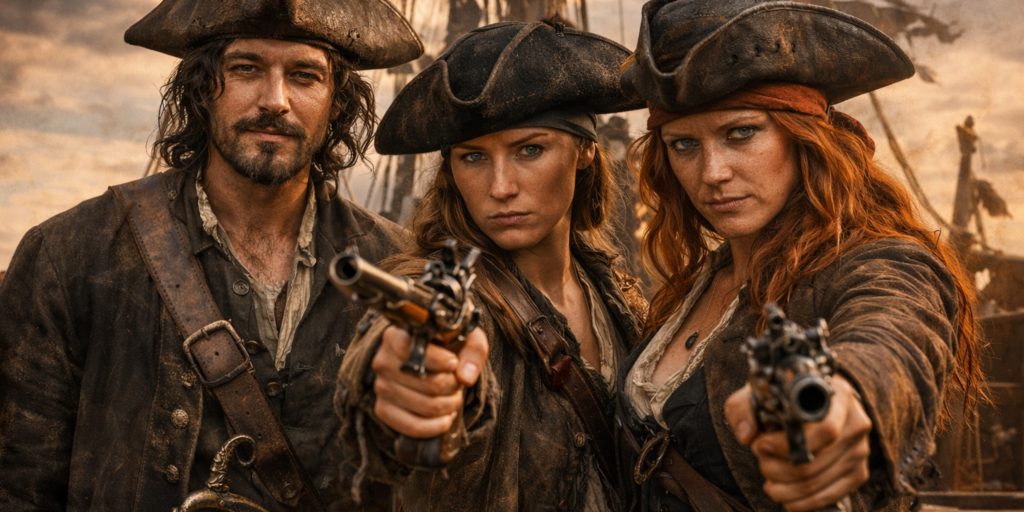
Few pirate partnerships have attracted as much fascination as the alliance between Anne Bonny, Mary Read and John “Calico Jack” Rackham.
Rackham himself was not a particularly brilliant pirate captain. His greatest talent appears to have been surrounding himself with far more interesting people.
Anne Bonny joined Rackham after leaving her husband in the Bahamas. Mary Read later joined the crew disguised as a man. Eventually both women became among the fiercest fighters aboard the ship.
Bonny and Read formed a close friendship and perhaps the most famous alliance between women in pirate history.
Contemporary accounts suggest that they fought harder than many of the men. When Rackham’s ship was attacked in 1720, most of the crew hid below deck, allegedly too drunk or terrified to resist.
Bonny and Read did not.
Contemporary Quote
“If there had been a man amongst ye, ye would have fought like the man ye were.”
Anne Bonny supposedly shouted this at Rackham after his capture. It is one of the sharpest lines in pirate history, and probably the last thing Rackham wished to hear before being hanged.
Their alliance ended with the capture of the crew off Jamaica. Rackham was executed. Bonny and Read escaped the gallows temporarily by pleading pregnancy.
Henry Morgan and the Brethren of the Coast
Long before the golden age pirates, the buccaneers of the Caribbean had already developed complex alliances.
Henry Morgan worked closely with the Brethren of the Coast, a loose fraternity of buccaneers based largely on Tortuga and Jamaica. Unlike later pirate crews, these men often cooperated openly with colonial governors.
Morgan’s greatest raids, including the attacks on Porto Bello and Panama, depended upon alliances between many different captains and crews.
At Porto Bello in 1668, Morgan united several hundred buccaneers into a single force. By the time of the Panama expedition in 1671, he commanded more than thirty ships and roughly 1,800 men.
The alliance was effective because Morgan offered:
- Clear leadership
- A reputation for success
- The promise of rich plunder
Yet Morgan’s success also bred resentment. Some buccaneers accused him of keeping more than his fair share of the treasure after Panama.
This was a recurring feature of pirate politics. A captain was popular right up until the moment someone suspected he had counted the gold incorrectly.
Contemporary Quote
“They all followed him with great cheerfulness.”
A contemporary description of Morgan before the Panama expedition, proving that success can make even dangerous men remarkably agreeable.
Henry Every and Thomas Tew
Henry Every and Thomas Tew never formed a formal partnership, but they became linked through the pirate network operating in the Indian Ocean during the 1690s.
Tew had already shown that raids against Mughal shipping could bring enormous wealth. His successful voyage encouraged others, including Every, to follow the same route.
The two men represented a kind of strategic alliance across time. Tew demonstrated the opportunity, and Every exploited it.
When Every captured the Mughal treasure ship Ganj-i-Sawai in 1695, the scale of the prize shocked the world. It also provoked one of the largest manhunts in maritime history.
Many authorities believed that Every had worked with other pirate captains. Whether or not he had, the fear of pirate cooperation was very real.
Edward Low and George Lowther
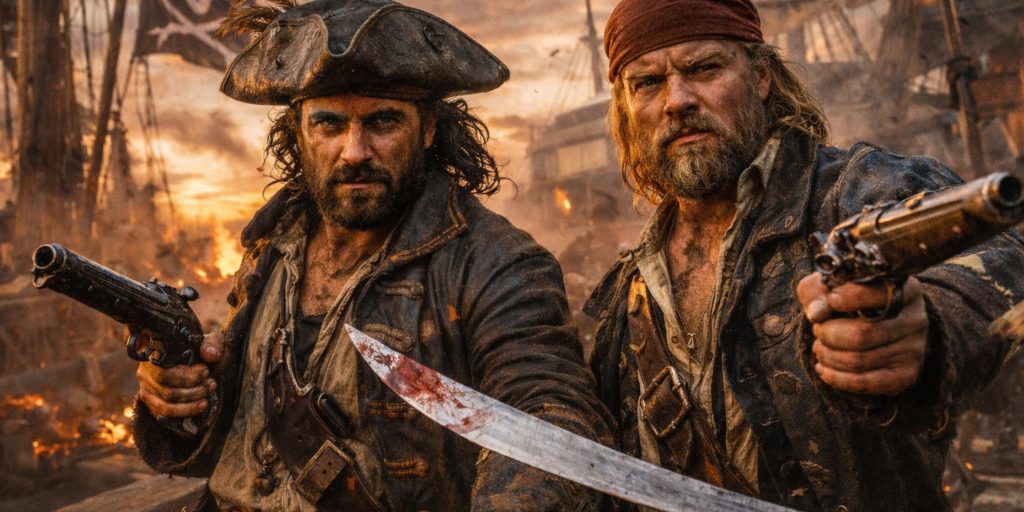
Edward Low began his pirate career under George Lowther. For a while the two men worked together successfully, attacking shipping in the Caribbean and along the American coast.
Lowther was relatively organised and pragmatic. Edward Low was violent, unpredictable and by all accounts thoroughly unpleasant.
Their alliance eventually broke apart when Low took command of his own vessel. Once independent, he developed a fearsome reputation for cruelty.
The rivalry between them was less a direct feud and more a sharp contrast in style. Lowther maintained discipline. Low inspired terror.
One contemporary writer described Edward Low as:
“The most savage and brutal villain that ever sailed.”
Given the competition available in piracy, this was not a modest accusation.
The Rivalry Between Black Bart Roberts and the Royal Navy
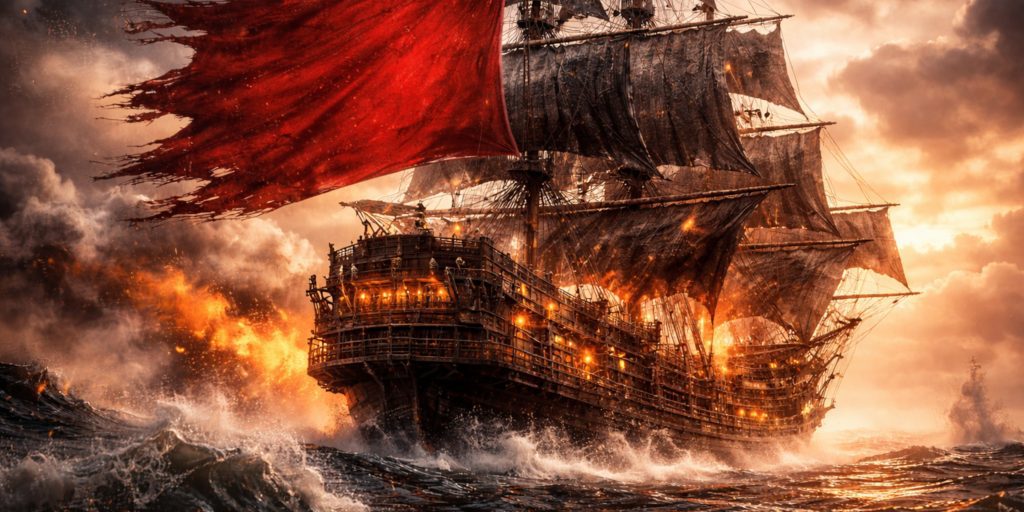
Not all pirate rivalries were with other pirates. Some of the fiercest feuds developed between pirates and the men sent to hunt them.
Bartholomew Roberts spent years outwitting Royal Navy captains. His most important rival was Captain Chaloner Ogle of HMS Swallow.
In 1722, Ogle finally trapped Roberts off the coast of West Africa. Roberts tried to escape, but a broadside from the Swallow killed him almost instantly.
Roberts’s crew obeyed his standing order and threw his body into the sea before the navy could capture it.
The rivalry mattered because it symbolised the end of the great pirate era. By the 1720s, the Royal Navy had become more organised, more determined and far less willing to tolerate pirate strongholds.
Contemporary Quote
“A grape-shot struck him directly in the throat.”
The stark description of Roberts’s death has none of the romance later writers tried to add. Pirate careers often ended not with glorious last words, but with a cannon shot and a very hurried funeral.
Why Pirate Rivalries Were So Bitter
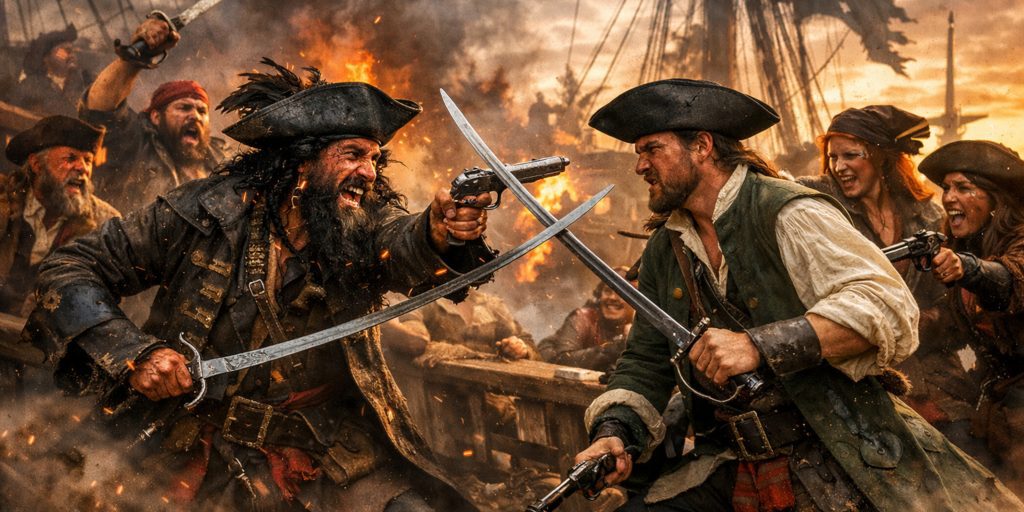
Pirate rivalries tended to become personal very quickly. The reasons were familiar enough:
- Competition for treasure
- Disputes over captured ships
- Arguments about leadership
- Revenge for betrayal
- Pride, which pirates possessed in industrial quantities
Unlike kings and admirals, pirates had no courts, treaties or diplomats to resolve disputes. If two pirate captains fell out, the disagreement was usually settled through mutiny, abandonment or gunfire.
That said, alliances could be surprisingly strong. Pirate crews often relied on one another more than ordinary sailors did. They lived together, fought together and depended on each other to survive. Some partnerships, such as Bonny and Read, or Morgan and his buccaneers, endured through genuine loyalty.
Others lasted only until the treasure chest was opened.
Legacy of Pirate Alliances and Rivalries
The alliances and rivalries of the pirate world shaped the stories that survive today. They created the legends of Blackbeard, Anne Bonny, Henry Morgan and Black Bart Roberts.
They also reveal that piracy was not simply chaos. Pirate society had its own politics, loyalties and shifting factions. Nassau, Tortuga and Port Royal were not merely nests of criminals. They were places where dangerous men and women built temporary communities, argued endlessly, formed friendships and occasionally betrayed one another with remarkable enthusiasm.
For historians, these alliances matter because they show the human side of piracy. Beneath the flags, pistols and improbable hats were people who wanted the same things most people want: money, status, friendship and occasionally revenge.
Pirates simply pursued those ambitions with considerably more cannon fire.