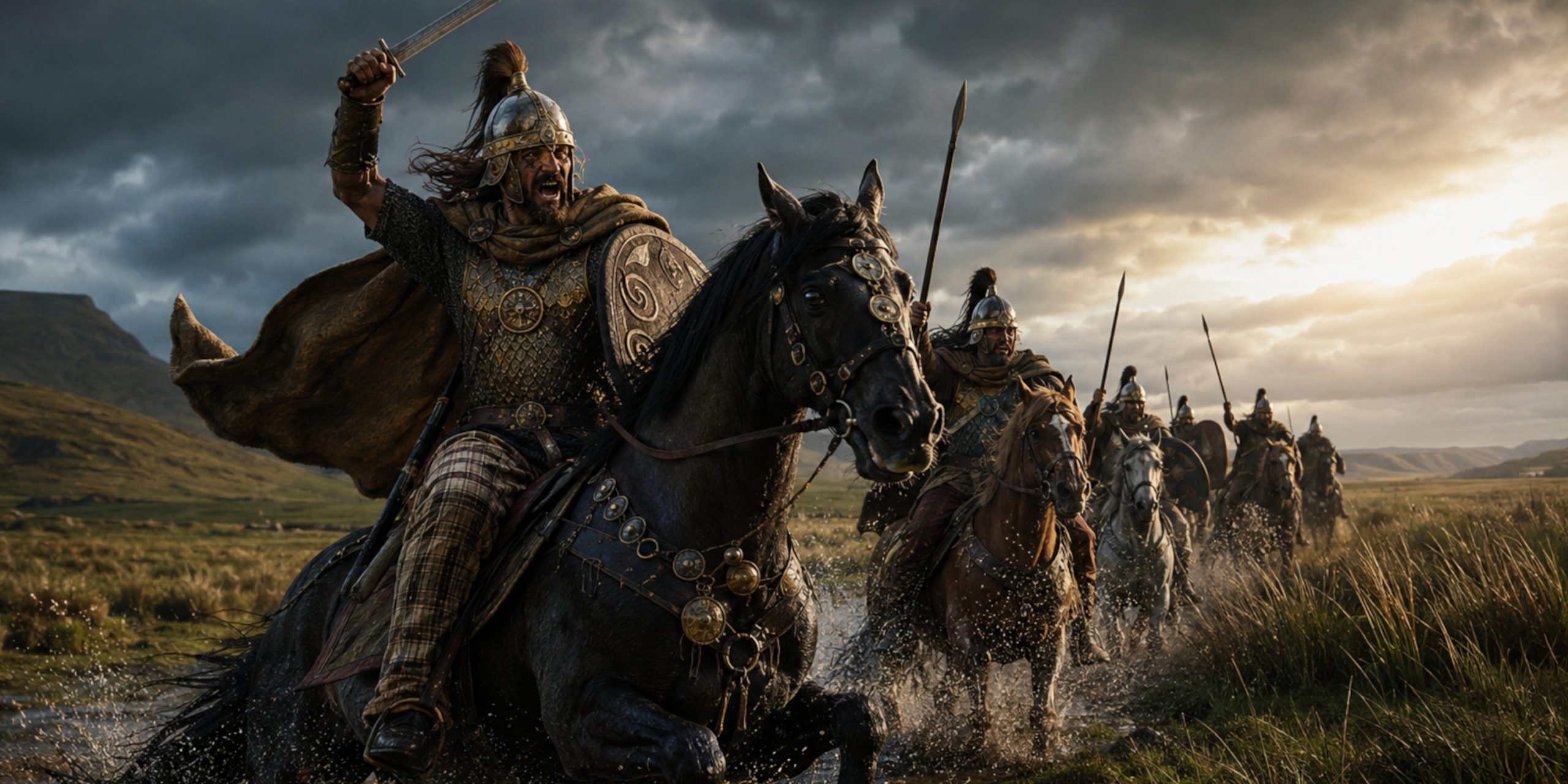
The image of ancient Celtic warfare is often dominated by fierce infantry charges, painted warriors and wild Roman descriptions of screaming tribesmen. The reality was far more sophisticated. Between the 4th and 1st centuries BCE, Celtic heavy cavalry represented some of the most respected mounted troops in Europe.
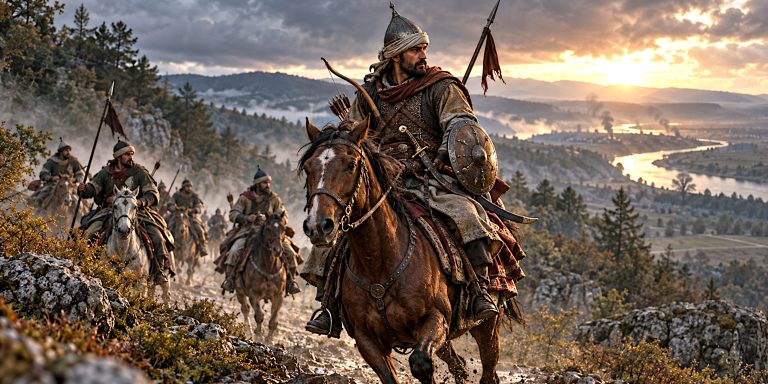
From Gaul and northern Italy to Iberia and the Balkans, aristocratic Celtic warriors fought from horseback with long swords, spears and finely crafted armour. They were not simply raiders on ponies. Many were wealthy nobles whose equipment displayed generations of metalworking skill, personal status and a rather obvious desire to look impressive before trying to remove an enemy from his saddle.
Greek and Roman commanders admired Celtic horsemen enough to recruit them as mercenaries, and by the late Republic, Rome itself relied heavily on Gallic cavalry.
Origins And Development Of Celtic Heavy Cavalry
The rise of Celtic cavalry was closely linked to the warrior aristocracy of the La Tène culture, which spread across much of central and western Europe from the 5th century BCE.
Earlier Celtic elites often displayed their status through chariot warfare, especially in regions such as Britain. On the continent, however, cavalry became increasingly important.
Several factors encouraged this shift:
- Greater contact with Mediterranean armies
- Larger tribal confederations requiring mobile forces
- Improved horse breeding
- Development of longer cavalry swords
- Influence from Greek, Etruscan and later Roman warfare
By the 3rd century BCE, Celtic cavalry had become famous across the ancient world. They fought for and against major powers including Rome, Carthage and the Hellenistic kingdoms.
Who Became A Celtic Cavalry Warrior?
Heavy cavalry was largely an elite role. Horses, armour and decorated weapons were expensive, placing mounted warfare beyond the reach of ordinary farmers.
A cavalryman was often:
- A noble warrior or retainer
- Part of a chief’s personal warband
- Connected through systems of loyalty and gift exchange
- Wealthy enough to own horses, armour and high-quality weapons
Status mattered enormously. A sword was not just a tool, it was a statement. Some warriors were buried with decorated scabbards, ornate helmets and equipment that practically announced: “Yes, I was important, please remember this.”
Luckily for archaeologists, many communities did exactly that.
Battlefield Role And Tactics
Celtic heavy cavalry was used differently depending on region and period, but common battlefield roles included:
Shock Attacks
Elite cavalry could launch aggressive charges against vulnerable infantry or opposing horsemen.
Unlike later medieval knights, they lacked stirrups and heavy couched lances, but a charging group of armoured warriors with spears and long swords remained a terrifying prospect.
Flanking Manoeuvres
Cavalry was particularly valuable for:
- Attacking enemy sides and rear
- Protecting friendly infantry
- Exploiting gaps
- Pursuing broken enemies
Noble Duels And Heroic Combat
Celtic warfare placed great cultural value on personal bravery. Ancient sources frequently describe warriors seeking individual glory.
This should be treated carefully. Roman writers loved dramatic “barbarian hero” stories, but archaeology confirms that elite warriors invested heavily in personal equipment.
Famous Campaigns Featuring Celtic Heavy Cavalry
| Conflict | Date | Role Of Celtic Cavalry |
|---|---|---|
| Celtic invasion of Italy | 4th century BCE | Mounted nobles formed part of armies threatening Rome |
| Gallic campaigns in Greece | 279 BCE | Cavalry supported large migrating warbands |
| Second Punic War | 218 to 201 BCE | Celtic horsemen fought for Hannibal and Rome |
| Roman conquest of Gaul | 58 to 50 BCE | Gallic cavalry became a major force during Caesar’s campaigns |
| Galatian wars | 3rd to 2nd centuries BCE | Celtic warriors served across Hellenistic battlefields |
Arms And Armour Of Celtic Heavy Cavalry
Celtic cavalry equipment varied greatly, but elite warriors could be extremely well equipped.
Swords Used By Celtic Cavalry
The sword was one of the defining weapons of Celtic mounted warriors.
La Tène Long Sword
The classic cavalry weapon.
Specifications:
| Feature | Details |
|---|---|
| Blade length | Often around 60 to 90 cm |
| Type | Straight double-edged sword |
| Use | Slashing attacks from horseback |
| Material | Pattern-welded or high-quality iron examples known |
The longer La Tène sword was ideal for mounted combat, allowing riders greater reach.
These swords usually featured:
- Parallel edges
- Rounded or pointed tips depending on period
- Organic grips of wood, bone or horn
- Decorated iron or bronze scabbards
Many later Roman cavalry swords, including the spatha, were influenced by longer Celtic blade traditions.
Anthropomorphic-Hilt Swords
Some Celtic warriors carried distinctive swords with handles shaped like stylised human figures.
These were not universal battlefield weapons but appear among elite finds.
Features:
- Human-shaped grip designs
- High-status craftsmanship
- Symbolic or religious meaning
A warrior carrying one of these was not aiming for subtlety.
Iberian Celtic Swords
Celtiberian cavalry used additional sword types, including:
- La Tène influenced long swords
- Gladius Hispaniensis style blades
- Antenna-hilt swords
Roman soldiers later adopted the Hispano-Celtic sword tradition, developing their famous gladius.
Spears And Lances
The spear was probably the primary cavalry weapon.
Common types included:
- Long thrusting spears
- Lighter throwing spears
- Leaf-shaped iron spearheads
Cavalry often began combat with spear work before switching to swords.
Helmets
Elite Celtic helmets were among the finest of the ancient world.
Common styles:
Montefortino Helmet
A hugely influential Celtic design.
Features:
- Rounded bronze skull
- Neck guard
- Cheek pieces
- Crest attachments
Rome adopted versions of this helmet, proving that even enemies recognised good kit when they saw it.
Coolus Helmet
A later Gallic design.
Features:
- Bronze construction
- Simple practical shape
- Used by both Celtic and Roman soldiers
Decorated Elite Helmets
Some examples include:
- Animal decorations
- Horns or crests
- Engraved patterns
The famous ceremonial helmets were probably not everyday battlefield gear. Fighting while wearing enormous decorations sounds heroic until a tree branch gets involved.
Body Armour
Chainmail
One of the greatest Celtic military innovations.
Celtic smiths are widely credited with developing mail armour around the 3rd century BCE.
Advantages:
- Flexible
- Strong protection against cuts
- Suitable for mounted combat
- Repairable
Roman soldiers later adopted mail as the lorica hamata.
Shields
Cavalry shields were usually:
- Oval or elongated
- Wooden construction
- Covered with leather
- Reinforced with metal bosses
They balanced protection with the need to control a horse.
Horses And Equipment
Celtic cavalry horses were generally smaller than modern warhorses but strong and agile.
Equipment included:
- Leather saddles
- Bridles with decorated fittings
- Iron bits
- Bronze ornaments
The lack of stirrups did not make ancient cavalry ineffective. Skilled riders could fight aggressively using balance, training and specially designed saddles.
Archaeology: What Survives Of Celtic Heavy Cavalry?
Archaeology has transformed understanding of Celtic warfare. Ancient writers often focused on spectacle, while graves and artefacts reveal organised, skilled warrior cultures.
La Tène Finds, Switzerland
The La Tène site has produced:
- Swords
- Scabbards
- Spearheads
- Shield fittings
- Metalwork
These finds define much of what historians understand about later Iron Age Celtic weaponry.
Chariot And Cavalry Burials
Elite graves across Europe contain:
- Horse equipment
- Weapons
- Armour fragments
- Imported luxury goods
Examples appear in:
- France
- Germany
- Switzerland
- Britain
They show the link between horses, warfare and aristocratic identity.
Ciumeşti Helmet, Romania
One of the most remarkable Celtic helmets ever discovered.
Features:
- Iron construction
- Bronze bird decoration
- Moving wings
It was likely ceremonial or used by a high-ranking warrior. Either way, whoever owned it understood the psychological value of arriving in unforgettable fashion.
Ribemont-sur-Ancre, France
This important Iron Age sanctuary has revealed:
- Weapons
- Human remains
- Evidence of warrior rituals
It demonstrates that warfare held deep social and religious significance in some Celtic societies.
Contemporary Accounts Of Celtic Cavalry
Ancient writers were fascinated by Celtic warriors, although their accounts must be read with caution. Greek and Roman authors often mixed observation with political messaging.
Julius Caesar On Gallic Cavalry
In Commentarii de Bello Gallico, Julius Caesar repeatedly noted the importance of Gallic horsemen:
“The whole of Gaul is greatly devoted to military matters.”
Caesar relied on allied Gallic cavalry during his campaigns, while also facing powerful mounted forces from rival tribes.
Polybius On Celtic Warriors
The Greek historian Polybius described the martial reputation of Celtic peoples:
“They were very formidable in appearance and in their gestures.”
His writings often highlight the intimidating nature of Celtic armies, although he contrasted bravery with what he considered weaker discipline compared with Roman methods.
Diodorus Siculus On Celtic Weapons
Diodorus commented on their impressive equipment:
“They wear bronze helmets with large projecting figures.”
While some descriptions may focus on ceremonial elites rather than ordinary warriors, archaeology proves elaborate Celtic equipment was real.
Decline And Transformation Under Rome
By the 1st century BCE, independent Celtic cavalry traditions began merging with Roman military systems.
Rather than disappearing, Celtic mounted warfare evolved.
Rome recruited thousands of Gallic and other Celtic horsemen as auxiliary cavalry. Their influence continued through:
- Roman cavalry equipment
- Longer sword development
- Auxiliary tactics
- Military craftsmanship
The conquerors borrowed heavily from the conquered, although Roman historians were not always in a hurry to admit that part.
Legacy Of Celtic Heavy Cavalry
Celtic heavy cavalry was one of the most effective mounted traditions of ancient Europe. These warriors combined aristocratic status, skilled horsemanship and exceptional metalworking.
The stereotype of chaotic warriors charging without organisation has slowly been replaced by a more complex picture. They were fierce, certainly, but also adaptable, technically skilled and influential.
Their swords shaped later cavalry weapons, their armour was copied by Rome, and their reputation travelled from Britain to Asia Minor.
Not bad for warriors who spent centuries being described mostly by their enemies.