Rome, Carthage, and the Long Struggle for the Mediterranean
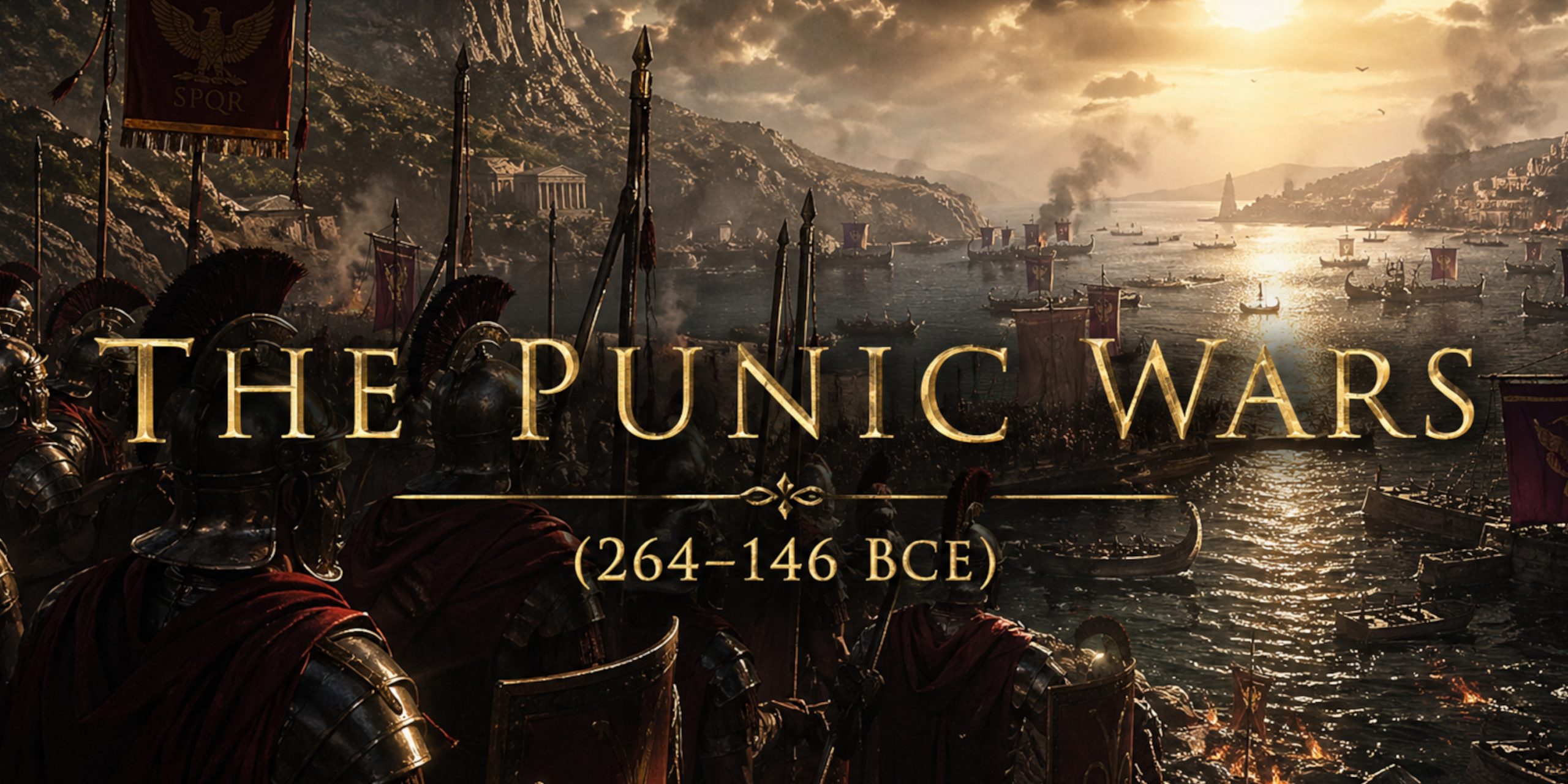
There are wars that decide borders, and then there are wars that decide the direction of history. The Punic Wars belong firmly in the second category. Across more than a century, Rome and Carthage fought three bitter conflicts that transformed the Mediterranean from a contested sea into what the Romans would later call their own.
From a historian’s perspective, what makes these wars so compelling is not simply their scale, but their persistence. Neither side quite understood when to stop. The result was a slow escalation from trade rivalry to total destruction, ending with Carthage erased and Rome left as the dominant power of the western world.
Background and Causes
At the heart of the conflict sat two very different systems. Rome was an expanding land power, cautious but relentless. Carthage, founded by Phoenician settlers, was a maritime empire built on trade, wealth, and naval strength.
Tension centred on Sicily, a strategically vital island that neither side could comfortably ignore. The First Punic War began almost by accident, drawn from a local dispute that both powers decided was worth intervening in. This is often how large wars begin, with a small spark and an unfortunate lack of restraint.
Economic rivalry, territorial ambition, and mutual suspicion ensured that once fighting began, it would not be settled quickly.
The Three Punic Wars at a Glance
First Punic War (264–241 BC)
Rome, inexperienced at sea, built a navy from scratch and somehow defeated Carthage, a seasoned maritime power. It was an early sign that Roman determination could compensate for technical inferiority.
The war ended with Rome gaining Sicily, its first overseas province.
Second Punic War (218–201 BC)
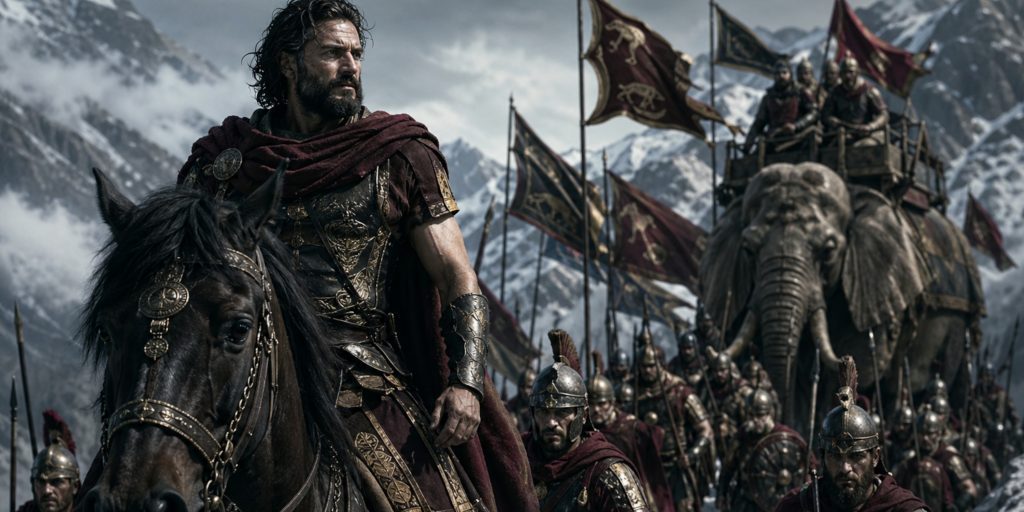
This is the war most people remember, largely because of Hannibal Barca. His march across the Alps remains one of the most audacious military manoeuvres in history.
For years, Hannibal dominated Italy, winning major victories and humiliating Roman armies. Yet Rome refused to surrender, adapting its strategy and eventually striking back in Spain and North Africa under Scipio Africanus.
Carthage was defeated, though not yet destroyed.
Third Punic War (149–146 BC)
The final war was less a contest and more an execution. Rome, increasingly intolerant of Carthage’s recovery, laid siege to the city.
After a brutal campaign, Carthage was captured and destroyed. Its territory was absorbed into the Roman system, and its people scattered or enslaved. It is hard not to feel that by this point, Rome was settling an old score with excessive enthusiasm.
Key Battles
Battle of Mylae (260 BC)
Rome’s first major naval victory, achieved with the help of the corvus boarding device. It allowed Roman infantry to turn sea battles into something resembling land combat, which suited them nicely.
Battle of Cannae (216 BC)
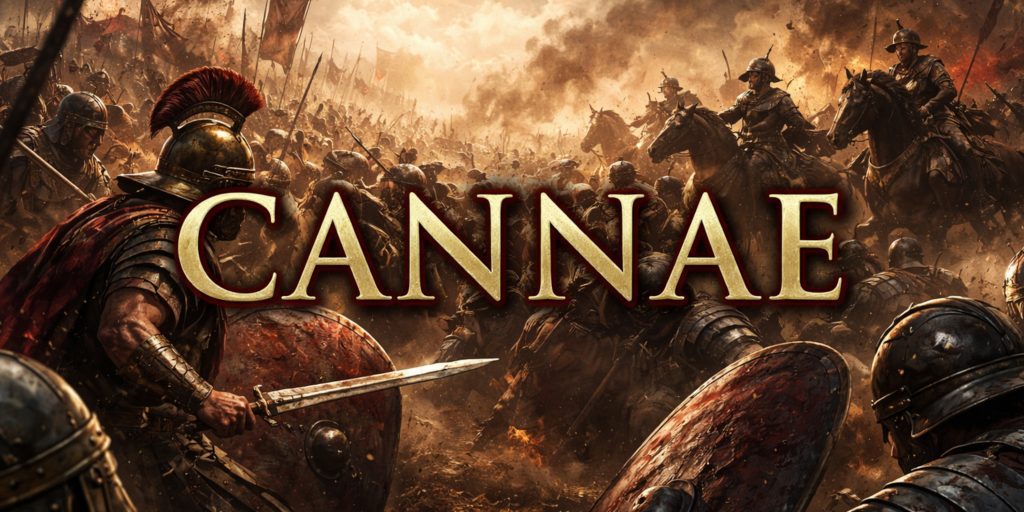
Perhaps the most famous tactical victory of the ancient world. Hannibal encircled and annihilated a much larger Roman army. It was a masterpiece, though one that failed to secure a final victory.
Battle of Zama (202 BC)
The decisive engagement of the Second Punic War. Scipio defeated Hannibal in North Africa, effectively ending Carthaginian resistance.
Siege of Carthage (149–146 BC)
A grim and prolonged siege that ended with the city’s destruction. Street fighting, famine, and systematic demolition followed. Rome left nothing to chance.
Arms and Armour
Roman forces relied on disciplined infantry equipped with:
- Gladius, a short stabbing sword designed for close combat
- Scutum, a large rectangular shield offering strong protection
- Pilum, a heavy javelin used to disrupt enemy formations
Carthaginian armies were more diverse, drawing on troops from across their territories:
- Iberian swordsmen with curved blades
- Numidian cavalry, fast and highly effective in skirmishing
- War elephants, used to disrupt enemy lines, with mixed results
The contrast was clear. Rome favoured uniformity and discipline. Carthage relied on variety and specialist troops. Both approaches had strengths, though Rome’s consistency proved more sustainable over time.
Archaeology and Evidence
Archaeological work has added texture to the written sources, though it rarely settles debates entirely.
Notable findings include:
- The Egadi Islands shipwrecks, likely from the final battle of the First Punic War, revealing rams and naval construction techniques
- Excavations at Carthage, showing layers of destruction consistent with the Roman siege
- Battlefield studies in Italy, particularly around Cannae, though physical evidence remains limited
Material evidence tends to confirm the scale and brutality described in ancient texts, even if it cannot capture the full drama that writers were keen to emphasise.
Contemporary Voices
Ancient historians provide much of what we know, though their accounts are not free from bias.
Polybius, writing relatively close to the events, offered a more analytical perspective:
“The Romans are superior in virtue and in discipline.”
Meanwhile Livy, writing later, added a stronger sense of Roman identity and destiny:
“Either Rome or Carthage must fall.”
These are not neutral observations. They reflect the mindset of a world in which total victory was seen as both necessary and inevitable.
Legacy
The consequences of the Punic Wars were profound:
- Rome emerged as the dominant power in the western Mediterranean
- Carthage was destroyed as a political entity
- Roman expansion accelerated into Spain, North Africa, and beyond
- The balance of power in the ancient world shifted decisively toward Rome
From a broader perspective, the wars mark the point at which Rome ceased to be a regional power and began its transformation into an empire.
Takeaway
The Punic Wars are often framed as a clash between two great powers, and that is certainly true. Yet they also reveal something less flattering about ancient warfare. Neither side was particularly inclined toward compromise, and the end result was not merely victory, but annihilation.
As a historian, it is difficult not to admire the strategic brilliance on display, particularly from Hannibal. It is equally difficult to ignore the cost. By the time the wars ended, one civilisation had been wiped from the map, and the other had learned that it could achieve almost anything if it was willing to persist long enough.
That lesson would echo for centuries.