Popular culture has given medieval sword fighting a rather peculiar reputation. Knights lumber around in armour so heavy they can barely move, swords weigh as much as small children, and battles are apparently decided by two men repeatedly smashing their blades together until somebody falls over.
Fortunately for medieval soldiers, very little of this is accurate.
Historical fighting manuals, surviving weapons, armour, archaeological evidence and experimental archaeology give us a much clearer picture of how medieval sword fighting actually worked. It was fast, technical and surprisingly sophisticated. A trained swordsman could cut, thrust, grapple, wrestle and use different parts of his weapon depending on the opponent and situation.
The medieval sword was not a crude iron club. Nor was every knight an elegant fencing master. Reality sits somewhere between those extremes, which is usually where history becomes interesting.
This guide examines the most persistent myths about medieval sword fighting and compares them with what the surviving evidence actually shows.
What Was Medieval Sword Fighting Really Like?
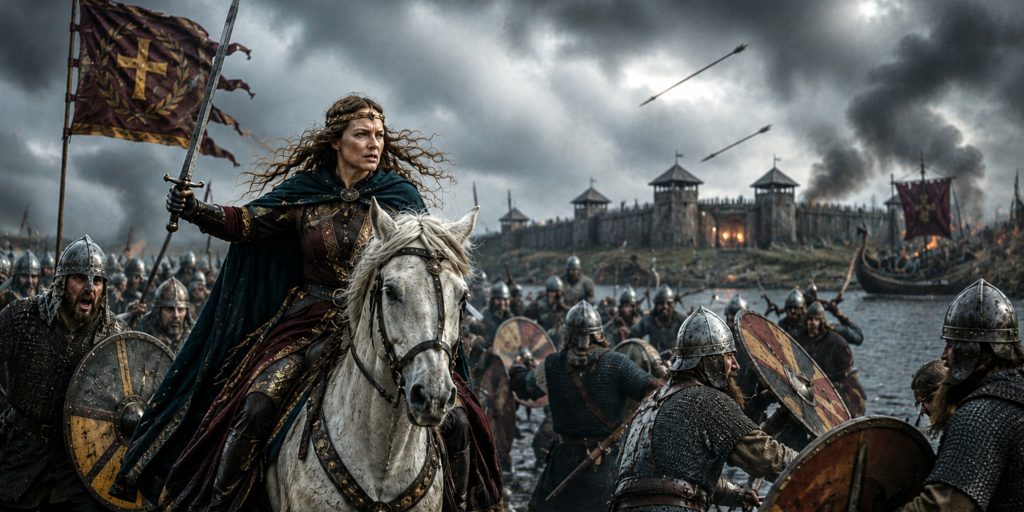
There was no single universal method of medieval sword fighting.
European swordsmanship changed considerably between the early Middle Ages and the fifteenth century. Weapons, armour, military organisation and fighting environments all evolved.
A warrior using a sword and shield in the eleventh century faced a very different tactical problem from a fifteenth-century man-at-arms wearing plate armour and carrying a longsword.
By the later Middle Ages, surviving fencing manuscripts reveal organised systems of combat involving:
- Cutting
- Thrusting
- Parries
- Counterattacks
- Wrestling
- Throws
- Disarms
- Pommel strikes
- Half-swording
- Fighting in armour
- Fighting without armour
- Mounted combat
The German tradition associated with Johannes Liechtenauer and the Italian system recorded by Fiore dei Liberi are particularly valuable.
These were not simply collections of clever tricks. They describe coherent approaches to fighting based on timing, distance, initiative and controlling the opponent’s weapon.
In other words, medieval Europeans had martial arts. They simply did not call them that.
Myth: Medieval Swords Were Extremely Heavy
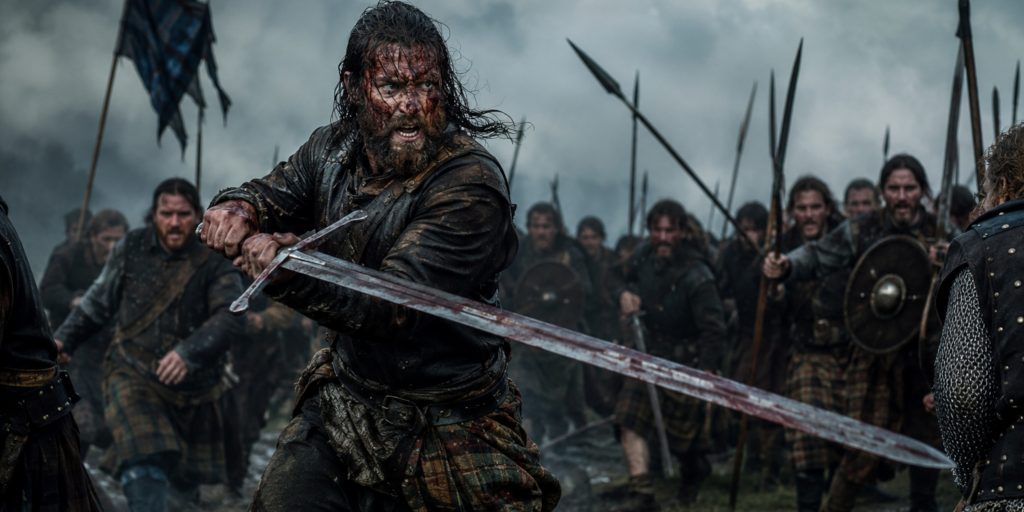
This is probably the most persistent medieval sword myth.
A typical one-handed European sword generally weighed somewhere around 1 to 1.5 kg, although individual examples vary. Longswords were larger, but many remained within roughly 1.2 to 1.8 kg.
Even very large two-handed swords from later periods were carefully balanced weapons rather than sharpened iron bars.
The important measurement is not simply weight.
Balance matters enormously.
A sword with much of its mass concentrated close to the hand feels dramatically different from an object of identical weight with that mass concentrated towards the tip.
Medieval swordsmiths understood this perfectly well.
A fighting sword needed enough authority in the blade to cut effectively while remaining responsive enough to redirect, parry and recover.
Anyone who has handled a good reproduction immediately understands why the “heavy sword” myth is misleading. The surprising thing is usually how lively the weapon feels.
Myth: Knights Could Barely Move in Plate Armour
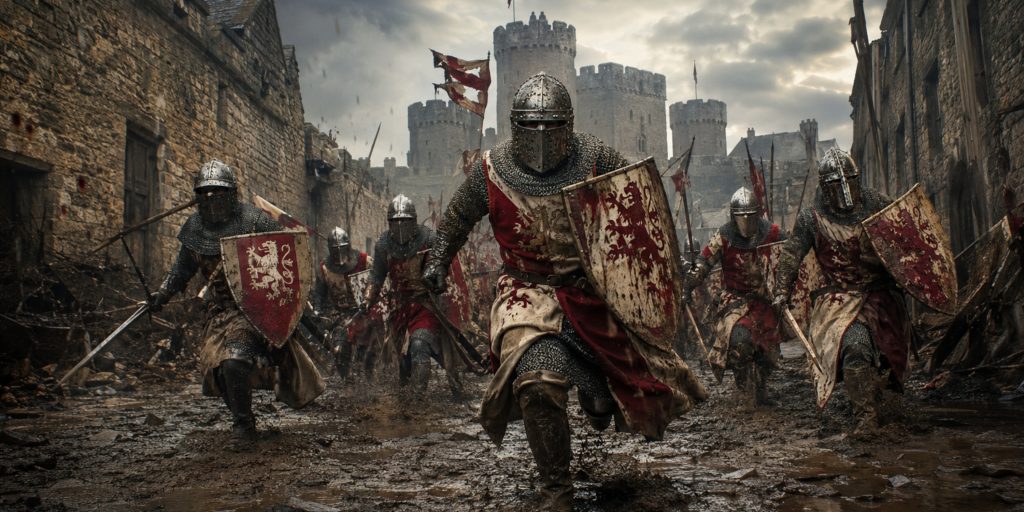
Cinema has been particularly cruel to medieval armour.
The familiar image has a knight clanking around like an overloaded boiler before being knocked over and becoming helpless.
Well-fitted fifteenth-century plate armour was considerably more mobile than that.
A complete harness might weigh somewhere around 20 to 30 kg, depending on its type and period. Crucially, that weight was distributed across the body rather than hanging entirely from the shoulders.
A trained wearer could run, kneel, mount a horse and fight effectively.
That does not mean armour was weightless or comfortable. Fighting while wearing tens of kilograms of steel is tiring. Heat could become a serious problem, particularly during prolonged exertion.
But armour had to permit movement because immobile armour would have been rather poor armour.
Its entire purpose was to keep a fighting man alive while he continued fighting.
Myth: Falling Over Meant Certain Death
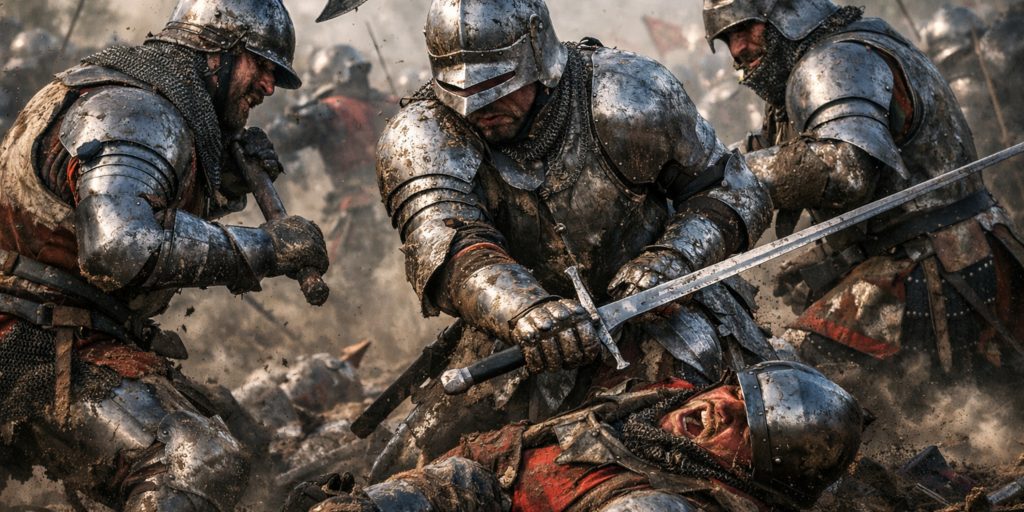
A related story claims that armoured knights who fell down could not stand up again.
This would have been an extraordinary design flaw.
Properly fitted plate armour articulated around the knees, hips, elbows and shoulders. A healthy trained man-at-arms could recover from the ground without requiring assistance.
The misconception probably owes something to much heavier specialist tournament armour, which could sacrifice mobility for protection.
Battlefield armour and tournament equipment should not automatically be treated as the same thing.
A fallen knight was certainly vulnerable. An opponent might grapple with him, pin him or attack openings in his armour.
But the problem was the enemy standing nearby with a weapon, not an inability to bend one’s knees.
Myth: Medieval Sword Fighting Was Mostly Wild Swinging
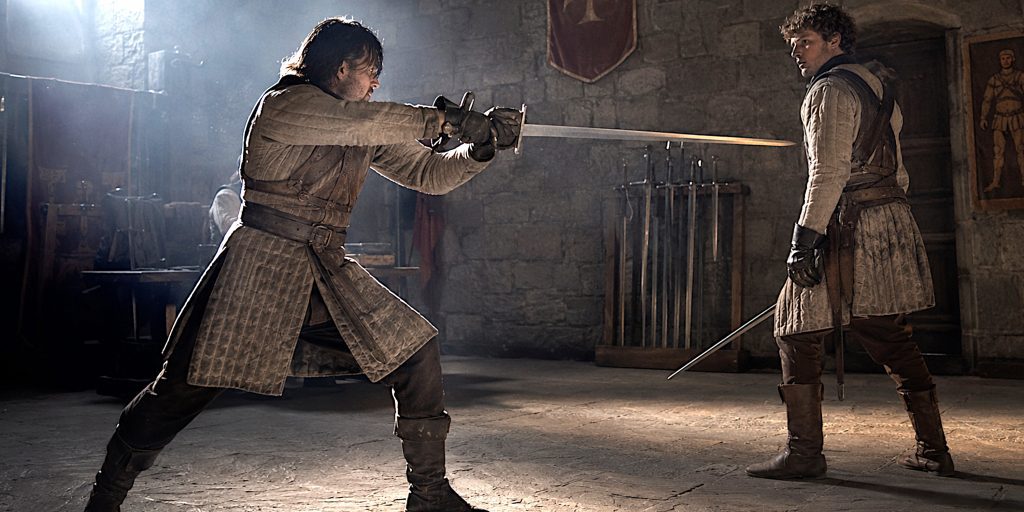
Surviving medieval fencing manuals make this one difficult to defend.
One of the most famous sources is Fiore dei Liberi’s early fifteenth-century Fior di Battaglia, or Flower of Battle. Fiore describes techniques involving swords, daggers, wrestling, spears and mounted combat.
The German fencing tradition associated with Johannes Liechtenauer is similarly sophisticated.
These systems emphasise concepts including distance, timing, initiative, leverage and blade control.
Cuts could simultaneously attack and defend. Fighters could bind blades and react according to pressure. Thrusts were directed towards vulnerable targets. Grappling became important at close range.
Medieval sword fighting was violent, certainly.
Violence and technical sophistication are not mutually exclusive.
Myth: Swords Could Easily Cut Through Plate Armour
This is one of my favourites because films remain determined to make it happen.
A sword is not a lightsaber.
Good plate armour was specifically designed to resist edged weapons. Attempting to cut directly through a steel breastplate with a sword is an excellent method of accomplishing very little while upsetting your sword.
Armoured fighting therefore required different techniques.
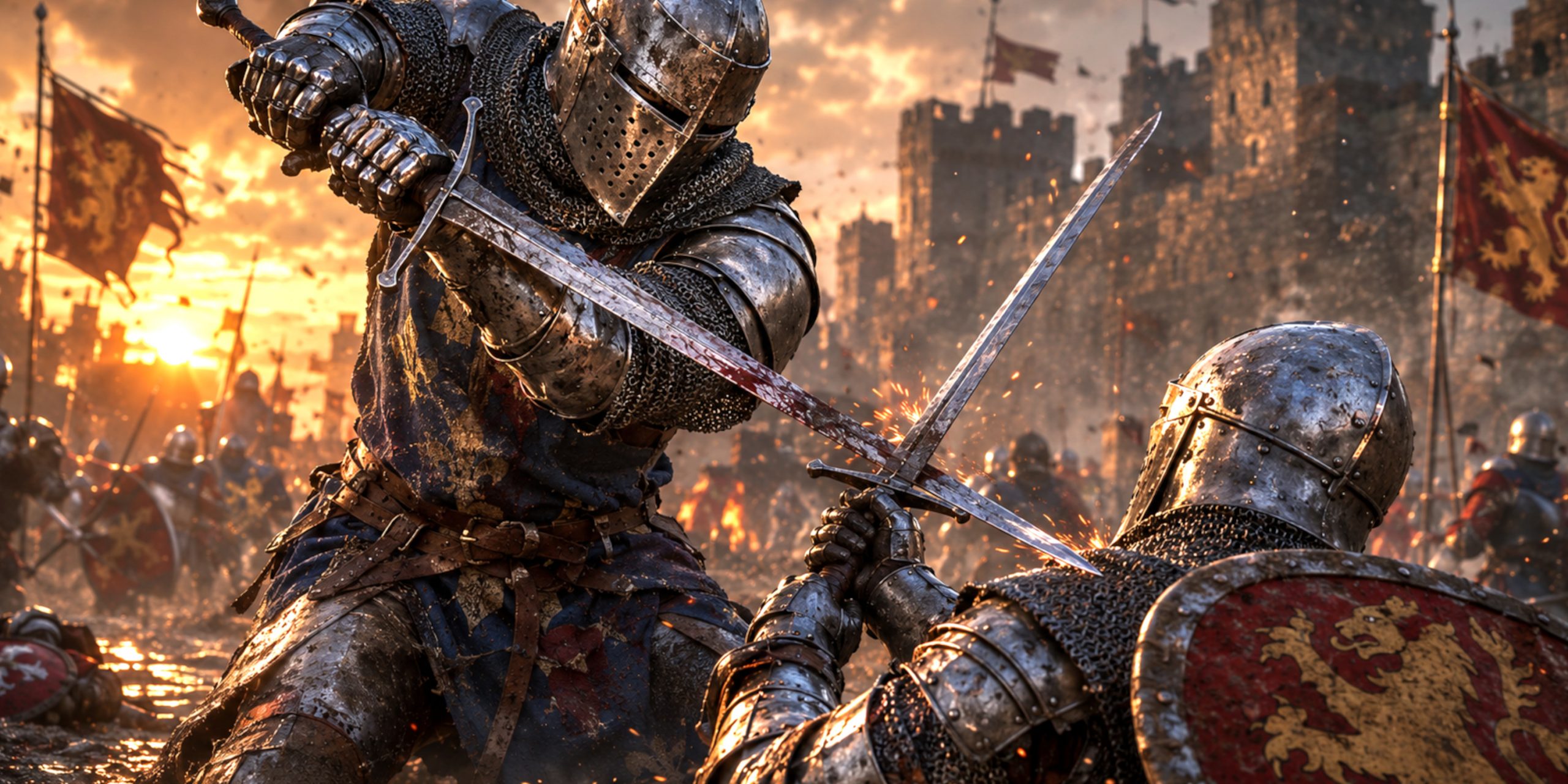
Combatants could use half-swording, gripping the blade with one hand while keeping the other on the hilt. This allowed the weapon to be directed more precisely like a short spear.
Targets included vulnerable gaps around:
- The visor
- Armpits
- Groin
- Inside of the elbows
- Back of the knees
- Neck
The sword could also be reversed and used in techniques often called the Mordhau or murder stroke, where the crossguard or pommel became the striking surface.
To modern eyes it looks wonderfully improper.
To a medieval fencing master, it was simply another way of using the weapon.
Myth: Grabbing a Sword Blade Would Slice Your Hand Open
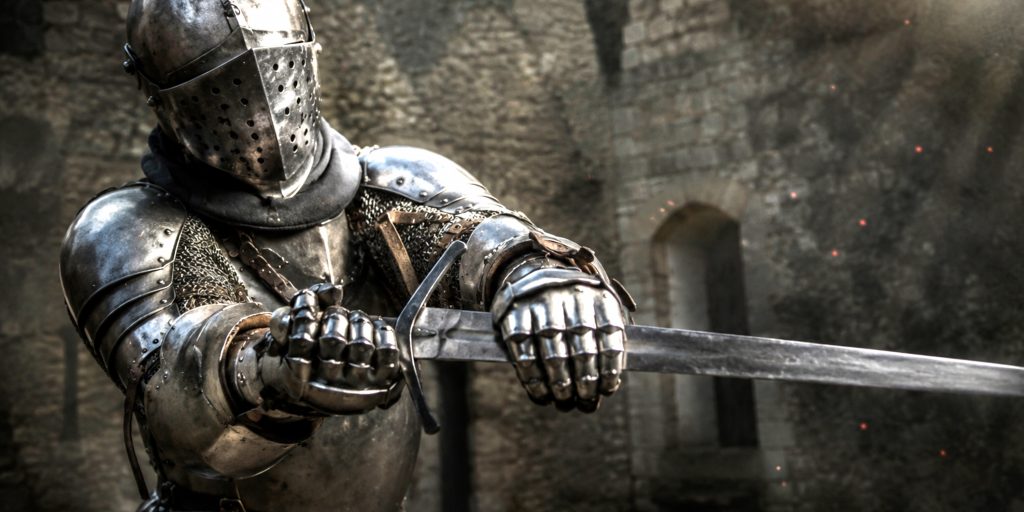
Half-swording creates one of the more understandable questions about medieval sword fighting.
Why would a trained fighter deliberately grab the blade of a sharpened sword?
The answer involves technique, blade construction and protection.
A sharp edge cuts most effectively when pressure is combined with movement across the surface. Firmly gripping a blade without allowing it to slide through the hand is quite different from drawing the hand along the edge. Historical fencing manuals clearly depict fighters taking hold of their own blades during armoured combat.
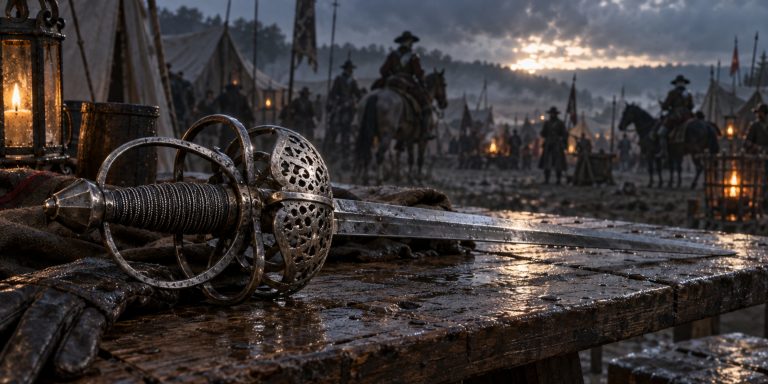
Some swords also featured an unsharpened section of blade, often described as a ricasso, which could provide a safer area to grip. Ricassos are particularly associated with certain later longswords and large two-handed swords, although they were not a universal feature of medieval swords and should not be treated as a requirement for half-swording. A swordsman could half-sword a weapon without one.
Armoured fighters had another considerable advantage: gauntlets.
Well-made plate gauntlets protected the hands with articulated metal plates while still allowing sufficient movement to control a weapon. Combined with the leather or textile components beneath them, they provided substantially more protection when handling a blade than a bare hand would have.
This becomes particularly important when considering the context of half-swording. The technique appears prominently in armoured combat, where the swordsman was likely to be wearing precisely the sort of hand protection that made gripping the blade considerably less hazardous.
None of this means grabbing a sword was completely safe. Edges could still injure the hand, particularly if the blade slipped or was violently pulled through the grip. Nor were all swords fitted with convenient blunt sections.
The important distinction is that half-swording did not depend on squeezing an exposed razor edge with an unprotected hand.
A combination of controlled grip, appropriate blade geometry, possible unsharpened sections and protective gauntlets made the technique practical. The surviving fencing manuals confirm that medieval fighters considered it useful enough to teach systematically.
It looks alarming to modern eyes, but medieval fencing masters were generally more interested in whether something worked than whether it looked sensible in a museum gift shop.
Myth: Every Medieval Soldier Owned a Sword
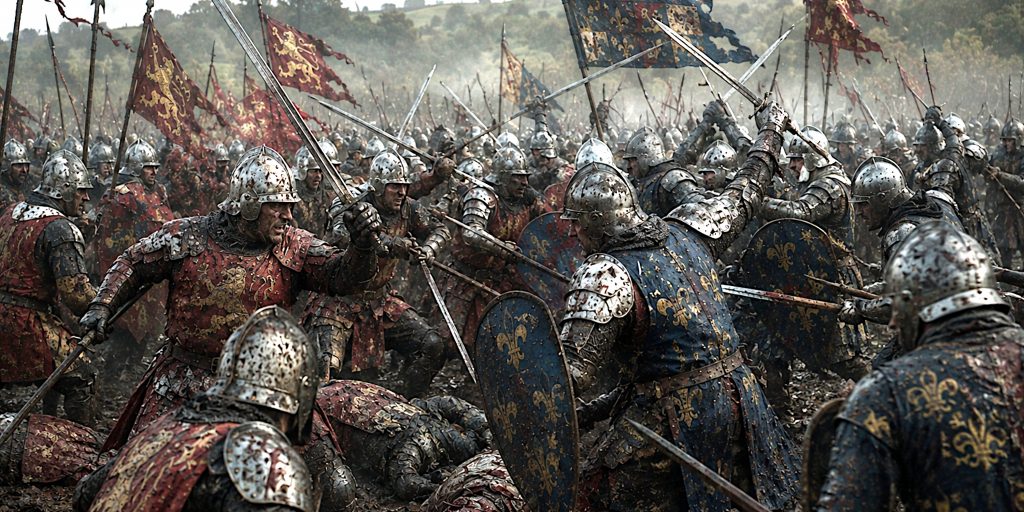
Swords required considerable labour and skilled craftsmanship.
While sword ownership became increasingly widespread in some periods and regions, particularly among professional soldiers and wealthier townsmen, we should not imagine every medieval levy marching around with one.
Weapons such as spears were cheaper and easier to manufacture in quantity.
Social status mattered too.
The sword became closely associated with warriors, knights and authority. Ceremonial swords appeared in coronations, civic rituals and judicial contexts precisely because the weapon carried meanings beyond its practical use.
The medieval sword was both tool and symbol.
Sometimes historians become so determined to strip away romanticism that we forget medieval people themselves were perfectly capable of romanticising swords.
Myth: European Swords Were Blunt Compared With Katanas
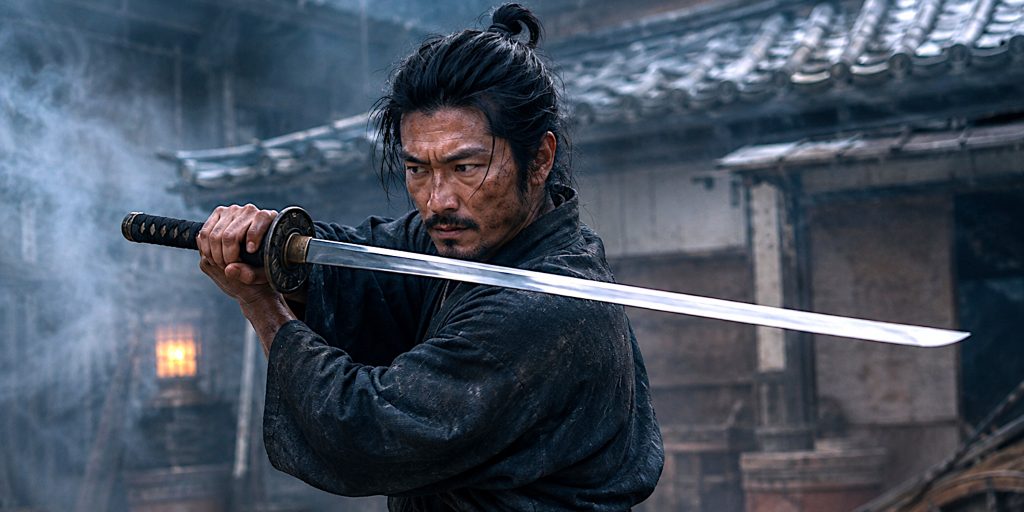
Few historical weapon discussions survive long before someone mentions the katana.
European medieval swords could be extremely sharp.
Their edge geometry depended upon intended use, blade design and historical period. A sword intended primarily for cutting might have a different cross-section from one increasingly optimised for thrusting against armoured opponents.
Japanese and European swords developed within different military cultures and responded to different requirements.
Declaring one inherently “sharper” or “better” is rarely useful.
A well-made European sword was perfectly capable of delivering devastating cuts.
Medieval Europeans were not waiting patiently for somebody in Japan to explain the concept of sharpening metal.
Myth: Sword Fights Lasted for Several Minutes
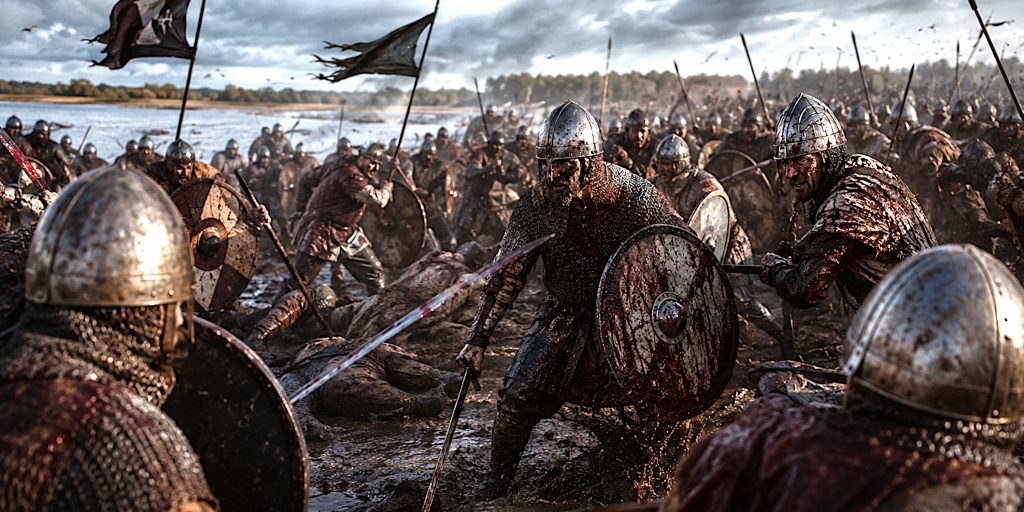
Long cinematic duels are wonderful entertainment.
Real fights involving sharp weapons are rather less considerate of pacing.
A sword can inflict catastrophic injuries very quickly. Historical fencing systems therefore emphasise controlling distance, gaining initiative and preventing the opponent from striking effectively.
This does not mean every historical duel ended within three seconds. Encounters could include cautious movement, probing attacks, disengagement and repositioning.
But once committed exchanges began, events could become extremely fast.
The spectacular extended blade-to-blade choreography familiar from films is primarily designed so audiences can follow what is happening.
Real sword fighting did not have an audience retention metric.
Myth: Swords Constantly Struck Edge Against Edge
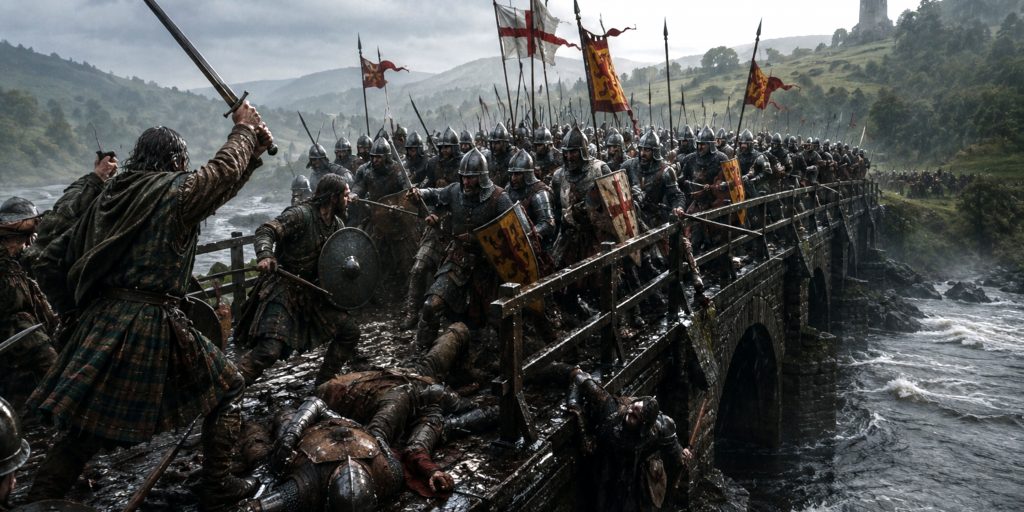
Repeatedly smashing sharpened edges together is bad for blades.
Historical fencing involved blade contact, but skilled fighters could use the stronger portions of their weapons to control or deflect opposing blades.
Later fencing terminology often distinguishes between the stronger section of a blade near the hilt and the weaker section towards the point.
Blade damage still happened.
Surviving swords sometimes show evidence of use, and no weapon should be imagined as indestructible. But medieval fighters had every incentive to avoid unnecessarily damaging equipment that could be expensive to replace.
Myth: A Sword Could Cut Another Sword in Half
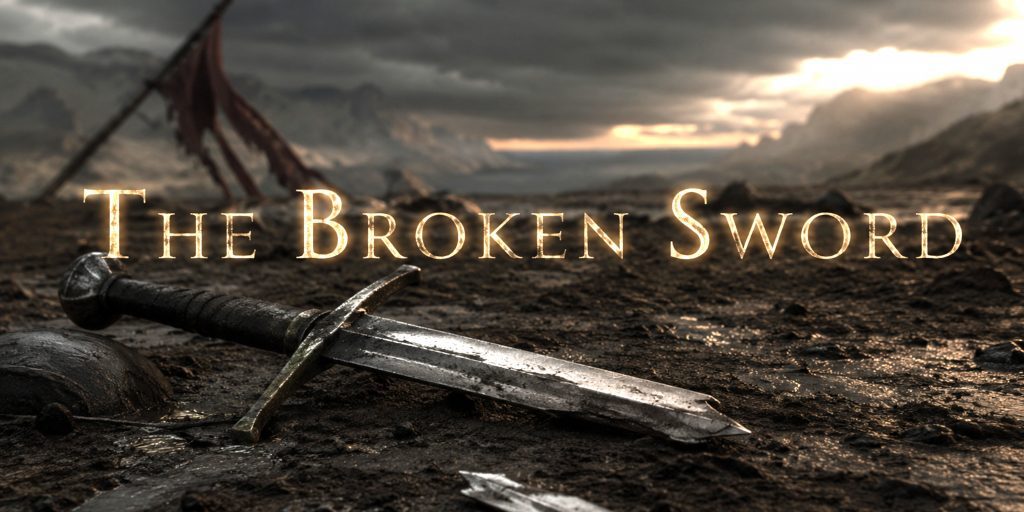
The image of one superior sword effortlessly slicing through another belongs largely to legend.
Steel swords can break. Poor manufacture, flaws, extreme stress, corrosion and repeated damage can all contribute to failure.
But cutting cleanly through another properly made steel sword during combat is another matter.
When blades collide, they may notch, bend or fracture. The outcome depends on metallurgy, blade geometry, heat treatment, impact angle and force.
Medieval smiths spent generations improving sword production precisely because blades needed to survive substantial punishment.
A sword that regularly snapped during combat would acquire a poor reputation rather quickly, although admittedly customer complaints may have been limited.
Myth: Medieval Swords Were Made From Primitive Metal

Medieval metallurgy varied enormously by region and period, but describing medieval swords simply as primitive iron weapons badly understates the craftsmanship involved.
Early medieval smiths sometimes produced pattern-welded blades by combining different iron and steel components.
Later improvements in steel production allowed more consistent blades.
Swordsmiths needed to control several characteristics simultaneously:
- Hardness
- Toughness
- Flexibility
- Edge retention
- Weight
- Balance
Too soft and the blade could deform.
Too hard and it could become brittle.
Producing a sword capable of surviving combat therefore required considerable skill.
The finest medieval blades were sophisticated pieces of engineering produced without modern temperature gauges, industrial furnaces or metallurgical laboratories.
I find that considerably more impressive than pretending the smith simply hammered metal until it looked sufficiently sword-shaped.
Myth: Medieval Sword Fighting Was Honourable and Chivalrous
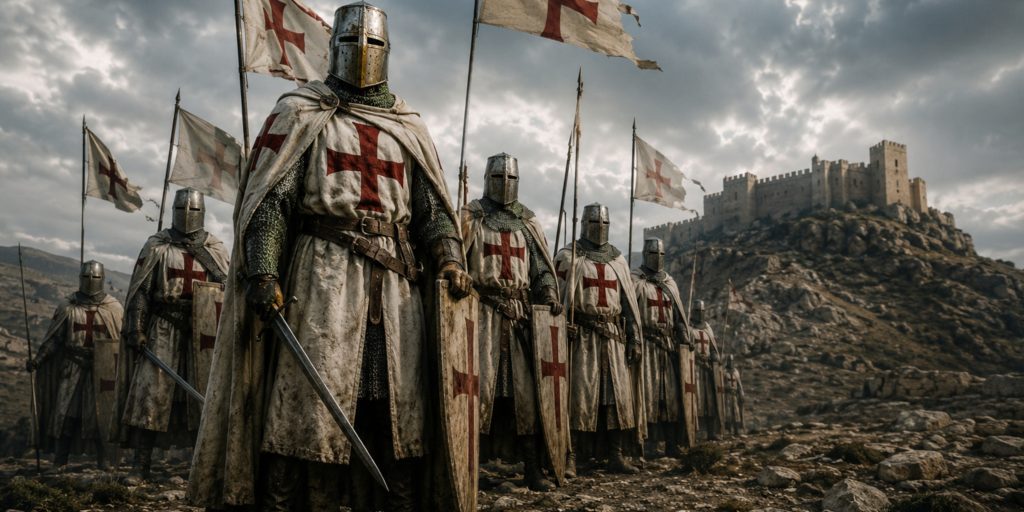
This is where romantic medievalism becomes particularly misleading.
Chivalric literature celebrated courage, loyalty, generosity and martial honour. Those ideals mattered. Knights themselves read, discussed and performed them.
Actual warfare remained brutal.
Prisoners could be killed. Civilians suffered. Towns were sacked. Captives were held for ransom. Political expediency regularly defeated noble sentiment.
Even formal combat could involve techniques modern audiences might consider unsporting.
Medieval fighting manuals contain throws, joint manipulation, dagger attacks, pommel strikes and techniques designed to exploit vulnerable positions.
The purpose of battlefield swordsmanship was survival and victory.
Nobody awarded additional points for looking noble while being stabbed.
Myth: Medieval Sword Fighting Was Only for Knights
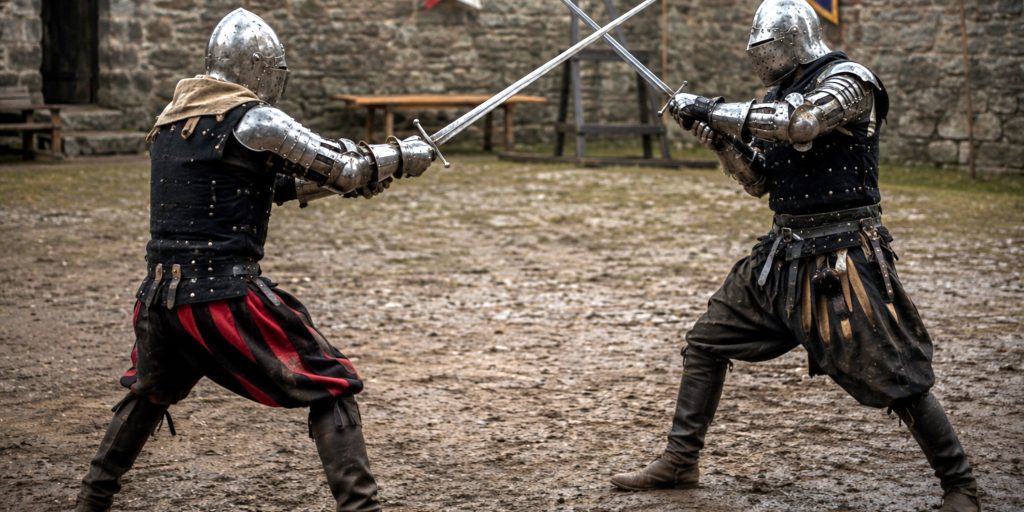
Knights dominate popular representations because armour, heraldry and horses photograph rather well.
But swordsmanship was not exclusively aristocratic.
By the later Middle Ages, fencing traditions existed within European towns. The German-speaking world developed fencing schools and guild traditions, while professional soldiers and urban citizens also practised martial skills.
Fencing masters taught paying students.
The surviving manuals themselves demonstrate that martial knowledge circulated beyond a narrow battlefield elite.
The knight remains important, but medieval European martial culture was considerably broader than the tournament field.
Myth: Women Never Used Swords
Warfare in medieval Europe was overwhelmingly male, and pretending otherwise would distort the evidence.
That does not mean women never participated in armed conflict.
Medieval chronicles occasionally record women defending fortifications, commanding forces or becoming involved in warfare during exceptional circumstances. Legal and fencing material also provides intriguing evidence.
Some later medieval and Renaissance combat manuscripts depict women participating in forms of judicial or formal combat, although these images require careful interpretation rather than being treated as evidence for armies of female sword fighters.
As a female historian, I find the extremes surrounding this subject rather tiresome. Women do not need to have constituted half of medieval armies for individual women’s military experiences to be historically interesting.
The evidence is limited, but limited evidence is not the same thing as no evidence.
How Did Medieval Swordsmen Train?
Training varied according to period, location and social status.
A knight’s martial education could begin in youth and include riding, wrestling, weapon handling and hunting alongside the social skills expected of an aristocratic warrior.
Professional soldiers developed skills through practice and experience.
By the later medieval period, fencing masters provide clearer evidence for systematic instruction.
Training could involve:
- Solo movement
- Partner drills
- Wrestling
- Sword exercises
- Dagger fighting
- Spear techniques
- Armoured combat
- Mounted combat
The surviving manuals suggest fighters were expected to understand principles rather than memorise isolated movements.
This is important.
Good historical swordsmanship was adaptive. A fighter needed to recognise what an opponent was doing and respond accordingly.
Medieval Sword Fighting Techniques
Several techniques repeatedly appear in surviving European fighting traditions.
Cutting
Cuts could be delivered from different angles towards the head, arms or body. Some systems classify attacks according to their direction and tactical purpose.
Thrusting
The point became increasingly important, particularly when facing improved armour. Thrusts could target the face, throat and openings between armour plates.
Parrying and Deflection
Defence was not always a static block. Fighters could redirect attacks while simultaneously positioning themselves to counter.
Binding
When two blades made contact, a skilled swordsman could use pressure and leverage to determine the opponent’s intentions and create an opening.
Half-Swording
Gripping the blade allowed greater point control during armoured combat.
Grappling
At very close range, wrestling could become more useful than attempting another large sword strike.
Throws and takedowns appear frequently in historical manuals.
Pommel and Crossguard Strikes
Every part of the sword could potentially become a weapon.
Medieval fencing masters were refreshingly unconcerned with the modern assumption that one is only supposed to use the sharp bit.
What Historical Fight Manuals Tell Us
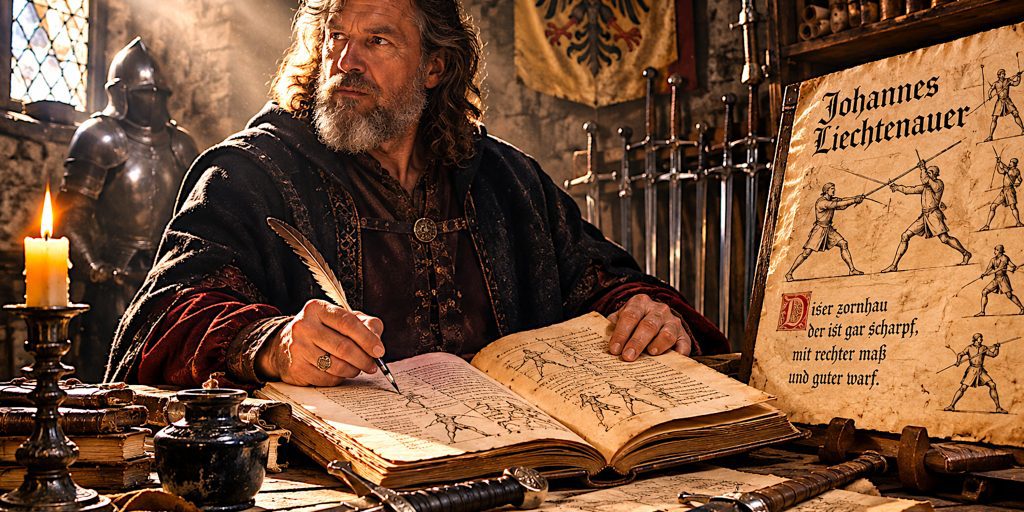
Our understanding of medieval sword fighting has changed enormously because of surviving Fechtbücher, or fight books.
Important sources include works connected with:
| Source | Approximate Date | Tradition | Subjects |
|---|---|---|---|
| Royal Armouries MS I.33 | c. 1300 | Germanic | Sword and buckler |
| Johannes Liechtenauer tradition | 14th century onwards | German | Longsword and other weapons |
| Fiore dei Liberi, Fior di Battaglia | c. 1400 | Italian | Wrestling, dagger, sword, spear, mounted combat |
| Hans Talhoffer manuscripts | 15th century | German | Longsword, judicial combat, wrestling and weapons |
| Paulus Kal manuscripts | 15th century | German | Longsword and martial techniques |
These manuscripts transformed modern understanding of European martial culture.
They demonstrate that medieval swordsmanship contained organised systems comparable in complexity to other historical martial traditions.
They also remind us of an important limitation.
Most surviving detailed fencing manuals come from the later medieval period. We cannot automatically project fifteenth-century longsword techniques backwards onto a Viking Age warrior or a Norman knight.
Historical swordsmanship changed.
Archaeology and Surviving Medieval Swords
Thousands of medieval swords survive in museums, collections, archaeological deposits and river finds.
Their physical characteristics provide an important counterweight to literary evidence.
Researchers can examine:
- Blade dimensions
- Weight
- Balance
- Metallurgy
- Edge geometry
- Construction techniques
- Wear and damage
- Inscriptions
- Hilt design
Weapon typologies, particularly those developed by Ewart Oakeshott, help historians classify medieval European swords according to blade and hilt characteristics.
These classifications also reveal technological change.
As armour improved, sword designs increasingly incorporated features suited to powerful thrusting, including narrower points and more rigid blade profiles.
Weapons evolved alongside the defences they were expected to defeat.
It was an arms race conducted with rather more plate steel and considerably fewer procurement committees.
Can HEMA Recreate Real Medieval Sword Fighting?
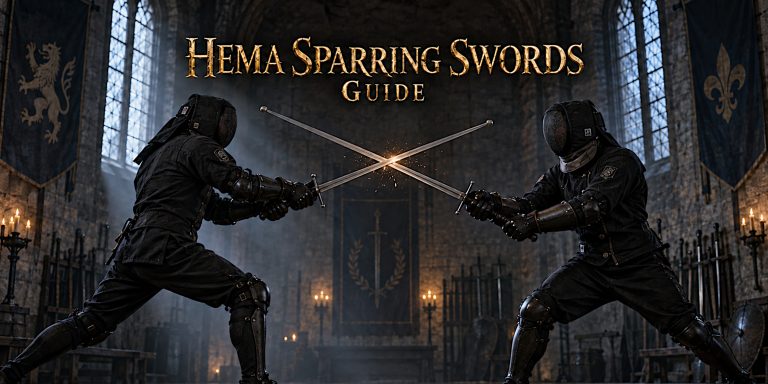
Historical European Martial Arts, usually shortened to HEMA, has played a major role in reviving interest in medieval fighting systems.
Practitioners study surviving manuscripts and attempt to reconstruct historical techniques through controlled training and sparring.
HEMA can demonstrate whether particular movements are mechanically plausible and reveal aspects of distance, timing and leverage that are difficult to understand from illustrations alone.
But there are limits.
Modern practitioners generally wear protective equipment, follow safety rules and know that their opponent is not genuinely attempting to kill them.
A steel training sword may reproduce aspects of historical handling, but psychological conditions are obviously different.
HEMA should therefore be treated as experimental interpretation rather than a perfect recreation of medieval combat.
It is enormously useful, provided nobody mistakes Saturday afternoon sparring for the Battle of Agincourt.
How Effective Was a Medieval Sword?
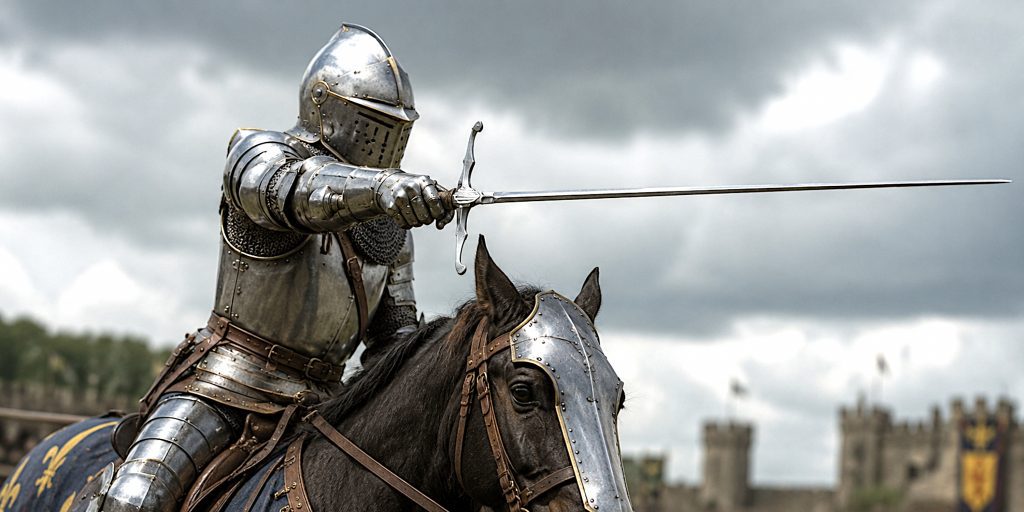
Very effective, within the circumstances for which it was designed.
Against an unarmoured opponent, a sword could inflict devastating cutting and thrusting injuries.
Against mail, cutting effectiveness was reduced, although exposed areas remained vulnerable and powerful impacts could still cause injury.
Against high-quality plate armour, direct cuts became much less useful. Fighters increasingly relied upon thrusting into gaps, wrestling, specialised techniques or weapons such as poleaxes.
That changing relationship between sword and armour is crucial.
There was no single answer to the question “How deadly was a medieval sword?”
The answer depends on which sword, which century, which opponent and what that opponent was wearing.
History stubbornly refuses to behave like a video-game statistics screen.
What Films and Games Usually Get Wrong About Sword Fighting
Popular culture tends to exaggerate movements because genuine fencing can happen too quickly and subtly for an audience to understand.
Common screen habits include:
- Huge telegraphed swings
- Constant edge-on-edge clashes
- Opponents politely attacking one at a time
- Swords cutting through armour
- Fighters exposing their backs during elaborate spins
- Extremely long duels
- Knights moving as if their armour weighs 100 kg
- Combatants continuing normally after serious wounds
Some productions have improved considerably, particularly as HEMA practitioners and historical consultants have become more involved.
But dramatic combat and historically accurate combat serve different purposes.
A duel designed for television must communicate character, emotion and spectacle. A real medieval fighter merely wanted the person opposite him to stop being dangerous.
Those priorities do not always produce the same choreography.
What We Still Do Not Know
Despite the surviving evidence, enormous gaps remain.
Fight books preserve particular traditions, teachers and periods rather than every form of European swordsmanship.
Battlefield archaeology can reveal weapons and injuries but rarely tells us precisely how an individual exchange unfolded.
Chronicles were written for political, religious and literary purposes and frequently exaggerate.
Experimental archaeology and HEMA help test possibilities but cannot fully recreate the fear, exhaustion and confusion of actual combat.
We therefore understand the mechanics of medieval sword fighting considerably better than we understand the lived experience.
That distinction matters.
Historians should be comfortable saying “we do not know”. It is considerably preferable to filling gaps with something seen in Braveheart.
The Reality Behind Medieval Sword Fighting
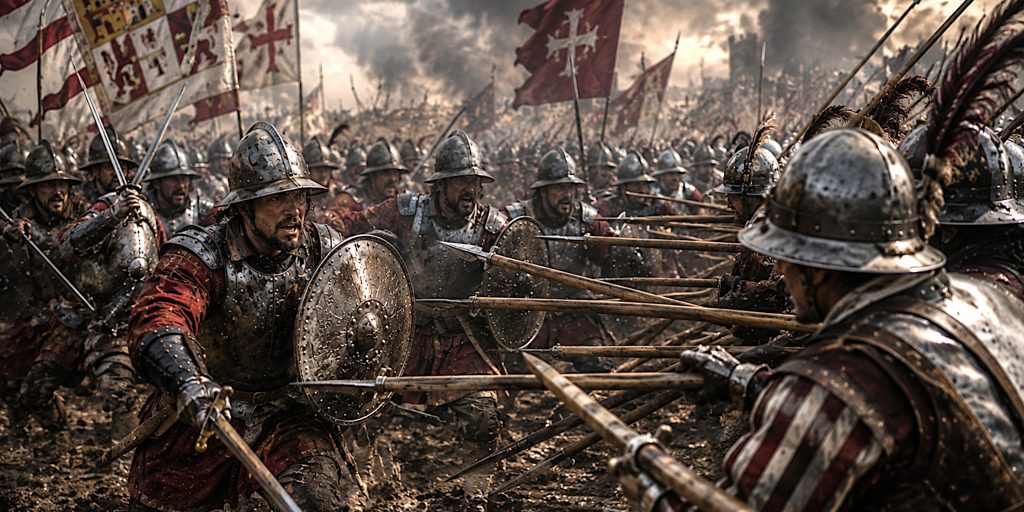
The most interesting thing about medieval sword fighting is that the reality requires very little embellishment.
Medieval swords were relatively light, carefully balanced weapons. Armour allowed substantial mobility. Fencing systems incorporated sophisticated concepts of timing, distance and leverage. Fighters wrestled, thrust, cut, grappled and adapted their techniques according to the armour and weapons they faced.
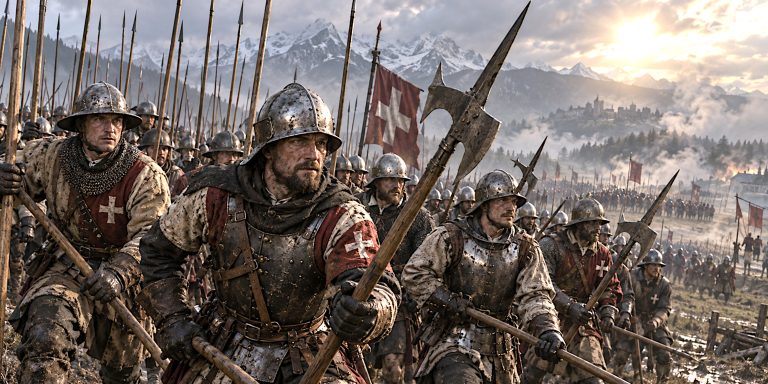
Swords were important, but they existed alongside spears, lances, bows, crossbows and polearms. They were weapons of war, personal defence, status and ceremony.
The medieval swordsman was neither an elegant modern fencer wearing old clothes nor a barbarian wildly swinging a lump of steel.
He belonged to a martial culture with its own techniques, assumptions and practical knowledge.
That, for me, is much more interesting than the myths.
The medieval world was perfectly capable of being strange, violent and spectacular without our assistance.
Frequently Asked Questions About Medieval Sword Fighting
How heavy was a medieval sword?
Many one-handed medieval swords weighed approximately 1 to 1.5 kg, while longswords commonly fell somewhere around 1.2 to 1.8 kg. Exact weights varied according to design and period.
Were medieval swords sharp?
Yes. Fighting swords could possess effective cutting edges, although sharpness and edge geometry varied according to their intended function.
Could medieval swords cut through armour?
Swords could cut vulnerable or lightly protected targets, but high-quality plate armour was extremely resistant to sword cuts. Fighters instead targeted gaps, grappled or used specialised armoured fighting techniques.
Could knights move properly in armour?
Yes. Properly fitted plate armour allowed running, kneeling, fighting and mounting a horse. Its weight was distributed around the body.
Did medieval knights actually know sword fighting techniques?
Yes. Surviving medieval fencing manuscripts document sophisticated systems of swordsmanship involving cuts, thrusts, counters, blade control, wrestling and armoured combat.
What is half-swording?
Half-swording involves gripping part of the sword blade with the second hand to improve point control. It was particularly useful when thrusting towards gaps in armour.
Was the sword the main medieval battlefield weapon?
Not necessarily. Spears, lances and polearms were often more important as primary battlefield weapons. Swords frequently served as versatile secondary weapons.
Is HEMA historically accurate?
HEMA reconstructs Historical European Martial Arts using surviving manuscripts and experimental practice. It can provide valuable insights into historical technique, although modern sparring cannot perfectly reproduce lethal medieval combat.