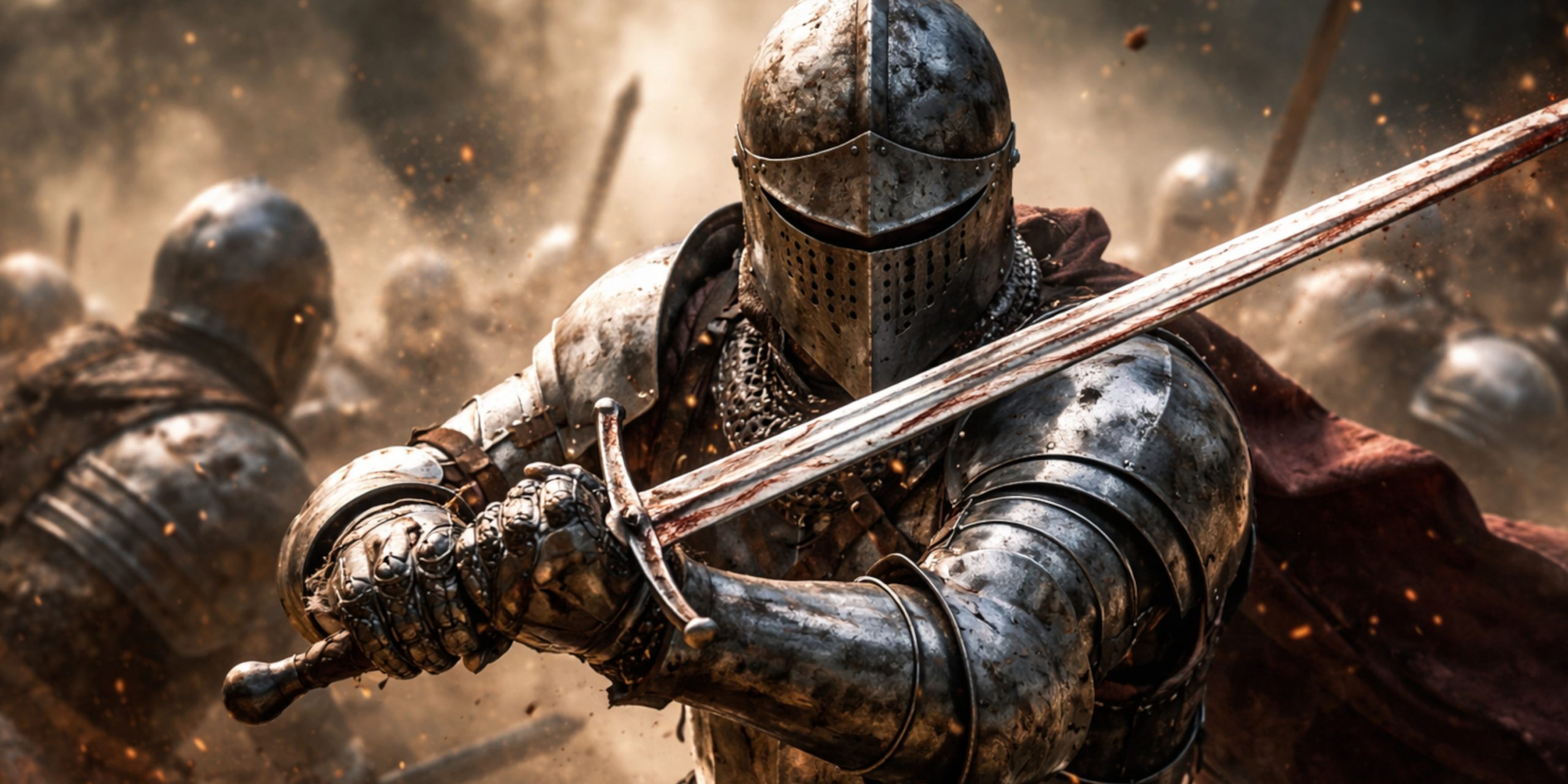
Plate armour changed everything.
Once knights began wrapping themselves in hardened steel during the late medieval period, the battlefield became a grim little arms race between protection and penetration. Swords did not vanish, despite what some internet experts armed with a YouTube comment section may insist. They adapted.
The broad cutting blades of earlier centuries slowly gave way to narrower, stiffer weapons designed for thrusting into weak points. Armpits. Visors. Groin gaps. The glamorous image of knights carving through plate armour like roast beef belongs firmly to fantasy. Medieval warriors were usually aiming for seams, joints, or sheer blunt trauma. It was less elegant than legend suggests, and considerably more desperate.
Armour-piercing swords emerged from this brutal reality.
What Is an Armour-Piercing Sword?
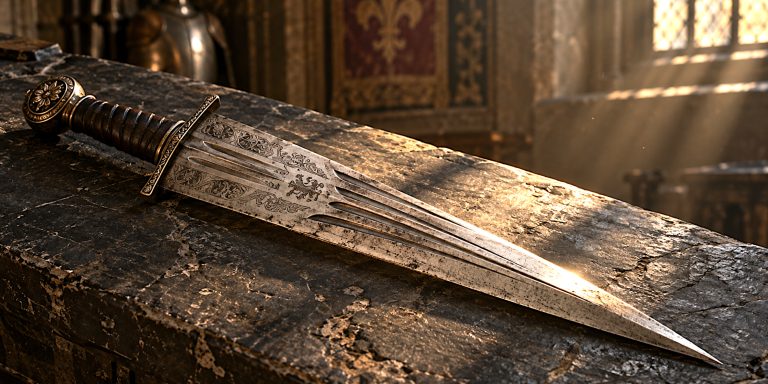
An armour-piercing sword refers to a blade designed primarily to thrust through gaps in armour or concentrate force against heavily protected opponents.
These swords often featured:
- Narrow and rigid blades
- Reinforced diamond or triangular cross-sections
- Acute thrusting points
- Reduced emphasis on wide cutting edges
- Excellent stiffness for two-handed leverage
Rather than slicing through steel plate directly, these weapons exploited vulnerabilities in armour construction.
Even the finest Milanese harness had weak spots. Human beings still needed to bend their elbows and breathe, which was terribly inconvenient for armourers.
Why Medieval Swords Changed
During the 11th and 12th centuries, mail armour dominated Europe. Against mail, cutting swords remained highly effective. A powerful strike could crush bone, split exposed flesh, or exploit weak coverage.
By the 14th and 15th centuries, full plate armour transformed warfare.
Knights now wore:
| Armour Element | Protection Level |
|---|---|
| Breastplates | Extremely high |
| Helmets and visors | High |
| Mail voiders | Moderate |
| Joint gaps | Vulnerable |
| Gauntlets | Strong but flexible |
| Arming doublets beneath plate | Limited against thrusts |
Swordsmiths responded accordingly.
Blades became narrower and more rigid. Two-handed longswords evolved into sophisticated weapons capable of half-swording techniques, where fighters gripped the blade itself to guide thrusts with terrifying precision.
It turns out medieval combat manuals were less about heroic windmill swings and more about aggressively trying to shove steel into somebody’s armpit.
The Estoc: The Ultimate Armour-Piercing Sword
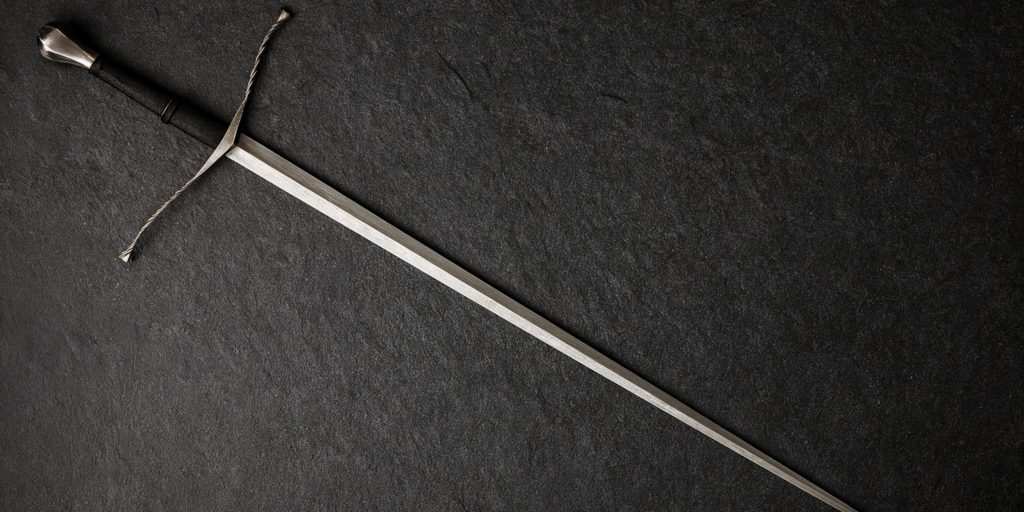
No sword represents anti-armour warfare better than the estoc.
The estoc emerged during the 14th century and remained popular into the Renaissance. Unlike traditional cutting swords, many estocs possessed almost no sharpened edge at all.
They were essentially giant steel spikes with ambitions.
Key Features of the Estoc
| Feature | Purpose |
|---|---|
| Long rigid blade | Maximum thrusting power |
| Diamond or triangular cross-section | Greater stiffness |
| Blunt or minimal edges | Focus entirely on thrusting |
| Two-handed grip | Improved control and force |
| Narrow point | Target armour gaps |
The estoc excelled in judicial duels, mounted combat, and armoured foot fighting.
Some versions were so stiff that they bordered on polearms rather than conventional swords.
Longswords and Half-Swording
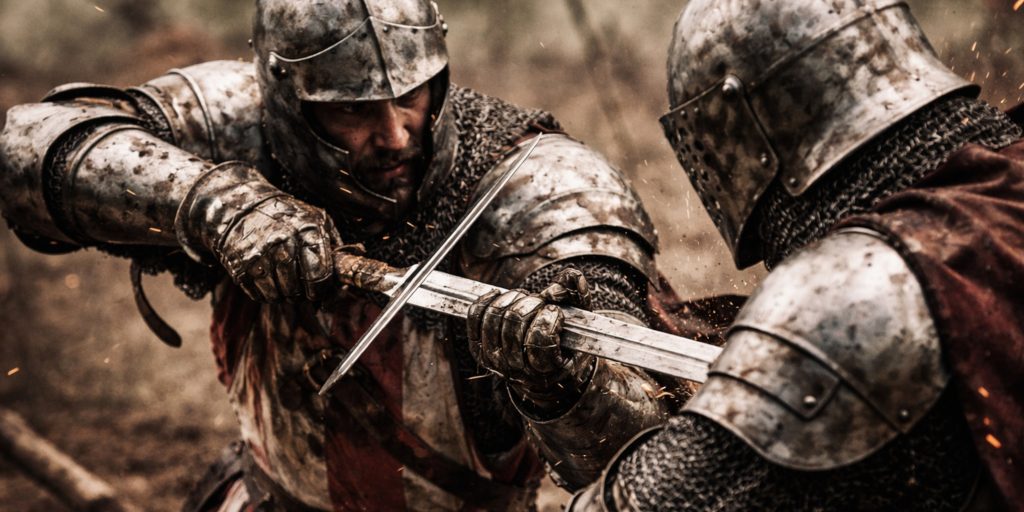
The longsword deserves special mention because it remained versatile while adapting to plate armour warfare.
Late medieval fencing manuals from masters such as Johannes Liechtenauer and Fiore dei Liberi show extensive use of thrusting techniques against armoured opponents.
Half-Swording
Half-swording involved gripping the middle of the blade with one hand while directing precise thrusts into weak points.
To modern audiences this looks utterly mad.
To medieval fighters it was perfectly logical.
Well-made blades were not razor sharp near the centre, and gauntlets provided protection for controlled gripping.
Targets included:
- Eye slits
- Throat gaps
- Armpits
- Groin openings
- Inner elbows
- Backs of knees
This transformed the sword from a cutting weapon into something closer to a short spear.
The Tuck and Other Thrusting Swords
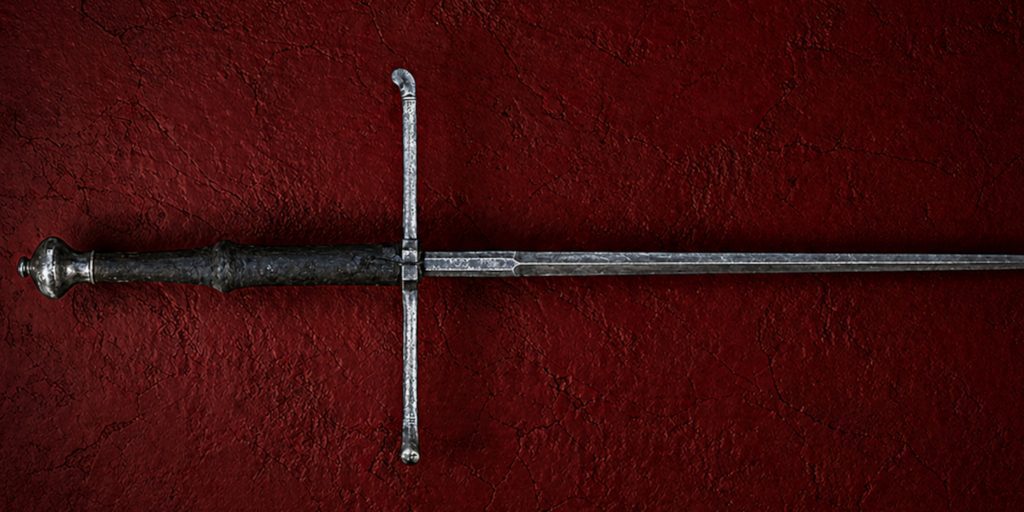
England developed the tuck, another narrow thrust-oriented sword heavily associated with armoured combat.
Meanwhile across Europe, swordsmiths experimented with specialised forms including:
- Koncerz in Poland
- Panzerstecher in Germany
- Civilian thrusting swords influenced by battlefield estocs
- Reinforced longswords optimised for armour combat
These weapons reflected a broader shift toward precision thrusting over broad slashing attacks.
Could Swords Actually Pierce Plate Armour?
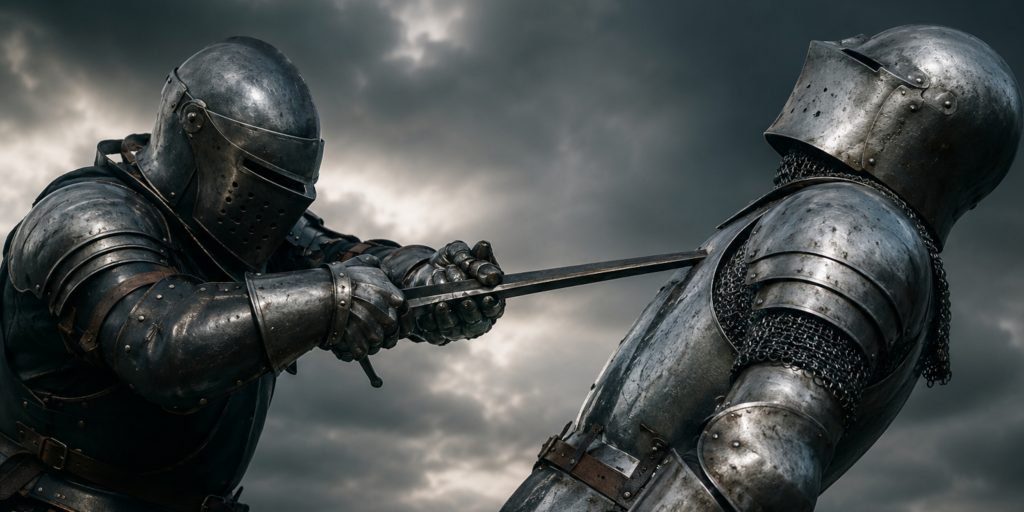
This question causes endless arguments online, usually between people who own either far too many historical books or far too many energy drinks.
The answer is nuanced.
A sword generally could not slice cleanly through high-quality plate armour. Well-forged plate was remarkably resilient.
However:
- Powerful thrusts could penetrate thinner sections
- Poor-quality armour was vulnerable
- Gaps and joints remained dangerous
- Concussive force could still injure the wearer
- Repeated strikes weakened armour integrity
Experimental archaeology has repeatedly shown that thrusting swords could exploit weak points effectively, especially at close range.
The real danger often came from control and leverage rather than brute penetration.
Armour-Piercing Techniques Beyond the Blade
Medieval fighters rarely relied on simple fencing techniques against armour.
Combat manuals reveal a far more savage reality.
Mordhau
The mordhau technique involved gripping the blade and striking with the hilt like a hammer.
Against plate armour, the sword effectively became a mace.
This was practical, brutal, and probably rather alarming for expensive sword owners.
Grappling and Wrestling
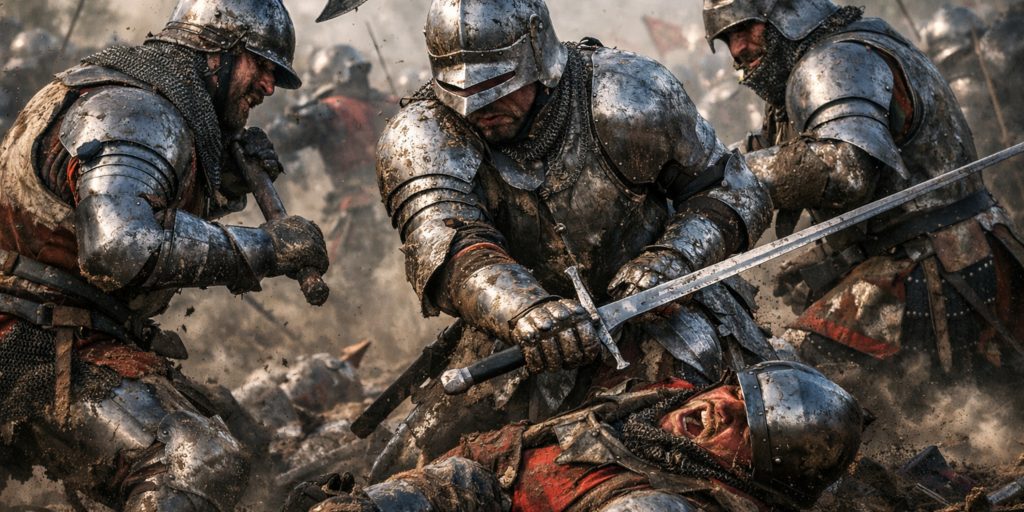
Armoured combat frequently collapsed into wrestling.
Fighters attempted to:
- Throw opponents to the ground
- Pin them
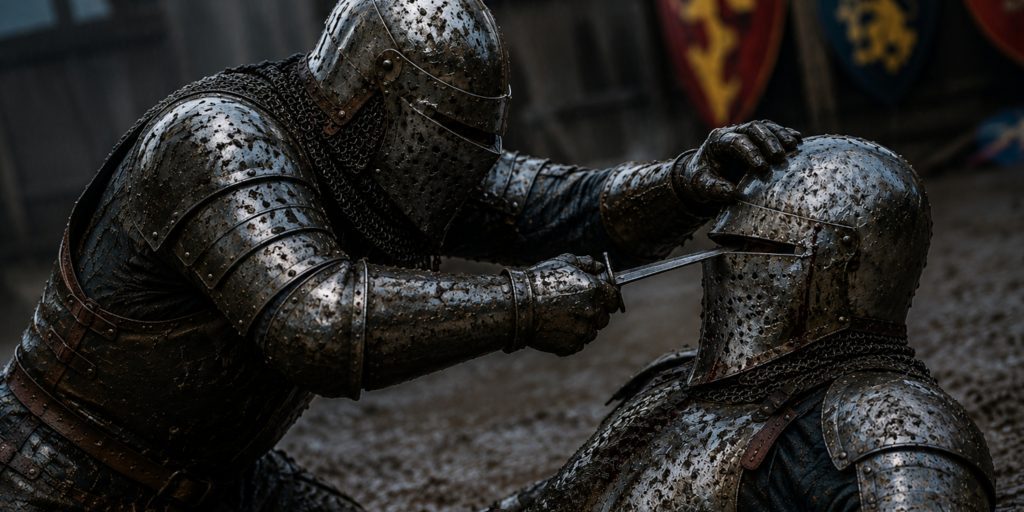
- Use daggers to finish the fight
- Exploit weak points at close range
The sword remained important, but technique mattered far more than cinematic flourishes.
Contemporary Quotes on Armoured Combat
The medieval sources themselves are wonderfully direct about the realities of fighting armoured men.
From Fior di Battaglia by Fiore dei Liberi:
“Take good care that your sword point does not fail you.”
Practical advice, honestly. Medieval fencing masters had little patience for nonsense.
From the German fighting traditions associated with Hans Talhoffer:
“Thrust into the openings.”
Again, not exactly poetic, but extremely effective.
These manuals consistently emphasise thrusting accuracy, grappling skill, and close-quarters brutality over sweeping attacks.
Famous Armour-Piercing Swords in Museums
Several excellent examples survive today.
Royal Armouries Museum
Home to numerous late medieval estocs and thrusting swords from across Europe.
The Wallace Collection
Contains elegant Renaissance thrusting weapons alongside armour displays.
Kunsthistorisches Museum
Features exceptional imperial arms and armour collections, including specialised anti-armour swords.
Musée de l’Armée
Offers extensive late medieval weapon collections with beautifully preserved thrusting blades.
The Decline of Armour-Piercing Swords
Gunpowder eventually made much of this technological dance obsolete.
As firearms improved during the 16th and 17th centuries, full plate armour became increasingly impractical outside specialised cavalry roles.
Swords evolved once again.
Civilian duelling swords such as rapiers retained thrust-oriented designs, but battlefield anti-armour swords slowly faded from military use.
The estoc and its relatives became relics of a very specific period in military history, one where steel fought steel at arm’s length with horrifying intimacy.
Key Factors in Armour-Piercing Sword Design
| Design Feature | Purpose |
|---|---|
| Narrow, rigid blades | Concentrate force for thrusting into gaps in plate armour. |
| Reinforced edges | Deliver powerful cuts to exploit weak points in chainmail or lamellar. |
| Triangular/quadrangular cross-sections | Prevent blade bending during thrusts. |
| Half-swording grips | Improve precision for targeting visor slits, joints, and armpits. |
Analysis of Armour-Piercing Swords
1. Estoc (15th–17th Century, Europe)
| Detail | Description |
|---|---|
| Design | Tapered, rigid blade (70–120 cm) with no cutting edges; hexagonal cross-section. |
| Metallurgy | High-carbon steel, quench-hardened for rigidity. Often combined with iron pommels for balance. |
| Combat Use | Thrust-focused attacks in half-swording stance; effective against plate armour joints. |
| Effectiveness | Penetrated mail and plate gaps; used by knights in tournaments and sieges. |
| Historical Context | Popular in France and Germany; depicted in Fechtbücher (medieval combat manuals). |
2. Rondel Dagger (14th–16th Century, Europe)
| Detail | Description |
|---|---|
| Design | Stiff triangular blade (20–30 cm) with a rondel guard to prevent hand slippage. |
| Metallurgy | Forged from bloomery steel; tip hardened via differential tempering. |
| Combat Use | Close-quarters grappling; thrusts to the visor, neck, or armpits. |
| Effectiveness | Could pierce mail rings and plate armour gaps; standard issue for English knights at Agincourt. |
| Historical Context | Found in mass graves from the Battle of Towton (1461). |
3. Tuck (Panzerstecher) (14th–16th Century, Europe)
| Detail | Description |
|---|---|
| Design | Shorter estoc variant (50–80 cm) with a quadrangular blade. |
| Metallurgy | Iron core with steel edges; reinforced tip via forge-welding. |
| Combat Use | Rapid thrusts against mounted opponents; paired with shields in infantry skirmishes. |
| Effectiveness | Pierced brigandine and mail; favoured by Swiss mercenaries. |
| Historical Context | Named Panzerstecher (“armour piercer”) in German; common in the Thirty Years’ War. |
4. Katana (Modified Tip – Edo Period, Japan)
| Detail | Description |
|---|---|
| Design | Curved blade with kissaki-moroha zukuri (double-edged tip) for thrusting. |
| Metallurgy | Tamahagane steel, clay-tempered for a hardened edge and flexible spine. |
| Combat Use | Precision thrusts into gaps in samurai lamellar armour (ō-yoroi). |
| Effectiveness | Limited against plate armour, but modified tips improved penetration against lighter armours. |
| Historical Context | Post-Sengoku period; samurai increasingly duelled in peacetime, prioritising precision. |
5. Rapier (16th–17th Century, Europe)
| Detail | Description |
|---|---|
| Design | Thin, stiff blade (90–110 cm) with a complex hilt for hand protection. |
| Metallurgy | Slender blades made from layered steel; tips hardened for thrusting. |
| Combat Use | Dueling against lightly armoured opponents; thrusts to the face or throat. |
| Effectiveness | Poor against plate, but lethal against mail or padded armour. |
| Historical Context | Symbol of nobility in Renaissance Spain and Italy; used by musketeers in the Thirty Years’ War. |
6. Zweihänder (15th–16th Century, Europe)
| Detail | Description |
|---|---|
| Design | Two-handed sword (150–180 cm) with a flamberge (wavy) or serrated edge near the tip. |
| Metallurgy | Heavy carbon steel blade; reinforced ricasso (blunt section) for grip. |
| Combat Use | Smashed polearms and delivered crushing blows to helmeted foes. |
| Effectiveness | Blunt force trauma could dent plate; serrations hooked armour plates to destabilise opponents. |
| Historical Context | Wielded by German Doppelsöldners (“double-pay mercenaries”) for breaching pike formations. |
7. Cinquedea (15th–16th Century, Italy)
| Detail | Description |
|---|---|
| Design | Broad, triangular blade (40–50 cm) with decorative fullers (grooves). |
| Metallurgy | Soft iron core with steel edges; often inlaid with brass or copper. |
| Combat Use | Urban self-defence; thrusts to the groin or underarm in street fights. |
| Effectiveness | Compromised by its short length, but could penetrate light chainmail. |
| Historical Context | Carried by Venetian nobles; symbolised wealth and martial skill. |
Effectiveness Against Armour Types
| Armour Type | Most Effective Swords | Reason |
|---|---|---|
| Full Plate Armour | Estoc, Tuck, Rondel Dagger | Rigid blades and precision thrusts exploited visor slits and joints. |
| Chainmail | Zweihänder, Modified Katana, Cinquedea | Heavy cuts split rings; reinforced tips pierced gaps. |
| Lamellar Armour | Katana, Rapier | Curved blades slipped between plates; thrusts targeted lacing points. |
| Brigandine | Tuck, Rondel Dagger | Concentrated force penetrated overlapping plates. |
Seven Swords Takeaway
Armour-piercing swords represent one of the clearest examples of medieval military adaptation.
These were not fantasy weapons built to cleave effortlessly through plate armour. They were highly specialised tools designed by practical people facing practical problems.
Late medieval warfare was sophisticated, technical, and often surprisingly clinical. Beneath all the heraldry and romance sat a very simple objective: find the weak spot before the other man finds yours.
History tends to remove the sweat from combat. The manuals, surviving weapons, and battlefield evidence put it right back again.