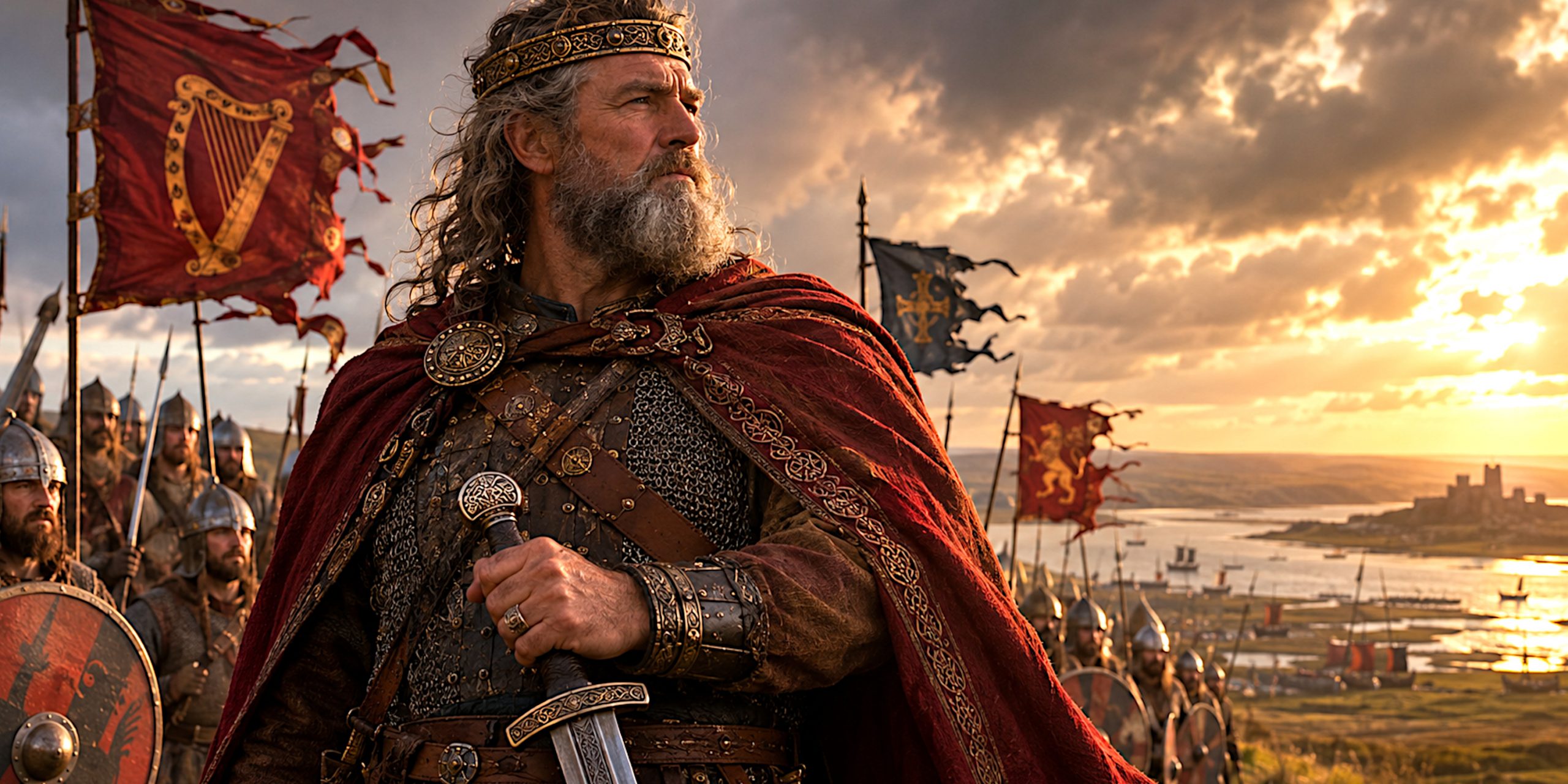
Brian Boru is one of those historical figures who has almost been swallowed by his own reputation. Warrior king, unifier of Ireland, destroyer of the Vikings, martyr of Clontarf. The familiar version has everything you could want from a medieval national hero, apart from the inconvenient problem that history was considerably messier.
Born into the Dál gCais dynasty in the tenth century, Brian rose from the politics of the Shannon region to become the most powerful ruler in Ireland. He fought Irish kings, Norse rulers and Norse-Gaelic armies, but he also negotiated with them, married into their families and used their towns and fleets when it suited him.
That is the Brian I find much more interesting. He was neither a simple liberator nor merely another provincial warlord who got lucky. He was an unusually successful political operator who understood that power in early medieval Ireland depended upon warfare, tribute, alliances, dynastic marriage, control of waterways and the support of the Church.
His death after the Battle of Clontarf in 1014 ensured that the man became a legend. Separating the two is considerably harder.
Brian Boru at a Glance
| Detail | Information |
|---|---|
| Name | Brian mac Cennétig |
| Common name | Brian Boru, Brian Bóruma |
| Born | Traditionally c. 941, although the precise date is uncertain |
| Dynasty | Dál gCais |
| Father | Cennétig mac Lorcáin |
| Brother | Mathgamain mac Cennétig |
| Principal power base | Thomond and the Shannon region |
| Main residence associated with him | Kincora, Killaloe |
| King of Munster | From 978 |
| Dominant king of Ireland | From 1002 |
| Principal rivals | Uí Néill rulers, Eóganachta, Leinster and Dublin |
| Major battles | Sulcoit, Belach Lechta, Glenmama, Clontarf |
| Died | 23 April 1014 |
| Place of death | During or immediately after the Battle of Clontarf |
| Burial tradition | Armagh |
| Dynasty founded | Uí Briain, or O’Brien |
Early Life and the Rise of the Dál gCais
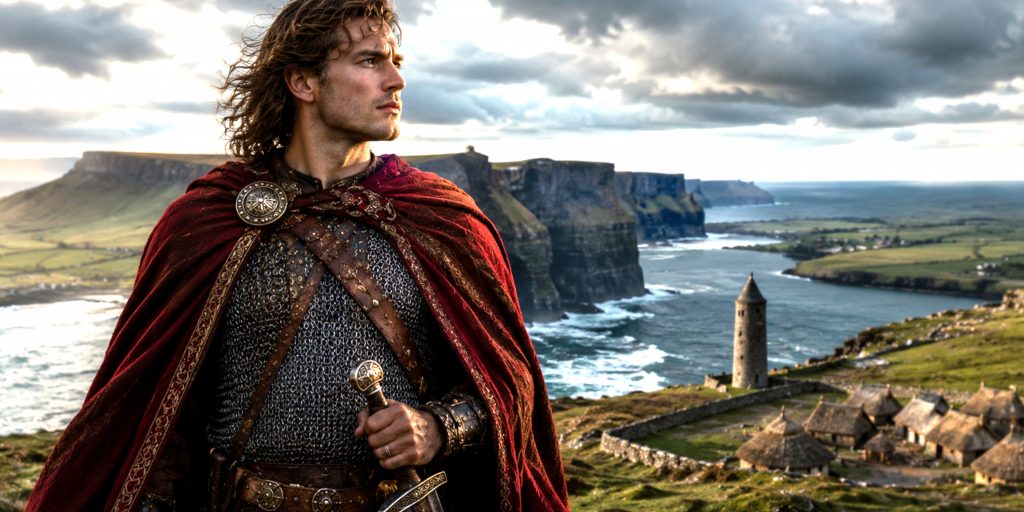
Brian was born into the Dál gCais, a dynasty based around what became Thomond, particularly areas of modern County Clare and the lower Shannon.
This was not the most obvious starting point for someone who would eventually dominate Ireland.
Munster had traditionally been associated with the Eóganachta dynasties. The Dál gCais were ambitious outsiders challenging an established political order, and Brian’s father, Cennétig mac Lorcáin, had already increased the family’s regional importance.
Brian’s older brother Mathgamain pushed that ambition considerably further.
During the tenth century, the Shannon was a political and military artery. Norse settlements, particularly Limerick, were important centres of trade and military power. Irish and Norse rulers fought one another, but they also traded, intermarried and formed alliances.
The neat division between “Irish” and “Viking” simply does not survive close examination.
Brian grew up in precisely this world.
The Battle of Sulcoit and the Capture of Limerick
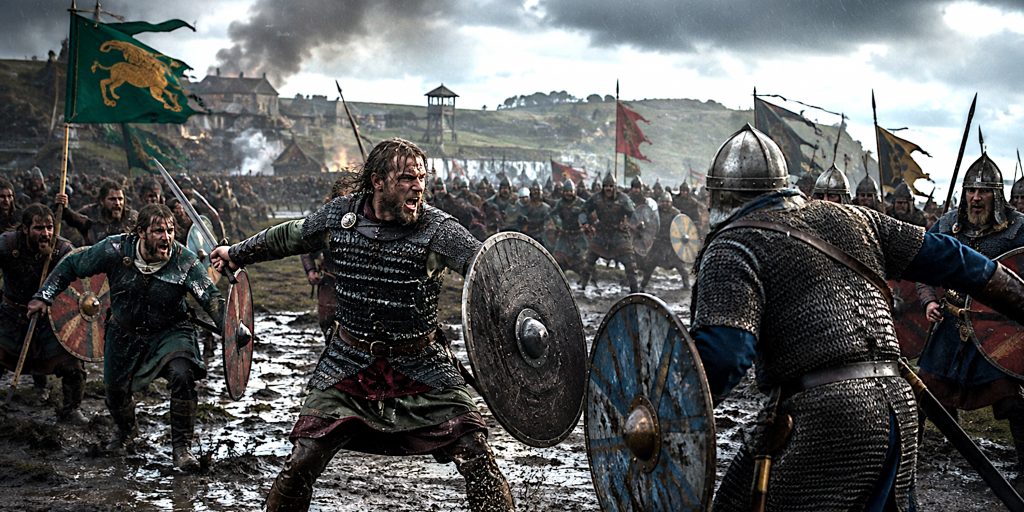
One of the decisive moments in the rise of the Dál gCais came around 968 at the Battle of Sulcoit.
Mathgamain and Brian fought the Norse rulers of Limerick and won a significant victory. Limerick was subsequently attacked and plundered.
Later accounts naturally turned the campaign into part of a grand Irish struggle against foreign invaders. The reality was more political. Control of Limerick meant access to wealth, shipping, trade and the Shannon.
Brian was learning an important lesson that would define much of his career: controlling Ireland required more than controlling farmland.
Rivers and towns mattered.
The Murder of Mathgamain
Brian’s rise accelerated dramatically following the death of his brother.
Mathgamain was captured in 976 and killed through the political manoeuvring of his enemies, particularly Máel Muad mac Brain of the Eóganachta.
Brian responded with the traditional medieval diplomatic instrument known as armed vengeance.
He defeated and killed Máel Muad at the Battle of Belach Lechta in 978. The victory effectively established Brian as the dominant ruler of Munster.
It also demonstrated something that appears repeatedly throughout his career. Brian could recover remarkably quickly from political disaster.
That ability is perhaps more impressive than winning battles. Medieval kings regularly won battles. Surviving decades of ambitious relatives, hostile neighbours and constantly renegotiated alliances was the genuinely difficult part.
Brian Becomes King of Munster
By the 980s, Brian had transformed the Dál gCais from an important regional dynasty into the dominant power in Munster.
His authority was maintained through a mixture of:
- Military campaigns
- Tribute
- Hostages
- Dynastic marriages
- Control of strategic settlements
- Naval forces
- Alliances with subordinate kings
- Patronage of important churches
Brian did not create a centralised state. Nothing resembling a modern Irish government suddenly appeared at Killaloe.
Instead, he constructed a hierarchy of personal and dynastic relationships. Lesser rulers acknowledged him, supplied tribute or hostages and sometimes provided troops.
Such arrangements worked remarkably well while the dominant king remained dominant.
The difficulty arrived when he died.
Brian Boru and the Vikings
The popular Brian Boru story traditionally casts him as the great destroyer of Viking power in Ireland.
It makes excellent nationalist mythology.
It makes rather less convincing history.
By Brian’s lifetime, Norse settlements such as Dublin, Limerick, Waterford and Wexford had been established for generations. Their inhabitants existed within Irish politics rather than outside it.
Brian fought Norse rulers when they opposed him. He also allied with Norse rulers when that was useful.
The same applied to his Irish rivals.
His enemies at Clontarf included Irishmen and Scandinavians. His wider political network also included Norse-Gaelic connections.
Brian was therefore not conducting some lifelong ethnic crusade against Vikings. He was attempting to dominate Ireland.
There is an important distinction.
The Battle of Glenmama
In 999 Brian joined Máel Sechnaill mac Domnaill, the Uí Néill king, against the combined forces of Leinster and Dublin.
The opposing army was defeated at the Battle of Glenmama.
Brian subsequently occupied Dublin.
This was an important moment because Dublin was one of the wealthiest and most strategically valuable settlements in Ireland. It connected Irish politics with the wider Irish Sea world and Scandinavian trading networks.
Brian did not destroy Dublin.
He incorporated it into his political system.
Sitriuc Silkbeard, king of Dublin, eventually returned to power and became connected to Brian through marriage politics. Brian himself married Gormlaith, Sitriuc’s mother and the sister of Máel Mórda of Leinster.
If anyone ever tells you medieval Irish politics was straightforward, family trees are an effective cure.
Becoming the Dominant King of Ireland
The great political breakthrough came in 1002.
Máel Sechnaill, the leading Uí Néill ruler and king of Tara, submitted to Brian.
Brian had achieved something extraordinary. A ruler from the Dál gCais had overturned centuries of political assumptions and established supremacy over the most powerful dynasties of Ireland.
Later tradition called him High King of Ireland.
That description requires some caution.
There was no single constitutional office of “High King” comparable to a later hereditary monarchy. Irish kingship operated through overlapping hierarchies of local kings, provincial kings and rulers claiming wider supremacy.
Brian nevertheless came exceptionally close to exercising island-wide overlordship.
He campaigned into northern Ireland and demanded hostages and submission from other rulers. His authority was real, although never absolute.
Was Brian Boru Really King of All Ireland?
In a practical sense, Brian was the dominant ruler in Ireland.
In a modern political sense, he did not “unite Ireland”.
There was no central bureaucracy enforcing laws from Killaloe. Regional dynasties retained considerable autonomy. Local rulers continued to govern their territories.
Brian’s supremacy depended upon personal authority and military credibility.
That distinction matters because describing him simply as the first king of a united Ireland creates a political structure that did not actually exist.
What he achieved was arguably more impressive anyway.
He persuaded, intimidated and defeated an extraordinary collection of rival dynasties until most recognised his supremacy.
I would give him that achievement without needing to invent a medieval nation-state around him.
Brian and the Church
Religion was an important element of Brian’s kingship.
He cultivated relationships with major ecclesiastical centres and presented himself as a Christian ruler worthy of authority across Ireland.
Armagh was particularly significant.
Brian’s association with the Church strengthened the ideological side of his kingship. Military success could make a ruler powerful, but ecclesiastical support could help make that power appear legitimate.
This relationship also helps explain the extraordinary respect reportedly shown to Brian’s remains after his death.
His connection with Armagh would become central to his posthumous reputation.
Brian Boru’s Family and Dynastic Politics
Brian’s marriages and children were important political instruments.
Among the women associated with him was Gormlaith ingen Murchada, a member of the Leinster dynasty and mother of Sitriuc Silkbeard of Dublin.
Later literature transformed Gormlaith into something approaching a medieval femme fatale, blaming her ambitions for the political crisis that eventually produced Clontarf.
That portrayal deserves considerable suspicion.
Medieval writers were rather fond of discovering a troublesome woman whenever complicated political events required a convenient explanation.
Brian had several sons, including:
- Murchad
- Donnchad
- Tadc
Murchad became one of Brian’s most important military commanders and was killed at Clontarf.
Brian’s descendants established the Uí Briain dynasty, from which the surname O’Brien developed.
Rebellion in Leinster
Brian’s political system began to fracture during the early eleventh century.
Máel Mórda mac Murchada, king of Leinster, rebelled against Brian’s supremacy. Dublin became entangled in the conflict, with Sitriuc Silkbeard seeking overseas support.
Scandinavian warriors arrived from the wider Norse world, including forces associated with Orkney and the Isle of Man.
Brian assembled his own coalition.
Again, the sides cannot sensibly be described simply as Irish against Viking.
The struggle was fundamentally about political supremacy within Ireland, although Scandinavian forces played an important role.
Everything was now moving towards Clontarf.
The Battle of Clontarf
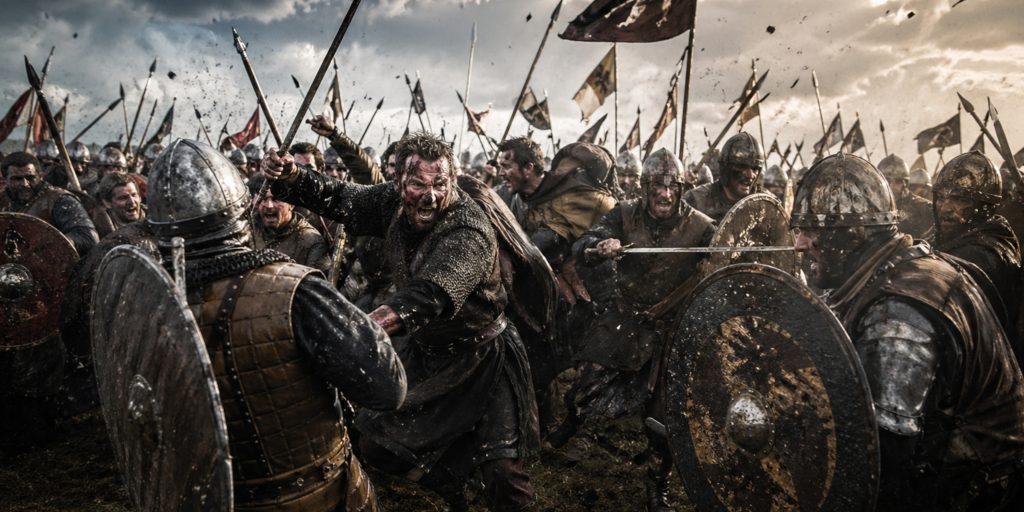
The Battle of Clontarf was fought on Good Friday, 23 April 1014, near Dublin.
Brian’s coalition faced forces associated with Leinster, Dublin and Scandinavian allies.
Among the important figures opposing Brian were:
- Máel Mórda, king of Leinster
- Sitriuc Silkbeard, king of Dublin
- Sigurd Hlodvirsson, Earl of Orkney
- Brodir, a Scandinavian warrior associated with the Isle of Man
Brian’s own army included Munster forces and allied contingents.
Máel Sechnaill was present in the wider campaign, although his precise role during the fighting has been heavily debated.
The battle appears to have been exceptionally bloody.
Brian’s army ultimately prevailed. The Leinster and allied Scandinavian forces suffered severe losses, particularly during the retreat towards the sea and Dublin.
Among those killed was Earl Sigurd of Orkney.
Máel Mórda also died.
But Brian’s victory came at a devastating price.
Did Brian Boru Fight at Clontarf?
Brian was probably around seventy years old, perhaps older, when Clontarf was fought.
Later accounts describe him praying in his tent while the battle took place.
We should be cautious about taking this scene literally. It fits the later literary image of Brian as an elderly Christian king whose warriors fought while he prepared spiritually for death.
It is quite plausible that he did not personally fight in the main battle.
Commanding an early medieval army did not necessarily require an elderly king to stand in the front rank waving a sword around. Hollywood would be devastated.
His son Murchad appears to have played a much more active battlefield role.
The Death of Brian Boru
Brian was killed despite his army winning the battle.
Later tradition identifies his killer as Brodir, who supposedly discovered Brian praying and struck him down.
The exact circumstances are uncertain.
What is clear from the annalistic tradition is that Brian died during the events surrounding Clontarf.
His son Murchad was also killed, as was his grandson Toirdelbach.
This dynastic bloodletting was enormously significant.
Brian had won the battle but lost both his life and several potential successors capable of maintaining his political system.
It is difficult to imagine a more medieval definition of a costly victory.
Arms and Armour in Brian Boru’s Ireland
No surviving sword, helmet or shield can securely be identified as belonging to Brian himself.
Any reconstruction of his equipment must therefore be based on archaeological evidence and contemporary military culture.
Swords
High-status warriors could carry double-edged swords descended from Scandinavian and Carolingian traditions.
These typically featured:
- Straight double-edged blades
- Short crossguards
- Single-handed grips
- Multi-lobed or simplified pommels
- Iron construction
- Occasional silver, copper-alloy or other decorative fittings
Swords were expensive objects and markers of status.
Irish warriors were also perfectly capable of using weapon styles associated with Scandinavia. Material culture does not obey the tidy ethnic labels modern audiences sometimes want to place upon it.
Spears
The spear was probably the most important battlefield weapon.
Both Irish and Norse-influenced warriors used thrusting and throwing spears.
Spears had several advantages:
- Relatively inexpensive production
- Greater reach than swords
- Effective use in formations
- Ability to thrust or throw
- Suitability for warriors of differing social status
If we could stand on the field at Clontarf, we would probably notice far more spearheads than gleaming swords.
Axes
Axes were also widely used.
The familiar association between axes and Vikings is only part of the story. Irish warriors adopted weapon forms from their Norse neighbours, and archaeological evidence demonstrates considerable cultural exchange.
Large fighting axes could deliver devastating blows, while smaller axes provided cheaper and more versatile weapons.
Shields
Round wooden shields remained common.
These could incorporate:
- Wooden boards
- Iron bosses
- Leather or hide coverings
- Painted decoration
- Metal fittings
The shield was an essential defensive tool in warfare dominated by spears, swords and axes.
Armour
Mail armour was valuable and relatively uncommon.
Elite warriors could have possessed mail shirts, while helmets were probably concentrated among wealthy or high-status combatants.
Most soldiers would have relied upon shields, layered clothing and mobility rather than full metallic protection.
Brian himself certainly possessed the resources to obtain high-quality military equipment. Whether he wore mail or a helmet at any particular battle remains unknown.
Brian Boru’s Military Strengths
Brian’s success was not based upon one revolutionary battlefield tactic.
His real strengths were strategic.
Control of the Shannon
The Shannon gave the Dál gCais access to a major transport network.
Brian understood the importance of waterways and naval forces. Moving warriors and supplies by water could be considerably more efficient than dragging an army across difficult Irish terrain.
Tribute and Hostages
Brian demanded tribute and hostages from subordinate rulers.
Hostages were political insurance. They represented submission and discouraged rebellion, although medieval Irish politics proves they were hardly an infallible system.
Rapid Campaigning
Brian repeatedly demonstrated the ability to campaign beyond Munster.
Maintaining armies over long distances required food, transport, political contacts and careful timing.
His ability to project force into northern Ireland was a major component of his supremacy.
Political Flexibility
Brian could fight an opponent one year and negotiate with him the next.
This was not inconsistency. It was medieval kingship.
His willingness to work with Norse rulers is particularly revealing. Brian was interested in power, not ideological purity.
What Archaeology Tells Us About Brian’s World
Archaeology has not produced Brian’s sword, crown or grave goods.
What it has provided is something arguably more useful: the material world in which he operated.
Finds from Ireland dating around the tenth and eleventh centuries demonstrate extensive interaction between Gaelic and Scandinavian communities.
Weapons, jewellery, silver and settlement evidence show a society connected to the wider Irish Sea and northern European worlds.
Among the most interesting objects associated with Brian’s broader period are the Lough Derg Sword and weapons displayed by the National Museum of Ireland.
The Lough Derg Sword was recovered in County Tipperary and dates slightly later than Brian’s lifetime. It is nevertheless an excellent example of the type of prestigious eleventh-century weapon familiar in the world created by Brian and his successors.
The National Museum’s Clontarf material also includes spearheads, axes, arrowheads and objects illustrating the mixture of Gaelic and Scandinavian cultural traditions.
Particularly interesting is the Shrine of the Stowe Missal, which carries an image of a warrior holding a sword of recognisably Viking type.
That small detail says rather more about cultural exchange than several pages of heroic nationalist mythology.
Kincora and Brian’s Royal Centre
Brian is strongly associated with Kincora at Killaloe.
Its position close to the Shannon made obvious strategic sense.
Unfortunately, anyone hoping for an Irish equivalent of excavated Anglo-Saxon royal halls is likely to leave slightly disappointed. The precise archaeological character of Brian’s royal centre remains difficult to reconstruct.
Killaloe nevertheless occupied a crucial position within the Dál gCais heartland.
From here Brian could exploit the Shannon and maintain communications through Munster and into central Ireland.
Was Clontarf Really the Battle That Drove the Vikings Out of Ireland?
No.
This is probably the most persistent myth associated with Brian Boru.
The Vikings were not expelled from Ireland after Clontarf.
Dublin remained a Norse-Gaelic kingdom, and Sitriuc Silkbeard continued to rule there after Brian’s death.
Norse-Gaelic communities remained important in Irish trade and urban life.
Clontarf was a major battle involving Scandinavian warriors, but it was primarily part of a struggle over political supremacy involving Leinster, Dublin, Munster and other Irish kingdoms.
The traditional story emerged gradually as Brian’s reputation developed.
It is a wonderful story.
History is under no obligation to cooperate with wonderful stories.
The Sources for Brian Boru
Reconstructing Brian’s life depends upon several medieval sources, and they do not all deserve equal confidence.
Annals of Ulster
The Annals of Ulster preserve important records concerning Brian’s campaigns, political activities and death.
Their relatively concise entries are invaluable, although annals themselves reflect particular traditions and interests.
Annals of Inisfallen
The Annals of Inisfallen are particularly important for Munster history and Brian’s career.
Their regional perspective makes them essential when examining the rise of the Dál gCais.
Cogadh Gáedhel re Gallaibh
The Cogadh Gáedhel re Gallaibh, or The War of the Irish with the Foreigners, provides the most famous literary presentation of Brian.
It is also problematic.
Written well after Brian’s death and associated with the political interests of his descendants, the text transforms his career into an heroic struggle against foreigners.
It contains valuable traditions, but it cannot simply be read as an eyewitness history of Clontarf.
This is where Brian Boru studies become particularly interesting. We are not merely reconstructing a medieval king. We are watching later generations construct the king they wanted to remember.
Contemporary and Medieval Descriptions
The annalistic description of Clontarf conveys the scale with unusual economy.
The Annals of Ulster described how:
“A valiant battle was fought between them, the like of which was never before encountered.”
Later writers became considerably more enthusiastic.
Brian’s association with Armagh also produced one of the most striking descriptions attached to him: “Emperor of the Irish.”
That language should not be interpreted as a literal imperial title in the Roman or Byzantine sense. It does, however, demonstrate how extraordinary Brian’s supremacy appeared to contemporaries and near-contemporaries.
What Happened to Brian’s Body?
According to medieval tradition, Brian’s remains received an elaborate ecclesiastical funeral.
His body and that of his son Murchad were taken northwards and eventually brought to Armagh.
The association was politically and religiously significant.
Armagh was one of Ireland’s foremost ecclesiastical centres. Burial there reinforced Brian’s image as a Christian ruler whose authority had extended beyond Munster.
No securely identified grave of Brian survives today.
Claims concerning precise burial locations should therefore be treated cautiously.
What Happened After Brian Boru Died?
Brian’s death exposed the weakness at the centre of his political achievement.
His supremacy had depended heavily upon him personally.
Máel Sechnaill returned to prominence after Clontarf and again became the dominant king associated with Tara.
Brian’s sons continued to wield substantial power in Munster, and the Uí Briain remained one of Ireland’s great dynasties.
But Brian’s island-wide supremacy was not immediately inherited intact.
This is one of the strongest arguments against describing his realm as a unified kingdom in the later European sense.
The king died.
The political structure loosened almost immediately.
The O’Brien Dynasty
Brian’s descendants became the Uí Briain.
The dynasty remained enormously important in Irish politics, particularly in Munster and Thomond.
The surname O’Brien ultimately derives from this dynastic connection to Brian.
Later rulers had every incentive to magnify their famous ancestor.
Brian’s reputation therefore became political capital.
Being descended from a competent king is useful.
Being descended from the heroic saviour of Ireland is considerably better.
Brian Boru: Myth Versus Evidence
| Popular claim | Historical assessment |
| Brian united Ireland into a single kingdom | He achieved widespread political supremacy, but Ireland remained composed of numerous kingdoms |
| Brian expelled the Vikings | False. Norse-Gaelic communities and rulers remained after 1014 |
| Clontarf was Irish versus Viking | Misleading. Irish and Scandinavian forces existed within a much more complicated coalition conflict |
| Brian personally led the fighting at Clontarf | Uncertain and probably unlikely given his age |
| Brian was killed while praying | Famous later tradition, but the precise circumstances remain uncertain |
| Clontarf destroyed Viking Ireland | No. Dublin remained an important Norse-Gaelic centre |
| Brian was an exceptional ruler | Strongly supported by the extraordinary geographical extent of his political influence |
| Brian created the O’Brien dynasty | His descendants formed the Uí Briain dynasty that dominated much later Munster politics |
Where to See Artefacts Connected with Brian Boru’s World
National Museum of Ireland, Dublin
The National Museum of Ireland holds some of the most important archaeological material for understanding Ireland around the period of Brian and Clontarf.
Its collections include weapons and objects reflecting both Gaelic and Scandinavian Ireland.
Particularly relevant material includes:
- The Lough Derg Sword
- Iron spearheads
- Fighting axes
- Dublin arrowheads
- The Killaloe Brooch
- The Shrine of the Stowe Missal
- Viking-period silver
- Objects illustrating slavery and commerce in early medieval Ireland
Killaloe
Killaloe remains essential for understanding Brian geographically.
The town stands within the landscape from which the Dál gCais built their power and is traditionally associated with Brian’s royal centre at Kincora.
Armagh
Armagh is traditionally associated with Brian’s burial and represents the ecclesiastical dimension of his kingship.
Clontarf
Modern Dublin has transformed the landscape considerably, making reconstruction of the battlefield difficult.
The precise geography of the battle remains debated, particularly because the medieval coastline and tidal environment differed substantially from modern Dublin.
How Much of the Brian Boru Legend Can We Believe?
Enough to recognise an extraordinary ruler.
Not enough to accept the legend literally.
Brian genuinely rose from a dynasty outside the traditional highest ranks of Irish kingship and overturned an established political order.
He genuinely became the most powerful ruler in Ireland.
He genuinely defeated major rivals.
He genuinely died during one of the most famous battles in Irish history.
None of that requires the additional claim that he liberated Ireland from Viking occupation.
In some ways, stripping away the mythology improves his story.
The historical Brian had to operate within a political environment of competing dynasties, Norse trading towns, ambitious provincial kings, ecclesiastical institutions and constantly shifting alliances.
He mastered that system more successfully than almost anyone of his generation.
Brian Boru’s Legacy
Brian’s greatest achievement was not Clontarf.
For me, it is what happened before it.
A Dál gCais ruler from the Shannon region managed to break the established political dominance of Ireland’s great dynasties and compel rulers across much of the island to recognise his supremacy.
That required decades of campaigning, diplomacy and political judgement.
Clontarf dominates his memory because it provides such an irresistible ending: an elderly king, a vast battle, victory, death and the destruction of much of his immediate dynasty in a single day.
History rarely supplies endings that dramatic without later writers giving it a little assistance.
Brian Boru deserves to be remembered without turning him into something he was not. He was not the king of a modern united Ireland. He did not drive every Viking into the sea. He did not end Scandinavian influence.
He was something more recognisably medieval and, I think, considerably more interesting.
He was a ruthless, adaptable and remarkably successful king who understood the politics of his age exceptionally well. He fought Norsemen and Irishmen, allied with Norsemen and Irishmen, used religion, marriage, tribute and military force, and built a supremacy that nobody around him could safely ignore.
Then came Clontarf.
Brian won the battle and died before he could enjoy the victory.
His political system fractured.
His descendants turned him into a dynastic icon.
Later generations turned him into a national hero.
A thousand years later, we are still trying to work out where the king ends and the legend begins.
And that, rather wonderfully, may be why Brian Boru remains so difficult to forget.