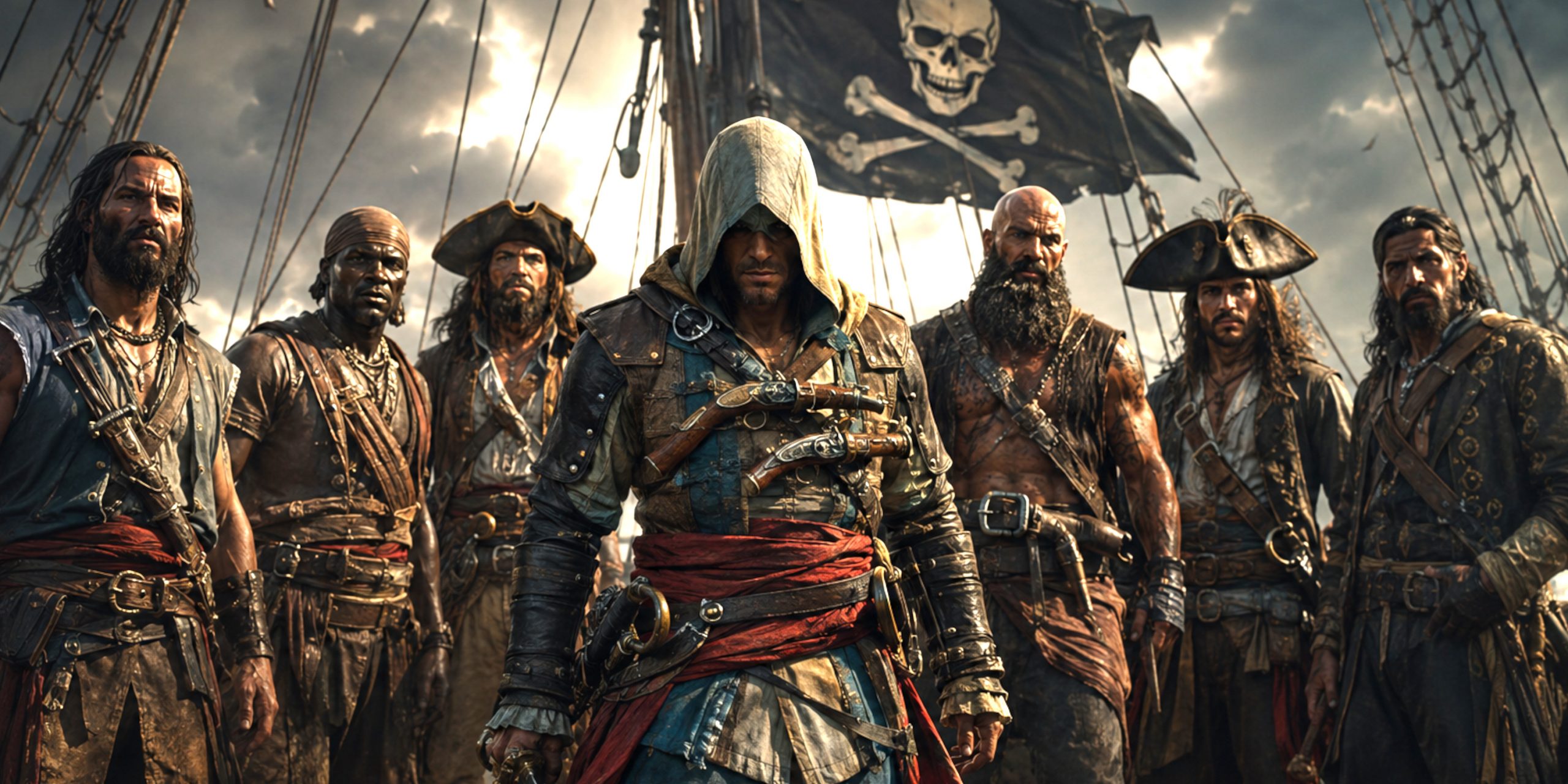
Assassin’s Creed IV: Black Flag has sea shanties, boarding actions, buried treasure, rum, questionable tattoos and enough dramatic speeches about freedom to keep Nassau’s taverns busy for years. What makes its world particularly good, though, is how much of the pirate cast actually existed.
Ubisoft dropped fictional pirate Edward Kenway into the final years of the Golden Age of Piracy and surrounded him with people pulled from the historical record. Edward Thatch, better known as Blackbeard, Benjamin Hornigold, Charles Vane, Jack Rackham, Anne Bonny and Mary Read were all real.
Some of their stories have been heavily polished for the game. Others were already so ridiculous that Ubisoft barely needed to help.
Here is every major real pirate who appears in Assassin’s Creed IV: Black Flag, what we actually know about them, and where the game takes a few liberties.
Edward Teach, Better Known as Blackbeard
Historical name: Edward Teach
Born: Probably around 1680
Died: 22 November 1718
Active: Caribbean and Atlantic coast of North America
Famous ship: Queen Anne’s Revenge
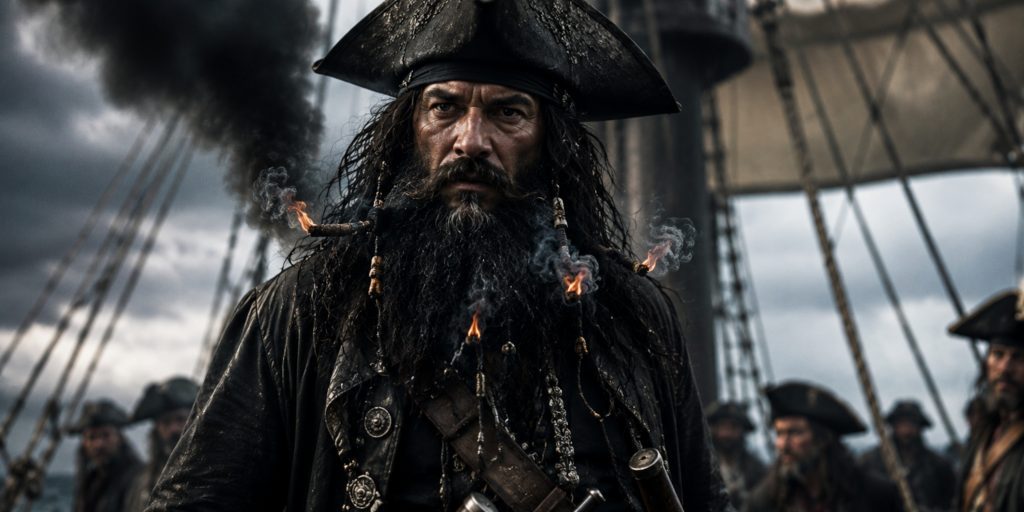
Blackbeard is easily the most famous historical pirate in Black Flag, and the game understands exactly why.
The historical Edward Thatch deliberately cultivated a frightening appearance. Contemporary descriptions mention his enormous black beard and the slow-burning matches he placed around his hat during battle. Imagine boarding a ship and discovering that the opposing captain has apparently decided being a pirate is insufficient and has begun cosplaying as Satan.
His greatest prize was the French slave ship La Concorde, which he captured in 1717 and converted into the heavily armed Queen Anne’s Revenge. He became notorious along the American coast, particularly after blockading Charleston in 1718.
Blackbeard was eventually killed at Ocracoke in North Carolina during a battle with forces commanded by Lieutenant Robert Maynard.
How accurate is Black Flag?
Surprisingly good in spirit.
The game exaggerates Blackbeard’s friendship with Edward Kenway, obviously, because Kenway is fictional. Yet its portrayal of Thatch as an intelligent man consciously constructing his own terrifying reputation fits the historical evidence rather well.
His death also draws from the historical battle at Ocracoke, although naturally the game inserts Edward into events.
Historical accuracy: High, with substantial fictionalisation around Edward Kenway.
Benjamin Hornigold
Born: Around 1680
Died: 1719
Active: Bahamas and Caribbean
Known for: Early Nassau pirate leader and mentor to Blackbeard
Benjamin Hornigold is one of the most important pirates in the game precisely because he represents something more complicated than the standard pirate stereotype.
Hornigold was among the leading figures associated with Nassau during the period sometimes called the Republic of Pirates. He commanded vessels in the Caribbean and was connected with several men who later became notorious pirates.
Blackbeard probably served under Hornigold before commanding his own vessel.
One particularly interesting detail concerns Hornigold’s reluctance to attack British ships. Like many early eighteenth-century pirates, he had previously operated in a world where privateering against Britain’s enemies could be perfectly legitimate.
His crew eventually removed him from command, reportedly because they wanted to attack British vessels as well.
Then came the part Black Flag makes central to his character.
Hornigold accepted the royal pardon offered to pirates and became a pirate hunter. To his former companions, that looked very much like betrayal. To Hornigold, it probably looked like survival.
He died in 1719 after his ship was wrecked during a hurricane.
How accurate is Black Flag?
The broad transformation from pirate to pirate hunter is historical. His relationship with Edward Kenway and involvement with the Templars belong entirely to the Assassin’s Creed universe.
Historical accuracy: Moderate to high.
Charles Vane
Born: Around 1680
Died: 29 March 1721
Active: Bahamas and Caribbean
Known for: Aggression, refusal of the royal pardon and spectacular inability to compromise
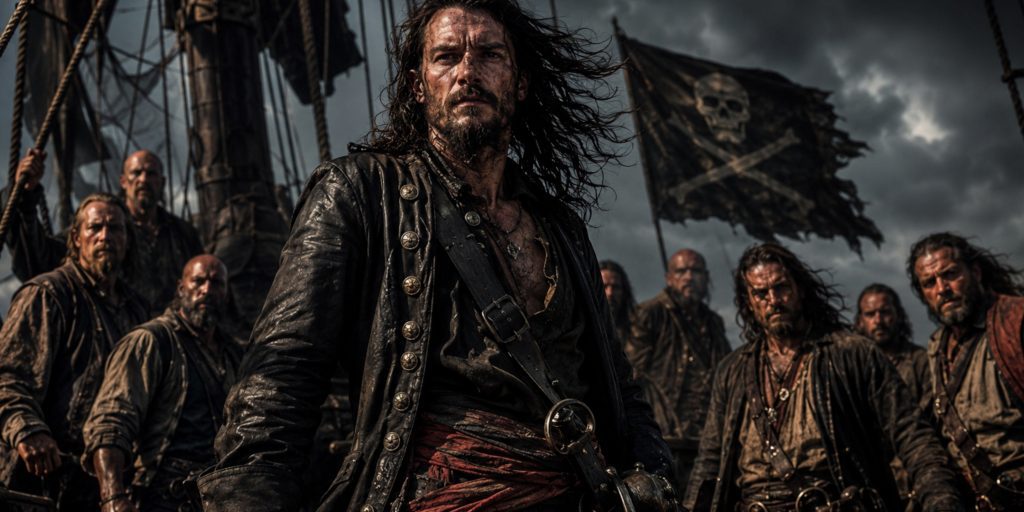
If Blackbeard became famous because he understood theatre, Charles Vane became famous because he appeared constitutionally incapable of calming down.
Vane operated from Nassau and was one of the pirates who resisted British attempts to restore control over the Bahamas.
When Woodes Rogers arrived as governor in 1718, Vane famously escaped Nassau aboard a fireship before continuing his piratical career.
His refusal to attack a French warship later caused serious problems. His crew considered his decision cowardly and removed him as captain, replacing him with Jack Rackham.
Vane continued piracy with a smaller crew until a hurricane wrecked his vessel. He was eventually recognised, captured and taken to Jamaica.
He was hanged at Port Royal in 1721.
How accurate is Black Flag?
The game’s Vane is unstable, violent and increasingly dangerous. Historical accounts certainly present him as unusually aggressive, although eighteenth-century descriptions of pirates were hardly neutral character assessments.
His breakdown and marooning with Edward are heavily fictionalised.
Still, if Ubisoft needed a pirate capable of turning a bad afternoon into attempted murder, history gave them a very convenient candidate.
Historical accuracy: Moderate.
Calico Jack Rackham
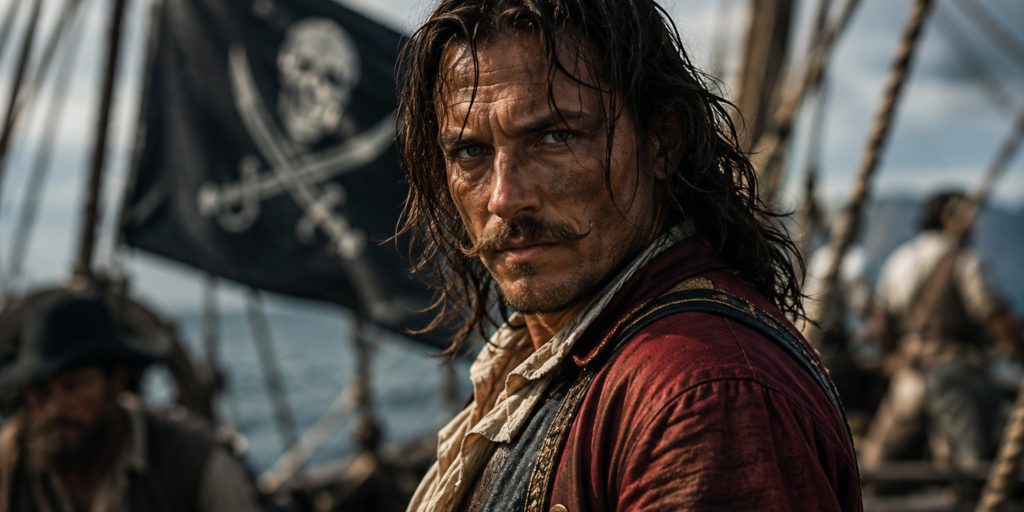
Full name: John Rackham
Nickname: Calico Jack
Died: 18 November 1720
Active: Bahamas and Jamaica
Known for: Association with Anne Bonny and Mary Read
Jack Rackham is one of those historical figures whose fame considerably exceeds his actual achievements.
He was not among the most successful pirates of the period. He did not command a gigantic pirate fleet or capture treasure ships capable of financing a small country.
What he did have was an excellent nickname and two extraordinary crew members.
Rackham earned the name Calico Jack from the colourful calico clothing he supposedly favoured. He became captain after Charles Vane’s crew deposed Vane in 1718.
Rackham later sailed with Anne Bonny and Mary Read, two women who became among the best-known pirates of the entire Golden Age.
His career ended in 1720 when pirate hunter Jonathan Barnet captured his vessel near Jamaica.
Rackham was subsequently tried and hanged at Port Royal.
How accurate is Black Flag?
His relationships with Vane, Bonny and Read are grounded in history. His interaction with Edward Kenway is fictional, while the game’s portrayal understandably gives him a larger role within the wider Nassau pirate community.
Historical accuracy: Moderate to high.
Anne Bonny
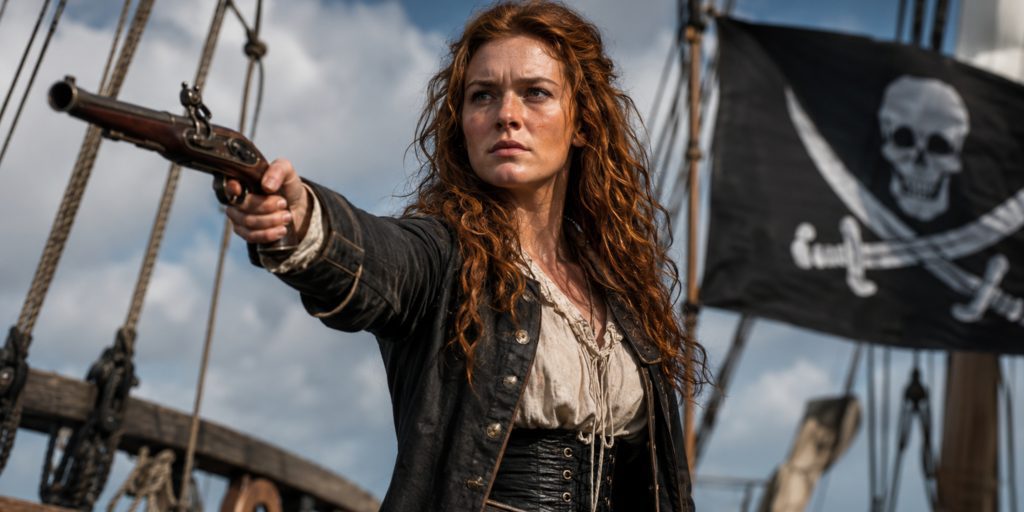
Born: Probably around 1697
Death: Unknown
Active: Caribbean
Known for: Sailing with Calico Jack and Mary Read
Anne Bonny has accumulated so much legend that separating the historical woman from the later pirate icon can become frustrating.
She was probably born in Ireland before moving with her family to the American colonies. She later became associated with Jack Rackham and joined his pirate crew.
Contemporary trial records confirm that Bonny and Mary Read were active members of Rackham’s crew rather than decorative passengers.
When Rackham’s vessel was captured in 1720, Bonny was taken to Jamaica and convicted of piracy.
She escaped immediate execution by declaring that she was pregnant, a legal plea known as “pleading the belly”.
After that, her fate becomes uncertain.
There are later stories claiming she returned to her family and lived for decades, but the evidence is far less secure than popular pirate biographies sometimes suggest.
How accurate is Black Flag?
The game gives Anne a much longer relationship with Edward and eventually makes her quartermaster aboard the Jackdaw. That is fictional.
Her association with Rackham and Read, however, is firmly historical.
The writers also deserve some credit for giving her an actual personality rather than treating “female pirate” as though that alone constitutes character development.
Historical accuracy: Moderate.
Mary Read
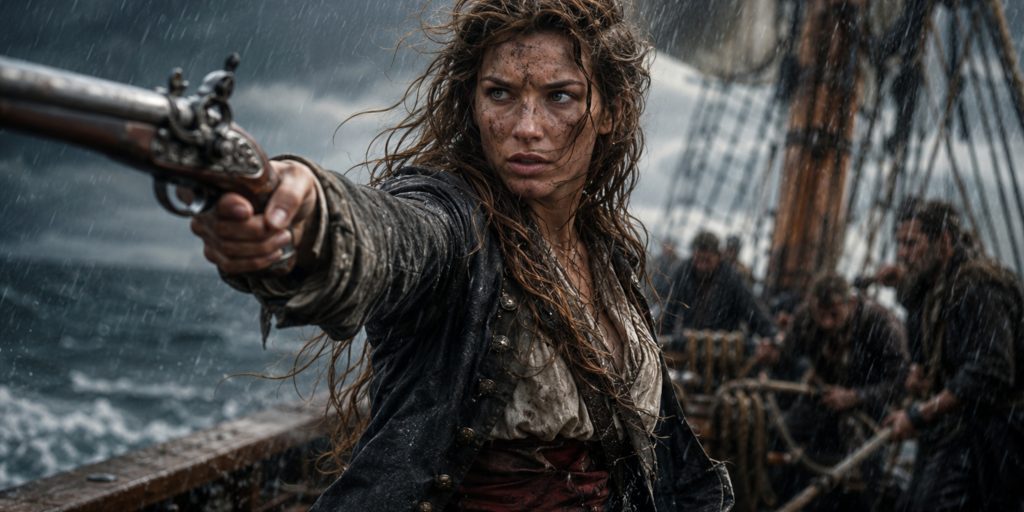
Born: Probably around 1685
Died: 1721
Active: Caribbean
Known for: Piracy alongside Anne Bonny
Mary Read’s historical life is another mixture of documented events and stories popularised by later accounts.
She reportedly spent parts of her earlier life disguised as a man and may have served aboard ships or in military environments before becoming a pirate.
What is certain is that she eventually joined Jack Rackham’s crew and sailed alongside Anne Bonny.
Read and Bonny became famous partly because accounts claimed they fought while other members of Rackham’s crew hid below deck during their capture.
Whether every detail of that story is trustworthy is debatable, but both women were certainly prosecuted for piracy.
Like Bonny, Read avoided immediate execution by declaring herself pregnant.
She died in prison in Jamaica in 1721.
James Kidd and Black Flag
This is where Ubisoft takes a major creative liberty.
In Black Flag, Mary initially presents herself as the male pirate James Kidd before revealing her identity to Edward.
James Kidd is essentially a fictional identity created for the game’s version of Mary Read.
The disguise draws upon traditional accounts of Read living as a man, but the Assassin storyline and her relationship with Edward belong to fiction.
Historical accuracy: Moderate.
Stede Bonnet
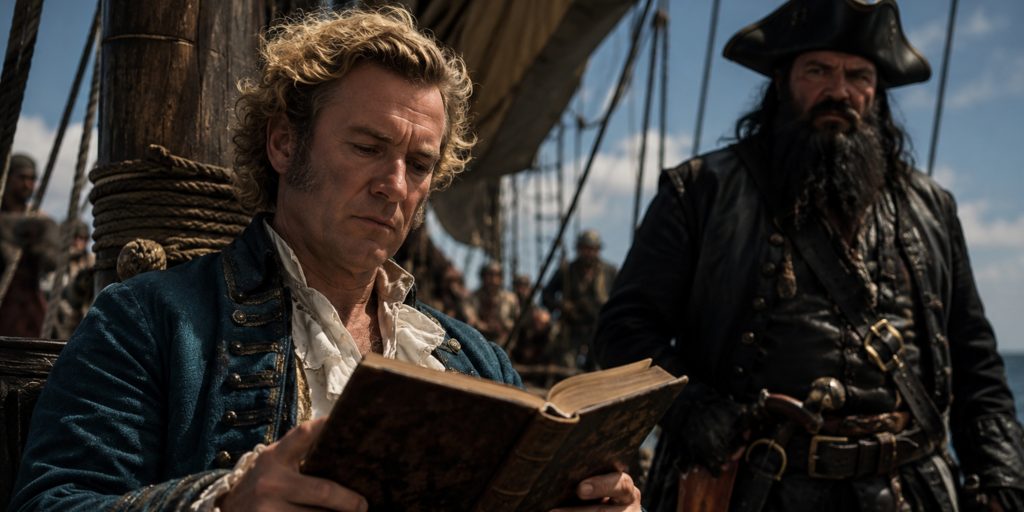
Born: 1688
Died: 10 December 1718
Nickname: The Gentleman Pirate
Active: Atlantic and Caribbean
Famous ship: Revenge
Stede Bonnet might have the strangest career of anyone on this list.
Unlike many pirates, Bonnet was a wealthy landowner before turning to piracy. Rather than capturing a vessel or working his way through a pirate crew, he reportedly purchased a ship, hired a crew and simply started being a pirate.
It was less a career progression and more an extremely expensive midlife crisis.
Bonnet later encountered Blackbeard, who effectively took control of his ship for a period. Their relationship was considerably less wholesome than many modern fictional versions suggest.
Bonnet eventually attempted to return to piracy after receiving a pardon. He was captured following the Battle of Cape Fear River in 1718.
He was hanged in Charleston later that year.
How accurate is Black Flag?
The game introduces Bonnet as an inexperienced merchant who gradually becomes fascinated with piracy.
That is a considerable simplification, but his gentlemanly background and unlikely transition into piracy are rooted in history.
His relationship with Edward Kenway is fictional.
Historical accuracy: Moderate.
Josiah Burgess
Josiah Burgess is considerably less famous than Blackbeard or Rackham, but he was also a historical pirate.
Burgess operated around the Bahamas and became associated with Nassau’s pirate community. Like several other pirates, he eventually accepted the royal pardon and moved towards legitimate activity.
Historical information about Burgess is much thinner than for some of the game’s bigger personalities, giving Ubisoft considerably more room to manoeuvre.
In Black Flag, Burgess becomes associated with Benjamin Hornigold and the Templars.
That particular career choice does not appear in the surviving historical record. Historians remain tragically unable to confirm eighteenth-century membership of secret organisations involving magical precursor technology.
Historical accuracy: Limited, although Burgess himself was real.
John Cockram
John Cockram was another genuine figure associated with Nassau’s pirate world.
He operated as a pirate and trader before accepting the royal pardon. He later became involved in hunting pirates, placing him among the former outlaws who switched sides once British authorities began seriously dismantling Nassau’s pirate community.
Cockram’s real historical importance is partly that he illustrates how fluid these identities could be.
Pirate, privateer, merchant and pirate hunter were not always completely separate careers. Men could move between them depending on wars, pardons, politics and whether the authorities were currently interested in hanging them.
In Black Flag, Cockram becomes another Templar-aligned enemy.
The pirate hunter part is historical. The Templar business, unsurprisingly, is not.
Historical accuracy: Moderate.
Who Was Not a Real Pirate?
This is where Black Flag cleverly mixes historical figures with invented characters.
Edward Kenway was fictional. There is no historical Welsh pirate who became an Assassin, fathered Haytham Kenway and spent his spare time climbing every church tower in the Caribbean.
Adéwalé was fictional, although his story draws upon the very real experiences of enslaved Africans, maroons and Black sailors in the Caribbean.
Other major characters, including Ah Tabai, El Tiburón and various Assassin and Templar figures, were created or substantially fictionalised for the game.
The important thing is that Ubisoft generally anchors these characters inside a recognisable historical framework.
The Real Pirates of Black Flag at a Glance
| Pirate | Historical figure? | Fate | Black Flag accuracy |
|---|---|---|---|
| Edward Thatch, Blackbeard | Yes | Killed in battle, 1718 | High |
| Benjamin Hornigold | Yes | Died in shipwreck, 1719 | Moderate to high |
| Charles Vane | Yes | Hanged, 1721 | Moderate |
| Jack Rackham | Yes | Hanged, 1720 | Moderate to high |
| Anne Bonny | Yes | Fate uncertain | Moderate |
| Mary Read | Yes | Died in prison, 1721 | Moderate |
| Stede Bonnet | Yes | Hanged, 1718 | Moderate |
| Josiah Burgess | Yes | Historical pirate and pardoned privateer | Limited |
| John Cockram | Yes | Became pirate hunter | Moderate |
| Edward Kenway | No | Fictional | Not applicable |
| Adéwalé | No | Fictional | Not applicable |
Why Nassau Was Perfect for Black Flag
The real masterstroke of Black Flag is Nassau.
Pirates really did establish themselves there during the early eighteenth century. The Bahamas were strategically positioned beside major shipping routes, while weak colonial government created ideal conditions for piracy.
By the 1710s, Nassau had become associated with figures including Hornigold, Blackbeard, Vane and Rackham.
Calling it the “Republic of Pirates” makes it sound more organised than it really was. There was no pirate constitution creating a Caribbean revolutionary state in the modern sense.
Still, pirates exercised enormous practical influence over Nassau.
Britain eventually decided enough was enough.
Woodes Rogers arrived as royal governor in 1718 carrying pardons for pirates willing to surrender and force for those who were not.
That decision effectively splits the pirate cast of Black Flag.
Hornigold accepted the new order. Vane resisted it. Blackbeard attempted retirement before returning to piracy. Rackham accepted a pardon before relapsing. Bonnet also received a pardon and subsequently returned to piracy.
Apparently early eighteenth-century career rehabilitation programmes had mixed results.
How Historically Accurate Are Black Flag’s Pirates?
Assassin’s Creed IV: Black Flag is historical fiction, not a documentary, and treating every scene as evidence would produce some spectacularly bad history.
The chronology is compressed. Relationships are invented. Edward Kenway is inserted into historical events. The Assassins and Templars reshape political motivations, and documented events are regularly adjusted to serve the story.
Yet the game gets something important right.
Its pirates are not portrayed simply as permanently drunk treasure hunters shouting about pieces of eight.
Hornigold is pragmatic. Vane is uncompromising. Blackbeard understands reputation. Rackham is ambitious without being particularly competent. Bonny and Read operate within a violent world that offered unusual opportunities but very little security.
Most importantly, the game captures the fragility of Nassau’s pirate experiment.
The Golden Age of Piracy was remarkably short.
The world these characters built was already collapsing around them.
What Black Flag Changes About the Golden Age of Piracy
The biggest distortion comes from making the pirates feel more politically unified than they really were.
The game’s characters regularly discuss freedom as though Nassau represents a coherent alternative to imperial government. There is some historical basis for seeing pirate crews as unusually participatory communities. Captains could be elected, loot was often distributed according to agreed shares, and shipboard rules could constrain a captain’s authority.
But pirates were not a single revolutionary movement.
They fought each other, betrayed each other, accepted pardons and switched allegiances whenever circumstances demanded it.
They were also participants in a brutal Atlantic world shaped by colonialism and slavery. Any romantic image of pirates as uncomplicated champions of liberty quickly runs into some unpleasant historical contradictions.
That messiness actually makes the real story more interesting.
Which Black Flag Pirate Is Most Historically Accurate?
Blackbeard probably receives the strongest treatment.
The game embraces his enormous reputation without reducing him completely to a cartoon. The idea that Thatch deliberately constructed the Blackbeard persona is one of the more interesting aspects of his historical career, and Black Flag makes excellent use of it.
Hornigold is another strong example because his decision to accept a pardon reflects a genuine divide within the Nassau pirate community.
Charles Vane is more exaggerated, while Mary Read and Anne Bonny inevitably inherit material from later legends because the historical evidence surrounding their personal lives is frustratingly limited.
That is the recurring problem with pirate history.
The people who produced the surviving records were usually merchants, governors, naval officers, newspaper writers and judges. Pirates themselves were not terribly considerate about leaving historians carefully catalogued archives.
Why the Real History Makes Black Flag Better
More than a decade after release, Black Flag remains one of the strongest historical settings Ubisoft has created for Assassin’s Creed.
Part of that comes from sailing the Caribbean with Blackbeard while your crew sings sea shanties. Obviously.
But beneath the spectacle is a surprisingly effective historical tragedy.
You already know that Nassau’s pirate community cannot last.
Blackbeard will die. Vane will hang. Rackham will hang. Read will die in prison. Hornigold will abandon piracy. British authority will return to the Bahamas.
Edward Kenway walks through the middle of that collapse as the fictional witness to a very real historical moment.
The game changes plenty of details, but it understands the basic shape of the period rather well. These pirates burned brightly because their particular world existed for only a few years.
And perhaps that is why Black Flag still works so well. Behind all the naval battles and treasure maps, you are watching the end of an era.
SEO Meta
SEO title: Every Real Pirate in Assassin’s Creed Black Flag Explained
Meta description: Discover every real pirate in Assassin’s Creed IV: Black Flag, from Blackbeard and Charles Vane to Anne Bonny, Mary Read and Calico Jack.
Suggested URL slug: real-pirates-assassins-creed-black-flag
Primary keyword: real pirates in Assassin’s Creed Black Flag
Secondary keywords: Black Flag real pirates, Blackbeard Black Flag, Anne Bonny Black Flag, Mary Read Black Flag, Charles Vane Black Flag, Calico Jack Black Flag, historical accuracy Assassin’s Creed Black Flag