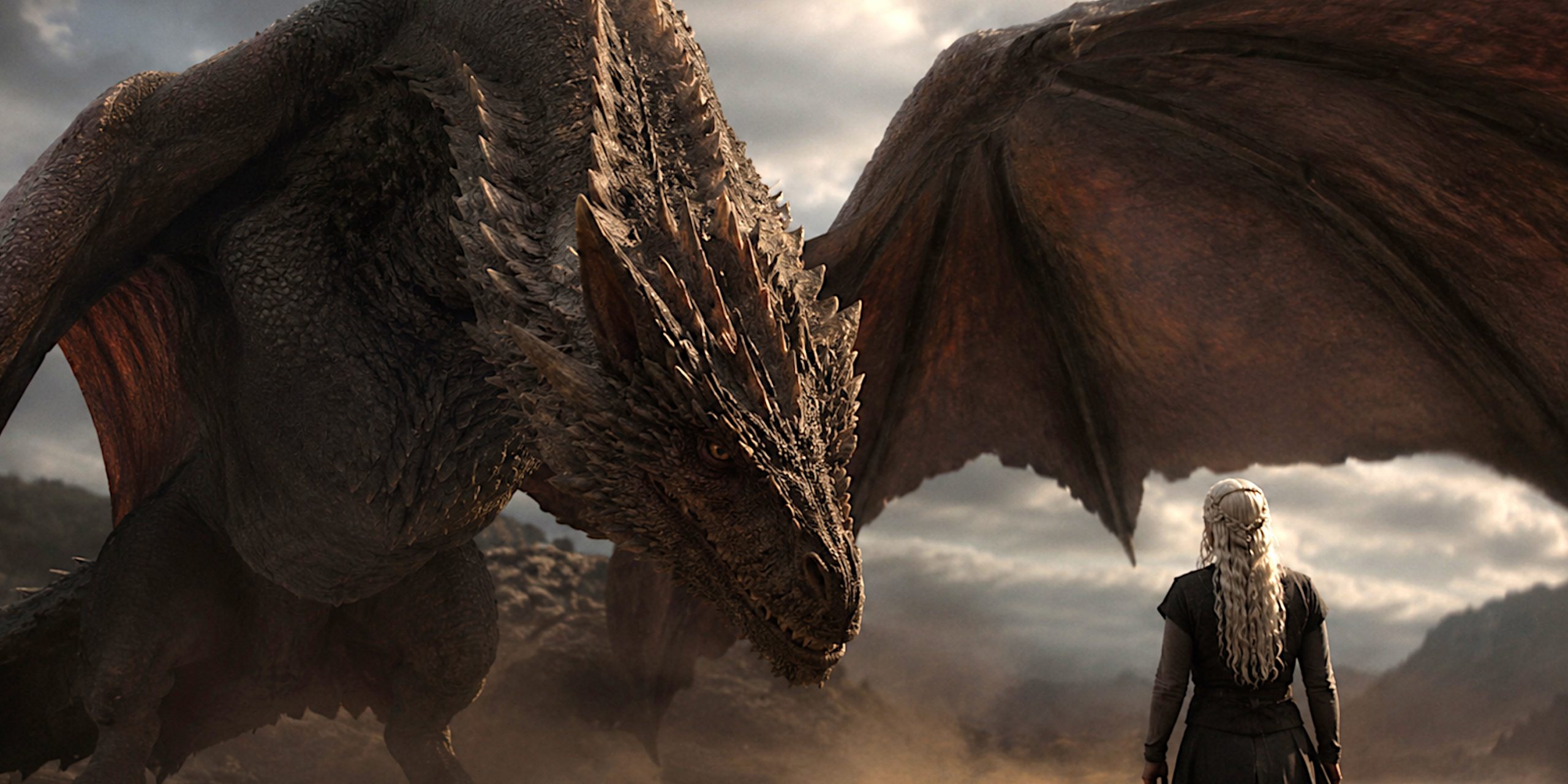
Sheepstealer is one of the strangest dragons in Fire & Blood, which is saying quite a lot when the competition includes an elderly cannibal and a dragon called the Blood Wyrm.
Unlike the great beasts raised around Dragonstone and the Dragonpit, Sheepstealer lived wild for decades. He had no interest in royal ceremony, dynastic prestige or looking impressive behind a Targaryen prince. He wanted sheep. Preferably freshly delivered.
That apparently simple appetite eventually allowed the low-born Nettles to achieve something extraordinary. She approached a dragon that had rejected or killed previous would-be riders and gradually persuaded him to accept her.
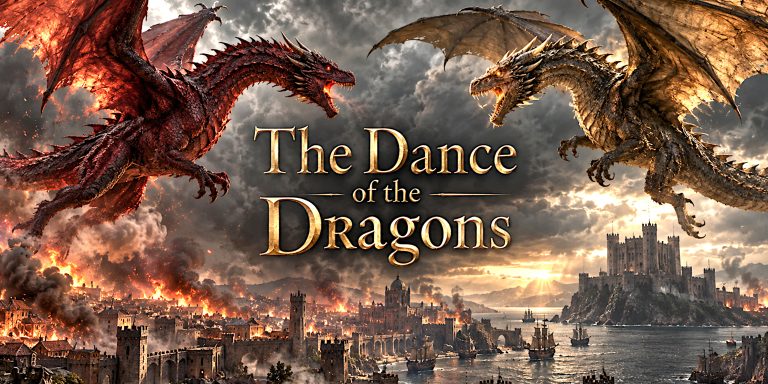
Their partnership became one of the most intriguing relationships of the Dance of the Dragons, and potentially one of the most important mysteries facing House of the Dragon.
Who Is Sheepstealer?
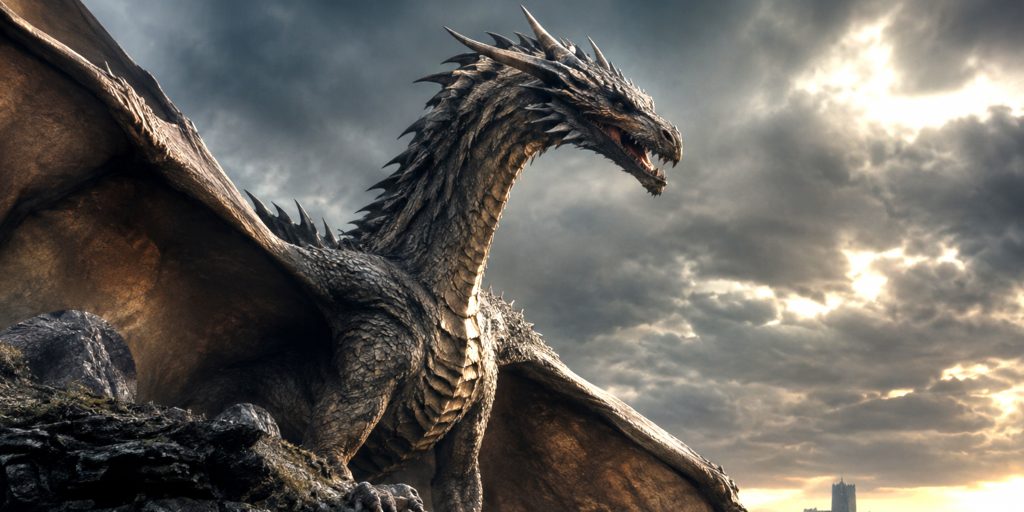
Sheepstealer was a wild dragon living on Dragonstone during the reign of House Targaryen.
He was never properly domesticated in the way dragons such as Caraxes, Syrax or Sunfyre were. According to Fire & Blood, he had been living wild since at least the reign of King Jaehaerys I and acquired his wonderfully literal name because of his habit of stealing sheep.
There is something almost refreshingly uncomplicated about that.
| Detail | Sheepstealer |
|---|---|
| Species | Dragon |
| Status | Wild dragon |
| Home | Dragonstone |
| Colour | Mud brown |
| Known rider | Nettles |
| Temperament | Fierce, wary and difficult to approach |
| Diet | Particularly fond of sheep |
| Historical period | Dance of the Dragons |
| Allegiance | Initially the Blacks through Nettles |
| Final fate | Unknown |
Sheepstealer was already a mature dragon by the outbreak of the Dance. He was large enough to be dangerous in battle, although he was neither as enormous as Vhagar nor as celebrated as Caraxes.
His real importance comes from the fact that he was wild.
What Did Sheepstealer Look Like?
George R. R. Martin describes Sheepstealer as an ugly, mud-brown dragon.
That immediately separates him from some of the more visually spectacular Targaryen dragons. Sunfyre is remembered for golden scales. Tessarion is the Blue Queen. Meleys is the Red Queen.
Sheepstealer looks like he has been living outdoors and eating livestock for several decades.
Which, to be fair, he has.
His brown colouring also fits his character surprisingly well. Sheepstealer is not a courtly dragon. He belongs to the rocky landscape of Dragonstone and seems more like a dangerous wild animal than an extension of Targaryen royal power.
That distinction matters.
Why Was Sheepstealer Wild?
Not every dragon associated with House Targaryen had a rider.
Several dragons lived wild on Dragonstone, with Sheepstealer being one of three particularly famous examples:
- Sheepstealer, eventually claimed by Nettles
- Grey Ghost, a shy dragon that largely avoided humans
- The Cannibal, an exceptionally aggressive wild dragon that was never successfully claimed
These creatures demonstrate that Targaryen control over dragons was never absolute.
Dragons could hatch without becoming bonded to riders. Some survived independently and established territories around Dragonstone.
Sheepstealer appears to have spent decades doing exactly that.
Rather than receiving food from dragonkeepers, he hunted for himself. Sheep became an especially convenient target, giving local shepherds one fairly obvious clue that a large dragon had moved into the neighbourhood.
How Dangerous Was Sheepstealer?
Very.
Sheepstealer was known to attack humans who came too close and had already killed would-be dragonriders before Nettles approached him.
During the Dance, Prince Jacaerys Velaryon called for people with Valyrian ancestry to attempt to claim the riderless dragons on Dragonstone. This became known as the Sowing of the Seeds.
It was not a particularly health-and-safety-conscious recruitment programme.
Numerous candidates attempted to approach dragons. Some were burned, mauled or eaten.
Sheepstealer proved particularly difficult because he was not accustomed to human handling. Unlike dragons raised around riders and dragonkeepers, he had spent most of his life treating humans as either irrelevant or potentially threatening.
Nettles needed another strategy.
How Nettles Claimed Sheepstealer
This is where Sheepstealer’s story becomes genuinely fascinating.
Nettles was a young woman of uncertain parentage who joined the attempts to claim dragons during the Dance. Rather than simply walking towards Sheepstealer and hoping that destiny would sort everything out, she studied his behaviour.
She discovered the obvious weakness.
Sheep.
Nettles began bringing Sheepstealer a freshly slaughtered sheep every morning.
She repeated the process day after day, gradually allowing the dragon to become accustomed to her presence. Eventually Sheepstealer permitted Nettles to approach him closely enough to form a bond.
It is one of the most practical pieces of dragon taming anywhere in Targaryen history.
No grand ceremony. No prophetic vision.
Breakfast.
Was Nettles Really a Dragonseed?
This question is much bigger than it initially appears.
The traditional assumption is that Nettles possessed some degree of Valyrian ancestry. The dragonseeds were generally believed to descend from Targaryens, Velaryons or other people of Valyrian blood who had lived around Dragonstone.
But Nettles’ ancestry is never conclusively established.
That creates a fascinating possibility.
What if she did not need Valyrian blood at all?
Her method of claiming Sheepstealer could suggest that dragon bonding is partly behavioural rather than purely magical or hereditary. Nettles patiently accustomed a wild animal to her presence until it trusted her.
That interpretation is not proven. Sheepstealer may still have sensed Valyrian ancestry in Nettles, and there are plenty of reasons to suspect that blood matters when bonding with dragons.
But George R. R. Martin leaves enough uncertainty to make the question uncomfortable for Targaryen mythology.
If ordinary people can potentially claim dragons, then the Targaryens’ greatest source of political legitimacy becomes considerably less exclusive.
Sheepstealer During the Dance of the Dragons
Once Nettles claimed Sheepstealer, she became one of the dragonriders supporting Queen Rhaenyra Targaryen.
She joined other dragonseeds including:
- Hugh Hammer on Vermithor
- Ulf White on Silverwing
- Addam Velaryon on Seasmoke
The arrival of these new riders dramatically strengthened Rhaenyra’s position.
For a brief period, the Blacks possessed a terrifying concentration of dragon power.
Unfortunately for them, handing enormous flying weapons to people whose loyalty you barely understand has certain drawbacks.
Hugh and Ulf eventually betrayed Rhaenyra.
Nettles did not.
Sheepstealer and the Hunt for Vhagar
One of Sheepstealer’s most important wartime roles came alongside Prince Daemon Targaryen and Caraxes.
Daemon and Nettles travelled through the Riverlands searching for Prince Aemond Targaryen and Vhagar.
Finding Vhagar was not exactly difficult in theory. She was the largest living dragon in Westeros and had a habit of leaving burned castles behind her.
Catching Aemond was another matter.
Daemon and Nettles operated together for some time, and rumours began spreading about the nature of their relationship.
Some sources presented Nettles as Daemon’s lover. Others suggested something closer to a father-daughter relationship.
As usual with Fire & Blood, the truth sits behind several unreliable narrators who are all absolutely certain they know what happened.
Why Rhaenyra Turned Against Nettles
Rhaenyra’s attitude towards the dragonseeds deteriorated after Hugh Hammer and Ulf White defected.
Their betrayal created an obvious fear. If two dragonseeds could change sides, perhaps the others could as well.
Nettles consequently became a target of suspicion.
Rhaenyra eventually ordered Lord Manfryd Mooton of Maidenpool to kill Nettles.
This presented Mooton with a minor logistical difficulty.
Nettles had a dragon.
Daemon learned of the order and allowed Nettles to escape. According to the account, their separation was deeply emotional. Nettles mounted Sheepstealer and flew away.
She was never reliably seen in the political struggles of Westeros again.
What Happened to Sheepstealer?
Nobody knows for certain.
After leaving Daemon, Nettles and Sheepstealer disappeared into the mountains of the Vale.
Later stories claimed that the pair lived in isolation around the Mountains of the Moon. Sheepstealer was reportedly seen flying above the region, while Nettles may have lived in a cave or remote mountain settlement.
The Burned Men, one of the Vale’s mountain clans, are sometimes connected to this story.
According to later traditions, the clan’s practice of burning themselves as a test of courage may have originated from encounters with Nettles and Sheepstealer.
It is a brilliant little historical possibility because it shows how a dragon could pass from political history into folklore.
Sheepstealer essentially disappears from the records.
For once in the Dance, disappearing was probably the sensible option.
Did Sheepstealer Survive the Dance?
Almost certainly for some period after Nettles fled.
Unlike many dragons involved in the Dance, Sheepstealer does not receive a confirmed death scene.
That makes him particularly interesting when considering the decline of dragons after the civil war.
Most of the great Targaryen dragons were killed during the conflict. Others died shortly afterwards. Within a generation, dragons had effectively disappeared from Westeros.
Yet Sheepstealer may have remained alive somewhere in the Vale.
How long he survived remains unknown.
It is entirely possible that he lived for years after the Dance before dying naturally somewhere beyond the reach of maesters and royal chroniclers.
How Big Was Sheepstealer?
George R. R. Martin does not provide a convenient measurement for Sheepstealer.
He was nevertheless an old and mature dragon by the Dance, having lived wild since the early reign of Jaehaerys I.
That should have made him considerably larger than younger dragons such as Vermax or Arrax.
He was not in Vhagar’s league. Very few dragons were.
A rough hierarchy would place Sheepstealer somewhere among the substantial adult dragons of the period rather than among either the young dragons or the true giants.
His wild lifestyle may also have influenced his physical condition. Sheepstealer hunted continuously rather than receiving food in captivity, which makes him particularly interesting from the perspective of how dragons developed outside Targaryen control.
Sheepstealer Compared With the Other Wild Dragons
| Dragon | Character | Claimed? | Fate |
| Sheepstealer | Aggressive but capable of becoming accustomed to humans | Yes, by Nettles | Unknown |
| Grey Ghost | Shy and elusive | No | Killed during the Dance |
| The Cannibal | Extremely aggressive | No | Unknown |
Sheepstealer occupies the middle ground.
Grey Ghost avoided humans.
The Cannibal apparently despised practically everything.
Sheepstealer was dangerous but understandable. He wanted food and learned to tolerate the person who consistently provided it.
That made him claimable.
Sheepstealer in House of the Dragon
Sheepstealer’s television storyline is one of the areas where HBO’s House of the Dragon has made significant changes from Fire & Blood.
The series connects Sheepstealer with Rhaena Targaryen, who discovers evidence of a wild dragon while in the Vale.
This is a major departure from the book because Sheepstealer’s canonical rider is Nettles.
The change potentially merges elements of Nettles’ story with Rhaena’s television storyline. Exactly how far the adaptation intends to take that remains one of the major questions surrounding the later seasons.
It could significantly alter several relationships, particularly the story involving Daemon.
For book readers, this is not a minor character shuffle. Nettles is important because she exists outside the normal structures of Targaryen privilege. Removing or substantially rewriting her changes one of the more interesting questions Martin raises about who actually has the right, or ability, to ride a dragon.
Could Rhaena Claim Sheepstealer?
The television version certainly appears to be moving in that direction, although the precise outcome depends on how the adaptation develops the storyline.
Rhaena has impeccable Valyrian ancestry but lacks a dragon during this stage of the story.
Giving her Sheepstealer would therefore create a very different dynamic from the book.
Nettles approaches Sheepstealer as an outsider who earns his trust through patience and observation. Rhaena would approach him as a Targaryen who has spent much of her life feeling inadequate because she does not possess a dragon.
Both stories can work.
They simply mean very different things.
Personally, I find the Nettles version more interesting because it challenges the rules of the world. Rhaena claiming Sheepstealer would instead make the story more directly about identity, inheritance and finally achieving something she has desperately wanted.
The question is whether the television adaptation can preserve Sheepstealer’s genuinely wild nature while making that change.
Why Sheepstealer Matters
Sheepstealer is easy to overlook beside dragons such as Vhagar, Caraxes and Vermithor.
Yet his story raises some of the biggest questions about dragons in Westeros.
He proves that dragons can survive outside direct Targaryen control. His relationship with Nettles complicates assumptions about dragonriding. His survival potentially extends beyond the catastrophic destruction of the Dance.
Most importantly, Sheepstealer feels like an animal rather than a heraldic symbol.
Nettles does not command him because a family tree says she should. She watches him, learns what he wants and builds trust.
Whether Valyrian blood was also required remains deliberately unresolved.
That uncertainty is exactly what makes the pair so interesting.
Sheepstealer FAQ
Who rode Sheepstealer?
In Fire & Blood, Sheepstealer was claimed and ridden by Nettles during the Dance of the Dragons.
Why was he called Sheepstealer?
He regularly hunted and ate sheep around Dragonstone.
What colour was Sheepstealer?
He was described as mud brown.
Was Sheepstealer bigger than Vhagar?
No. Vhagar was considerably larger and was the greatest living dragon during the Dance.
Did Sheepstealer die in the Dance?
There is no confirmed account of his death during the war.
Where did Sheepstealer go?
Nettles and Sheepstealer fled towards the Vale and were later associated with the Mountains of the Moon.
Is Sheepstealer in House of the Dragon?
The television adaptation has introduced a wild dragon in the Vale associated with Sheepstealer’s storyline and has connected that plot with Rhaena Targaryen.
Does Rhaena ride Sheepstealer in the book?
No. Nettles is Sheepstealer’s rider in Fire & Blood. Rhaena’s book storyline is different.
Takeaway
Sheepstealer might have one of the best lives of any dragon involved in the Dance.
He spends decades living wild, terrorises the local sheep population, reluctantly befriends one human, gets dragged into a civil war and then apparently decides he has had enough of Targaryen politics.
Understandable.
Behind the slightly amusing name, however, sits one of George R. R. Martin’s more interesting pieces of dragon lore. Sheepstealer challenges the idea that dragons naturally belong to the Targaryens. His relationship with Nettles suggests that patience, familiarity and animal behaviour may matter alongside blood and magic.
And then both of them disappear.
Considering what happens to almost everyone else during the Dance, vanishing into the mountains with your dragon starts to look less like a mystery and more like excellent judgement.