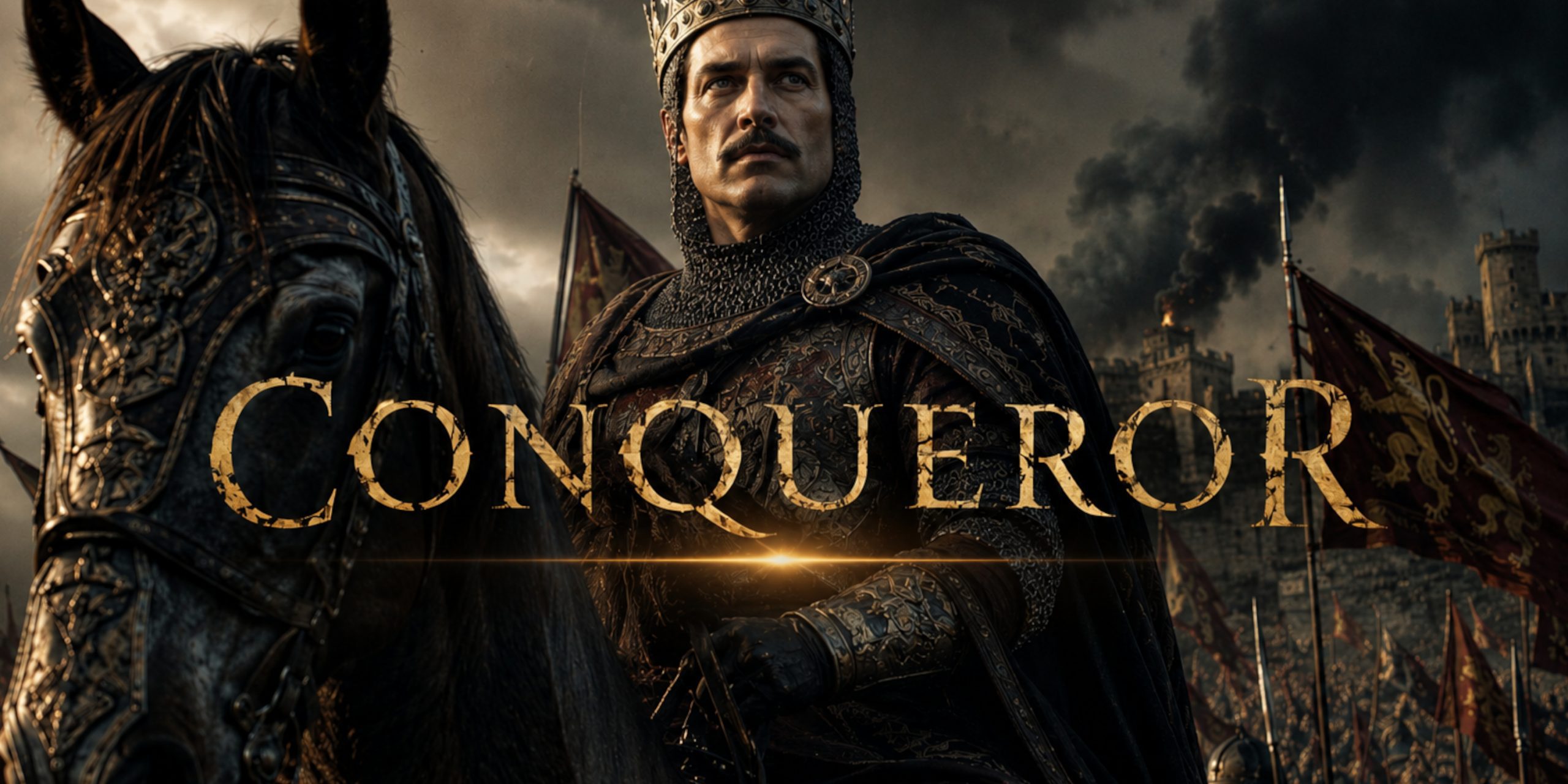
Few rulers altered the direction of a country as completely as William the Conqueror. Born as the illegitimate son of a Norman duke, mocked by rivals and surrounded by enemies, he somehow fought his way from a vulnerable child ruler to one of the most powerful monarchs in medieval Europe.
The Norman Conquest of 1066 was not simply a change of kings. It transformed England’s aristocracy, language, castles, military organisation, land ownership and relationship with continental Europe. For historians, William remains a fascinating contradiction. He was a brilliant strategist, an organiser of rare ability and a ruthless conqueror capable of extreme brutality.
Admiring his achievements does not require ignoring the destruction left behind. Medieval kings rarely won popularity contests, and William was playing on the hardest difficulty setting.
Early Life: From Bastard Duke to Survivor
William was born around 1028 in Falaise, Normandy. He was the son of Duke Robert I of Normandy and Herleva, a woman traditionally described as the daughter of a tanner.
His illegitimacy earned him the nickname “William the Bastard”, a label used frequently by his enemies. When his father died returning from pilgrimage in 1035, William inherited Normandy as a child.
The result was almost immediate chaos.
Norman nobles fought for influence, assassinations became common and several of William’s guardians were murdered. These early years shaped his character. He learned that power depended on loyalty, military strength and decisive action.
By his teenage years, William was already fighting to keep his duchy.
Rise as Duke of Normandy
William’s major breakthrough came at the Battle of Val-ès-Dunes in 1047, where he defeated rebellious Norman nobles with support from King Henry I of France.
After securing his rule, William strengthened Normandy by:
- Reducing the independence of rebellious lords
- Rewarding loyal knights with land
- Expanding castle networks
- Developing a powerful cavalry force
- Encouraging religious reform through Norman monasteries
Normandy became one of the most disciplined military powers in western Europe.
William’s marriage to Matilda of Flanders around 1050 also strengthened his political position. Their partnership appears to have been unusually stable for the period, which in medieval royal marriages was almost an achievement worthy of a medal.
Claim to the English Throne
The crisis that made William famous began with the death of Edward the Confessor in January 1066.
William argued that Edward had promised him the English throne years earlier. He also claimed that Harold Godwinson, England’s most powerful noble, had sworn an oath supporting his succession.
Harold was crowned King Harold II instead.
Whether William’s claim was legally convincing remains debated. Medieval succession was often less about paperwork and more about who could gather enough warriors to enforce their argument.
William chose the traditional medieval solution. He prepared an invasion.
Battles and Military Acumen
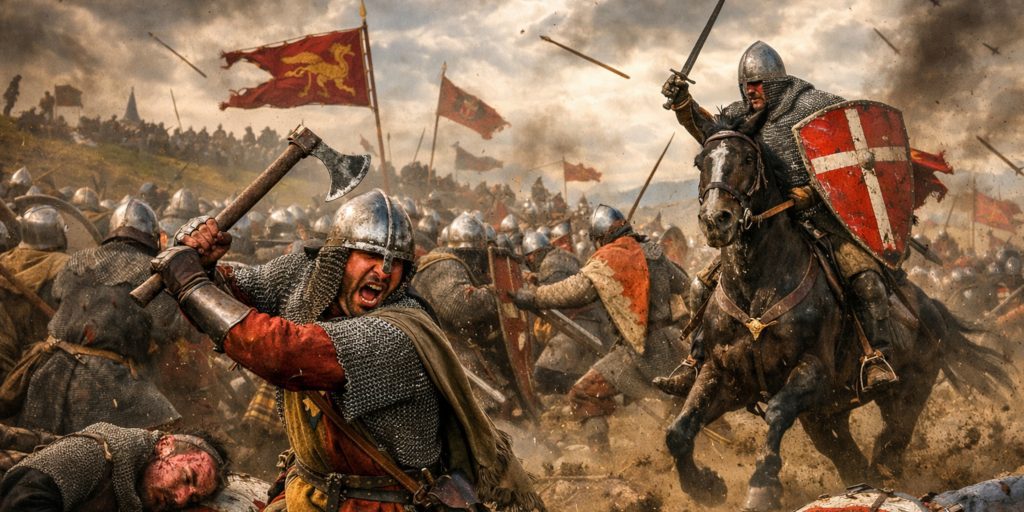
William was not simply lucky. His military record shows patience, organisation and the ability to adapt under pressure.
Battle of Val-ès-Dunes (1047)
Opponent: Rebel Norman barons
Importance:
William secured control of Normandy and proved he could survive against experienced rivals.
His success allowed him to begin transforming Normandy from a divided territory into a military powerhouse.
Battle of Mortemer (1054)
Opponent: King Henry I of France
William’s commanders defeated French forces attempting to weaken Normandy. The victory demonstrated that Normandy could challenge larger neighbours.
Battle of Varaville (1057)
William used timing and terrain brilliantly, attacking part of the French army after it became separated while crossing a river.
This showed one of his greatest qualities as a commander. He rarely rushed into a fight unless the situation favoured him.
Battle of Hastings (1066)
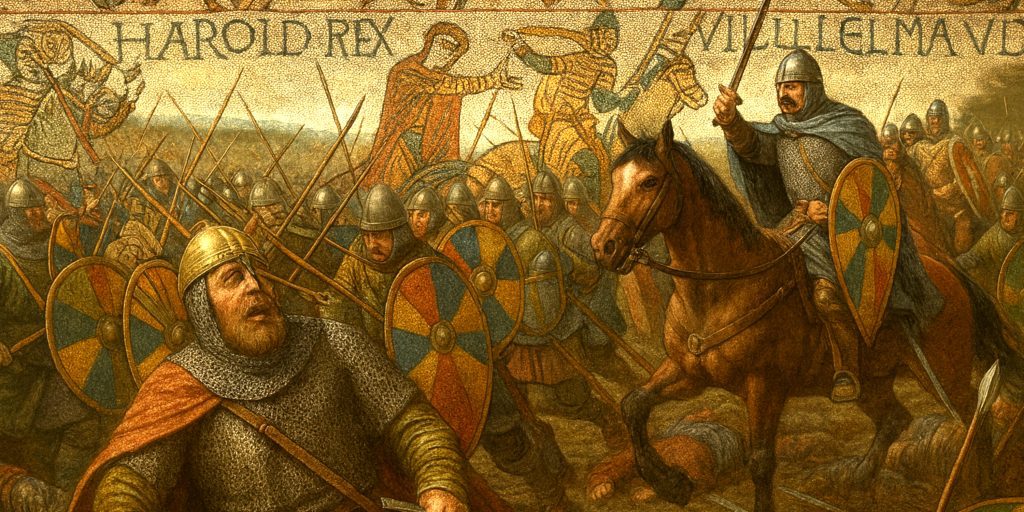
Opponent: King Harold II of England
Hastings remains William’s defining battle.
His army included:
- Norman heavy cavalry
- Infantry
- Archers and crossbowmen
- Breton and French allies
The Anglo-Saxon shield wall initially resisted repeated attacks. William responded with changing tactics, including controlled retreats that encouraged sections of Harold’s army to break formation.
After hours of fighting, Harold was killed and the English army collapsed.
Hastings was not a simple cavalry victory. It was a long, exhausting contest won through persistence, command discipline and tactical flexibility.
William as a Military Leader
William’s strengths included:
Strategic Planning
The invasion of England required:
- Building a fleet
- Gathering international allies
- Supplying thousands of soldiers
- Waiting for favourable weather conditions
- Maintaining morale
The organisation behind the conquest was arguably as impressive as the battlefield victory itself.
Psychological Warfare
William understood symbolism.
After Hastings, he built castles across England, including the earliest phases of the Tower of London. These were defensive structures but also political statements carved in stone.
The message was clear: Norman rule was permanent.
Ruthlessness
William’s harshest campaign was the Harrying of the North from 1069 to 1070.
After rebellions in northern England, Norman forces devastated large areas, destroying settlements and food supplies.
Even medieval writers were shocked by the scale of destruction.
Arms and Armour of William the Conqueror’s Era
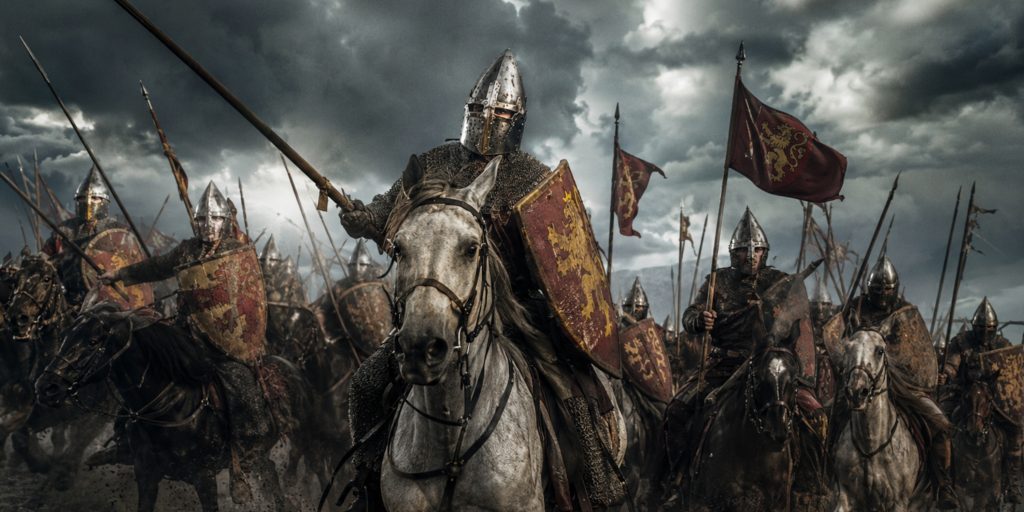
The Norman army represented some of the finest military equipment of the 11th century.
Armour
Mail Hauberk
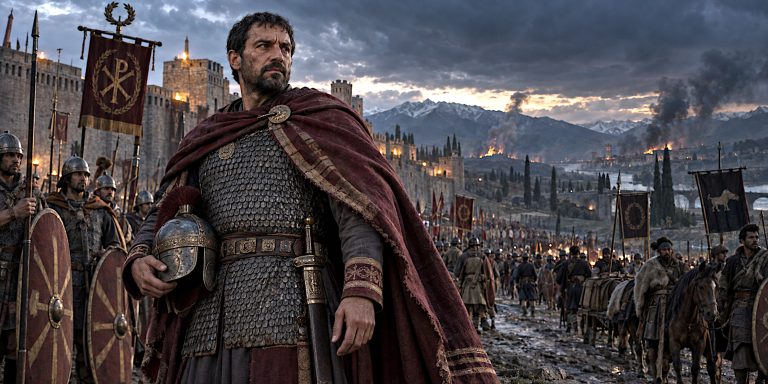
William and his elite warriors wore mail armour consisting of thousands of linked iron rings.
Features:
- Knee-length protection
- Split design for riding
- Defence against sword cuts
- Often worn over padded garments
Mail was expensive and represented elite warrior status.
Helmet
Norman warriors typically used nasal helmets.
Features:
- Conical iron construction
- Nose guard protection
- Improved deflection against strikes
The famous Bayeux Tapestry shows William and his knights wearing this style.
Shield
Norman knights used kite shields.
Advantages:
- Protected more of the body while mounted
- Covered the vulnerable left side
- Worked effectively with cavalry tactics
Swords and Weapons Used by William’s Forces
Norman Knightly Sword
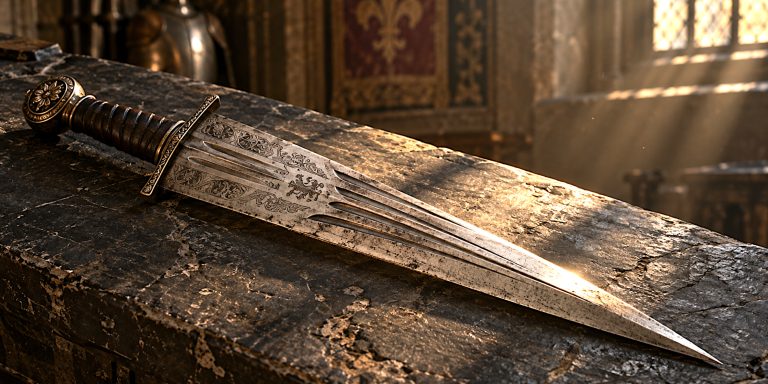
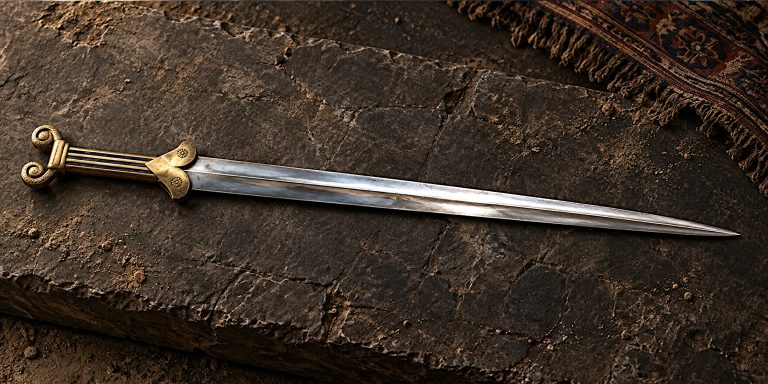
The classic Norman sword was a direct ancestor of the medieval arming sword.
Typical features:
- Double-edged blade
- Around 70 to 80 cm blade length
- Straight crossguard
- One-handed grip
- Designed for cutting and thrusting
These swords were status symbols as much as battlefield weapons.
Lance
The lance was the key weapon of Norman cavalry.
Early Norman riders used both:
- Overarm throwing techniques
- Underarm couched attacks
The full couched lance charge developed more strongly in later medieval warfare, but William’s cavalry helped push mounted combat forward.
Spear
The spear remained the most common weapon.
Used by:
- Infantry
- Lower-ranking soldiers
- Mounted warriors
Axe
Although associated strongly with the Anglo-Saxons, axes were also used by some Norman fighters.
Castles and Transformation of England
One of William’s greatest military innovations in England was the rapid construction of castles.
Important Norman castles included:
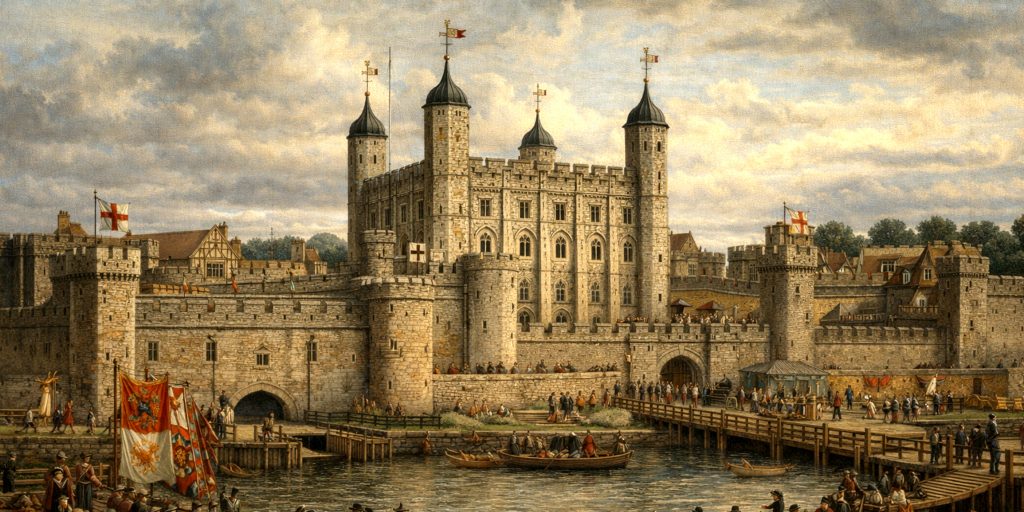
- Tower of London
- Warwick Castle
- Windsor Castle
- York Castle
- Norwich Castle
Many began as wooden motte-and-bailey structures before later being rebuilt in stone.
The speed of construction was extraordinary. William understood that winning a battle was easier than controlling a conquered kingdom.
The Domesday Book
In 1086 William ordered one of medieval Europe’s most ambitious administrative projects, the Domesday Book.
It recorded:
- Land ownership
- Resources
- Settlements
- Livestock
- Tax obligations
For historians, it is an incredible survival. Few rulers before William created such a detailed snapshot of their kingdom.
It was essentially an 11th-century database, just with more monks and fewer loading errors.
Latest Archaeology and Discoveries
Archaeology continues to refine our understanding of William’s world.
Battle of Hastings Landscape
The exact details of the battlefield remain debated. Archaeologists continue examining the area around Battle Abbey, looking at terrain, settlement evidence and possible battlefield material.
Large numbers of weapons have not been discovered, which is common for medieval battlefields because valuable iron was usually collected afterwards.
Norman Castles
Excavations at Norman castle sites reveal:
- Early timber defences
- Construction methods
- Domestic buildings
- Military organisation
Research has shown how quickly the Normans established control after 1066.
Norman Military Equipment
Finds across Britain and Normandy have provided examples of:
- Sword fittings
- Mail fragments
- Spearheads
- Arrowheads
- Horse equipment
These discoveries help reconstruct the appearance and fighting methods of William’s army.
Where to See Artefacts Connected to William the Conqueror
Bayeux Museum, France
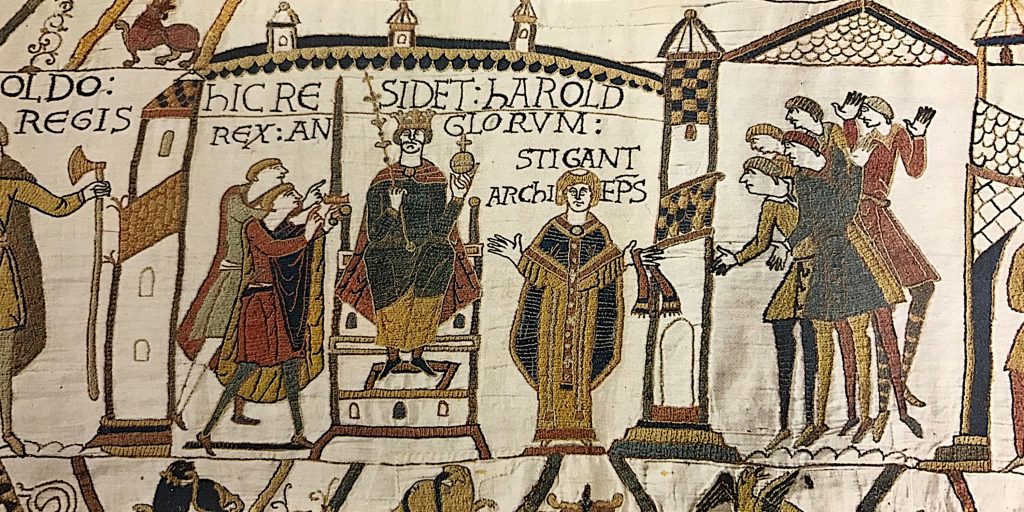
Home of the Bayeux Tapestry, the most famous visual source for the Norman Conquest.
Highlights:
- Norman armour depictions
- Battle scenes
- Ship construction
- Cavalry tactics
Although it is Norman propaganda, it remains one of the greatest medieval sources ever created.
Tower of London, England
William ordered the construction of the White Tower after his conquest.
Visitors can see:
- Norman architecture
- Later royal armour collections
- The physical symbol of Norman power in England
Battle Abbey, East Sussex
Built near the traditional site of the Battle of Hastings.
The site explores:
- The 1066 campaign
- Battlefield landscape
- Norman rule after conquest
British Museum, London
Contains extensive collections from the Anglo-Saxon and Norman periods, including:
- Weapons
- Jewellery
- Coins
- Manuscript material
Death and Legacy
William died in 1087 after being injured during a campaign in France.
His legacy is enormous:
- England received a new ruling elite
- French vocabulary entered English society
- Castle building expanded dramatically
- Feudal structures developed further
- England became more connected to European politics
He was not a gentle reformer or a heroic liberator. He was a medieval warlord with exceptional ability, enormous ambition and a willingness to use overwhelming force.
From a historian’s perspective, William is fascinating because he achieved something almost impossible. He crossed the sea, defeated an established kingdom and created a political order that shaped England for centuries.
Few conquerors leave a mark so deep that people are still arguing about them nearly a thousand years later. William managed exactly that.of violence, ambition, and the indelible mark of a man who dared to seize a crown, and in doing so, changed the world.