The Battle of Bautzen in 1002 was not one of the largest clashes of the Middle Ages, but it was one of the most consequential for Central Europe. It marked the beginning of a prolonged German-Polish War between Bolesław I Chrobry, known as Bolesław the Brave, and the German king Henry II. At stake was control of Lusatia and the frontier territories between Poland and the Holy Roman Empire.
What makes Bautzen particularly fascinating is that it was as much a story of opportunism as warfare. In the political chaos following the death of Emperor Otto III, ambitious rulers across Europe saw chances to expand their influence. Few seized the moment more effectively than Bolesław.
The fortress of Bautzen became one of the earliest flashpoints in a conflict that would continue for years and reshape the political map of the region.
Background

The death of Otto III in 1002 created uncertainty throughout the Holy Roman Empire. Several candidates sought the German throne, while regional rulers manoeuvred for advantage.
Bolesław had been a close ally of Otto III and had enjoyed considerable prestige within the imperial system. When Henry II emerged as king, relations quickly deteriorated.
Bolesław occupied key territories including Meissen, Lusatia and Bautzen, claiming rights and influence established during Otto’s reign. Henry viewed these actions as a direct challenge to imperial authority.
Bautzen sat at a crucial crossroads linking German, Polish and Slavic lands. Whoever controlled the fortress controlled trade routes, military movement and political influence across the region.
Forces

Precise figures are not recorded in surviving sources, which is hardly unusual for the early eleventh century. Medieval chroniclers often had a remarkable talent for recording heroic deeds while forgetting to count the participants.
Polish Forces
Estimated strength: Several thousand warriors
Composition
- Heavy cavalry retainers of Bolesław
- Armoured noble warriors
- Infantry equipped with spears and shields
- Slavic tribal levies from allied territories
- Frontier garrison troops
Imperial and Local Defenders
Estimated strength: Unknown, likely several hundred to over a thousand
Composition
- Local garrison troops
- German armoured warriors
- Regional militia
- Castle defenders and retainers
Commanders
| Side | Commander | Role |
|---|---|---|
| Poland | Bolesław I Chrobry | Duke of Poland |
| Holy Roman Empire | Local Imperial Officials | Bautzen garrison command |
| Holy Roman Empire | Henry II (indirectly) | King of Germany |
Arms and Armour
Military equipment in 1002 reflected a transitional period between Viking Age warfare and the more heavily armoured knightly warfare of the High Middle Ages.
Polish Warriors
Weapons
- Spears
- Throwing spears
- Axes
- Knives and seaxes
- Bows
- Early knightly lances
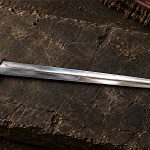
Sword Types
- Petersen Type X swords
- Petersen Type S swords
- Early medieval broad-bladed swords
- Carolingian swords imported through trade networks
Imperial Defenders
Weapons
- Spears
- Swords
- Axes
- Javelins
- Bows and arrows
Sword Types
- Carolingian arming swords
- Petersen Type X swords
- Frankish cavalry swords
Armour
| Equipment | Polish Forces | Imperial Forces |
|---|---|---|
| Mail Hauberk | Common among elites | Common among elites |
| Conical Helmets | Yes | Yes |
| Round Shields | Common | Common |
| Kite Shields | Rare, emerging | Rare, emerging |
| Quilted Armour | Common | Common |
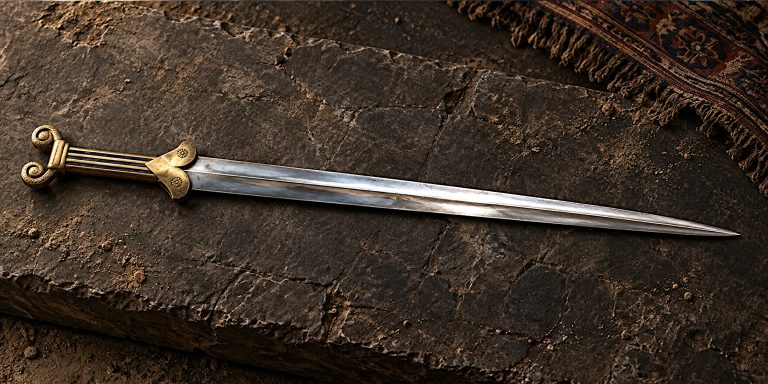
One interesting detail is that many swords on both sides were likely manufactured in similar workshops or descended from common Frankish traditions. The warriors might have been fighting for different rulers while carrying remarkably similar weapons.
The Battle and Capture of Bautzen
Rather than a conventional open-field battle, Bautzen was primarily a military seizure of a strategic fortress.
Bolesław moved quickly during the imperial succession crisis. He occupied Lusatia and advanced on Bautzen before Henry II could establish effective control over the region.
The fortress fell into Polish hands, whether through intimidation, negotiation, military pressure or a combination of all three. The surviving sources provide frustratingly few details about the exact fighting.
What is clear is that the capture was swift and successful. Bautzen became a cornerstone of Bolesław’s frontier defence system and an important bargaining chip in future negotiations with Henry II.
The occupation demonstrated Bolesław’s political instincts. He understood that castles and fortified towns often mattered more than battlefield victories.
Battle Timeline
| Date | Event |
|---|---|
| January 1002 | Otto III dies |
| Spring 1002 | Political instability spreads across the Empire |
| Mid 1002 | Bolesław advances into disputed territories |
| Summer 1002 | Bautzen occupied by Polish forces |
| Late 1002 | Henry II begins efforts to restore imperial control |
| 1003 onwards | Polish-German conflict intensifies |
| 1018 | Peace of Bautzen confirms Polish control of Lusatia |
Contemporary Quotes
The principal contemporary account comes from Thietmar of Merseburg, whose chronicle remains indispensable for understanding the period.
Writing about Bolesław, Thietmar frequently expressed admiration mixed with frustration, a combination many medieval chroniclers reserved for capable rivals.
One passage describes Bolesław as:
“A fox in cunning, a lion in strength.”
Although not specifically describing Bautzen itself, the observation captures the qualities that allowed Bolesław to seize the fortress during a moment of political weakness.
Thietmar also noted the ongoing tensions and territorial disputes that emerged after Otto III’s death, providing valuable context for the events of 1002.
Archaeology
Bautzen remains one of the most important medieval sites in eastern Germany.
Archaeological investigations have revealed evidence of:
- Early medieval fortifications
- Defensive earthworks
- Stone and timber construction phases
- Settlement layers dating to the Slavic period
- Artefacts associated with military occupation
Excavations have demonstrated that Bautzen was already a significant stronghold before Bolesław’s occupation. Its location overlooking important routes made it strategically valuable long before kings and dukes began arguing over it.
Finds from the wider Lusatian region include:
- Sword fragments
- Spearheads
- Arrowheads
- Horse equipment
- Mail armour fragments
- Ceramic assemblages linked to frontier communities
Unfortunately, no archaeological discovery can yet be directly linked to the specific events of 1002.
Why Bautzen Mattered
At first glance, the capture of a single fortress may seem minor compared with the great battles of medieval history.
Yet Bautzen became the centrepiece of two decades of conflict between Poland and the Holy Roman Empire.
Control of the fortress gave Bolesław:
- Access to Lusatia
- A forward military base
- Prestige among neighbouring rulers
- Leverage in negotiations with Henry II
The significance of Bautzen was ultimately confirmed in 1018 when the Peace of Bautzen formally recognised Polish control of Lusatia.
Few military seizures receive their own peace treaty sixteen years later.
Legacy
The events at Bautzen in 1002 marked the emergence of Poland as a major regional power.
Bolesław demonstrated that he could challenge imperial authority and successfully defend territorial gains. His actions laid the foundation for Poland’s rise during the early eleventh century and contributed to his later coronation as king.
For Henry II, Bautzen became an enduring symbol of unfinished business. Repeated campaigns sought to recover the lost territories, yet the fortress remained stubbornly beyond imperial control.
As a historian, I find Bautzen fascinating precisely because it was not a dramatic clash of thousands on an open battlefield. It was a reminder that medieval power often rested on castles, diplomacy and timing. Bolesław recognised an opportunity, acted decisively and changed the course of Central European history.
Sometimes the most important battles are the ones where a ruler arrives before everyone else has finished arguing about who is in charge.
Takeaway
The Battle of Bautzen in 1002 was a pivotal moment in the struggle between Poland and the Holy Roman Empire. Through a combination of military pressure, political calculation and opportunism, Bolesław the Brave secured one of the most important fortresses in the frontier lands.
Although overshadowed by larger medieval battles, Bautzen’s capture helped shape the balance of power in Central Europe for decades. Its legacy lived on through the wars that followed and the peace treaty that ultimately bore its name.