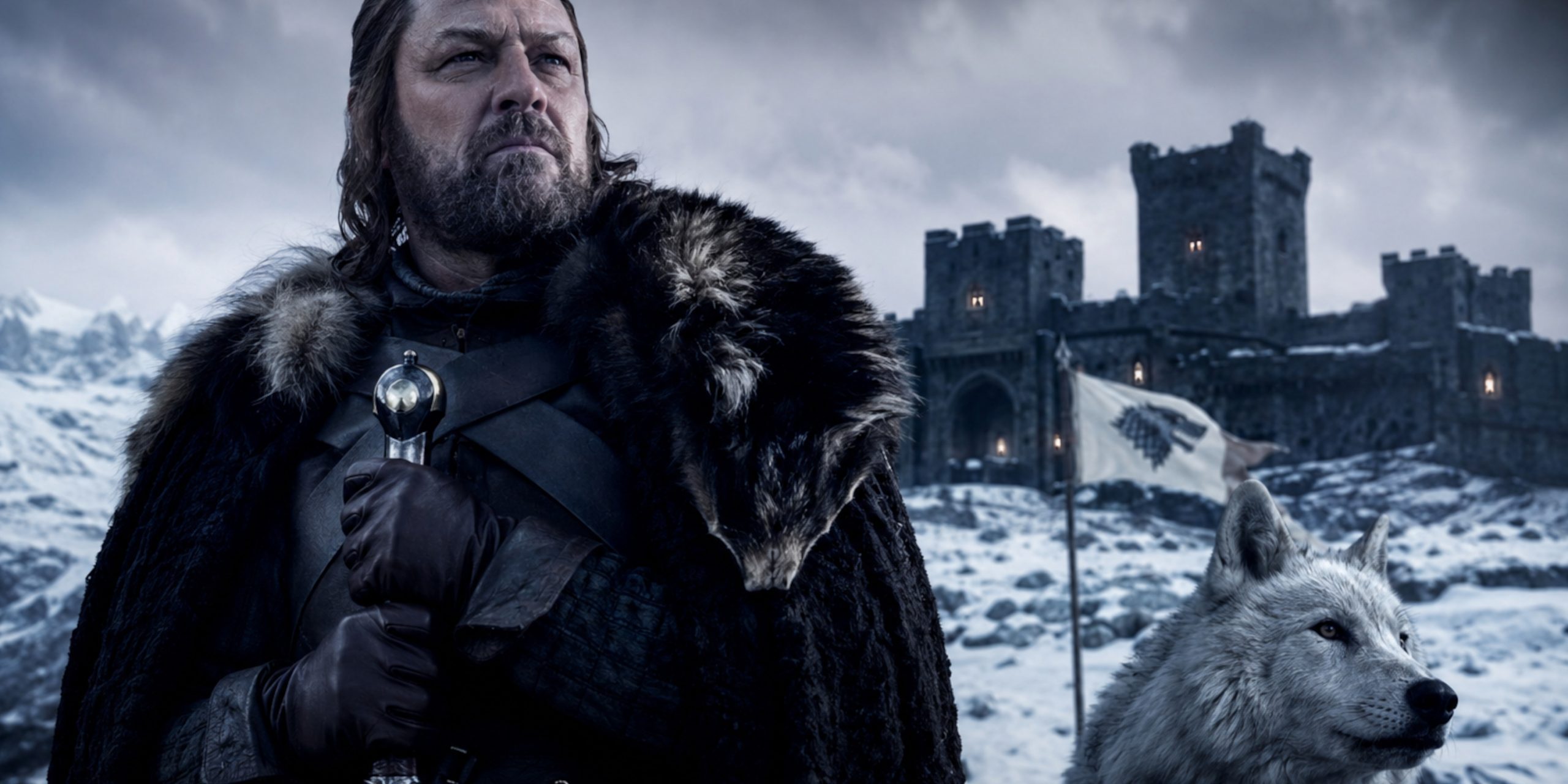
There is something weirdly comforting about House Stark. Maybe it is the snow. Maybe it is the giant wolves. Maybe it is the fact they are one of the few families in Westeros who occasionally behave like functioning human beings.
While most noble houses in Game of Thrones seem permanently one wine goblet away from betrayal, the Starks built their reputation on duty, honour, and surviving winters that would make most kingdoms simply give up and move south.
That reputation came at a cost.
The history of House Stark is not some clean heroic tale about noble rulers protecting the realm. It is centuries of brutal wars, political disasters, ancient magic, betrayals, executions, and enough family trauma to keep an entire generation of maesters employed.
Still, no house in Westeros feels more important to the identity of the series itself.
Who Are House Stark?
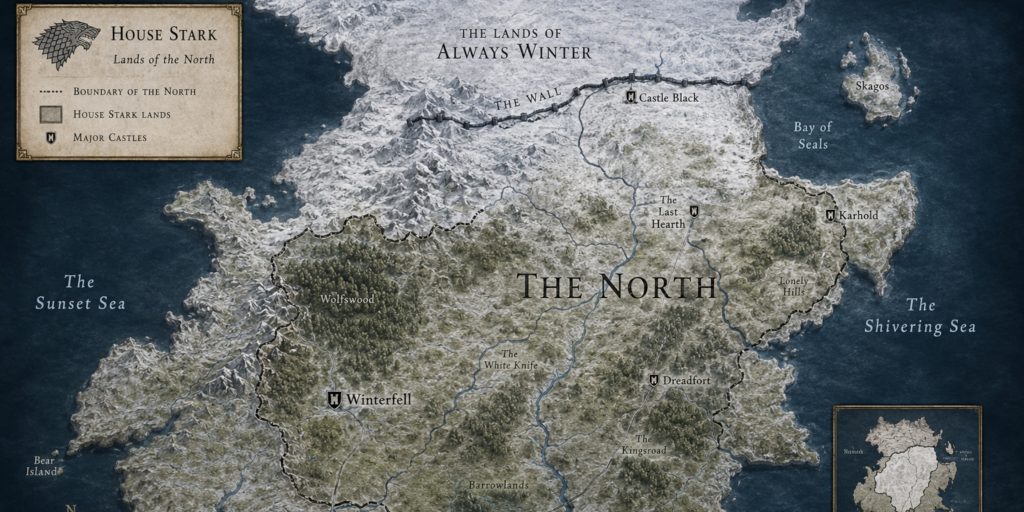
House Stark is the ancient ruling family of the North in the world of A Song of Ice and Fire and Game of Thrones. Their seat is Winterfell, one of the oldest castles in Westeros, and their sigil is the grey direwolf on a white field.
Their house words are famously simple:
“Winter is Coming.”
Which sounds dramatic at first until you realise it is also just practical northern weather forecasting.
Unlike many southern houses obsessed with tournaments, court politics, and looking expensive at banquets, the Starks built their identity around endurance. The North is massive, cold, sparsely populated, and often brutal to survive in. Stark rulers were expected to be hard people because the land itself demanded it.
They also trace their bloodline back thousands of years to the First Men, which gives the family a much deeper connection to ancient northern traditions and old magic than most southern nobles.
The Origins of House Stark
According to legend, House Stark was founded by Bran the Builder around 8,000 years before the events of Game of Thrones.
Yes, eight thousand years. Westerosi timelines are absolutely ridiculous sometimes.
Bran the Builder is credited with constructing:
- Winterfell
- The Wall
- Storm’s End, depending on which story you believe
The myths surrounding him blur the line between history and fantasy. Some tales suggest the Children of the Forest helped him use magic during construction. Others claim giants assisted in building the Wall.
Nobody fully knows what is true because most records from the Age of Heroes are basically half history book, half campfire story.
Still, the Starks emerged as the dominant rulers of the North during this era and slowly expanded their territory through warfare, alliances, and conquest.
They became known as the Kings of Winter.
The Kings of Winter
Before Aegon’s Conquest united Westeros, the Starks ruled the North as independent monarchs for thousands of years.
And honestly, they were not especially gentle about it.
The early Stark kings fought wars against:
- The Boltons
- Wildling kings beyond the Wall
- Marsh kings from the Neck
- Ironborn invaders
- Rival northern clans
The conflict with House Bolton became particularly infamous. The Boltons were ancient enemies of the Starks and had a deeply unsettling habit of flaying their opponents alive. Northern politics in Westeros really had no middle ground between “grim” and “deeply concerning”.
Eventually the Starks defeated and absorbed many rival kingdoms into northern rule.
One of the most important victories came when they conquered the Barrowlands and later brought the Dreadfort under Stark authority. Rather than exterminating the Boltons completely, the Starks allowed them to remain as bannermen.
This decision would age terribly.
Winterfell and the Heart of the North
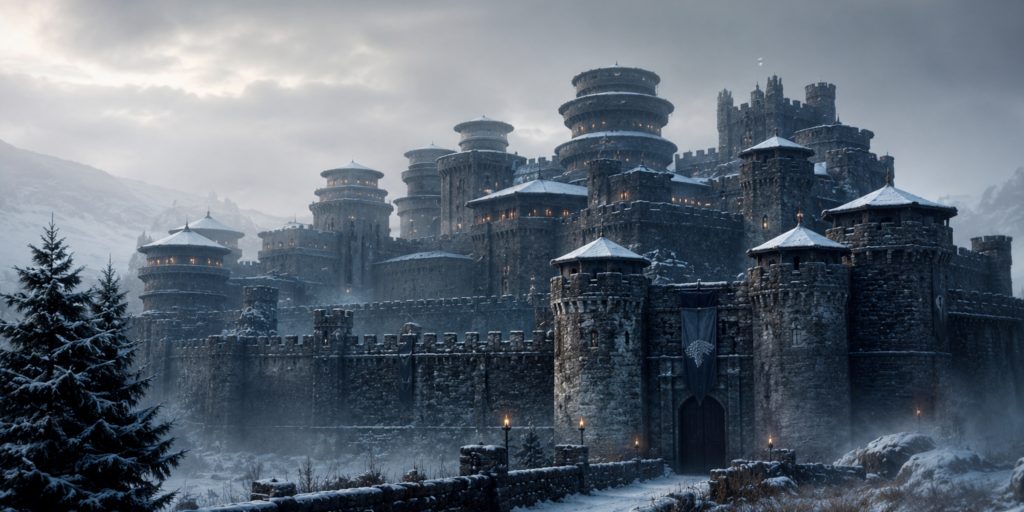
Winterfell became more than a castle. It evolved into the political and spiritual centre of the North.
Unlike southern castles built mainly for prestige, Winterfell feels ancient and functional. The hot springs running beneath the fortress keep parts of it warm during winter, which is one of those details George R. R. Martin added that quietly makes the setting feel real.
The castle contains:
- The Great Hall
- The crypts of the Stark kings
- The godswood
- Ancient defensive walls
- Hidden passages and tunnels
The crypts beneath Winterfell matter enormously in Stark history. Generations of kings and lords are buried there with iron swords laid across their tombs to supposedly keep restless spirits contained.
Which is either symbolic tradition or an enormous red flag.
The Starks also remained loyal to the Old Gods of the Forest long after much of Westeros converted to the Faith of the Seven.
That spiritual connection became increasingly important throughout the story.
Torrhen Stark and Aegon’s Conquest
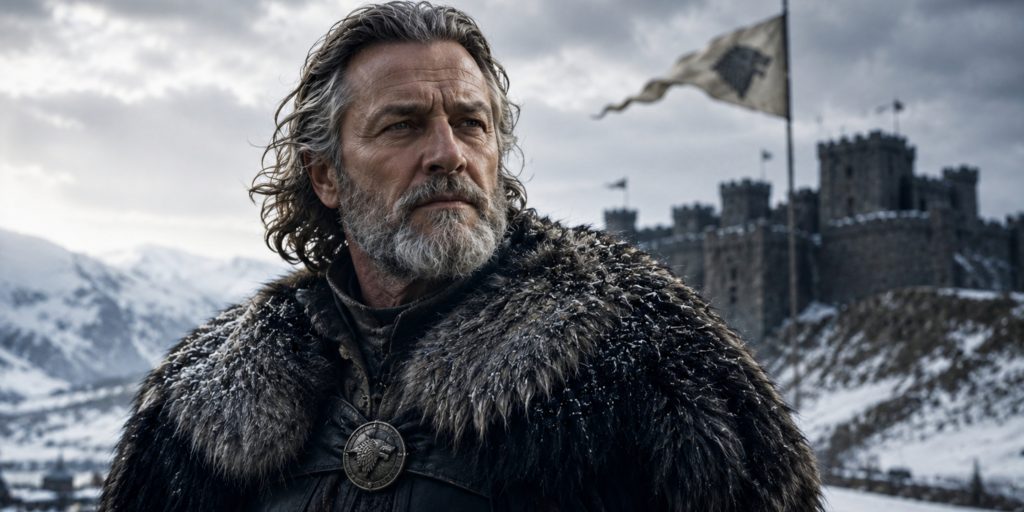
One of the defining moments in Stark history came during Aegon Targaryen’s invasion of Westeros.
Torrhen Stark marched south with northern armies prepared to resist the dragonlords. Then he saw the dragons.
At this point many kings probably realised warfare had changed forever in the same way medieval armies would react to suddenly seeing fighter jets.
Rather than sacrificing his people in a hopeless battle, Torrhen chose submission.
He bent the knee to Aegon and became known as:
“The King Who Knelt.”
Some northern lords viewed the decision as dishonourable. Others saw it as wise leadership. In truth, Torrhen likely saved the North from annihilation.
The Starks retained control of Winterfell and continued ruling as Wardens of the North under Targaryen authority.
House Stark During the Targaryen Era
For most of Targaryen rule, the Starks stayed relatively isolated from southern politics.
This was usually a smart move because southern politics in Westeros tend to resemble a travelling disaster.
Still, several major events drew the family into wider conflicts.
The Dance of the Dragons
During the Targaryen civil war known as the Dance of the Dragons, House Stark supported Queen Rhaenyra Targaryen.
Cregan Stark emerged as one of the most respected figures of the conflict. Late in the war he marched south with northern forces during the period known as the Hour of the Wolf.
Cregan basically arrived, looked around King’s Landing, realised everyone had collectively lost their minds, and started dispensing justice at alarming speed.
He became one of the most admired Stark rulers in the lore.
Robert’s Rebellion
Centuries later, House Stark became central to the rebellion that destroyed the Targaryen dynasty.
Rickard Stark and his son Brandon Stark were executed by the Mad King Aerys II in horrifying fashion. Their deaths pushed Eddard Stark and Robert Baratheon into open revolt.
The rebellion reshaped Westeros completely.
It also planted the seeds for nearly every major event in Game of Thrones.
Eddard Stark and the Fall of Honour

Ned Stark became the moral centre of Game of Thrones in its early story.
He believed in justice, honesty, loyalty, and responsibility.
Naturally, Westerosi politics destroyed him almost immediately.
After serving as Warden of the North for years, Ned travelled south to become Hand of the King to Robert Baratheon. There he uncovered the truth about the Lannister children’s parentage and attempted to act honourably.
This was his fatal mistake.
Ned underestimated how ruthless King’s Landing had become. He expected decency to matter in a system that rewarded manipulation and cruelty.
His execution shocked audiences because fantasy stories usually protect characters like Ned.
Game of Thrones absolutely did not.
His death shattered House Stark politically and triggered the War of the Five Kings.
The War of the Five Kings
Following Ned’s execution, Robb Stark was declared King in the North.
At first Robb looked unstoppable.
He defeated Jaime Lannister in battle, won major victories in the Riverlands, and inspired fierce loyalty among northern lords.
Then came the political mistakes.
Breaking his marriage pact with House Frey proved catastrophic. The Red Wedding became one of the most infamous betrayals in television and fantasy history.
The massacre effectively destroyed Stark power in the North.
For a time, it appeared House Stark itself might vanish completely.
The Surviving Starks

One reason House Stark remains so compelling is that the family survives through adaptation rather than conquest.
Each surviving Stark child evolves differently after the collapse of Winterfell.
Jon Snow
Though technically raised as a Stark bastard, Jon becomes one of the most important figures in the story.
His journey beyond the Wall reconnects the North to ancient threats long forgotten by southern rulers.
He also inherits many Stark traits:
- Duty
- Isolation
- Stubbornness
- Quiet leadership
Sometimes excessive brooding too, but nobody in Westeros has invented therapy yet.
Sansa Stark
Sansa transforms from a naive noble girl into one of the sharpest political minds in Westeros.
Her survival depends on learning how power truly functions.
By the end of the story she understands something Ned never fully accepted:
Good intentions alone do not protect anyone.
Arya Stark
Arya’s story becomes increasingly dark and strange as she trains with the Faceless Men.
Still, she retains her Stark identity beneath everything else. Her bond to family and vengeance drives nearly every decision she makes.
Bran Stark
Bran’s journey pulls House Stark back toward the mystical foundations of the North.
The old gods, greenseers, weirwoods, and ancient magic all reconnect through him.
His transformation into the Three-Eyed Raven changes the direction of the story entirely.
Direwolves and Stark Symbolism
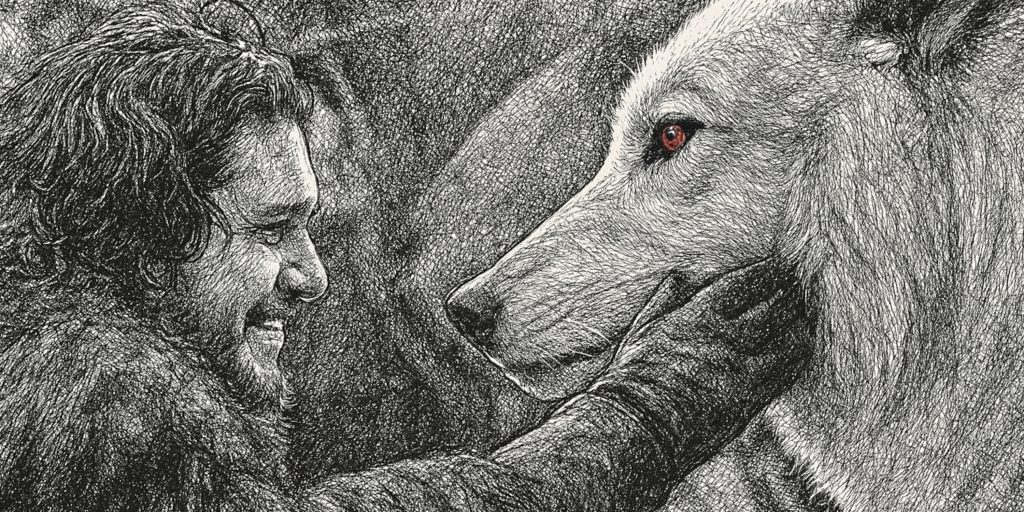
The direwolves found near Winterfell early in the story symbolise the Stark children themselves.
Each wolf reflects aspects of its owner’s personality and fate.
- Ghost mirrors Jon’s isolation
- Nymeria reflects Arya’s wild independence
- Lady represents Sansa’s lost innocence
- Summer embodies Bran’s spiritual connection
- Grey Wind reflects Robb’s role as a warrior king
The direwolves also reinforce how closely tied the Starks remain to the ancient North.
Unlike southern houses obsessed with heraldry and appearances, Stark identity feels primal and old.
There is always a sense that they belong to something deeper than politics alone.
An enduring House in Westeros
The Starks survive because they represent stability in a world built on chaos.
They are not perfect rulers. Several Stark leaders make terrible decisions throughout history. Honour repeatedly places them at a disadvantage.
But people trust them.
That matters.
In Westeros, where alliances collapse every five minutes and noble families casually poison each other during weddings, trust becomes rare currency.
House Stark also embodies one of the core themes of the series:
Power means very little if you lose your humanity trying to keep it.
Even after betrayal, war, exile, and near extinction, the Starks retain their identity. They bend without fully breaking.
That resilience is why audiences remain attached to them long after the series ends.
The Legacy of House Stark
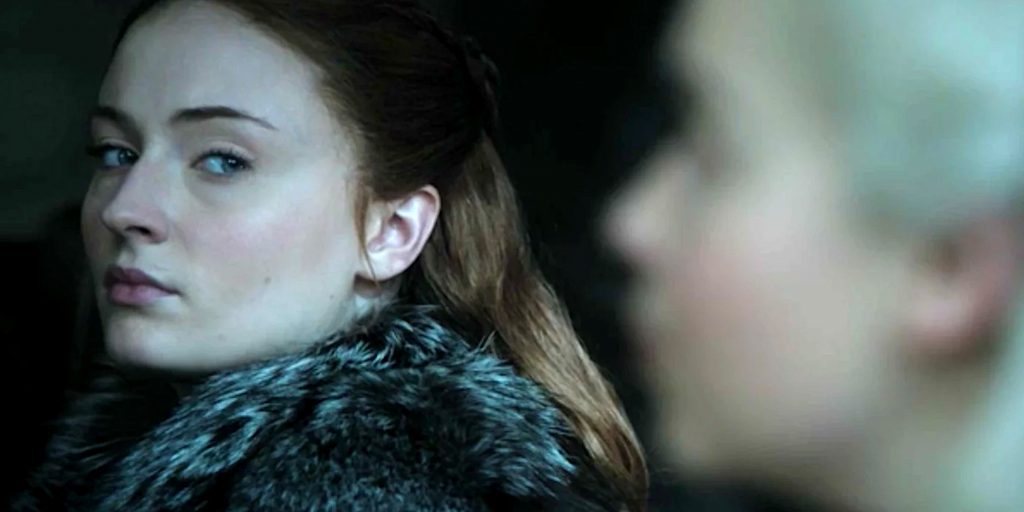
By the conclusion of Game of Thrones, House Stark once again stands at the centre of Westeros.
The surviving family members shape the future of both the North and the wider realm in very different ways.
Their story begins with ancient kings battling in frozen forests and ends with a shattered kingdom trying to rebuild after catastrophe.
Not bad for a family whose main slogan is essentially a weather warning.
More than dragons or thrones, House Stark became the emotional backbone of the franchise. Their history carries the themes that define the series:
- Family
- Memory
- Sacrifice
- Survival
- Identity
And underneath all the politics and warfare sits a simple northern truth:
Winter always comes eventually. The question is whether you are ready for it.