There are two kinds of people watching Spartacus. The first group is there for the political scheming, tragic betrayals, and surprisingly emotional character arcs. The second group just wants to see somebody get hit with a shield hard enough to leave orbit.
Honestly, both are valid.
One thing the series absolutely nailed was its arenas. They were not just random sand pits for sword fights. Each arena reflected status, power, Roman vanity, and sometimes complete chaos disguised as “civilisation”. The locations evolved alongside Spartacus himself. Early arenas feel cramped and personal. Later ones become theatrical blood factories where Rome practically turns murder into a public festival.
Here’s every major arena in Spartacus explained, including how they functioned in the story, what inspired them historically, and why some of them still look ridiculously cool years later.
The Ludus Training Arena, House of Batiatus

The first arena most viewers see is not technically a public arena at all. It is the training yard inside the ludus of Lentulus Batiatus in Capua.
This place becomes the emotional centre of the entire series.
At first glance it looks simple. Wooden barriers, packed dirt, weapon racks, angry trainers yelling at exhausted men. But the longer the show goes on, the more important this space becomes. Friendships are built here. Rivalries explode here. Half the cast nearly dies here before even reaching a public audience.
It also perfectly captures the grim reality of gladiator schools. Before the fame and spectacle, most gladiators spent their lives drilling endlessly under brutal discipline. The show exaggerates things for drama, naturally. Real Roman trainers probably did not monologue like Shakespearean crime bosses every ten minutes. Still, the atmosphere works.
The training arena also tells you everything about Batiatus as a character. He treats the place like an investment portfolio mixed with a casino. Every fighter is an asset. Every victory is currency.
Poor Barca just wanted some peace and quiet.
The Arena of Capua

This is the arena that truly launches Spartacus into fame.
Capua’s public arena becomes the series’ first major stage, and it absolutely matters because Capua itself was one of the great gladiatorial centres of Roman Italy. Historically, the city had a long association with gladiator schools. That part is grounded in reality.
The arena in the show feels intimate compared to later Roman spectacles. Crowds are close to the action. Nobles scream wagers from their seats like modern football fans after six beers and a controversial penalty decision.
What makes Capua important is symbolism. Spartacus begins as property here. He fights for survival, then for applause, then eventually for reputation. The crowd slowly transforms him from condemned outsider into celebrity warrior.
Which is deeply Roman, honestly.
The architecture leans heavily into sandstone textures, enclosed viewing tiers, and concentrated violence. Unlike the gigantic imperial arenas later in the series, Capua feels local and personal. Death here is entertainment, but also community ritual.
And yes, Ashur somehow survives far longer than common sense suggests.
The Arena at Pompeii
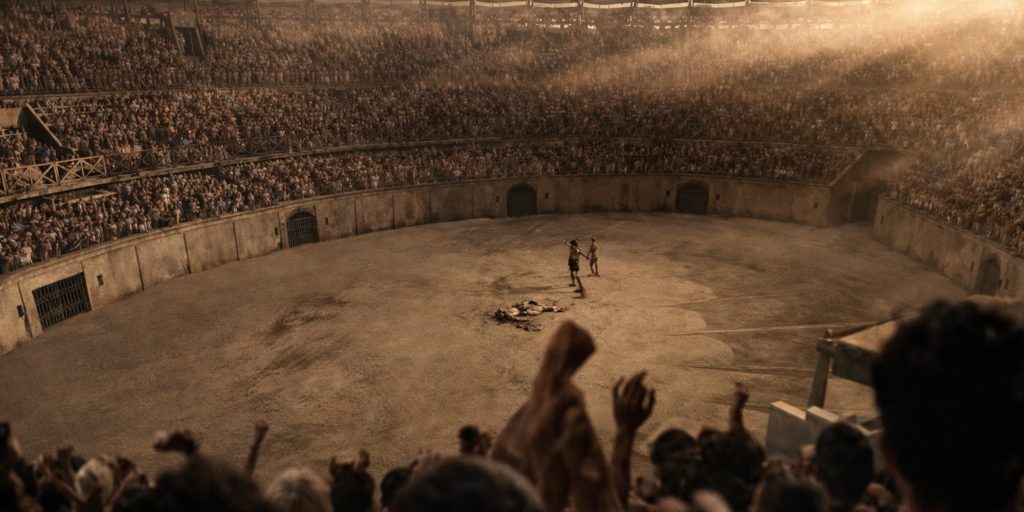
The Pompeii episodes feel different immediately. The arena is larger, wealthier, and more politically charged.
Historically, Pompeii genuinely possessed one of the earliest surviving Roman amphitheatres, built around 70 BC. The series borrows from that reputation. Its version of the arena feels like a regional prestige venue trying very hard to impress Roman elites.
Which, frankly, was half of Roman society anyway.
This arena matters because Spartacus is no longer just another gladiator by this stage. He is becoming a phenomenon. His fights are treated almost like headline sporting events. There is more pageantry, more ceremony, and far more social tension surrounding every appearance.
The Pompeii arena scenes also highlight how gladiatorial games connected directly to politics. Elite Romans used games to display wealth, gain influence, and show off cultural sophistication, even while watching people stab each other for applause.
Civilisation is complicated.
Visually, the Pompeii arena has brighter stonework, grander entrances, and a more open atmosphere than Capua. It feels richer. More performative. Less grounded in survival and more obsessed with spectacle.
The Shadow Arena Beneath the Market
One of the more fascinating additions in the series is the underground fighting spaces used for illegal or private contests.
These smaller arenas are claustrophobic and vicious. They strip away the grandeur of Roman public games and expose the uglier side of gladiatorial culture. No patriotic speeches. No polished ceremony. Just wealthy spectators indulging violent curiosity.
Historically, underground combat and private spectacles absolutely existed in various forms throughout the Roman world. Wealthy patrons often held exclusive entertainments away from official arenas.
The show uses these hidden arenas brilliantly because they feel dangerous in a different way. Public arenas at least pretend to operate under rules. Underground pits feel lawless. Every fight looks like it could spiral into a massacre at any second.
Which, to be fair, describes half the social gatherings in Spartacus.
The Roman Arena in War of the Damned
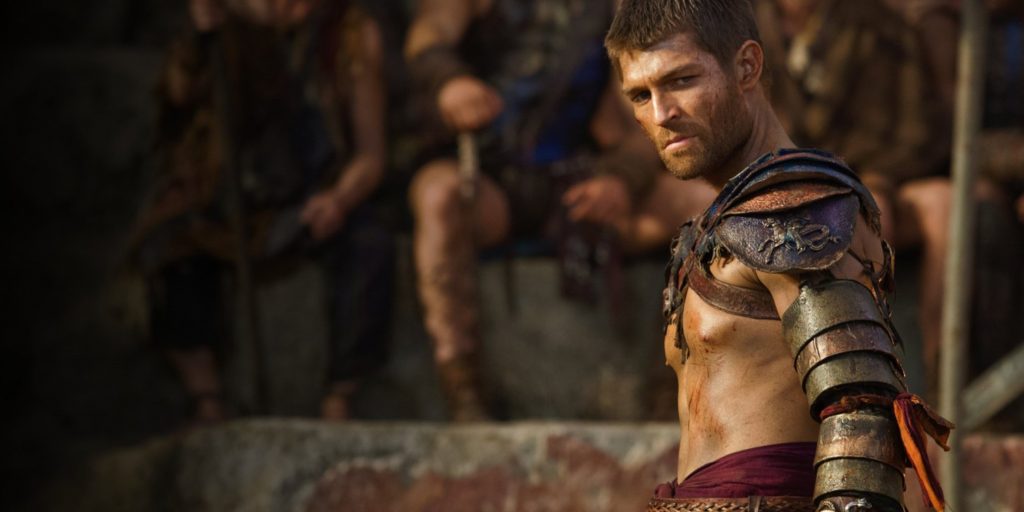
By the final season, the arenas barely resemble the smaller fighting spaces from earlier episodes.
Rome’s influence transforms everything into industrial-scale spectacle.
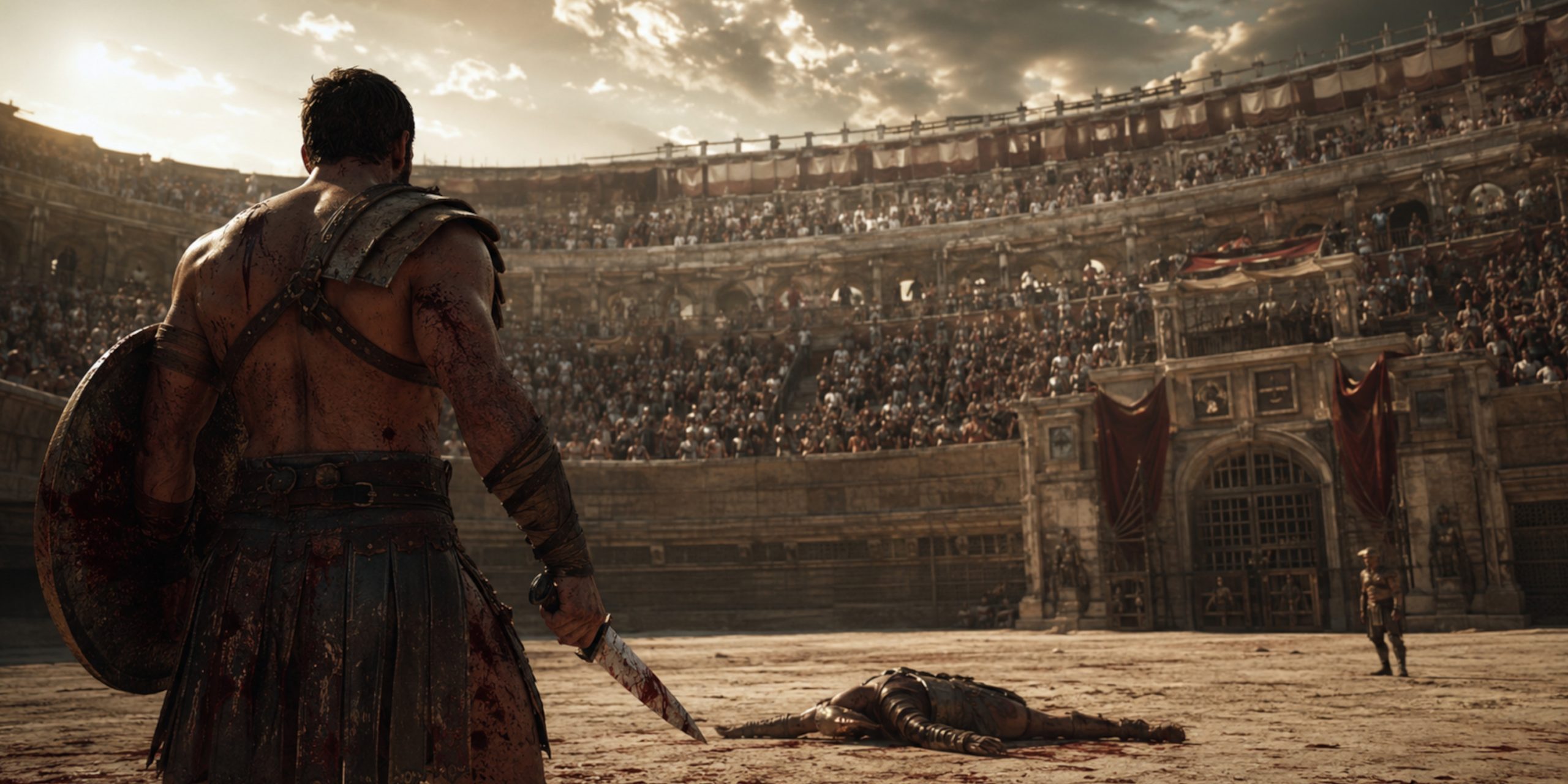
The great arenas seen later in the series reflect the empire’s obsession with mass entertainment. Crowds are enormous. Processions are elaborate. Combat becomes increasingly theatrical. Fighters are no longer simply athletes or slaves. They are symbols within a giant propaganda machine.
This evolution mirrors Roman history surprisingly well.
As gladiatorial games expanded, arenas became tools of imperial image-building. Emperors and politicians used them to project power, distract populations, and reinforce social hierarchy. The crowd demanded bigger spectacles over time, which led to increasingly extravagant events involving animals, staged battles, and executions.
Human civilisation occasionally has the energy of a teenager trying to make every school project “more epic”.
The later arenas in Spartacus capture that escalation perfectly. The violence feels larger, but also colder. Earlier fights carried personal stakes. Later arenas feel like systems consuming human beings for mass entertainment.
The Egyptian-Style Arena Aesthetic
One underrated detail throughout Spartacus is how certain arena decorations borrow from conquered cultures.
Roman arenas often incorporated exotic imagery from across the empire. Egyptian statues, eastern banners, foreign armour styles, and captured animals all reinforced Rome’s message that the world belonged to them.
The series leans into this heavily during ceremonial fights.
It works because Rome itself was obsessed with spectacle through domination. Every imported decoration reminded audiences of conquest. Even the arena became propaganda architecture.
Also, Romans apparently looked at crocodiles and thought, “Yes, let us place this near civilians.”
Bold decision.
How Accurate Are the Arenas in Spartacus?
The answer is somewhere between “surprisingly grounded” and “absolutely unhinged”.
Architecturally, many arenas draw from genuine Roman amphitheatre design. The tiered seating, underground holding areas, ceremonial entrances, and crowd structures all echo real ancient venues.
The atmosphere also feels right. Roman arenas genuinely were loud, political, emotional spaces filled with gambling, chanting, elite posturing, and brutal violence.
Where the show exaggerates things is scale, speed, and theatricality. Fights are stylised almost like graphic novels. Blood physics occasionally stop obeying earthly laws. Some combat sequences feel less historical and more like somebody gave a theatre director unlimited energy drinks.
But honestly, that is part of the charm.
Spartacus was never trying to be a dry documentary. It aimed for operatic historical fantasy rooted loosely in Roman culture. When it hits the emotional balance correctly, it becomes strangely immersive despite all the slow-motion decapitations.
Why the Arenas Matter So Much in the Story
The arenas are not just settings. They track Spartacus’ transformation.
The training yard represents captivity.
Capua represents survival.
Pompeii represents fame.
The underground pits represent corruption.
The imperial arenas represent Rome itself, vast, hungry, and impossible to satisfy.
That progression gives the series much more thematic depth than people sometimes admit. Beneath all the violence and shouting, Spartacus is deeply interested in how systems turn suffering into entertainment.
Which feels uncomfortably modern at times.
Even the crowds evolve. Early spectators seem emotionally invested in fighters. Later audiences often feel detached, consuming violence as spectacle rather than contest.
The arenas become mirrors of Roman society. Bigger empire, bigger arena, bigger appetite for blood.
Takeaway
The arenas in Spartacus are a huge part of why the series still has such a loyal following. They are memorable, visually distinctive, and packed with symbolism beneath all the flying limbs.
Capua remains the emotional heart of the show for many fans, but the later imperial arenas capture something fascinating too. They show how Rome industrialised spectacle long before modern entertainment existed.
Also, few TV shows have ever committed this hard to dramatic sand physics.
Whether you watch Spartacus for the history, the action, or the delightfully chaotic dialogue, the arenas give the entire series its identity. They are places of ambition, humiliation, survival, and rebellion all at once.
And somehow, after all the bloodshed, you still end up emotionally attached to half the gladiators by the end.
Which feels like the show’s greatest trick of all.