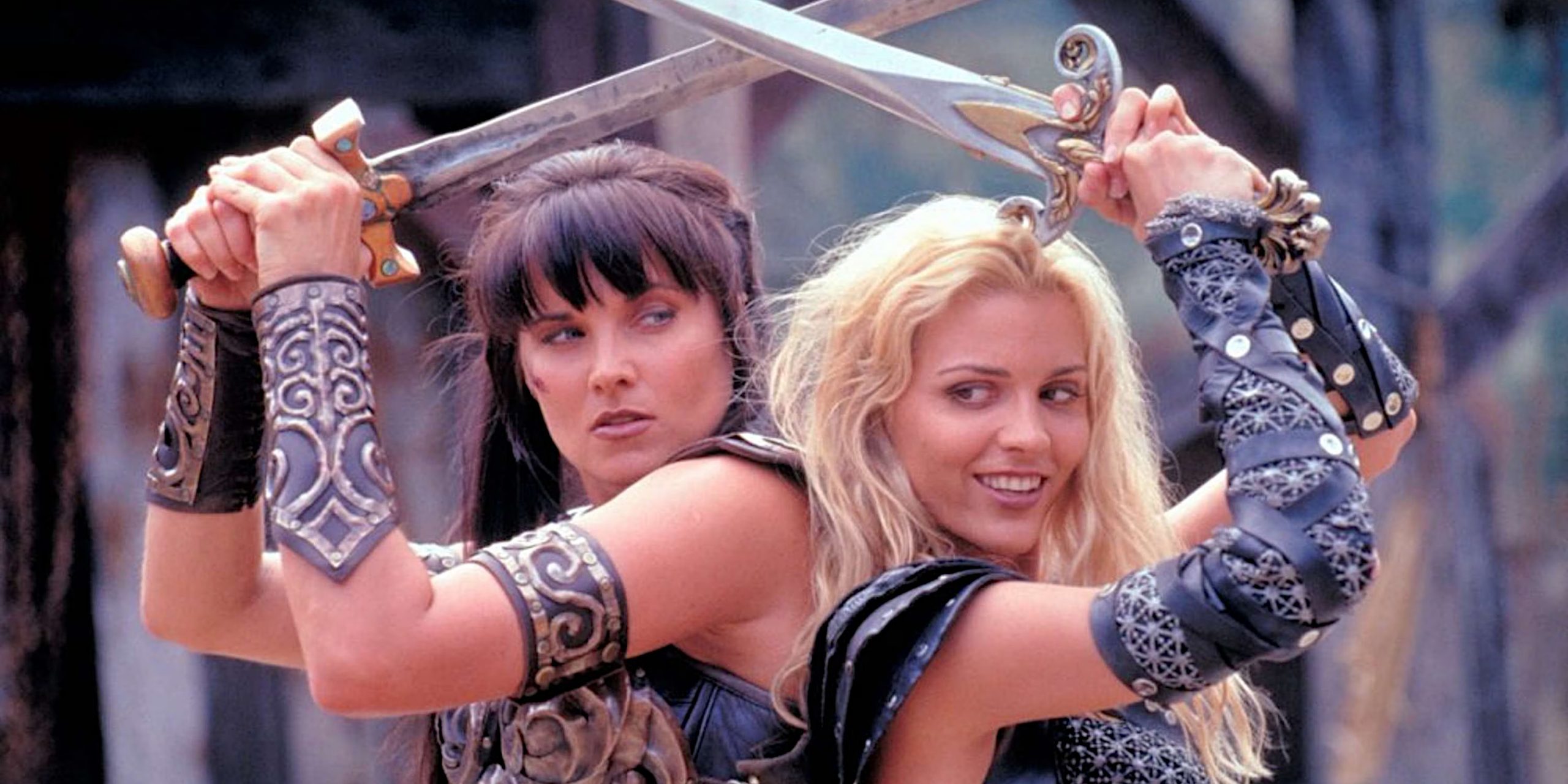
There are fantasy heroes, there are cult TV icons, and then there is Xena. Somewhere between ancient mythology, Saturday afternoon chaos, and surprisingly emotional storytelling, Xena: Warrior Princess became one of the strangest success stories of the 1990s. It had flying chakrams, gods with attitude problems, warlords dressed like they robbed a leather shop, and moments that somehow managed to be genuinely moving right before someone got kicked through a wooden cart.
And yet, beneath the camp and glorious nonsense, Xena endured because the character had weight. She was violent, guilty, clever, charismatic, and constantly trying to outrun her own past. The series built an enormous mythology around redemption long before every modern antihero started brooding dramatically in prestige television.
This is the complete history of Xena, from feared conqueror to television legend.
Who Was Xena?
Xena: Warrior Princess was a fantasy adventure series that aired between 1995 and 2001. Created by John Schulian and Robert Tapert, the show starred Lucy Lawless as Xena and Renée O’Connor as Gabrielle.
Originally introduced in Hercules: The Legendary Journeys as a villain, Xena became so popular that she earned her own spin-off series almost immediately. Frankly, audiences took one look at the leather armour, spinning chakram, and deeply traumatised warrior energy and collectively decided, “Yes. More of that please.”
The show blended Greek mythology, historical fantasy, comedy, tragedy, martial arts, romance, and occasional complete madness into something oddly unique. One week featured brutal warfare and moral dilemmas. The next week involved body-swaps or musical numbers. Somehow it worked.
Xena’s Origins Before the Series
Within the lore of the series, Xena was born in the town of Amphipolis. Unlike many fantasy heroes, she did not begin as noble or chosen by prophecy. She became a warrior through survival.
Her early life was shaped by raids and violence, particularly attacks from warlords that devastated communities across Greece. After helping defend her village from invaders, Xena gained a reputation for tactical brilliance and fearlessness.
Unfortunately, she then made several catastrophic life choices.
Instead of remaining a defender, Xena embraced conquest. She built armies, conquered territories, and became one of the most feared warlords in the ancient world. Entire regions knew her name with genuine terror. The series constantly reminded viewers that redemption was not simple because Xena’s crimes were enormous.
This was not a misunderstood rebel with a rough edge. This was a former destroyer trying desperately to become human again.
The Dark Years and the Rise of the Warrior Princess

Much of Xena’s backstory unfolds gradually through flashbacks across the series. These episodes became some of the show’s strongest storytelling because they revealed how deeply damaged she had become.
During her darkest years, Xena travelled across Asia, Scandinavia, and the Mediterranean, encountering historical and mythological figures alike. The timeline was gloriously chaotic. Julius Caesar might appear one week, then Norse gods shortly after. Historical accuracy occasionally wandered into the sea and never returned.
Still, the emotional core stayed consistent.
Key moments during this period included:
- Her manipulation by powerful warlords
- Her toxic relationship with Caesar
- Her friendship and betrayal involving Borias
- The loss of her child
- Her growing reputation as a merciless conqueror
One of the defining events came when Xena was betrayed and crucified by Caesar. Rather than breaking her completely, the experience hardened her further and intensified her hatred of Rome.
The series often portrayed evil as cumulative. Every violent act pushed Xena deeper into darkness until she barely recognised herself.
Gabrielle Changed Everything

The turning point in Xena’s life came when she met Gabrielle.
Gabrielle began as an idealistic village girl who longed for adventure and purpose beyond rural life. Against all common sense, she decided following a notorious ex-warlord across Greece sounded fun.
Their relationship became the heart of the series.
Gabrielle represented hope, compassion, and morality. Xena, meanwhile, represented experience, violence, and regret. Together they balanced each other in ways that kept both alive.
Over time, Gabrielle evolved from comic relief into one of television’s most fully developed fantasy characters. She became a bard, warrior, strategist, and eventually Xena’s equal in many respects.
The emotional complexity between the two characters remains one of the biggest reasons the show still has a loyal fanbase decades later. The series never fully defined their relationship in explicit terms, partly because of television restrictions during the era, but the emotional intimacy between them became impossible to ignore.
Subtle eventually stopped being subtle.
Xena’s Weapons and Fighting Style

Xena’s combat style helped define the character visually. She fought with speed, agility, and theatrical confidence that separated her from more traditional fantasy warriors.
Her most famous weapon was the chakram.
The chakram was a circular throwing weapon capable of ricocheting off practically anything. Walls, swords, helmets, impossible angles, probably tax collectors if needed. The physics were deeply questionable, but nobody cared because it looked brilliant on screen.
Xena also used:
- Swords
- Daggers
- Staff weapons
- Hand-to-hand combat
- Acrobatic martial arts techniques
The series borrowed heavily from Hong Kong action cinema, especially in its stunt choreography and wire-assisted combat. This gave the fights a faster and more stylised feel compared to many fantasy shows of the era.
Greek Mythology and the Gods
One of the biggest strengths of Xena: Warrior Princess was its use of mythology.
The series featured gods from Greek mythology including:
- Ares
- Athena
- Aphrodite
- Hades
- Zeus
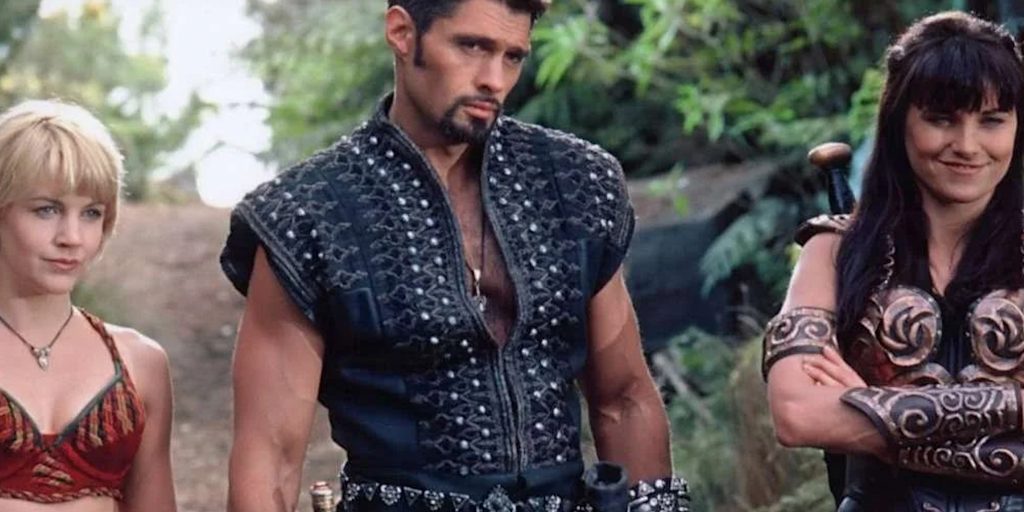
Ares became particularly important. Played with oily charm by Kevin Smith, Ares acted as both tempter and admirer. He constantly tried to drag Xena back toward violence while also clearly fascinated by her strength.
The mythology eventually expanded far beyond Greece. The show explored:
- Norse mythology
- Egyptian mythology
- Hindu mythology
- Chinese folklore
- Biblical themes
The historical timeline collapsed completely under this pressure, but honestly, trying to fact-check Xena is like trying to arrest a tornado.
The Rift Between Xena and Gabrielle
One of the most important storylines in the series was the Rift.
After a chain of manipulations and tragedies involving Gabrielle’s child Hope, the friendship between Xena and Gabrielle collapsed. For a time, the series became much darker and emotionally brutal.
These episodes mattered because they showed the consequences of violence and mistrust. Xena’s past kept infecting the present, hurting the people she loved most.
The Rift arc gave the show emotional depth far beyond its reputation as simple fantasy television. It also proved both lead actresses could handle genuinely heavy material.
Callisto and Xena’s Greatest Enemy
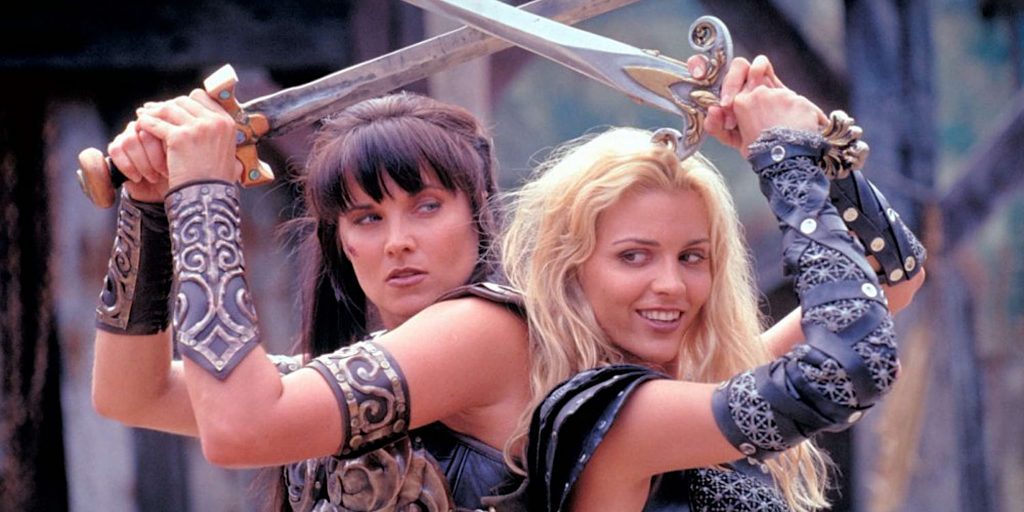
If Xena had a true nemesis, it was probably Callisto.
Played by Hudson Leick, Callisto was essentially a mirror image of Xena. Her family had been killed during one of Xena’s raids, leaving her consumed by hatred and madness.
She was chaotic, dangerous, funny, tragic, and completely obsessed with Xena.
Their rivalry became one of the defining dynamics of the series because Callisto embodied the damage Xena could never undo. No matter how much good Xena achieved, the victims of her past still existed.
Also, Callisto had the unnerving habit of smiling right before attempting murder. Never ideal.
Why the Series Became a Cultural Phenomenon
By the late 1990s, Xena: Warrior Princess had become a genuine global hit.
Several factors made it stand out:
A Rare Female Action Lead
At a time when television action heroes were overwhelmingly male, Xena dominated her own series physically and emotionally. She was powerful without being reduced to a stereotype.
Genre-Blending Chaos
The show mixed fantasy, comedy, horror, romance, and historical adventure freely. It never felt trapped by its own premise.
LGBTQ+ Representation
Although often coded indirectly, the bond between Xena and Gabrielle became hugely meaningful for LGBTQ+ audiences. The show pushed boundaries in ways that were unusually bold for syndicated television during the 1990s.
Lucy Lawless
Quite simply, Lucy Lawless carried the role with immense charisma. Xena worked because Lawless balanced humour, rage, vulnerability, and absurd confidence effortlessly.
She could deliver emotional tragedy in one scene and throw a fish at someone in the next without losing credibility.
That is range.
The Final Season and Xena’s Death

The series finale remains controversial.
In the final episode, “A Friend in Need,” Xena travels to Japan and sacrifices herself in battle. She dies permanently, choosing not to return because her death allows thousands of souls to remain at peace.
Many fans were devastated by the ending, especially because the series had repeatedly used resurrection before. Killing Xena permanently felt unusually harsh.
Others appreciated the tragic closure and the idea that redemption ultimately required sacrifice.
Either way, people are still arguing about it years later, which usually means the ending mattered.
Xena’s Legacy Today
Xena: Warrior Princess remains one of the most influential fantasy series of its era.
Its influence can be seen in:
- Female-led fantasy television
- Action choreography
- LGBTQ+ representation in genre media
- Serialised character development
- Fantasy-comedy storytelling
Shows like Buffy the Vampire Slayer, Legend of the Seeker, and even aspects of modern superhero storytelling owe something to Xena’s success.
The fandom also never truly disappeared. Conventions, online communities, merchandise, fan fiction, and academic analysis around the series still exist today.
Not bad for a spin-off that many executives probably assumed would quietly disappear after one season.
The Xena Takeaway
Some older fantasy shows feel trapped in their era. Xena occasionally does too, admittedly. The CGI could be questionable enough to frighten modern graphics cards, and some episodes feel like the writers consumed three litres of coffee before entering the room.
But the character herself still works.
Xena’s story is ultimately about guilt, redemption, friendship, and the fear that people cannot truly change. Those themes remain timeless even when surrounded by exploding barrels and dramatic slow-motion flips.
Underneath the camp, there was sincerity. The show cared deeply about its characters, and audiences responded to that honesty.
Also, spinning a metal disc into somebody’s helmet will never stop being entertaining.