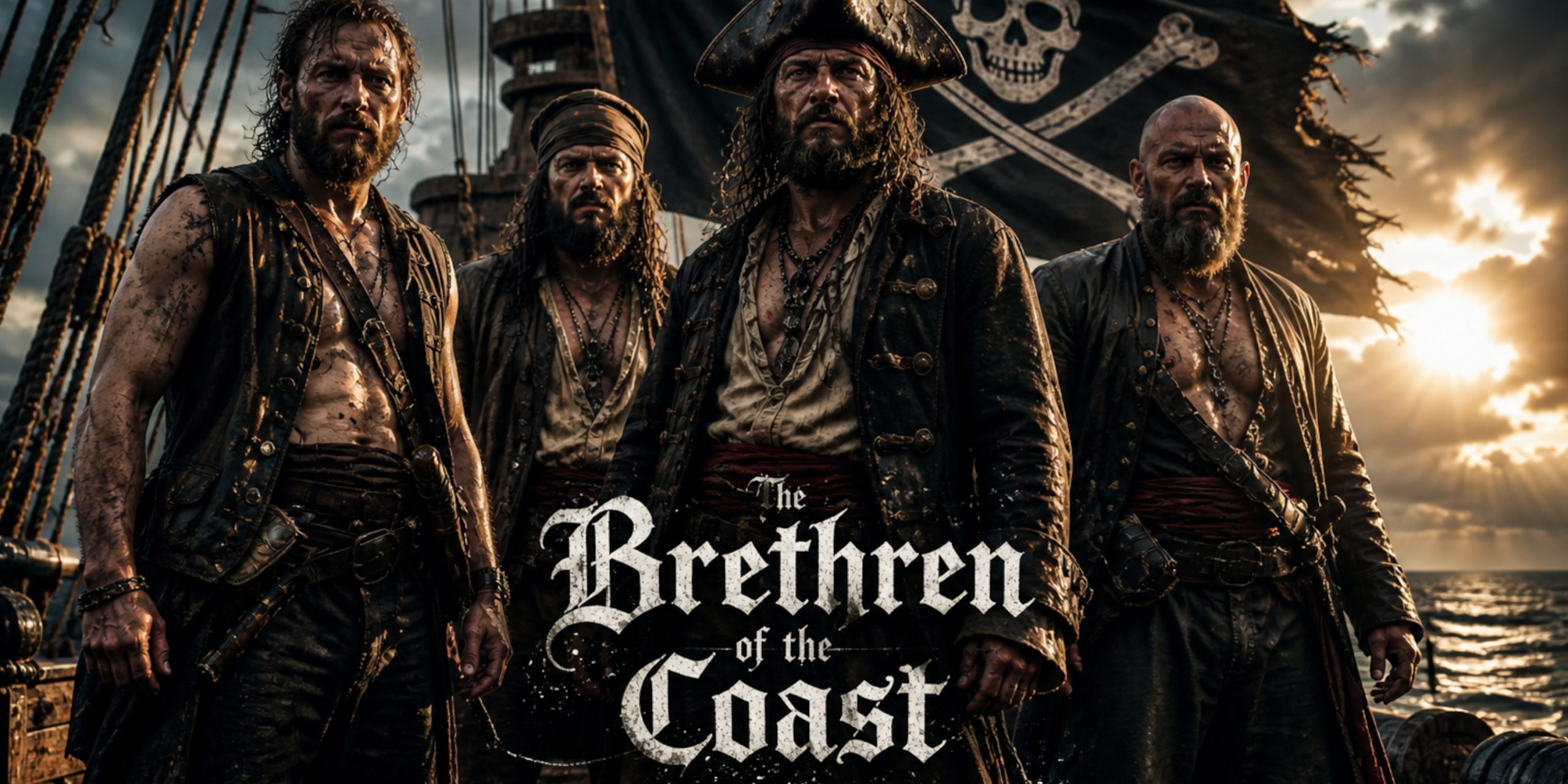
There is something oddly democratic about pirates. For all the blood, theft, and general inconvenience to respectable society, they created communities that were, in their own rough way, more equal than the empires chasing them. The Brethren of the Coast sit right at the centre of that contradiction. They were not a single crew or a tidy organisation. They were a loose brotherhood of privateers, buccaneers, and outright pirates who thrived in the Caribbean during the seventeenth century.
They lived fast, argued loudly, voted often, and occasionally remembered to fight.
Origins and Meaning
The term “Brethren of the Coast” emerged in the Caribbean during the late 1600s. It referred to a network of seafarers who operated from bases such as Tortuga and Port Royal. These men, and a few women though records are thin, were often former privateers who had lost official backing once wars ended.
Privateering blurred easily into piracy. A letter of marque could turn a raider into a patriotic hero one year and a criminal the next. When peace treaties arrived, many simply carried on.
Key roots of the Brethren include:
- French buccaneers hunting cattle on Hispaniola before turning to the sea
- English and Dutch privateers targeting Spanish shipping
- Displaced sailors, soldiers, and opportunists drawn by profit
The Spanish Empire, rich but overstretched, provided the perfect target. Gold, silver, and trade goods moved in predictable routes. The Brethren followed.
Where They Operated

Their world was the Caribbean, though that term hides a lot of chaos. The Brethren used a shifting network of ports and hideouts rather than a fixed headquarters.
Important centres included:
- Tortuga, a haven off the coast of Hispaniola, famously unruly
- Port Royal in Jamaica, often described as one of the richest and most lawless towns in the world
- Nassau in the Bahamas, later becoming a pirate stronghold
These ports offered more than shelter. They provided markets for stolen goods, ship repairs, and an endless supply of rum, which seems to have been considered essential naval equipment.
Organisation and Code
The Brethren were not anarchic in the way popular imagination suggests. They operated with rules, often written down in articles agreed by the crew.
Common features of pirate governance:
- Captains elected by vote
- Quartermasters balancing authority and representing crew interests
- Shares of plunder distributed according to rank
- Compensation for injury, with set payments for lost limbs
It was a strange form of maritime contract law. Brutal, yes, but predictable. Compared to the harsh discipline of naval ships, many sailors found pirate life appealing.
I sometimes think of it as a floating workplace with better pay and worse long term prospects.
Daily Life and Culture
Life among the Brethren was a mixture of routine and sudden violence. Days could pass in dull sailing, broken by moments of intense action.
Daily realities included:
- Hunting, fishing, and rationing supplies
- Maintaining ships constantly under strain
- Gambling and drinking when in port
- Sharing stories, which likely improved with each retelling
The word “buccaneer” itself comes from the boucan, a wooden frame used to smoke meat. It is a reminder that many pirates began not as raiders but as hunters trying to survive on the fringes of empire.
Weapons and Combat
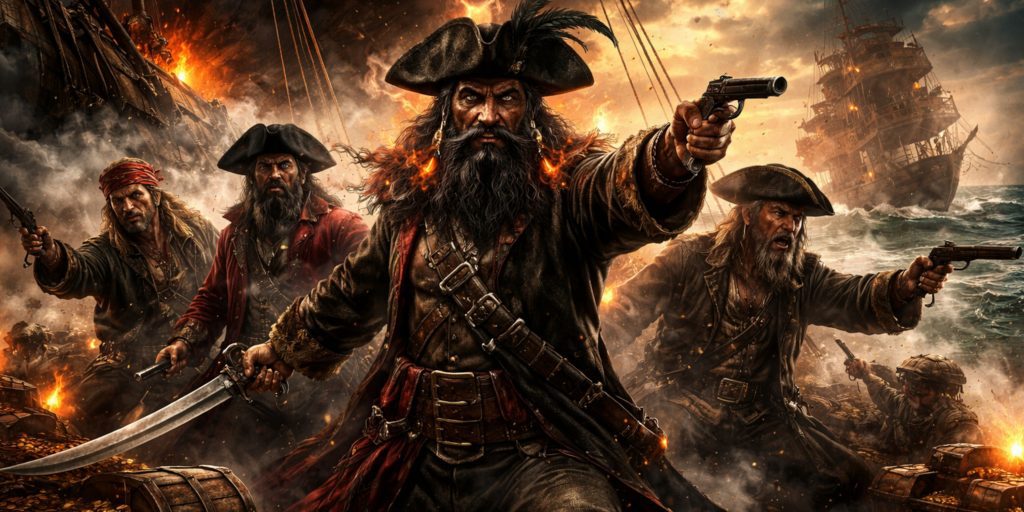
When violence came, it was fast and personal. The Brethren favoured weapons suited to close quarters fighting.
Typical arms included:
- Cutlasses, short and brutal blades ideal for boarding
- Flintlock pistols, often carried in pairs
- Muskets for initial volleys
- Small grenades, known as grenadoes
Naval battles were rarely long duels. Pirates aimed to overwhelm quickly, board the target, and end resistance before it could organise.
Notable Figures

The Brethren were not a formal club, yet certain names echo through their history.
- Henry Morgan, who walked the line between pirate and governor with remarkable confidence
- Edward Teach, whose theatrical reputation did as much damage as his cannons
- Anne Bonny and Mary Read, who challenged assumptions about who could live this life
Each operated independently, yet all were shaped by the same environment of opportunity and risk.
Decline of the Brethren
By the early eighteenth century, the world that sustained the Brethren began to close.
Several pressures combined:
- Stronger naval patrols by European powers
- Coordinated anti piracy campaigns
- The growing stability of colonial governments
- Less tolerance for unofficial warfare after major treaties
Port Royal’s destruction in the 1692 earthquake did not end piracy, but it symbolised the fragility of their world. Gradually, the Brethren were hunted down, absorbed, or forced into more marginal roles.
Myth Versus Reality
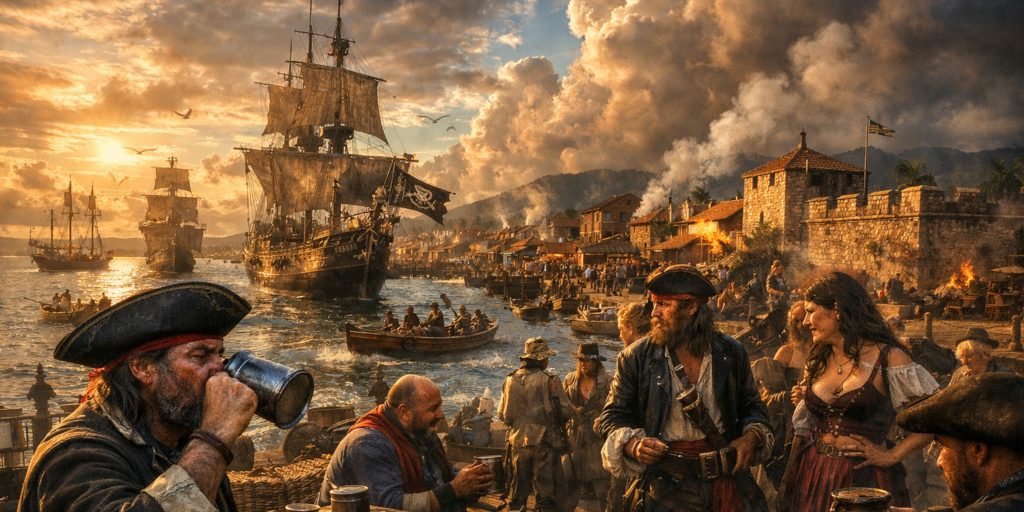
Popular culture has softened the edges. The Brethren are often portrayed as rebellious heroes or romantic adventurers.
The truth is less comfortable:
- They could be democratic, but also ruthless
- They resisted authority, but depended on stolen wealth
- Their freedom came at the expense of others
And yet, there is something undeniably compelling about them. They created systems of shared power in an age dominated by rigid hierarchy. That alone makes them worth studying.
Legacy
The Brethren of the Coast have left a long cultural shadow.
Their influence appears in:
- Literature and film, especially modern pirate narratives
- Nautical folklore and symbolism
- Historical debates about early forms of democracy
They were not idealists, but they were not entirely without principles either. That uneasy balance is what keeps them interesting.
Takeaway
As a historian, I find the Brethren slightly irritating in the best possible way. They refuse to fit neatly into categories. Criminals, entrepreneurs, rebels, opportunists, all of the above depending on the day.
If you strip away the romantic varnish, you are left with something more human. A group of people navigating a violent world, making choices that were sometimes clever, sometimes reckless, and often both at once.
Which, if I am honest, feels rather familiar.