A historian’s attempt to untangle the first moments we can truly call “war”
There is something faintly unsettling about trying to locate the first battle in history. Violence is older than writing, older than cities, older than most things we feel comfortable dating. What we are really asking is not when people first fought, but when someone bothered to write it down, or carve it into stone with enough confidence to be believed.
The earliest battles we know are therefore not necessarily the first, only the first that survived the long, indifferent erosion of time. They come to us through royal boasts, fragmentary inscriptions, and archaeological hints that feel more like whispers than statements.
What Counts as a “Recorded” Battle?
Before naming names, a small but necessary irritation. A “recorded” battle usually means one of two things:
- A written or inscribed account from the period itself
- Archaeological evidence that strongly suggests organised combat
The problem is that early rulers were not inclined toward modesty. Many of the earliest battle accounts read less like reports and more like victory speeches delivered to eternity. Numbers are inflated, enemies are conveniently crushed, and the king always seems to be at the centre of things, behaving impeccably.
So, we proceed with caution, and a raised eyebrow.
The Battle of Megiddo (c. 1457 BC)
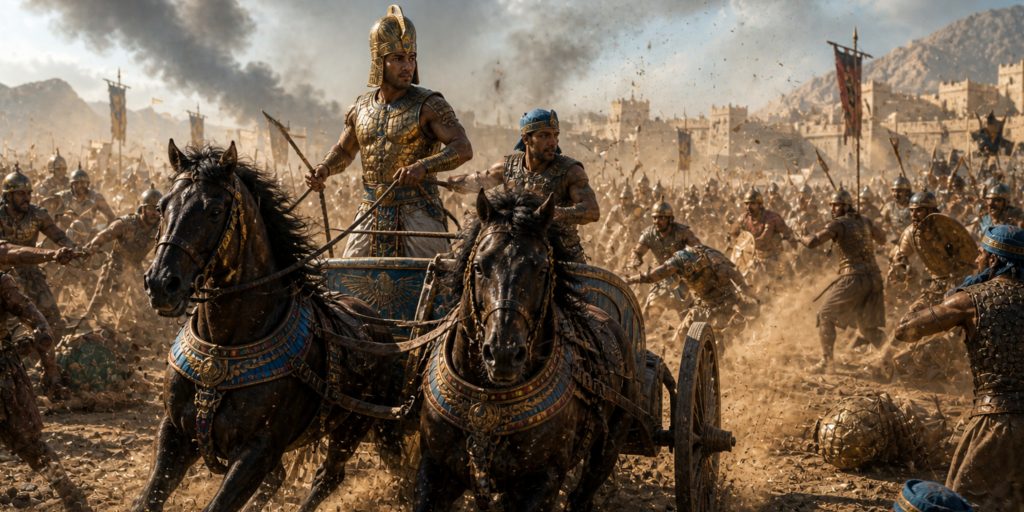
One of the earliest battles described in real narrative detail is the clash at Megiddo under the Egyptian pharaoh Thutmose III.
What makes Megiddo remarkable is not just its age, but its clarity. Egyptian scribes recorded the campaign with unusual precision, including tactics, routes, and even the king’s bold decision to take a narrow pass that his generals considered reckless.
The opposing force was a coalition of Canaanite city states. The battle ended in a decisive Egyptian victory, followed by a lengthy siege.
What lingers in the record is not just triumph, but personality. Thutmose appears decisive, slightly impatient, and entirely convinced of his own judgement. It is one of the first times a commander feels recognisably human.
The Stele of the Vultures and the Battle of Lagash vs Umma (c. 2450 BC)
If we step further back, things become more fragmentary, and more fascinating.
The so called Stele of the Vultures, commissioned by Eannatum of Lagash, depicts a conflict with the neighbouring city of Umma. It dates to around 2450 BC and is one of the earliest known visual representations of organised warfare.
We see soldiers marching in tight formation, spears levelled, trampling enemies beneath their feet. Above them, vultures carry off severed heads. It is not subtle.
There is no tidy narrative, but the message is unmistakable. This was a structured, state level conflict, not a raid or skirmish. It suggests discipline, hierarchy, and a shared understanding of how to wage war.
Also, it confirms that even at this early stage, rulers had a flair for dramatic messaging.
Early Dynastic Conflicts in Sumer (c. 2600–2350 BC)
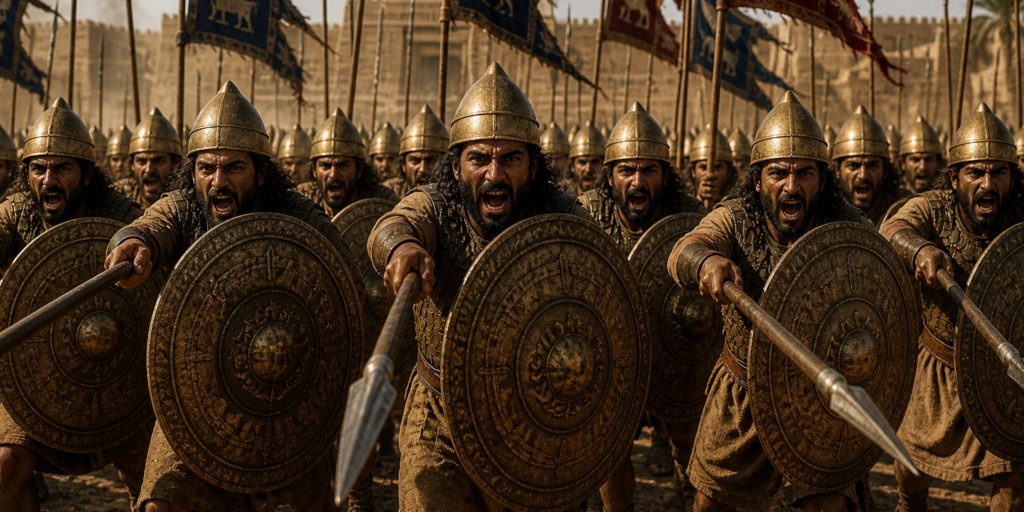
Beyond specific battles, we have broader evidence of repeated warfare between Sumerian city states such as Lagash, Ur, and Kish.
These conflicts are recorded in king lists and inscriptions, though often frustratingly vague. One ruler claims victory, another claims the same, and both appear entirely sincere.
Archaeology fills in some gaps. Mass graves, weapon deposits, and defensive walls all point toward frequent and organised warfare.
If you were hoping for a clear account of who fought whom on a particular afternoon, you will be disappointed. If you are interested in how early states competed for land and water, this period is rich with evidence.
The Battle of Kadesh (c. 1274 BC)
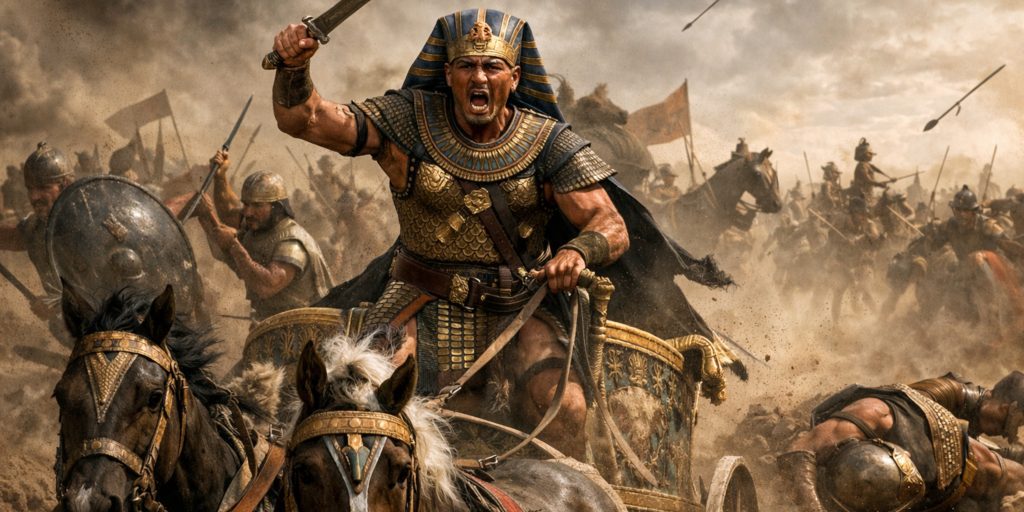
A little later, but impossible to ignore, is the famous battle between Ramesses II and the Hittite king Muwatalli II.
Kadesh is not the oldest battle, but it is one of the earliest to be documented from both sides, at least indirectly. Egyptian inscriptions present it as a heroic stand by Ramesses, who allegedly fought off overwhelming odds with admirable composure.
Modern historians are less convinced. The outcome was likely indecisive, followed by one of the earliest known peace treaties.
It is a useful reminder that early battle accounts are as much about reputation as reality.
Archaeology Before Writing, The Shadow of Earlier Warfare
If we step even further back, into prehistory, the evidence becomes quieter but no less striking.
Sites such as Jebel Sahaba, dating to around 13,000 years ago, show clear signs of violent conflict. Skeletons bear embedded arrowheads and trauma consistent with organised attacks.
This is not a “battle” in the recorded sense, but it is unmistakably warfare.
There are no kings here, no inscriptions, no boasts carved into stone. Only the remains of individuals who were caught in something coordinated and deadly.
It is perhaps the most honest evidence we have.
Why These Battles Endure
It is tempting to treat these early conflicts as distant curiosities, but they reveal something fundamental.
By the third millennium BC, humans were already organising into states, raising armies, and fighting over resources with grim efficiency. They developed formations, weapons, and strategies that would echo for thousands of years.
There is also a certain familiarity in the way victories are presented. The urge to exaggerate success and minimise failure appears to be as old as writing itself. Some traditions never really change.
The Seven Swords Takeaway
The oldest recorded battles are less about pinpointing a first fight and more about recognising a threshold. They mark the moment when conflict moved from memory into record, from experience into narrative.
And once that happens, war becomes something that can be studied, justified, glorified, or quietly questioned.
Personally, I find the earliest evidence the most sobering. Not because it is grand, but because it is so stark. A line of soldiers carved into stone. A field of bones with arrowheads still lodged in place. No speeches, no speeches needed.
History begins, it seems, with someone deciding that a victory was worth remembering. Or perhaps worth convincing others of.