When people talk about legendary Valyrian steel swords, the conversation usually races straight to Dark Sister, Blackfyre or Longclaw. Poor Sunfyre rarely gets invited. Which feels a bit unfair, considering it belonged to one of the most controversial kings in Targaryen history.
Named after the most magnificent dragon of its age, Sunfyre is a weapon wrapped in symbolism. It represented royal authority, Targaryen pride and the brutal civil war that tore the dynasty apart during the Dance of the Dragons. Unlike some famous fantasy swords that become characters in their own right, Sunfyre stays largely in the background. Even so, every appearance carries weight.
Sometimes the swords that say the least end up revealing the most.
What Is Sunfyre?
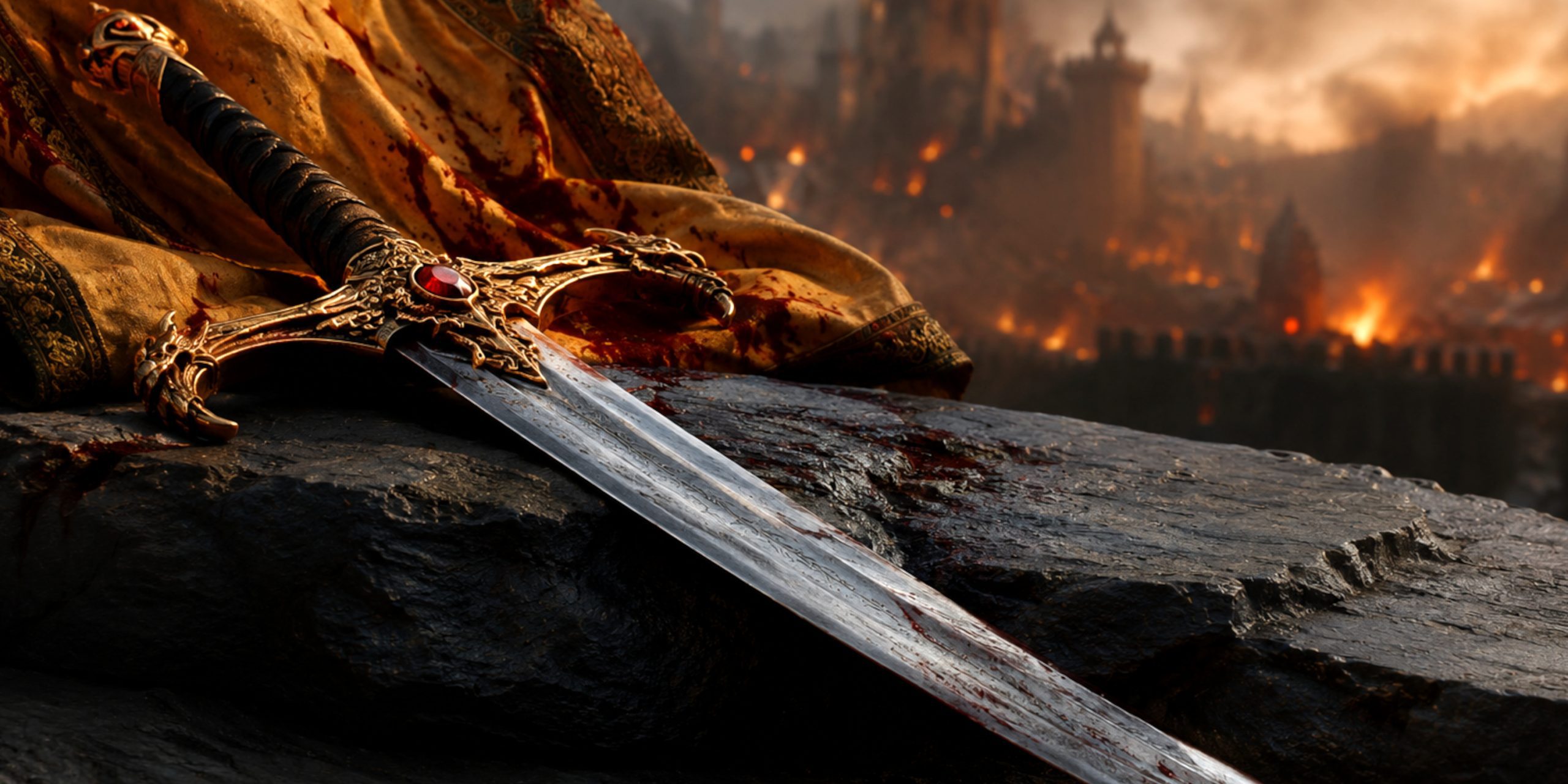
Sunfyre is a Valyrian steel longsword carried by King Aegon II Targaryen during the events of Fire & Blood. The sword shares its name with his legendary golden dragon, Sunfyre the Golden, creating a powerful visual link between king, dragon and blade.
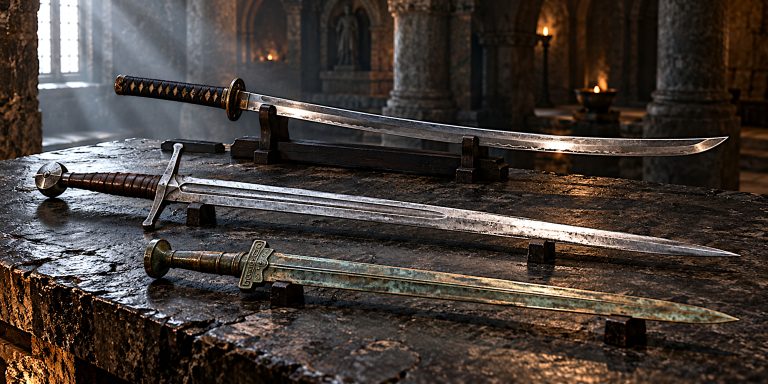
Like all Valyrian steel weapons, Sunfyre would have possessed exceptional craftsmanship. Its blade was lighter than ordinary steel, remarkably strong and capable of keeping an incredibly sharp edge.
Although George R. R. Martin provides little physical description, readers can safely assume it followed the elegant appearance associated with other noble Valyrian swords.
The Meaning Behind the Name
The name immediately tells you what Aegon II wanted people to see.
His dragon, Sunfyre the Golden, was celebrated as perhaps the most beautiful dragon ever seen. Naming his sword after the same creature transformed it into an extension of royal identity.
The pairing creates a clear image.
- Dragon in the sky.
- Sword in the king’s hand.
- Fire and steel working together.
It is classic Targaryen symbolism. Dragons won kingdoms from above while Valyrian steel maintained them on the ground.
A Sword of a Contested King
Sunfyre’s owner is what makes the weapon historically fascinating.
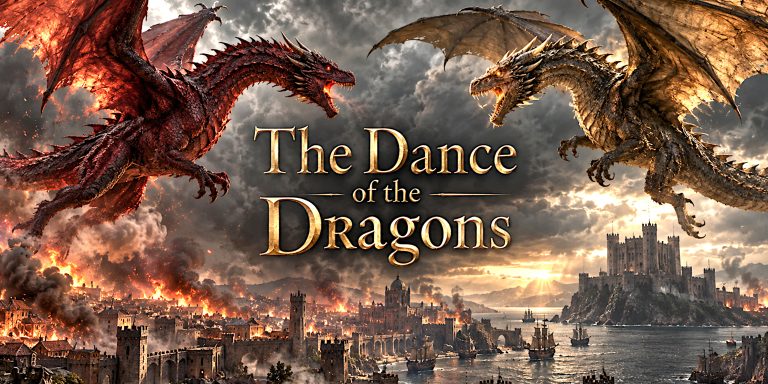
Aegon II claimed the Iron Throne following the death of Viserys I, despite many believing Princess Rhaenyra was the rightful heir. This disagreement exploded into the Dance of the Dragons, one of the bloodiest conflicts in Westerosi history.
Throughout the war, Sunfyre represented Aegon’s claim to kingship.
Whenever he appeared with the sword, it reinforced the image of a monarch descended from Aegon the Conqueror. Whether people accepted that claim is another matter entirely.
That political symbolism arguably mattered more than the sword’s battlefield record.
Did Sunfyre See Battle?
Unlike Dark Sister or Blackfyre, Sunfyre is not associated with famous duels that define its reputation.
Aegon II did fight during the Dance, most notably alongside his dragon during the Battle of Rook’s Rest. Much of his military power came from dragonback rather than swordsmanship.
Following devastating injuries sustained during the war, Aegon spent long periods unable to campaign effectively. As a result, Sunfyre never builds the legendary combat history enjoyed by other Valyrian blades.
Ironically, the dragon named Sunfyre became far more famous than the sword sharing its name.
Was Sunfyre a Valyrian Steel Masterpiece?
Almost certainly.
Every known Valyrian steel sword represents extraordinary craftsmanship dating back to Old Valyria before the Doom.
Common characteristics include:
- Exceptional sharpness
- Very light weight
- Incredible durability
- Distinctive rippled patterns across the blade
- Prestigious family ownership over generations
Owning one instantly placed its bearer among the highest nobility of Westeros.
For a king claiming supreme authority, carrying anything less would have seemed almost unimaginable.
Sunfyre Compared with Other Famous Valyrian Steel Swords
| Sword | Known Owner | Reputation |
|---|---|---|
| Blackfyre | Aegon the Conqueror and later House Blackfyre | Symbol of kingship and conquest |
| Dark Sister | Visenya, Daemon Targaryen and Brynden Rivers | Speed, duelling and military leadership |
| Longclaw | House Mormont, later Jon Snow | Honour and survival |
| Heartsbane | House Tarly | Ancient noble heirloom |
| Sunfyre | Aegon II Targaryen | Royal symbolism during the Dance of the Dragons |
Sunfyre occupies an unusual place.
It is historically significant because of who carried it rather than what it accomplished in combat.
Why Isn’t Sunfyre Better Known?
There are a few reasons.
First, Fire & Blood deliberately presents history as an incomplete record. Not every weapon receives equal attention.
Second, Aegon II himself remains a divisive figure. Readers often focus on larger personalities such as Daemon Targaryen, Rhaenyra or Aemond One-Eye.
Finally, the dragon Sunfyre steals the spotlight. Whenever the name appears, most fans instinctively picture shimmering golden scales rather than polished Valyrian steel.
It is a rare case where a dragon completely overshadows its own sword.
Symbolism During the Dance of the Dragons
Sunfyre embodies several recurring themes within the Targaryen civil war.
Royal Legitimacy
The sword reinforced Aegon II’s claim that he was the lawful king.
Pride
The matching names of sword and dragon reflected the confidence, perhaps even arrogance, that defined parts of Aegon’s reign.
The Decline of House Targaryen
Despite possessing dragons, Valyrian steel and immense wealth, the family nearly destroyed itself through internal conflict.
Sunfyre survives in memory as a reminder that legendary weapons cannot save a kingdom consumed by ambition.
Did Sunfyre Appear in House of the Dragon?
So far, the television adaptation has focused primarily on the dragon Sunfyre rather than highlighting Aegon II’s sword.
That could easily change as later events from the Dance unfold. The series has shown increasing interest in Valyrian steel weapons, and Sunfyre would fit naturally into future scenes involving Aegon’s rule.
Even a brief appearance would delight readers who enjoy spotting the smaller details hidden throughout George R. R. Martin’s world.
Legacy
Sunfyre may never become as iconic as Blackfyre or Dark Sister, but that does not make it unimportant.
Its story reflects a recurring truth throughout Fire & Blood. Possessing legendary weapons and dragons offers no guarantee of victory, wisdom or stability. The Targaryens inherited extraordinary power, yet repeatedly found inventive ways to turn it against themselves. Family dinners in King’s Landing must have been spectacularly awkward.
Sunfyre stands as a symbol of a fractured dynasty, a king fighting for legitimacy and a civil war that permanently weakened House Targaryen. It reminds us that history often remembers the people who carried a sword more vividly than the blade itself.
That quiet significance is precisely what makes Sunfyre worth exploring. It may not dominate every battle or headline every fan discussion, but it remains an elegant piece of the wider Targaryen story, waiting for curious readers to notice it.