Despite being only a knife rather than a mighty sword, Angrist performs one of the greatest feats in all of Tolkien’s legendarium. It slices a Silmaril from the iron crown of Morgoth himself, something that countless armies, heroes and gods never achieved.
That alone earns it legendary status.
It is also a reminder that Tolkien rarely measured greatness by size. His greatest heroes often relied on courage, intelligence and a healthy amount of desperation rather than brute strength. Beren certainly falls into that category. If someone offered him a straightforward quest instead, his life would have been considerably less stressful.
What Is Angrist?
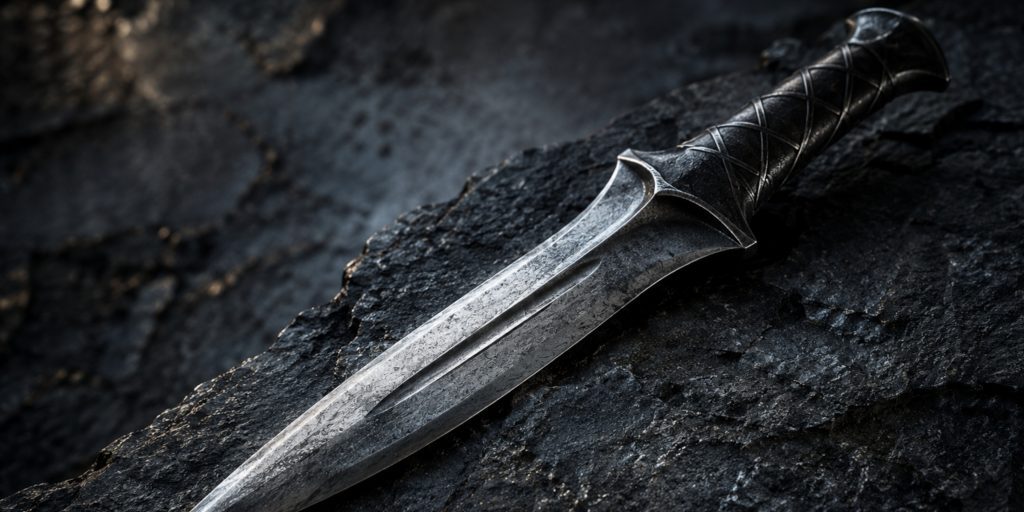
Angrist was a legendary knife forged by the Dwarves during the First Age.
Its name means “Iron Cleaver” in Sindarin, an appropriately direct description for a blade that specialised in cutting materials most weapons could barely scratch.
Unlike ceremonial blades or ornate royal weapons, Angrist was built for function. It possessed an edge of extraordinary sharpness and craftsmanship, capable of slicing through iron as though it were leather.
This remarkable quality ultimately made it one of the most important weapons in Tolkien’s mythology.
Who Forged Angrist?
Angrist was crafted by Telchar, the greatest smith of Nogrod.
If you keep seeing Telchar’s name appear throughout Middle-earth history, there is a good reason. He was essentially the celebrity blacksmith of the First Age.
Among the famous weapons attributed to him are:
| Weapon | Famous Owner | Significance |
|---|---|---|
| Angrist | Beren | Removed a Silmaril from Morgoth’s crown |
| Narsil | Elendil, later Aragorn | The sword that cut the One Ring from Sauron’s hand |
| Dragon-helm of Dor-lómin | Hador, Túrin | One of the greatest helms in Middle-earth |
Telchar’s creations consistently appear during defining moments of history. That is an impressive portfolio for someone who spent most of his life in a forge.
Angrist and the Quest for the Silmaril
Angrist becomes famous during one of Tolkien’s greatest adventures.
King Thingol demanded that Beren recover a Silmaril from Morgoth’s Iron Crown as the price for marrying his daughter, Lúthien.
It was an impossible task.
Morgoth ruled from Angband, protected by Balrogs, dragons, Orcs and countless horrors. Walking into his throne room was about as sensible as volunteering to wrestle a volcano.
Yet Beren and Lúthien somehow succeeded.
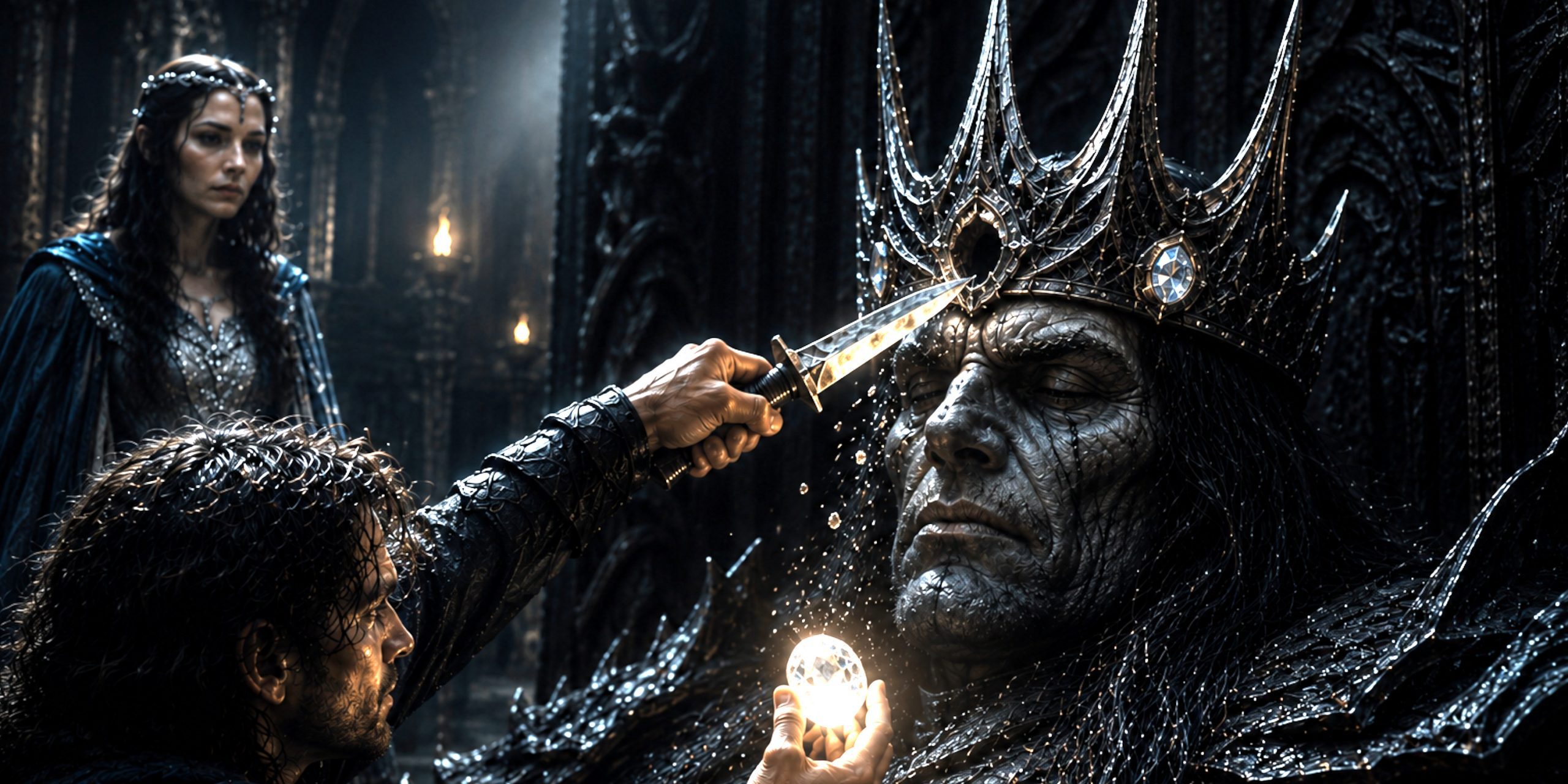
Lúthien enchanted Morgoth and his court into a magical sleep. While the Dark Lord lay unconscious upon his throne, Beren used Angrist to carefully cut one of the Silmarils free from the Iron Crown.
No sword could have managed such delicate work.
Only Angrist possessed the sharpness required.
The Blade That Cut Morgoth’s Crown
This is the defining moment of Angrist’s history.
The Iron Crown had become a symbol of Morgoth’s absolute domination over Middle-earth. Embedded within it were the stolen Silmarils, radiant jewels created by Fëanor that contained the light of the Two Trees of Valinor.
Using Angrist, Beren successfully removed the first jewel.
Encouraged by his success, he attempted to remove another.
That proved to be a mistake.
The knife snapped.
Its broken blade struck Morgoth across the face, waking the Dark Lord instantly.
Sometimes knowing when to leave well enough alone is the hardest lesson in fantasy.
Why Did Angrist Break?
Tolkien never gives a precise mechanical explanation.
Several possibilities fit the story.
The Iron Crown resisted further cutting
Even Angrist may have reached the limits of what any crafted blade could endure.
Morgoth’s immense power
The crown belonged to the greatest evil being in Arda. Magical resistance almost certainly played a role.
Pride and temptation
Thematically, Tolkien often shows disaster arriving when characters seek more than they were meant to possess.
Beren’s original objective was one Silmaril.
Attempting to claim another echoes a recurring pattern throughout Tolkien’s work, where ambition crosses into greed.
Whether this was divine irony or simple bad luck remains deliberately ambiguous.
Angrist’s Design
Tolkien provides only limited physical description, leaving much to the imagination.
Based on the text, Angrist likely possessed:
| Feature | Description |
|---|---|
| Blade | Short, extremely sharp knife |
| Material | Dwarven-forged steel |
| Edge | Able to cleave iron effortlessly |
| Style | Practical rather than decorative |
| Maker | Telchar of Nogrod |
| Era | First Age |
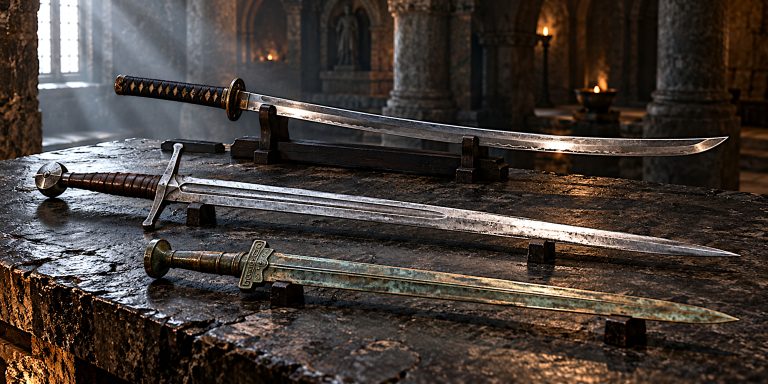
Artists often depict Angrist with elegant Dwarven engravings, although Tolkien never explicitly describes elaborate decoration.
The simplicity arguably makes it more believable.
Symbolism of Angrist
Like many of Tolkien’s weapons, Angrist represents more than combat.
Skill over strength
Beren defeats no armies with Angrist.
Instead, he relies on stealth, courage and precision.
Dwarven craftsmanship
The blade showcases what Dwarven smiths could achieve at their absolute peak.
The limits of mortal achievement
Even the greatest crafted weapon eventually fails.
That failure reminds readers that no object, however legendary, can permanently overcome overwhelming evil.
How Powerful Was Angrist?
Judging by its achievements, Angrist ranks among the greatest crafted weapons in Middle-earth.
Its unique abilities included:
- Cutting iron with extraordinary ease.
- Piercing one of the most powerful artefacts created by Morgoth.
- Remaining sharp throughout an impossible mission.
- Possessing craftsmanship unmatched by ordinary smiths.
Unlike swords such as Glamdring or Andúril, Angrist carried no known magical glow or enchantment.
Its power lay entirely in its craftsmanship.
That feels appropriately Tolkien. Sometimes incredible skill is more impressive than flashy magic.
Angrist Compared with Other Famous Tolkien Weapons
| Weapon | Owner | Greatest Achievement |
|---|---|---|
| Angrist | Beren | Cut a Silmaril from Morgoth’s crown |
| Andúril | Aragorn | Symbol of the restored Kingdom of Gondor |
| Sting | Bilbo, Frodo | Defeated Shelob and warned against Orcs |
| Glamdring | Gandalf | Wielded throughout the War of the Ring |
| Narsil | Elendil | Cut the One Ring from Sauron’s hand |
| Gurthang | Túrin | Slayed Glaurung before Túrin’s death |
Angrist stands apart because its greatest victory required precision rather than battle.
What Happened to Angrist?
After breaking against Morgoth’s crown, Angrist disappears from the story.
Tolkien never records anyone recovering or repairing the blade.
Its disappearance actually strengthens its legend.
Like many relics of the First Age, it passes into myth, remembered for one extraordinary achievement that permanently altered the history of Middle-earth.
Angrist in Adaptations
Angrist has yet to receive significant attention in major screen adaptations.
Because The Silmarillion has never been fully adapted for film or television, the knife remains largely confined to Tolkien’s writings and artistic interpretations.
Should the tale of Beren and Lúthien ever reach the screen, Angrist would almost certainly become one of the most recognisable weapons in Tolkien’s wider universe.
It has all the ingredients. A legendary maker, an impossible mission, and one unforgettable moment that changes history.
Why Angrist Still Matters
Angrist proves that legendary weapons are not defined by their size.
It never won a great battle.
It was never carried by an army.
It existed for one seemingly impossible task, and it succeeded where every sword in Middle-earth would likely have failed.
That makes it one of my favourite Tolkien weapons. There is something wonderfully understated about a knife quietly becoming one of the most important artefacts in the entire legendarium. It reminds us that history often turns not on the largest armies or the grandest kings, but on a single brave person holding exactly the right tool at exactly the right moment.
For a blade with only a handful of appearances, Angrist casts an impressively long shadow.
Frequently Asked Questions
What does Angrist mean?
Angrist means “Iron Cleaver” in Sindarin.
Who forged Angrist?
The knife was forged by the master Dwarven smith Telchar of Nogrod, one of the greatest craftsmen in Middle-earth.
Who wielded Angrist?
Beren carried Angrist during the Quest for the Silmaril.
Did Angrist cut Morgoth?
No. Angrist cut a Silmaril from Morgoth’s Iron Crown. When the blade later broke, the shattered fragment struck Morgoth’s face and woke him.
Why did Angrist break?
Tolkien never provides a definitive reason. It likely reached its physical limit while attempting to remove a second Silmaril from Morgoth’s crown.
Is Angrist magical?
Tolkien never explicitly describes Angrist as enchanted. Its extraordinary effectiveness appears to come from the unmatched craftsmanship of Telchar rather than overt magic.