Few weapons in gaming announce themselves quite like the Crucible. The moment the Doom Slayer draws this burning blade, subtlety leaves the room, probably through the nearest wall.
Introduced as one of the most important artefacts in modern Doom lore, the Crucible is not simply a powerful sword. It represents ancient Sentinel craftsmanship, Argent energy, the Doom Slayer’s transformation into an almost mythic warrior, and the series’ wonderful commitment to making everything as ridiculously metal as possible.
A sword powered by hellish energy that can permanently destroy Titans? Sometimes video game weapons do not need to apologise for being excessive.
What is the Crucible?

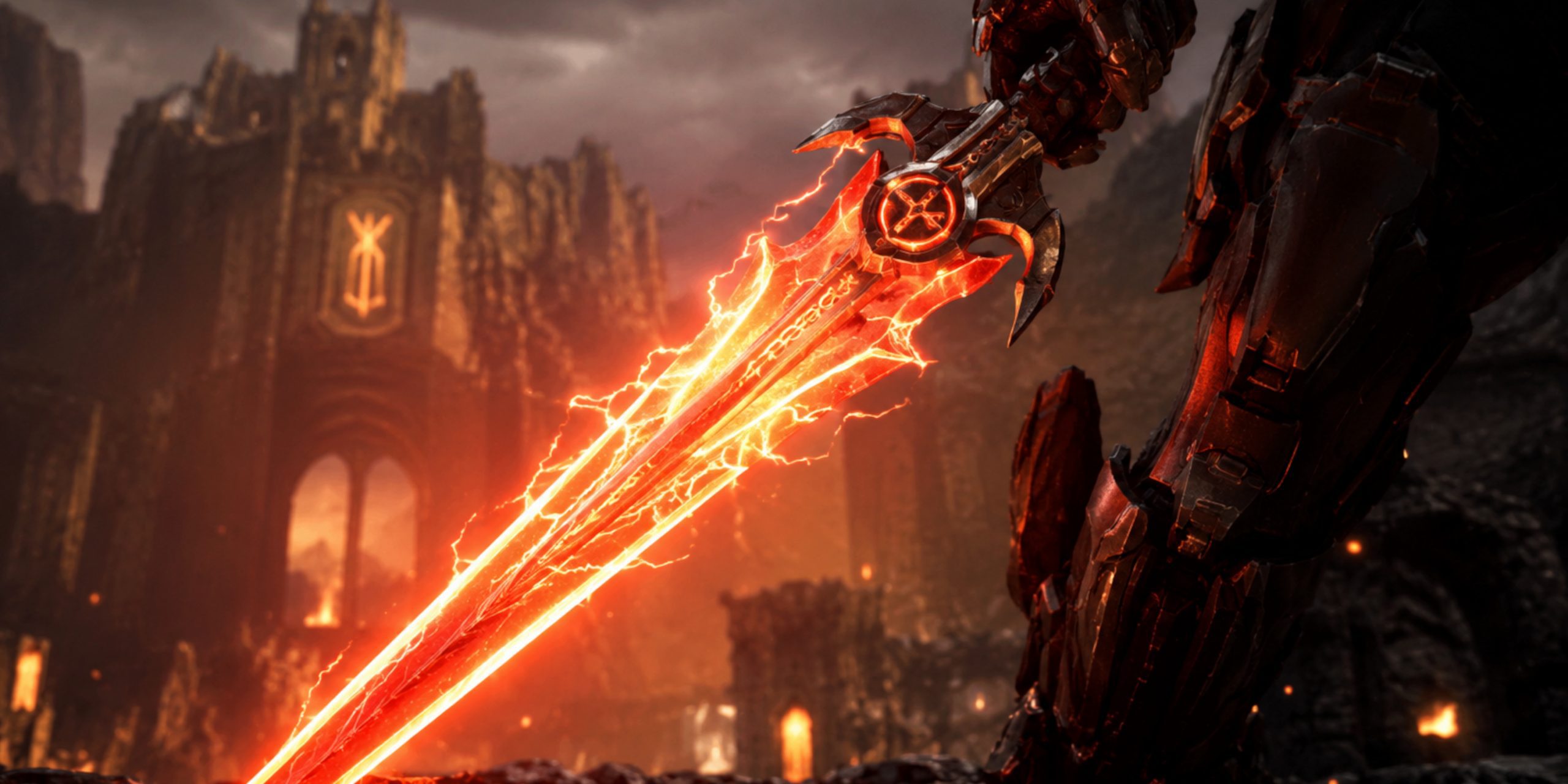
The Crucible is an energy-based sword featured prominently in Doom (2016) and Doom Eternal. Unlike a traditional steel blade, it forms a burning edge of concentrated Argent energy projected from an advanced hilt.
The weapon is closely connected to:
- The Doom Slayer
- The Night Sentinels of Argent D’Nur
- The Makyrs
- The war against Hell
- Ancient Titan battles
It combines science fiction technology with fantasy sword mythology, making it feel somewhere between a holy relic and something a weapons engineer designed after listening to too much heavy metal.
Crucible Specifications
| Feature | Details |
|---|---|
| Weapon type | Energy sword |
| First major appearance | Doom (2016) |
| Main wielder | Doom Slayer |
| Origin | Argent D’Nur Sentinel civilisation |
| Power source | Argent energy |
| Blade material | Energy projection rather than physical metal |
| Combat style | Heavy melee execution weapon |
| Main purpose | Killing powerful demons and Titans |
Origins and History of the Crucible
The Crucible comes from the ancient world of Argent D’Nur, home of the warrior society known as the Night Sentinels.
The Sentinels valued honour, combat skill and powerful weapon craftsmanship. Their weapons blended advanced technology with mystical energy sources, creating tools that looked ancient but operated far beyond normal human understanding.
The Crucible became one of their greatest weapons. It was capable of defeating massive demonic creatures that ordinary weapons could barely harm.
Its importance grew during the endless wars against Hell, where the Doom Slayer became a legendary figure among the Sentinels.
The Doom Slayer’s Crucible
The Doom Slayer’s Crucible is especially important because of its connection to the Titans.
During his war against Hell, the Slayer used the blade against enormous demons. The Crucible was powerful enough to stop these creatures permanently because leaving the blade embedded inside them prevented regeneration.
That detail gives the weapon a surprisingly brutal tactical purpose. It is not just about cutting something down. It is about making sure it stays down.
Given the average demon in Doom treats death as a mild inconvenience, that is fairly useful.
Design and Appearance
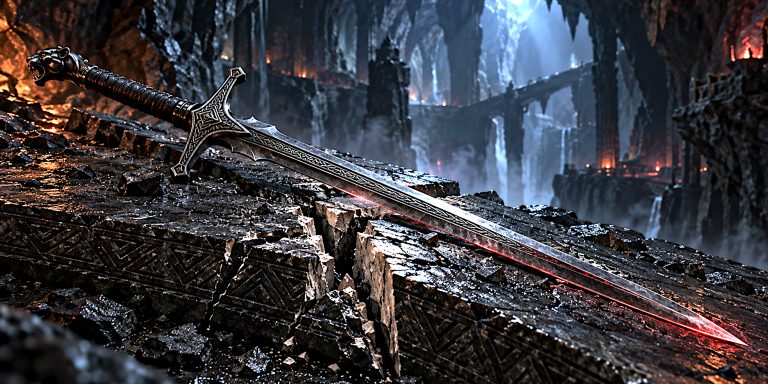
The Crucible has one of the most recognisable weapon designs in modern gaming.
Key design features include:
- A large mechanical hilt
- Red-orange energy blade
- Wide sword profile resembling a greatsword
- Sentinel markings and ancient styling
- A mixture of medieval and futuristic influences
The design cleverly reflects the Doom Slayer himself. It feels ancient, violent and ceremonial, but also technologically advanced.
It is basically a knight’s sword rebuilt for fighting skyscraper-sized nightmares.
How Powerful is the Crucible?
Within Doom lore, the Crucible sits among the most powerful weapons available.
Its abilities include:
- Destroying high-level demons instantly
- Severing extremely durable enemies
- Containing enough power to defeat Titans
- Channelling Argent energy
- Functioning after centuries of conflict
In gameplay terms, Doom Eternal presents it as a limited-use weapon capable of eliminating many major demons with a single strike.
Enemies vulnerable to the Crucible include:
| Enemy Type | Effectiveness |
| Hell Knight | Extremely effective |
| Mancubus | Instant destruction |
| Baron of Hell | Highly effective |
| Tyrant | Devastating |
| Titan-class demons | One of the few suitable weapons |
Advantages and Disadvantages
Advantages
- Incredible destructive power
- Can defeat enemies ordinary weapons cannot
- Lightweight compared with a physical sword of similar size
- Combines melee combat with advanced technology
- Symbolic power among Sentinels and demons
Disadvantages
- Requires Argent energy
- Limited use in gameplay
- Difficult to replace or repair
- Not practical against large groups without sufficient energy
- Requires an exceptional wielder
The Crucible is amazing, but handing it to an average person probably results in a very expensive glowing stick and immediate demon-related problems.
Comparison With Similar Gaming Weapons
| Weapon | Franchise | Comparison |
| Energy Sword | Halo | Smaller and faster, designed for elite duelling |
| Lightsaber | Star Wars | More elegant and versatile, less brutally destructive |
| Buster Sword | Final Fantasy VII | Physical oversized blade focused on strength and identity |
| Soul Edge | Soulcalibur | Magical weapon with corrupting power |
| Blade of Olympus | God of War | Closest match in terms of mythological destruction |
The Crucible stands apart because Doom does not treat it as a gentleman’s duelling weapon. It is closer to a supernatural execution tool.
The Crucible vs a Real Sword
Historically, massive swords existed, including greatswords and ceremonial blades, but nothing close to the Crucible would be practical with real materials.
A real sword requires:
- Balance
- Edge geometry
- Manageable weight
- Flexibility
- Reliable construction
The Crucible avoids these problems because the blade is energy rather than metal. The hilt provides control while the energy does the destructive work.
It is fantasy physics, but at least Doom builds its own internal logic around it.
Legacy of the Crucible
The Crucible has quickly become one of Doom’s defining symbols alongside the Super Shotgun and Praetor Suit.
It represents the evolution of Doom from a straightforward demon shooter into a larger mythology filled with ancient wars, lost civilisations and legendary weapons.
Some players prefer the simpler “angry marine versus demons” concept of classic Doom, which is fair. The newer games lean much harder into fantasy lore. The Crucible is the perfect example of that shift.
Ridiculous? Absolutely.
Memorable? Without question.