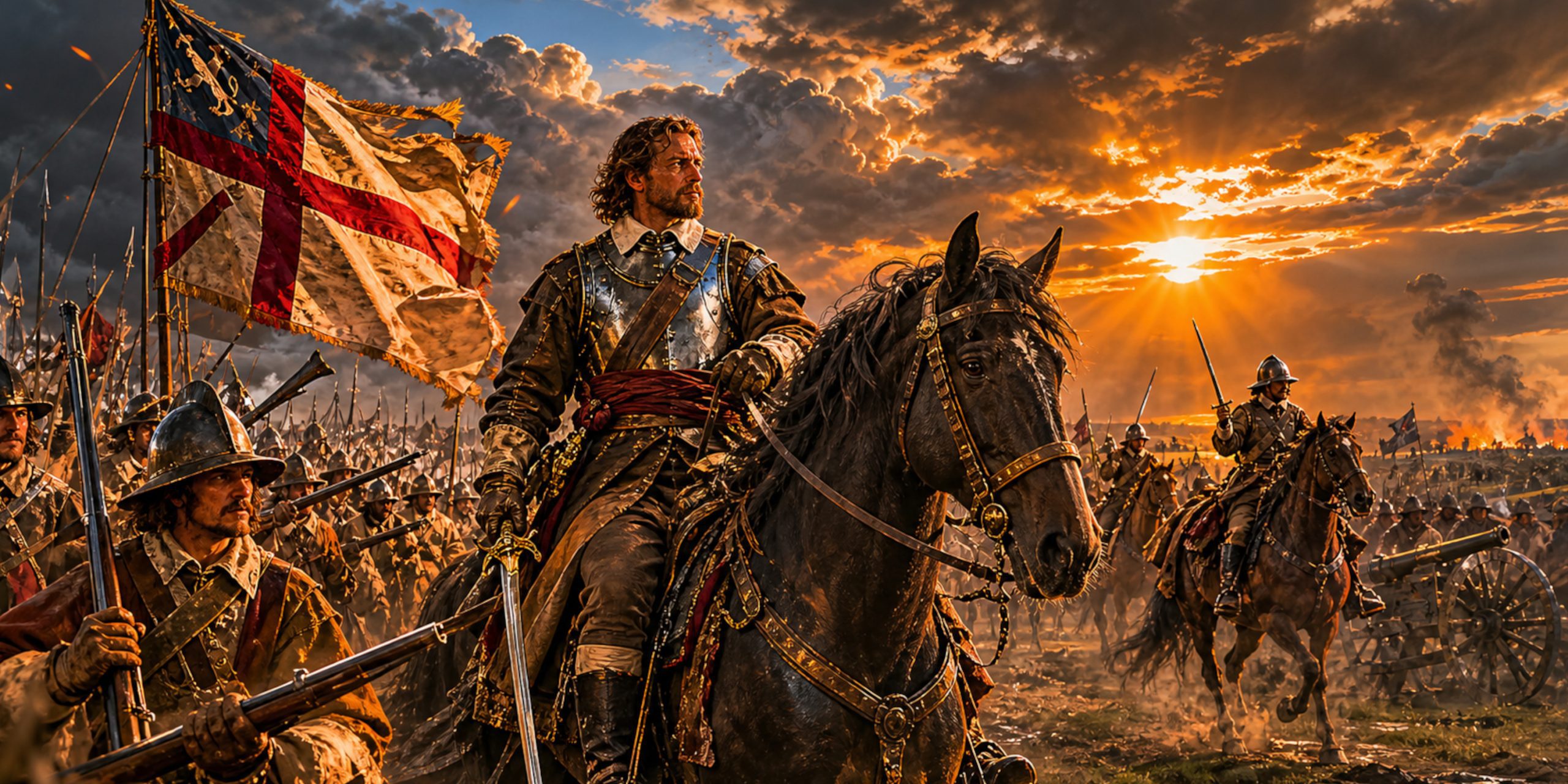
Sir Thomas Fairfax has always struck me as one of those figures who seems slightly out of place in his own story. Here is a man who helped win a civil war, commanded one of the most effective armies in British history, and yet never quite appeared comfortable with the consequences. He was a soldier of discipline and principle rather than ambition, which makes him both admirable and, at times, frustrating.
Born into a powerful Yorkshire family in 1612, Fairfax came of age during a period when loyalty to crown and conscience began to pull in different directions. When war came in 1642, he chose Parliament, though not without hesitation. That tension never truly left him.
Early Life and Formation
Fairfax was the son of Ferdinando Fairfax, 2nd Lord Fairfax of Cameron. His upbringing was shaped by education, travel, and exposure to continental warfare. He spent time in the Netherlands, observing military practices during the Eighty Years’ War, which would later inform his approach to discipline and organisation.
He was not a natural firebrand. Contemporary descriptions suggest a reserved man, thoughtful and cautious, yet capable of decisive action when required. One senses he preferred order to chaos, which makes his later success in civil war all the more interesting.
Arms and Armour
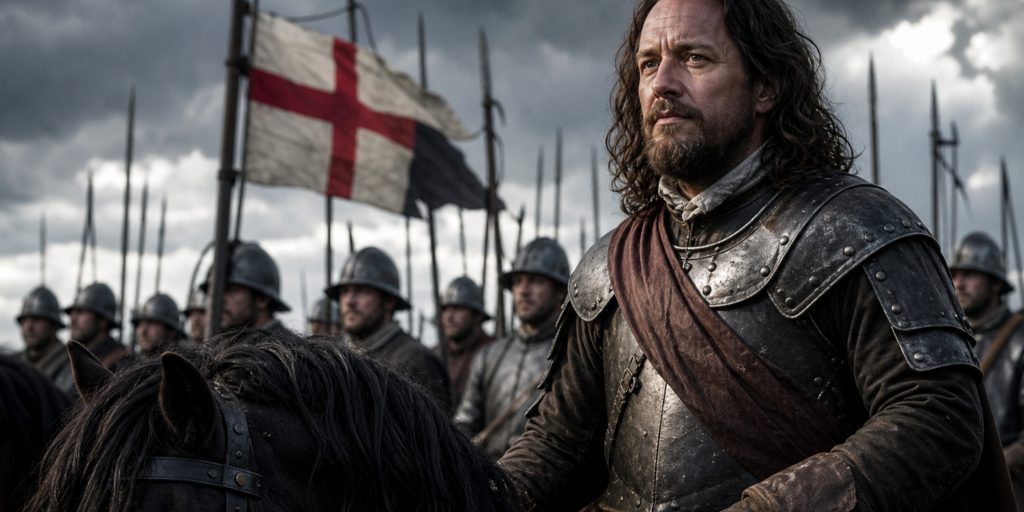
Fairfax fought during a transitional period in military equipment, where older knightly traditions met increasingly practical battlefield realities.
Personal Arms and Equipment:
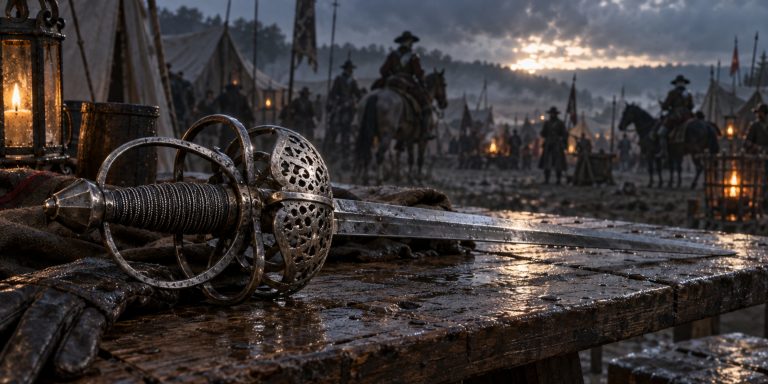
- Sword: Likely a basket-hilted broadsword or early backsword, suited for cavalry combat
- Pistols: Flintlock or earlier wheel-lock pistols carried on horseback
- Armour:
- Buff coat for flexibility and protection
- Breastplate and backplate for cavalry engagements
- Open-faced helmet, often a lobster-tailed pot helmet
New Model Army Equipment Standards:
- Infantry typically carried matchlock muskets and pikes
- Cavalry, including Fairfax’s own command, relied on swords and pistols
- Armour use declined over time, favouring mobility over heavy protection
There is a noticeable pragmatism here. Fairfax did not cling to outdated displays of chivalry. His forces were equipped for effectiveness, not spectacle.
Battles and Military Acumen
Fairfax’s reputation rests firmly on his battlefield performance and his role in shaping the New Model Army.
Key Engagements
Battle of Marston Moor (1644)
- One of the largest battles of the war
- Fairfax fought alongside Parliamentarian and Scottish forces
- Victory secured the north of England
Battle of Naseby (1645)
- Fairfax commanded the New Model Army
- Decisive defeat of Royalist forces under Charles I
- Demonstrated discipline, coordination, and tactical clarity
Siege Warfare
- Fairfax excelled in sieges, including York and Oxford
- Preferred methodical pressure rather than reckless assault
Command Style
- Emphasis on discipline and organisation
- Trusted subordinates, notably Oliver Cromwell
- Maintained strict control over troops, reducing looting and disorder
His leadership feels modern in some respects. He valued structure, reliability, and cohesion. There is less of the flamboyant commander here and more of a professional officer.
Relationship with Oliver Cromwell
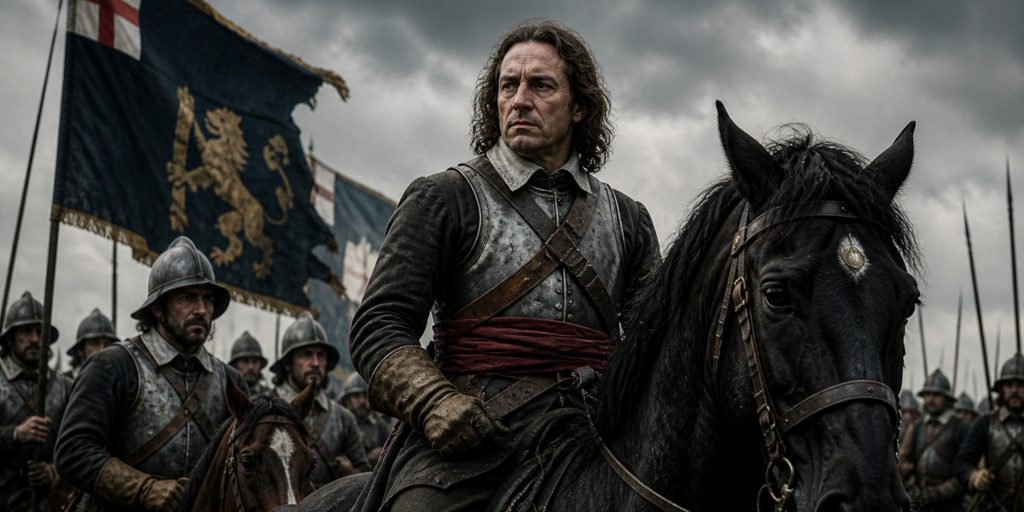
This is where things become complicated.
Fairfax and Cromwell worked closely, particularly during the formation and success of the New Model Army. Fairfax was commander-in-chief, Cromwell his most dynamic subordinate. Together, they formed a formidable partnership.
Yet Fairfax was never entirely aligned with Cromwell’s political radicalism. When the trial of Charles I came, Fairfax notably distanced himself. He refused to participate in the king’s execution, an act that speaks volumes.
There is a quiet integrity in that decision, though it arguably cost him influence in the new regime.
Later Life and Withdrawal from Power
After the war, Fairfax gradually withdrew from political life. He resigned his command in 1650 rather than lead a campaign against Scotland, which he viewed with reluctance.
During the Restoration in 1660, he supported the return of Charles II, helping stabilise the transition. It is a curious arc, from fighting the monarchy to facilitating its return, though perhaps not so surprising given his consistent discomfort with extremism.
He died in 1671, leaving behind a reputation for honour rather than dominance.
Where to See Artefacts
Artefacts connected to Fairfax and the Civil War period can still be found in several locations:
- National Army Museum, London
- Weapons, armour, and displays on the New Model Army
- Royal Armouries, Leeds
- Extensive collection of 17th-century arms and armour
- Yorkshire Museums
- Regional collections linked to the Fairfax family
- Bodleian Library, Oxford
- Manuscripts and documents from the Civil War period
Personal items directly tied to Fairfax are relatively scarce, which feels fitting. He was not a man inclined toward self-mythologising.
Archaeology and Recent Findings
Civil War archaeology has expanded in recent years, offering clearer insights into the world Fairfax operated in.
Key Developments:
- Battlefield surveys at Naseby
- Metal detecting has revealed musket balls and cavalry engagement zones
- Confirms the intensity and structure of the fighting
- Siege sites such as York and Oxford
- Excavations show trench systems and artillery placements
- Evidence of prolonged and organised siege warfare
- Material culture studies
- Analysis of armour fragments and weapon remains
- Indicates gradual decline in heavy armour use
These findings reinforce the idea that Fairfax’s success was rooted in organisation and discipline rather than brute force alone.
Legacy
Fairfax’s legacy is often overshadowed by Cromwell, which feels slightly unjust. Without Fairfax, the New Model Army may never have reached its full potential.
He represents a different kind of military figure. Not driven by ideology or personal ambition, but by a sense of duty that occasionally placed him at odds with his own side.
If Cromwell is the storm of the English Civil War, Fairfax is the steady hand that ensured it did not collapse into chaos. Not as dramatic, perhaps, but arguably just as essential.
Takeaway:
There is something quietly compelling about Fairfax. He wins battles, commands loyalty, and shapes history, yet remains uneasy with power. As a historian, I find that tension far more interesting than simple heroism.
He reminds us that not all great generals are comfortable in victory. Some simply do what they believe is necessary, then step back and let others argue about the meaning of it all.