Fire Temples, Silver Kings and the Empire That Would Not Stay Quiet
The Sassanian Dynasty sits in that strange historical position where it was enormously important, deeply sophisticated, militarily terrifying, and somehow still gets brushed aside in popular history by Rome, Byzantium, and later Islamic empires. Which is rather unfair when you consider the Sassanians spent over four centuries staring down Rome and Byzantium like an exhausted neighbour arguing across a garden fence.
From 224 to 651, the Sassanians ruled one of the great superpowers of the ancient world. Their empire stretched from Mesopotamia to Central Asia and the Persian Gulf. They built monumental cities, fielded elite cavalry armies, patronised scholars and artists, and developed a political structure that influenced the Islamic caliphates that followed them.
And yet the dynasty also carried a constant sense of tension. Court intrigue, ambitious nobles, brutal wars and succession crises haunted the empire almost from beginning to end. Reading Sassanian history often feels like watching brilliant people repeatedly set fire to the same carpet.
Origins of the Sassanian Dynasty
The dynasty emerged from the region of Persis, modern Fars in southern Iran. Its founder, Ardashir I, was originally a local ruler under the declining Parthian Empire.
The Parthians had ruled Iran for centuries, but by the early third century their authority had weakened badly. Regional nobles were increasingly independent, central power looked fragile, and rival factions were constantly fighting each other. Into this chaos stepped Ardashir, who seems to have possessed three useful qualities:
- Military ambition
- Political ruthlessness
- An excellent understanding of timing
In 224, Ardashir defeated the Parthian king Artabanus IV at the Battle of Hormozdgan. That victory effectively ended Parthian rule and began the Sassanian Empire.
Ardashir styled himself Shahanshah, meaning “King of Kings,” deliberately invoking the memory of the old Achaemenid Persian Empire. This was not subtle branding. The Sassanians wanted the world to know Persia was back.
The Structure of the Empire
The Sassanian state was far more centralised than the Parthian system it replaced.
The empire relied upon:
| Institution | Role |
|---|---|
| Shahanshah | Supreme ruler and divine monarch |
| Noble families | Military and regional administration |
| Zoroastrian priesthood | Religious authority and state support |
| Bureaucracy | Taxation, law and governance |
| Elite cavalry | Core military strength |
The king stood at the centre of political and cosmic order. Sassanian ideology tied monarchy closely to divine favour, especially through Zoroastrianism.
This produced a fascinating contradiction. The shahanshah was presented almost as a sacred figure, but many of them were assassinated, overthrown or imprisoned by their own elites. Apparently divine radiance did not always survive palace politics.
Zoroastrianism and Religion
The Sassanians strongly promoted Zoroastrianism as the state religion.
Fire temples appeared across the empire, priests gained enormous influence, and religious identity became tied closely to imperial legitimacy. Sacred fires symbolised purity and divine order.
The famous Zoroastrian dualism between truth and falsehood deeply shaped Sassanian political culture. Kings presented themselves as defenders of order against chaos, both earthly and spiritual.
At the same time, the empire remained remarkably diverse.
Within Sassanian territory lived:
- Christians
- Jews
- Manichaeans
- Buddhists
- Hindus
- Local pagan traditions
Treatment varied depending on the ruler and political circumstances. Some periods saw tolerance and intellectual exchange. Others brought persecution, especially when Christians were suspected of sympathising with the Roman Empire.
Which, to be fair, often happened during yet another Roman-Persian war.
The Great Rivalry with Rome and Byzantium
If there is one defining feature of Sassanian foreign policy, it is conflict with Rome and later Byzantium.
For over four centuries, the two superpowers fought across:
- Mesopotamia
- Armenia
- Syria
- Anatolia
- The Caucasus
These wars shaped the ancient Near East.
Shapur I and the Humiliation of Rome
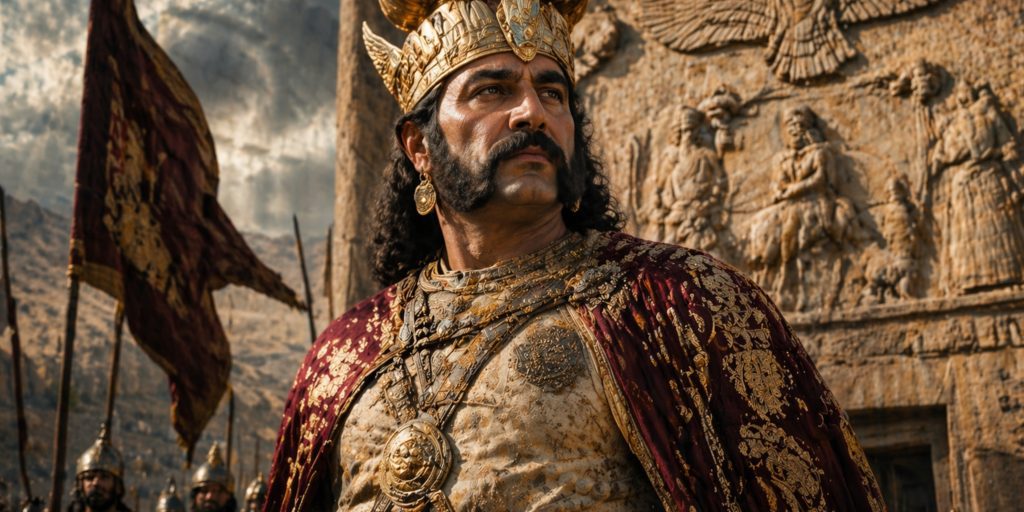
One of the greatest Sassanian rulers was Shapur I, son of Ardashir.
He expanded the empire aggressively and inflicted catastrophic defeats on Rome. His most famous achievement came in 260 when he captured the Roman emperor Valerian alive after the Battle of Edessa.
This was an extraordinary humiliation for Rome. No Roman emperor had ever been captured by a foreign enemy before.
Sassanian rock reliefs proudly displayed the moment:
- Roman emperors kneeling
- Persian rulers triumphant
- Horses dramatically posed because ancient imperial propaganda loved theatrical composition almost as much as modern cinema posters
Shapur also sponsored monumental building projects and founded cities populated partly by Roman prisoners.
The Sassanian Military
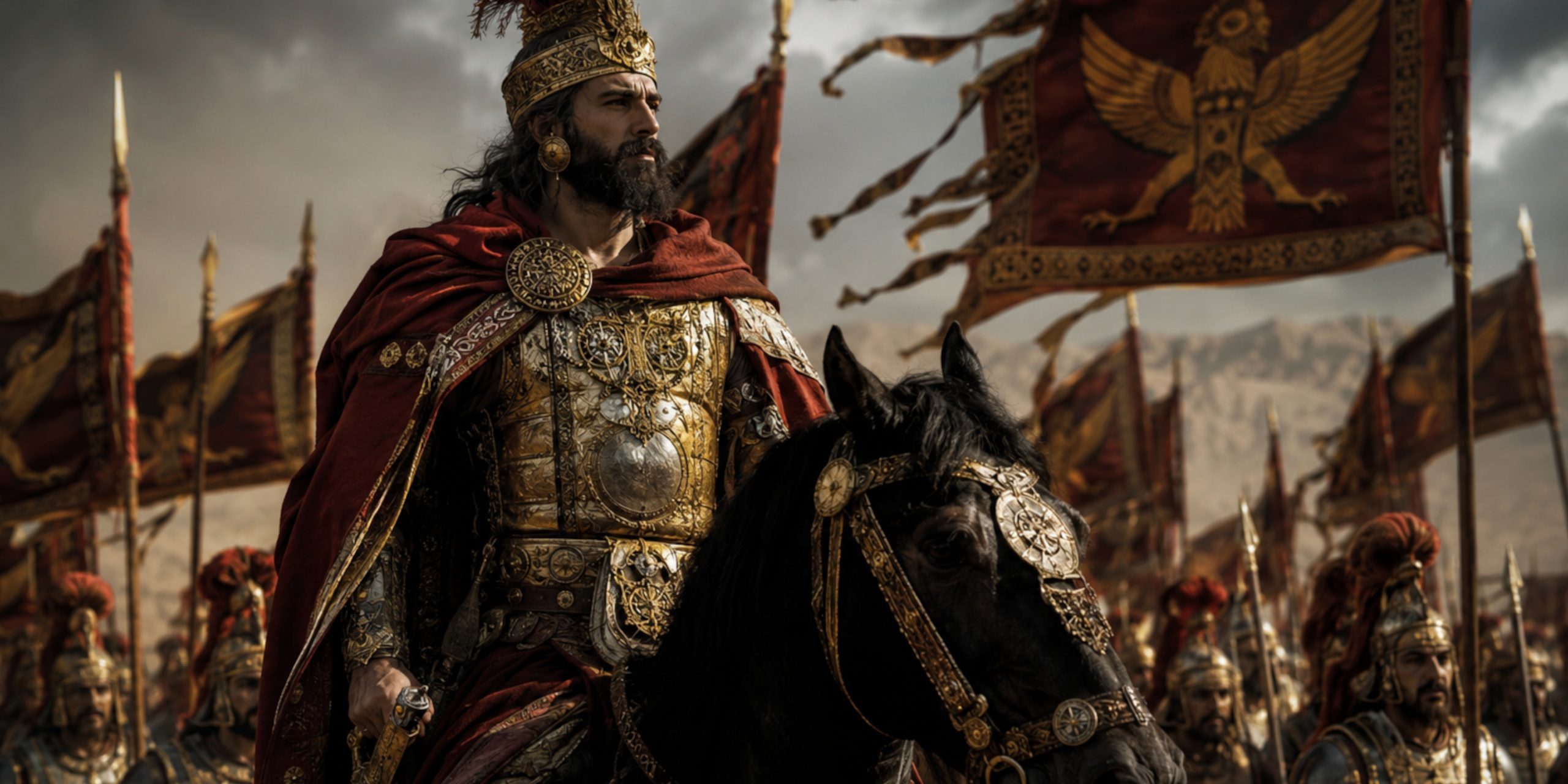
The Sassanian army developed into one of the most effective military systems of late antiquity.
Its reputation rested heavily on elite cavalry.
Key Military Forces
| Unit Type | Description |
|---|---|
| Cataphracts | Fully armoured heavy cavalry |
| Horse archers | Fast mobile missile troops |
| War elephants | Shock units, especially in eastern campaigns |
| Infantry | Supporting troops and garrison forces |
| Frontier forces | Border defence and fortifications |
The famous heavy cavalry were often covered head to toe in armour, as were their horses. Roman writers described them with a mixture of fear and irritation.
Sassanian weaponry included:
- Long lances
- Composite bows
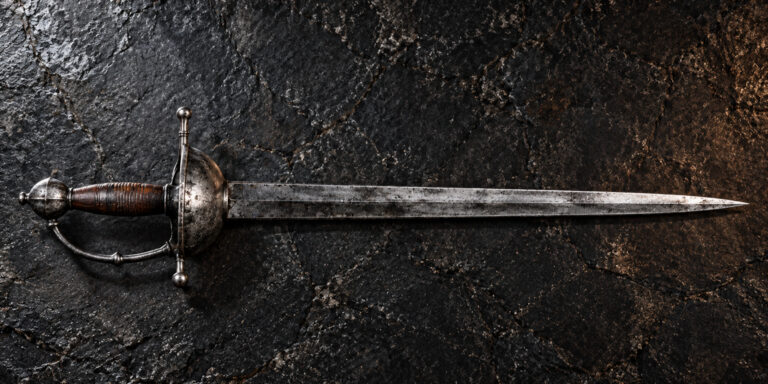
- Straight double-edged swords
- Maces
- Scale armour
- Lamellar armour
Their battlefield tactics relied heavily on mobility, missile fire and devastating cavalry charges.
The Romans eventually copied quite a lot of this. Empires are competitive creatures, but they are also shameless borrowers.
Khosrow I and the Golden Age
Khosrow I, also called Anushirvan or “the Immortal Soul,” ruled during the sixth century and is often regarded as the greatest Sassanian monarch.
Under Khosrow I, the empire experienced:
- Administrative reform
- Military restructuring
- Economic expansion
- Intellectual flourishing
- Architectural development
He reorganised taxation and strengthened central authority. He also cultivated scholarship and welcomed philosophers displaced from the Byzantine world.
The royal court became famous for sophistication and ceremony. Persian luxury goods travelled across Eurasia, and Sassanian silverware became prized from Europe to China.
Honestly, some surviving Sassanian silver plates still look astonishingly modern. The craftsmanship has a confidence to it. There is no uncertainty in those designs. Every king depicted seems absolutely convinced he deserves to be there.
Cities and Architecture
Sassanian architecture influenced both Islamic and Byzantine styles.
Major cities included:
- Ctesiphon
- Gundeshapur
- Bishapur
- Istakhr
The arch of Ctesiphon, the famous Taq Kasra, remains one of the great architectural achievements of the ancient world.
Characteristics of Sassanian Architecture
- Massive vaulted halls
- Monumental arches
- Domed chambers
- Decorative stucco work
- Palace complexes
- Fire temples
Their architecture possessed scale without losing elegance. Even ruins retain a kind of imperial arrogance.
Art and Culture
Sassanian art is among the most distinctive visual traditions of late antiquity.
Royal imagery dominates surviving works:
- Hunting scenes
- Kings battling lions
- Ceremonial banquets
- Investiture scenes
- Silver plates and bowls
- Intricate textiles
The dynasty loved visual propaganda. Crown designs became increasingly elaborate, almost absurdly so in some cases.
Several later Islamic artistic traditions inherited Sassanian motifs, administrative ideas and court customs.
Persian literature also flourished. Although much early material was later lost or rewritten, the Sassanian period helped preserve Iranian mythological traditions that eventually shaped works like the Shahnameh.
Gundeshapur and Learning
The Academy of Gundeshapur became one of the intellectual centres of the late ancient world.
Scholars there studied:
- Medicine
- Astronomy
- Philosophy
- Mathematics
- Translation work
Greek, Persian, Indian and Syriac traditions interacted within the city.
Some historians see Gundeshapur as a precursor to later Islamic centres of learning such as Baghdad’s House of Wisdom.
Which makes the Sassanian world feel surprisingly connected to later medieval civilisation. The old boundaries between “ancient” and “medieval” history start to blur quite quickly here.
The Final Great War with Byzantium
The last great Roman-Persian conflict proved catastrophic for both empires.
Under Khosrow II, the Sassanians initially achieved spectacular success:
- Syria conquered
- Jerusalem captured
- Egypt occupied
- Byzantine territory devastated
For a moment it looked as though Persia might dominate the eastern Mediterranean entirely.
Then Emperor Heraclius launched a remarkable counteroffensive. Byzantine armies penetrated deep into Persian territory, alliances collapsed, and internal rebellion spread through the empire.
The war exhausted both powers financially and militarily.
This timing could not have been worse.
The Islamic Conquest
Only a few years after the Roman-Persian war ended, Arab Muslim armies emerged from Arabia with extraordinary speed and momentum.
The Sassanians, already weakened by:
- Civil war
- Economic strain
- Succession crises
- Plague
- Military exhaustion
were unable to recover.
Key defeats included:
| Battle | Date | Outcome |
|---|---|---|
| Battle of al-Qadisiyyah | c. 636 | Major Sassanian defeat |
| Battle of Nahavand | 642 | Collapse of organised resistance |
The final ruler, Yazdegerd III, fled eastward before eventually being killed in 651.
The dynasty ended, but Persian culture did not.
That distinction matters enormously.
Legacy of the Sassanians
The Sassanian legacy survived through:
- Persian administrative traditions
- Court ceremonial culture
- Military organisation
- Art and architecture
- Literature and mythology
- Zoroastrian communities
The Islamic caliphates inherited and adapted large parts of the Sassanian state apparatus.
Even later medieval Persian identity retained deep connections to the Sassanian past. Their rulers became legendary figures in Persian memory, half historical monarchs and half mythic heroes.
In many ways, the Sassanians formed the bridge between ancient Persia and the Islamic Persianate world that followed.
Archaeology and What Survives Today
Important surviving Sassanian sites include:
| Site | Modern Location | Importance |
|---|---|---|
| Taq Kasra | Iraq | Monumental palace arch |
| Naqsh-e Rustam | Iran | Royal rock reliefs |
| Bishapur | Iran | Urban and ceremonial centre |
| Firuzabad | Iran | Early Sassanian capital |
| Taq-e Bostan | Iran | Elaborate royal carvings |
Archaeologists continue uncovering:
- Coins
- Military equipment
- Ceramics
- Urban foundations
- Religious sites
- Silver treasures
The rock reliefs are especially fascinating because they project such deliberate theatrical power. Ancient rulers truly understood the value of image management. Modern politicians would probably admire the confidence.
Takeaway
The Sassanian Dynasty was one of the great imperial powers of world history. Militarily formidable, culturally rich and politically ambitious, it shaped the ancient Near East for over four centuries.
What fascinates me most is the mixture of brilliance and fragility. The Sassanians built magnificent cities, refined statecraft, and maintained a civilisation capable of challenging Rome itself. Yet beneath the grandeur sat constant instability. Noble rivalries, dynastic disputes and endless warfare slowly hollowed the empire out.
There is something deeply human in that contradiction.
The empire looked eternal right up until it wasn’t. History rather enjoys doing that to powerful states.