The Silmarillion does not treat swords like ordinary pieces of equipment. In Tolkien’s world, a blade can carry history, identity, tragedy and sometimes a worrying amount of personality. These weapons are not magical loot waiting in a chest. They are heirlooms forged by master craftsmen, carried through impossible battles and remembered thousands of years later in songs.
Some swords became symbols of hope. Others seemed to collect misfortune like a cursed family heirloom nobody had the good sense to leave alone.
Ranking them is difficult because Tolkien rarely used simple measures of power. A sword’s importance came from its maker, its wielder, its deeds and the fate attached to it.
These are the most powerful swords associated with The Silmarillion and the wider First Age legends of Middle Earth.
10. Anguirel
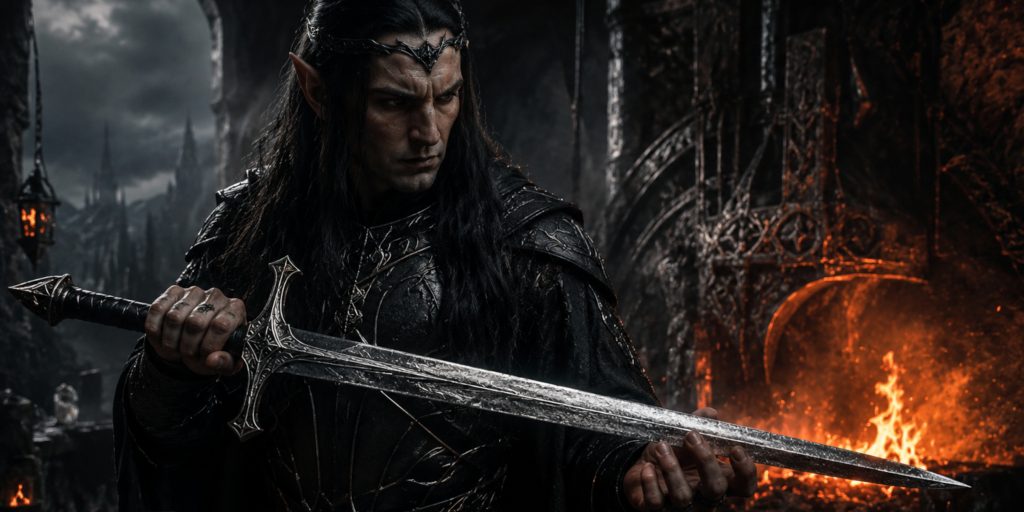
Original owner: Eöl the Dark Elf
Maker: Eöl
Material: Meteoric iron
Era: First Age
Anguirel is one of the most mysterious blades in Tolkien’s mythology. Forged by Eöl, the skilled but deeply troubled Dark Elf of Nan Elmoth, it was created from the same strange iron as its more famous sibling, Anglachel.
Eöl was not exactly winning awards for personality, but as a smith he was extraordinary. His knowledge of metalwork rivalled some of the greatest craftsmen among the Elves.
Anguirel remained with Eöl, while Anglachel eventually entered a much darker and more famous story. Because we hear less about Anguirel’s achievements, it ranks lower, but its origin alone makes it one of Middle Earth’s most remarkable weapons.
Why it was powerful
- Forged from rare meteoric iron
- Created by one of the greatest Elven smiths
- Sister blade to Anglachel and Gurthang
- Possibly possessed similar supernatural qualities
9. Aranrúth
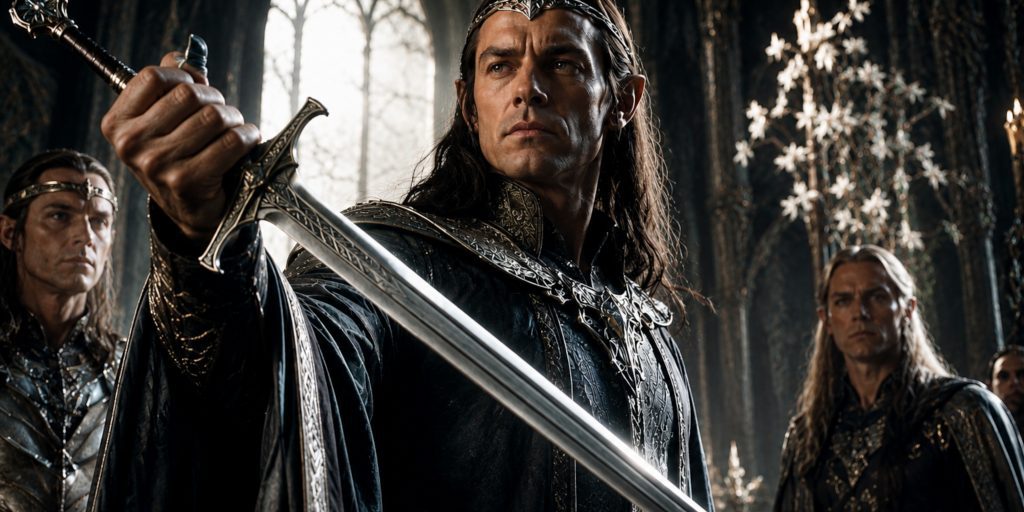
Meaning: King’s Ire
Original owner: Thingol
Later owners: Kings of Númenor
Era: First Age and Second Age
Aranrúth belonged to Thingol, King of Doriath, one of the most powerful Elven rulers in Middle Earth’s history.
Unlike some legendary swords, Aranrúth is remembered less for dramatic duels and more for its incredible lineage. After the fall of Beleriand, it survived and became part of the royal treasures of Númenor.
That survival alone is impressive. Most First Age artefacts had a habit of ending up lost, broken or somewhere extremely inconvenient at the bottom of the sea.
Why it was powerful
- Sword of one of the greatest Elven kings
- Preserved as a royal treasure of Númenor
- Connected directly to the Elder Days
- Symbolised authority and ancient power
8. Glamdring
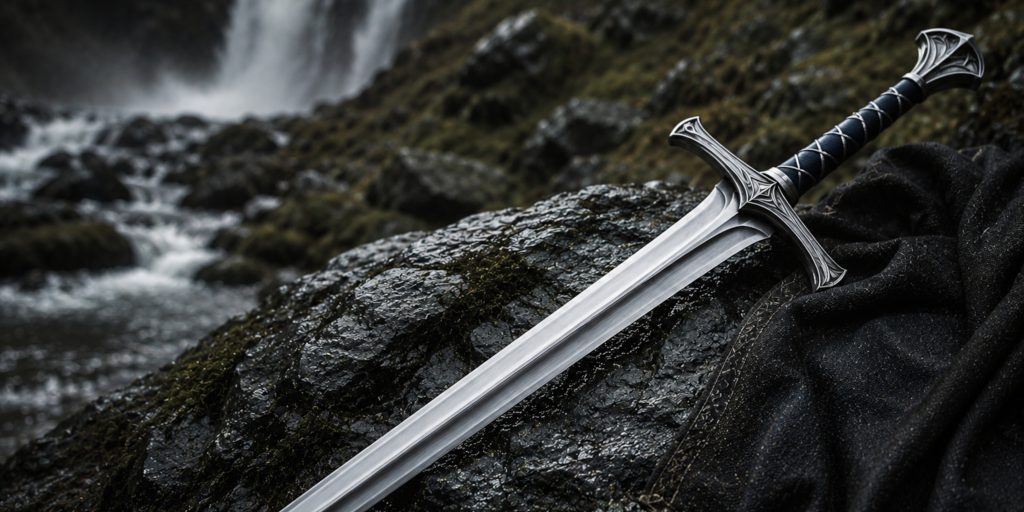
Meaning: Foe Hammer
Original owner: Turgon of Gondolin
Later owner: Gandalf
Era: First Age to Third Age
Although Glamdring is best known from The Hobbit and The Lord of the Rings, its story begins in the First Age.
It belonged to Turgon, King of Gondolin, a hidden Elven kingdom famous for its beauty, craftsmanship and extremely unfortunate ending. During the Fall of Gondolin, Glamdring would have been carried against the armies of Morgoth.
Thousands of years later, Gandalf recovered the blade, proving that great Elven craftsmanship apparently came with a very generous warranty.
Why it was powerful
- Forged in Gondolin
- Carried by an Elven king
- Survived multiple ages
- Feared by Orcs as “Beater”
7. Orcrist
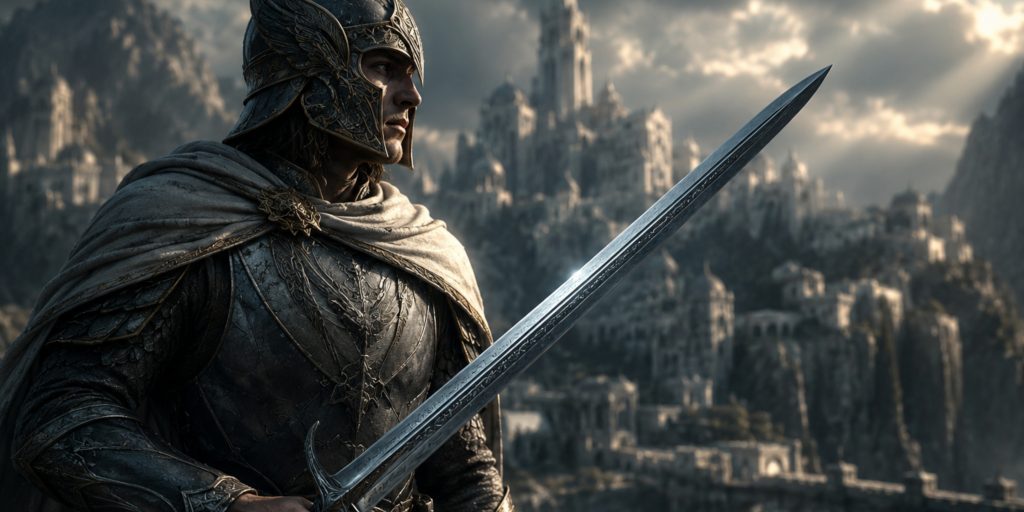
Meaning: Goblin Cleaver
Original owner: Unknown Orcist
Later owner: Thorin Oakenshield
Era: First Age to Third Age
Orcrist was Glamdring’s companion blade, another weapon forged in Gondolin during the wars against Morgoth.
Its original owner is unknown, but its reputation among Orcs survived for thousands of years. A weapon remembered by your enemies after several millennia has clearly made an impression.
Thorin Oakenshield later carried Orcrist during the Quest of Erebor, connecting the weapon’s First Age origins with the later struggles of Middle Earth.
Why it was powerful
- Crafted by the Elves of Gondolin
- Famous Orc-slaying weapon
- Survived from the First Age
- Became a legendary Dwarven royal sword
6. Narsil
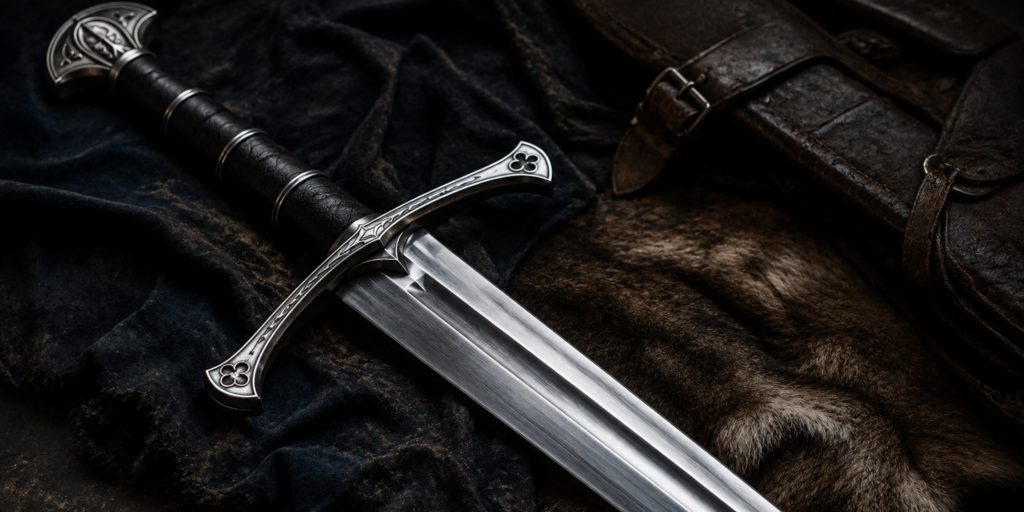
Meaning: Red and White Flame
Original owner: Elendil
Maker: Telchar of Nogrod
Later reforged as: Andúril
Narsil is not mainly a Silmarillion sword, but its origins belong to the same ancient world.
Forged by Telchar, the legendary Dwarven smith of Nogrod, Narsil became the sword that helped end the Second Age. During the War of the Last Alliance, Elendil carried it against Sauron.
Even broken, Narsil remained powerful. Most swords become useless after snapping. Narsil became an inspirational political symbol for thousands of years. Not bad for half a blade.
Why it was powerful
- Forged by one of Middle Earth’s greatest smiths
- Used in the defeat of Sauron
- Became the symbol of Aragorn’s inheritance
- Reforged into Andúril
5. Anglachel
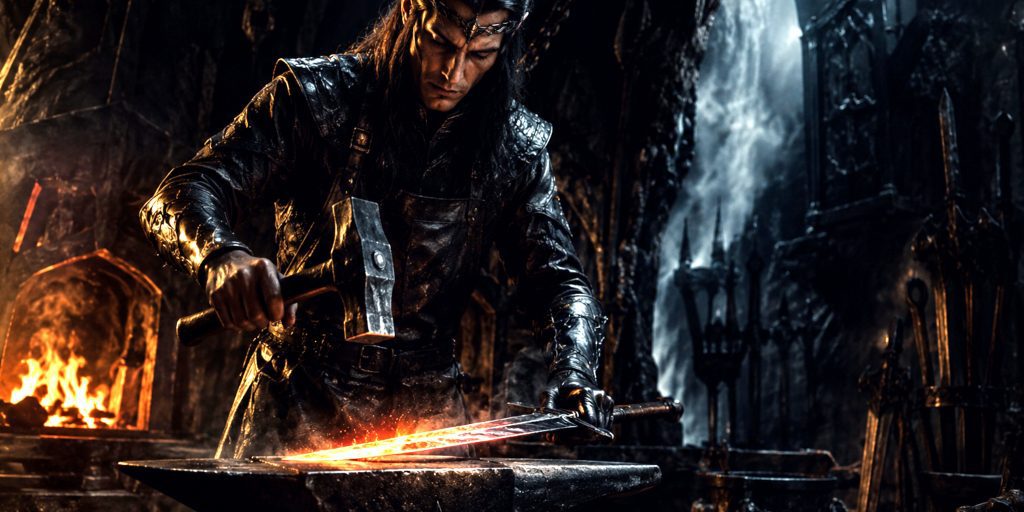
Original owner: Beleg Cúthalion
Later reforged as: Gurthang
Maker: Eöl
Before becoming Gurthang, Anglachel already had a dark reputation.
Thingol received the blade from Eöl, but Melian immediately sensed something wrong within it. Tolkien suggested that part of Eöl’s bitterness had passed into the weapon itself.
That makes Anglachel fascinating. It is one of the closest things Tolkien created to a genuinely cursed sword.
Why it was powerful
- Contained unusual supernatural qualities
- Forged from rare material
- Used by the great warrior Beleg
- Later transformed into an even greater weapon
4. Herugrim
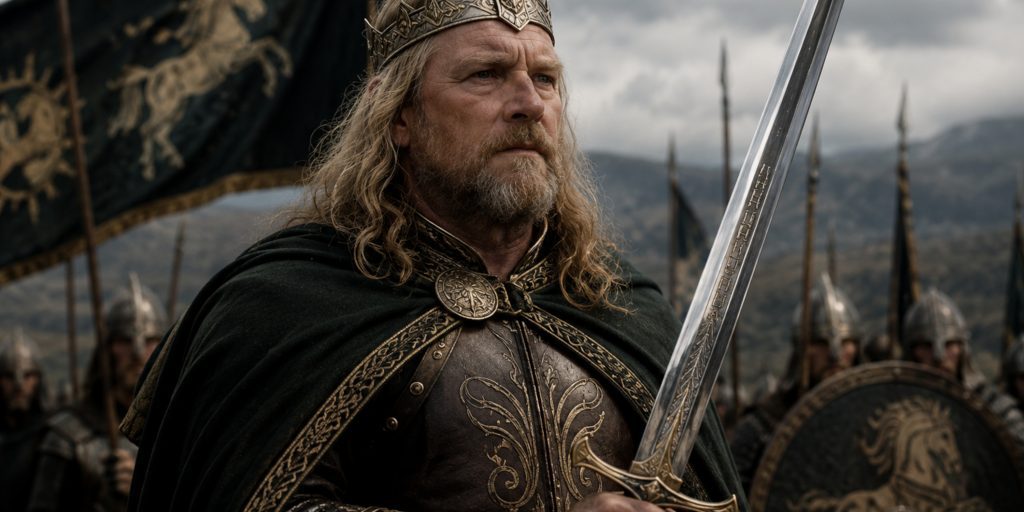
Original owner: Kings of Rohan
Notable wielder: Théoden
Herugrim does not have the same First Age mystery as many Elven blades, but Tolkien’s world repeatedly shows that power is not only about magic.
A sword becomes legendary because of the person holding it.
Herugrim represented the kingship of Rohan and was restored to Théoden before his final campaigns. It earns its place through symbolism rather than supernatural force.
Why it mattered
- Royal sword of Rohan
- Symbol of restored leadership
- Connected to one of Middle Earth’s greatest charges
3. Ringil
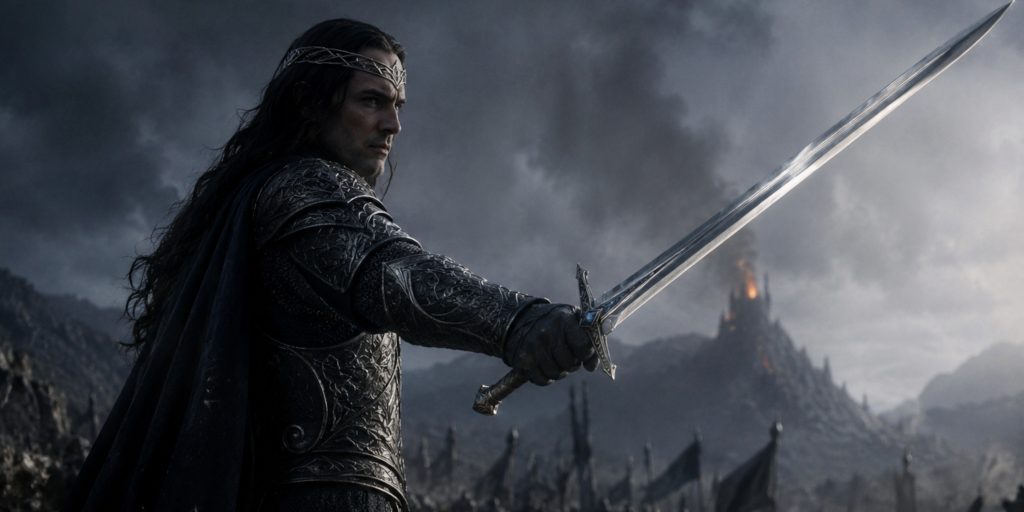
Owner: Fingolfin
Era: First Age
Ringil deserves legendary status for one simple reason. It wounded Morgoth.
Fingolfin, High King of the Noldor, challenged the first Dark Lord himself in single combat. It was a hopeless fight, but Fingolfin managed to strike Morgoth several times with Ringil before falling.
There are many famous swords in Tolkien’s writing. Very few can claim they permanently injured the most powerful evil being in Arda.
Why it was powerful
- Weapon of one of the greatest Elven warriors
- Used against Morgoth directly
- Left lasting wounds on the first Dark Lord
- Associated with unmatched courage
2. Gurthang
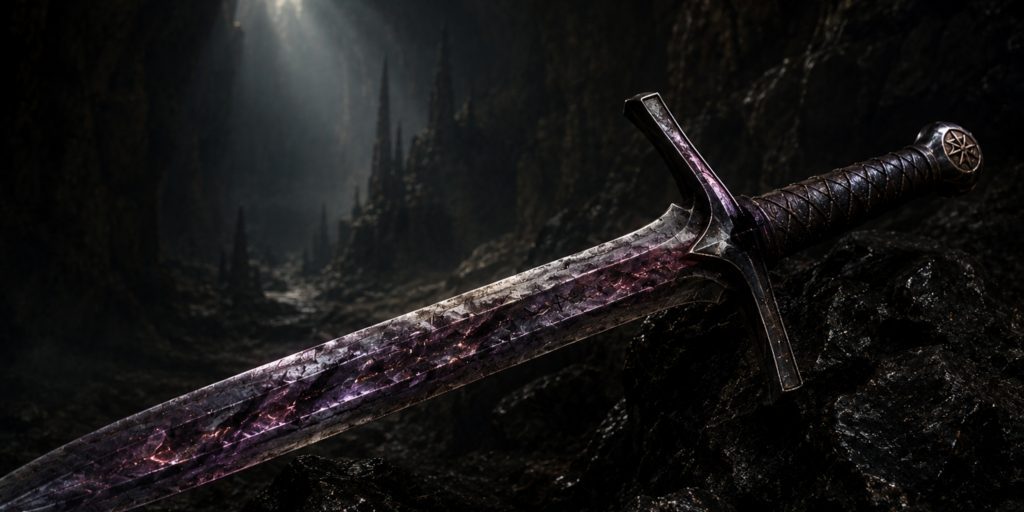
Meaning: Iron of Death
Owner: Túrin Turambar
Formerly: Anglachel
Gurthang may be Tolkien’s darkest sword.
After Anglachel was reforged, Túrin carried it during his tragic wars against Morgoth’s servants. The blade killed Glaurung, the first dragon and one of the most terrifying creatures in Middle Earth.
The disturbing part is that Gurthang appears to possess awareness. When Túrin speaks to the sword near the end of his life, it answers. For anyone considering owning a talking sword, Tolkien provides a strong warning label.
Why it was powerful
- Killed Glaurung
- Possibly possessed its own will
- Connected to one of Tolkien’s greatest heroes
- One of the clearest examples of a cursed weapon in Middle Earth
1. Angrist
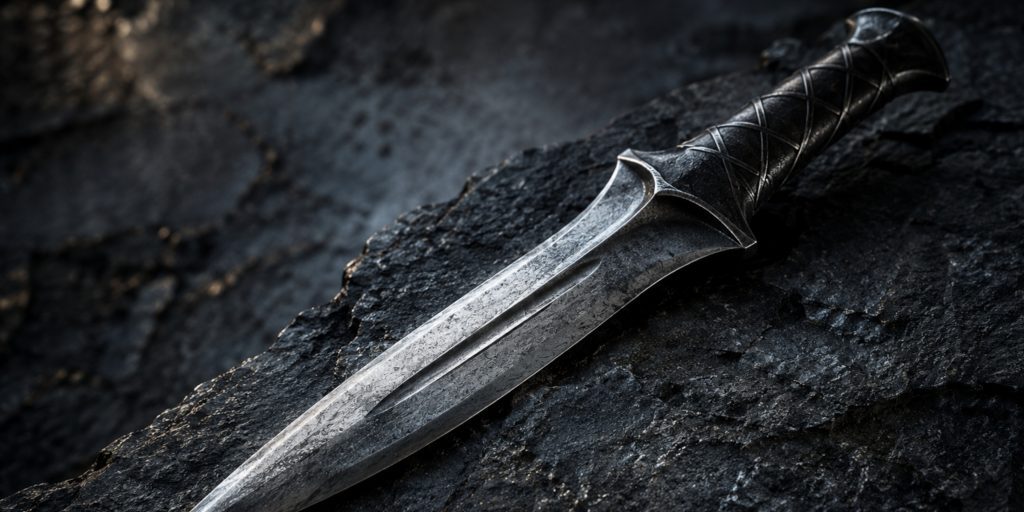
Meaning: Iron Cleaver
Owner: Beren
Maker: Telchar of Nogrod
Angrist earns the top spot because of what it achieved.
This was the knife used by Beren to cut a Silmaril from the Iron Crown of Morgoth. Although technically a blade rather than a sword, its importance is almost impossible to ignore.
Forged by Telchar, Angrist could cut through iron with ease. It failed only when Beren attempted to remove another Silmaril, proving that even legendary weapons have limits.
Why it was powerful
- Cut a Silmaril from Morgoth’s crown
- Forged by Telchar
- Played a central role in one of Tolkien’s greatest stories
- Changed the history of Middle Earth
Which Sword Was Truly The Strongest?
If judging purely by combat achievement, Ringil and Gurthang stand above almost everything else. Ringil wounded Morgoth himself, while Gurthang killed the first dragon.
If judging craftsmanship, Telchar’s creations such as Angrist and Narsil are almost impossible to beat.
The beauty of Tolkien’s weapons is that “power” is complicated. The greatest sword is rarely just the sharpest piece of metal. It carries memory, tragedy and the choices of the person brave enough, or unlucky enough, to draw it.
Final Ranking
| Rank | Sword | Greatest Achievement |
|---|---|---|
| 1 | Angrist | Cut a Silmaril from Morgoth’s crown |
| 2 | Gurthang | Killed Glaurung |
| 3 | Ringil | Wounded Morgoth |
| 4 | Herugrim | Symbol of restored kingship |
| 5 | Anglachel | Legendary cursed blade |
| 6 | Narsil | Helped defeat Sauron |
| 7 | Orcrist | Ancient Orc-slaying sword |
| 8 | Glamdring | Weapon of Turgon and Gandalf |
| 9 | Aranrúth | Royal sword of Thingol |
| 10 | Anguirel | Sister blade of Anglachel |