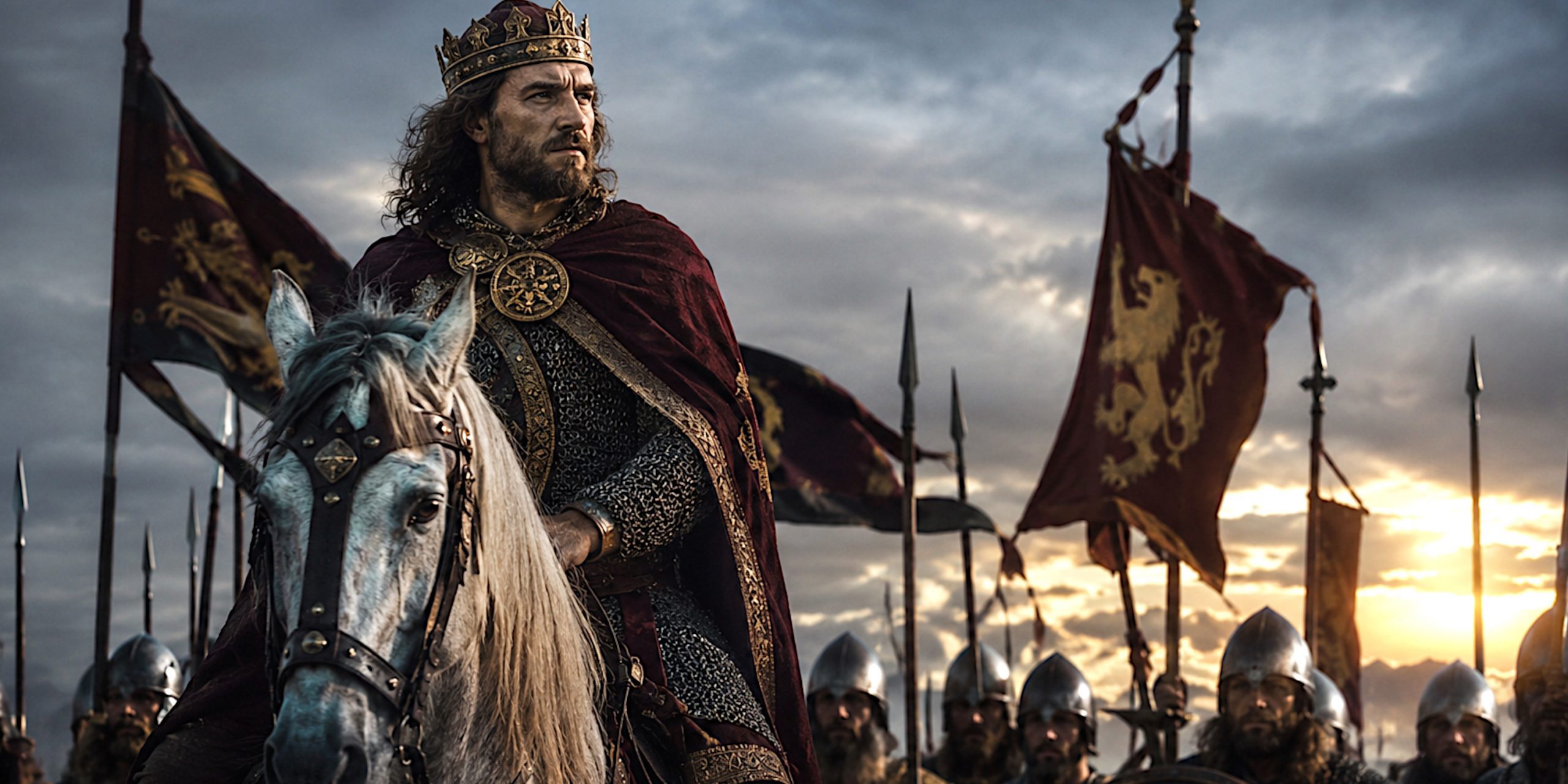
When people think of the kings who shaped England, names such as Alfred the Great, William the Conqueror and Henry II usually spring to mind. Yet one ruler quietly sits at the centre of that story. Without Athelstan (Old English: Æthelstan), there is a strong argument that there would have been no Kingdom of England for later monarchs to inherit.
Athelstan was the first ruler to bring the Anglo-Saxon kingdoms under one crown and successfully defend that achievement against a formidable alliance of enemies. He was an accomplished military commander, an astute diplomat, a lawmaker and a patron of learning. By the time he died in 939, England had become one of the most influential kingdoms in western Europe.
Despite those achievements, Athelstan remains one of Britain’s most overlooked monarchs. Historians have gradually restored his reputation over the past century, recognising that his reign marked one of the great turning points in medieval history.
Early Life
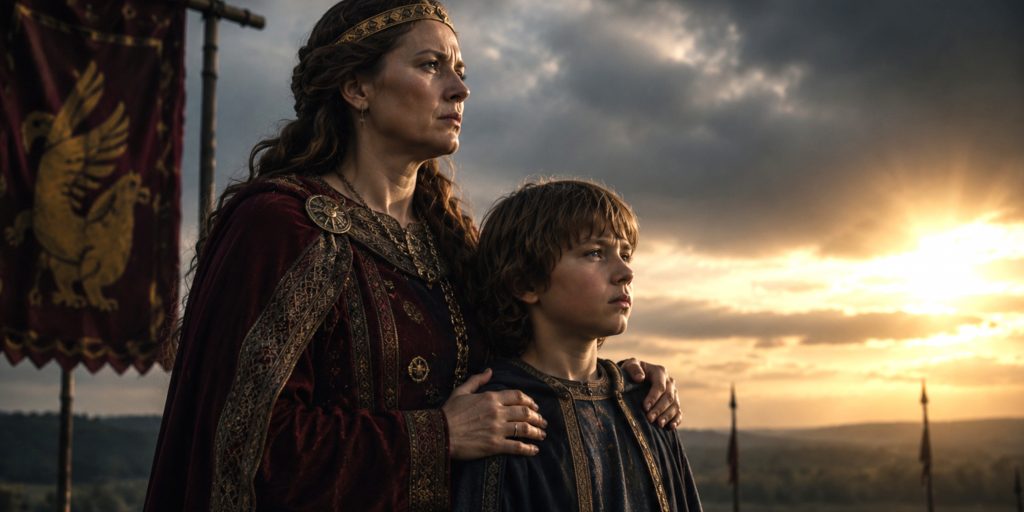
Athelstan was born around 894, the eldest known son of Edward the Elder and the grandson of Alfred the Great. His mother, Ecgwynn, remains an elusive figure. Later medieval writers questioned her status, although these accounts were likely influenced by dynastic politics rather than reliable evidence.
Much of Athelstan’s childhood appears to have been spent in Mercia under the care of his aunt Aethelflaed (Old English: Æthelflæd), the celebrated Lady of the Mercians. If so, he grew up in one of the most politically active and militarily experienced courts in Britain.
Mercia had long been a centre of learning, trade and warfare. Living there exposed the young prince to administration, diplomacy and campaigning from an early age.
Unlike many medieval heirs, Athelstan was prepared carefully for kingship rather than simply inheriting power.
Becoming King
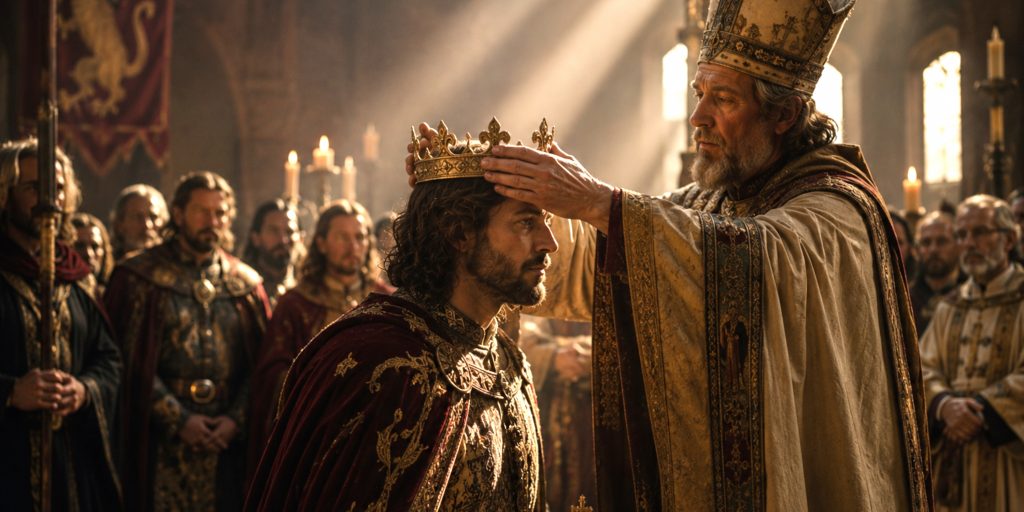
Edward the Elder died in 924.
Succession was not immediate or uncontested. Mercia proclaimed Athelstan king, while sections of Wessex initially supported his younger half-brother Aelfweard (Old English: Ælfweard).
Aelfweard died only weeks later, allowing Athelstan to consolidate his authority, although resistance in parts of Wessex delayed his coronation until September 925 at Kingston upon Thames.
The ceremony itself was remarkably elaborate for its time. New rituals emphasised that the king ruled by divine authority and carried responsibilities that extended across all the English peoples.
Those ceremonial developments would influence English coronations for centuries.
The First King of England
Before Athelstan, several rulers had controlled large parts of England, but none had permanently united all the major Anglo-Saxon kingdoms.
That changed in 927.
After capturing York from the Viking king Guthfrith, Athelstan became the first ruler to govern Wessex, Mercia, East Anglia and Northumbria simultaneously.
His authority extended beyond England itself.
The kings of Wales acknowledged his overlordship. Constantine II of Scotland recognised his position, albeit reluctantly, while the rulers of Strathclyde also entered agreements with him.
Royal charters increasingly described him with titles that reflected this remarkable position.
Among them were:
- King of the English
- King of All Britain
- Emperor of Britain
Some titles were undoubtedly intended to impress, but they also reflected the unprecedented scale of his authority.
A Court Connected to Europe
Athelstan’s court was unlike that of earlier English rulers.
Scholars, churchmen and nobles travelled from across Europe to visit him. Foreign princes sought his friendship, while continental rulers arranged marriages with his sisters to strengthen diplomatic ties.
England had ceased to be an isolated kingdom on the edge of Europe. Under Athelstan it became an active participant in continental politics.
His court was also known for its impressive library and collection of religious relics.
Books, manuscripts and learning flourished under royal patronage, giving England a reputation for scholarship that rivalled many European kingdoms.
Battles and Military Acumen
Athelstan inherited a strong military tradition from Alfred the Great and Edward the Elder, but he expanded it into something far more ambitious.
His campaigns reveal a commander who combined strategic planning with political judgement.
Rather than relying solely on battlefield victories, he understood that logistics, diplomacy and intimidation could achieve just as much.
The Capture of York, 927
The seizure of York transformed Britain.
Northumbria had long been contested between Anglo-Saxon and Viking rulers. By securing the city, Athelstan removed the greatest obstacle to English unity.
The campaign demonstrated careful preparation rather than reckless conquest.
York remained one of the wealthiest and most important cities in Britain, making its capture as much an economic victory as a military one.
The Scottish Campaign, 934
Relations with Constantine II deteriorated during the early 930s.
Athelstan assembled one of the largest armies yet seen in Britain, supported by a fleet operating along the eastern coast.
Although no major pitched battle took place, the scale of the expedition forced Constantine to submit once more.
The campaign highlighted Athelstan’s ability to project power across difficult terrain while coordinating land and naval forces.
The Battle of Brunanburh, 937
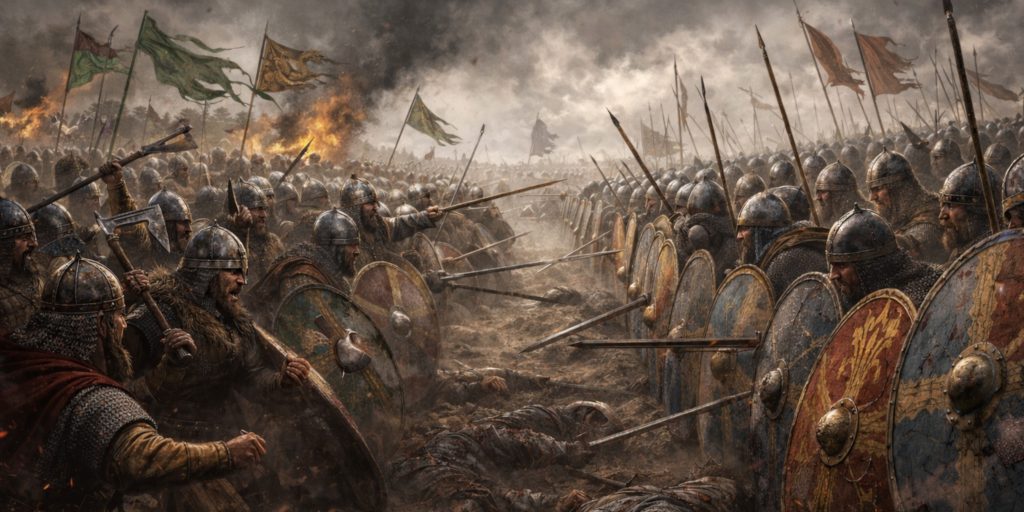
Brunanburh stands among the defining battles of British history.
A coalition led by Constantine II, Olaf Guthfrithson of Dublin and Owen of Strathclyde sought to destroy Athelstan’s kingdom before it became permanent.
Instead, Athelstan and his younger brother Edmund inflicted a decisive defeat.
The contemporary Old English poem commemorating the battle describes relentless fighting, broken shields and the field strewn with fallen warriors.
The victory secured English unity for generations.
Had Athelstan lost, Britain might easily have returned to a patchwork of competing kingdoms.
Arms and Armour
Athelstan almost certainly fought alongside his household warriors and would have worn the finest equipment available in tenth century England.
Weapons
Royal warriors typically carried:
- Double-edged iron or steel swords with richly decorated hilts
- Spears, the principal battlefield weapon
- Seaxes worn as sidearms
- Throwing spears
- Battle axes
- Long knives for everyday use
High-quality swords remained valuable possessions that could pass through generations of noble families.
Many were beautifully balanced weapons as well as powerful symbols of rank.
Armour
Elite warriors likely wore:
- Riveted mail shirts extending to the thighs
- Iron helmets fitted with nasal guards
- Large round wooden shields faced with leather
- Thick woollen tunics over padded garments
- Leather belts supporting swords and seaxes
Mail represented considerable wealth.
Most ordinary members of the fyrd relied primarily on shields and helmets, while complete mail armour remained the preserve of kings and leading nobles.
Government and Law
Conquering territory was only part of Athelstan’s achievement.
Holding it together required effective government.
His law codes rank among the most sophisticated produced in Anglo-Saxon England.
They addressed:
- Theft and robbery
- Coinage
- Market regulation
- Church authority
- Public order
- Oaths and legal procedure
- Royal justice
He strengthened royal oversight across England, ensuring that local communities increasingly answered to central authority rather than regional rulers.
Coinage became more uniform during his reign, helping trade flourish across the kingdom.
It may not sound glamorous compared with defeating Viking armies, but reliable laws and standardised money usually leave a kingdom in much better condition than another heroic battle.
Diplomacy and International Reputation
Few English kings before the Norman Conquest enjoyed greater prestige abroad.
Royal marriages linked Athelstan’s family with ruling dynasties across Europe.
Foreign princes spent time at his court.
Continental rulers exchanged gifts, relics and diplomatic correspondence with him.
England increasingly appeared as an equal among Europe’s established kingdoms rather than a distant frontier.
Religion and Patronage
Athelstan was deeply committed to the Church.
He collected relics from across Europe and donated generously to monasteries.
Several surviving charters reveal an educated ruler who understood both theology and royal symbolism.
His reign also witnessed the production of magnificent manuscripts whose artistry demonstrates the confidence of English culture during the tenth century.
Death and Burial
Athelstan died on 27 October 939 at Gloucester.
Rather than choosing Winchester, where several West Saxon kings had been buried, he requested burial at Malmesbury Abbey.
The decision reflected his admiration for the scholar and saint Aldhelm.
Although the original royal tomb suffered damage after the Dissolution of the Monasteries, Malmesbury remains closely associated with England’s first king.
Artefacts From Athelstan’s Reign
Very few personal possessions belonging directly to Athelstan survive, yet a number of remarkable objects from his reign can still be viewed.
The British Museum, London
Visitors can see:
- Silver pennies struck during Athelstan’s reign
- Anglo-Saxon swords
- Spears and shield fittings
- Fine metalwork
- Jewellery from tenth century England
His coins remain some of the clearest surviving expressions of royal authority, carrying inscriptions that proclaimed his kingship across a newly unified realm.
The British Library, London
The library preserves important manuscripts and royal charters connected with the intellectual world of Athelstan’s court.
These documents reveal both the sophistication of his administration and the flourishing of learning during his reign.
Ashmolean Museum, Oxford
Its Anglo-Saxon collections include:
- Weapons
- Decorative metalwork
- Ecclesiastical treasures
- Sculptural fragments
Together they help illustrate the world in which Athelstan ruled.
Malmesbury Abbey, Wiltshire
Although little remains of his original burial monument, the abbey remains the most significant place associated with his memory.
Walking through the site offers a tangible connection with one of England’s greatest rulers.
Latest Archaeological Findings
Research into Athelstan’s England continues to evolve.
Modern archaeology has painted a picture of a kingdom that was considerably more sophisticated than earlier generations imagined.
Recent work has focused on several areas.
The Search for Brunanburh
The exact location of the battle remains one of Britain’s greatest historical mysteries.
Excavations, landscape analysis and metal detector surveys have narrowed several possible sites, particularly in north-west England, although no definitive answer has yet emerged.
Coin Hoards
New discoveries of silver pennies continue to improve understanding of England’s economy.
Their wide distribution demonstrates both royal authority and expanding trade networks.
Scientific Analysis of Weapons
Laboratory studies have revealed increasingly sophisticated steel production during the tenth century.
Many Anglo-Saxon swords were manufactured to exceptionally high standards, confirming the skill of English smiths.
Digital Study of Charters
Advanced imaging techniques have uncovered faded writing and erased corrections in royal documents.
These discoveries provide valuable insights into how Athelstan’s government operated on a practical level.
Isotope Analysis
Scientific examination of human remains has shown growing movement of people between England, Ireland and continental Europe.
These findings reinforce written evidence that Athelstan’s kingdom was closely connected to wider European networks.
Contemporary Views
The anonymous poet who celebrated Brunanburh described Athelstan as a victorious protector of the English people.
Centuries later, William of Malmesbury praised him as:
“A prince more worthy of praise than all his predecessors.”
Such admiration is striking.
Medieval writers certainly enjoyed praising successful kings, but Athelstan consistently attracted respect across generations. That lasting reputation suggests his achievements genuinely stood apart from those of many contemporaries.
Legacy
Athelstan accomplished something extraordinary.
He did not simply win battles or inherit territory. He created a kingdom with institutions, laws and royal authority capable of surviving long after his death.
Later monarchs expanded England, defended it and occasionally managed to lose parts of it, but they all inherited the political framework that Athelstan established.
His reign marked the moment when England became more than a collection of kingdoms.
It became a nation.
For someone whose achievements were once overshadowed by more famous rulers, that is beginning to change. Historians increasingly place Athelstan where he belongs, among the greatest kings Britain has ever produced.
Frequently Asked Questions
Was Athelstan really the first King of England?
Yes. Earlier rulers governed substantial parts of England, but Athelstan was the first to unite the major Anglo-Saxon kingdoms under one crown.
What was Athelstan’s greatest victory?
The Battle of Brunanburh in 937 is widely regarded as one of the most important victories in British history and secured the survival of a united England.
Did Athelstan marry?
No. He never married and left no known legitimate children.
Where was Athelstan buried?
He was buried at Malmesbury Abbey in Wiltshire, where his memory is still honoured today.
Why is Athelstan important?
Athelstan united England, strengthened royal government, defeated powerful enemies, developed the legal system and established England as a respected European kingdom. Few rulers have had a greater influence on the country’s early history.