Pata (Gauntlet Sword): History, Design and the Legendary Weapon of India
The Pata, often called the Indian gauntlet sword, is one of the most distinctive swords ever developed. Combining a long straight blade with a fully enclosed steel gauntlet, it looks unlike almost anything produced in Europe, the Middle East or East Asia. At first glance it appears almost impractical. In reality, it was a highly specialised cavalry and infantry weapon that rewarded training, aggression and momentum.
Few weapons capture the imagination quite like the Pata. The sight of a warrior wielding what appears to be a sword attached directly to the forearm feels almost theatrical, yet it was an entirely practical military weapon. It became closely associated with the Marathas of western India, although its origins stretch back several centuries before their rise to prominence.
The Pata reflects a distinctly Indian approach to warfare. Rather than copying Persian or European sword designs, Indian armourers created something entirely their own, combining protection, reach and devastating cutting power into a single weapon.
Pata Specifications
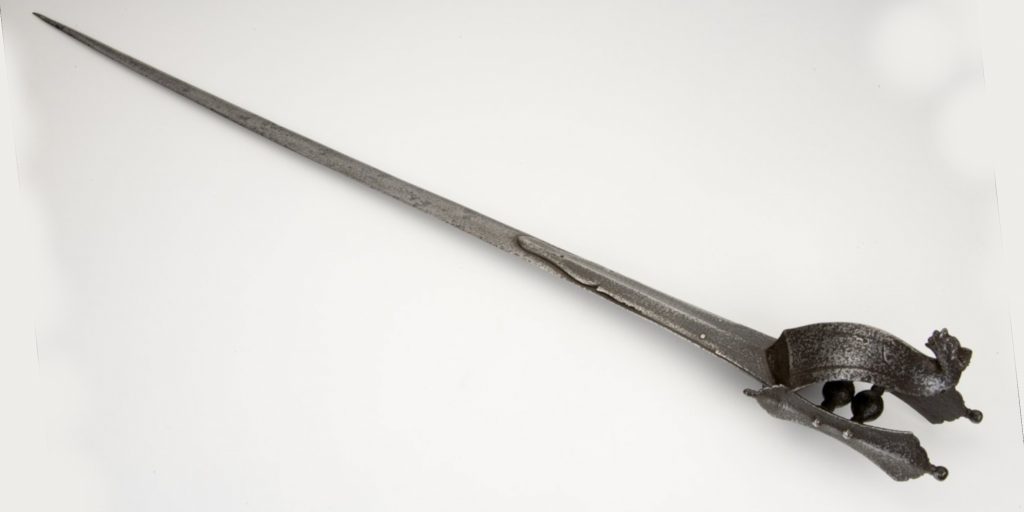
| Feature | Details |
|---|---|
| Weapon Type | Gauntlet sword |
| Origin | Indian Subcontinent |
| Period | 14th to 19th century |
| Overall Length | 100 to 130 cm |
| Blade Length | 80 to 110 cm |
| Weight | Approximately 1.5 to 2.5 kg |
| Blade Type | Straight, double-edged |
| Hilt | Enclosed steel gauntlet |
| Primary Use | Cavalry and infantry combat |
| Construction | High-carbon steel, often wootz steel on premium examples |
What Makes the Pata Unique?
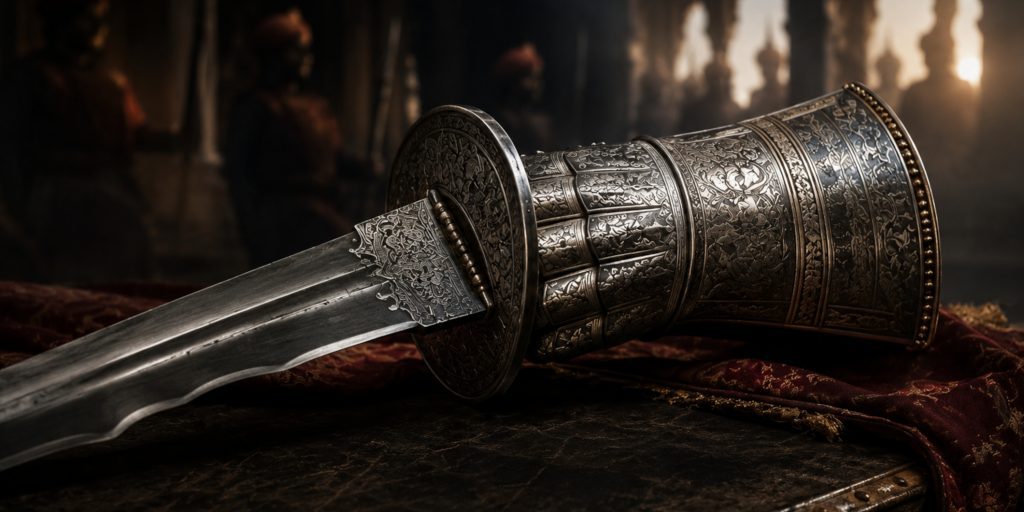
The defining feature is its enclosed gauntlet hilt.
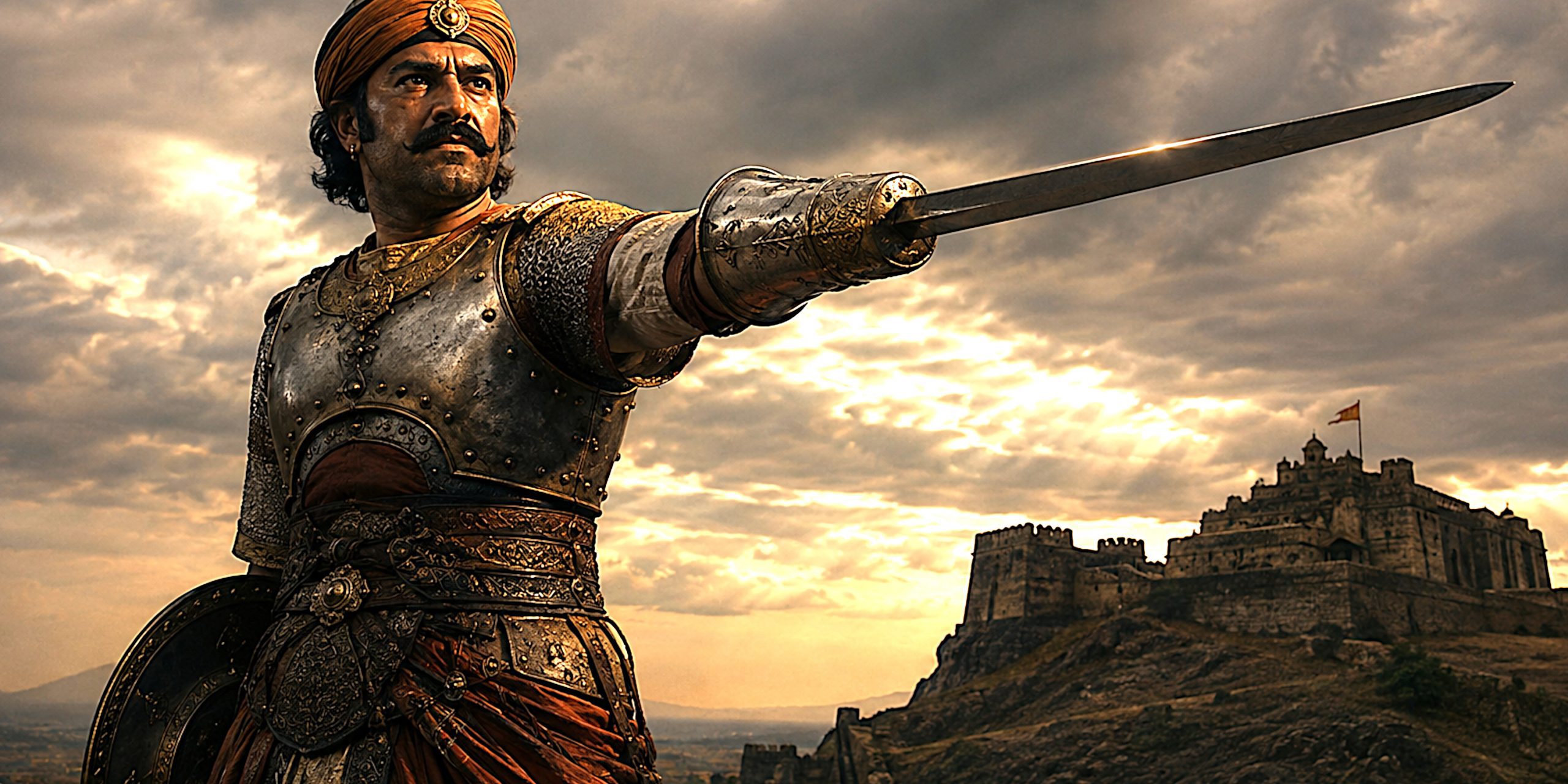
Instead of gripping a crossguard and pommel, the user’s hand fits inside a steel glove attached permanently to the blade. A horizontal grip bar sits inside the gauntlet while the wrist and forearm are protected by an articulated metal cuff.
This arrangement effectively turns the sword into an extension of the arm.
Key characteristics include:
- Fully enclosed steel gauntlet
- Long straight blade
- Double-edged cutting surface
- Excellent hand protection
- Optimised for powerful thrusts and sweeping cuts
- Often decorated with gold koftgari, silver inlay or engraved floral designs
Luxury examples owned by Indian nobility often rival European presentation swords in craftsmanship.
History and Evolution
Early Origins
The precise origins remain debated, although most historians place its development between the fourteenth and fifteenth centuries.
Indian armourers had long experimented with enclosed hand protection. The evolution of metal gauntlets naturally led to combining armour with the weapon itself.
The earliest surviving examples appear during the late Delhi Sultanate period, before becoming more common under regional kingdoms.
Mughal Period
During the Mughal era the Pata gained widespread recognition.
Although Mughal armies relied heavily upon curved talwars, elite warriors occasionally carried the Pata as a specialist weapon.
The long blade proved effective against lightly armoured infantry while its enclosed hand protection suited close fighting.
Many surviving examples feature Mughal decorative influences including floral engraving and precious metal inlays.
The Marathas
No group became more closely associated with the Pata than the Marathas.
During the seventeenth century, under leaders such as Shivaji Maharaj and his successors, the weapon became almost symbolic of Maratha military culture.
Maratha cavalry frequently employed fast-moving attacks, and the Pata’s extended reach made it highly effective during charges.
Accounts describe highly trained warriors capable of wielding a Pata in each hand. While this required exceptional skill and strength, it demonstrates the confidence elite fighters placed in the weapon.
Later Decline
By the nineteenth century firearms had transformed warfare.
As close combat became less decisive, specialist swords such as the Pata gradually disappeared from military service.
Today it survives primarily as:
- A ceremonial weapon
- A museum piece
- A collector’s item
- A martial arts weapon within traditional Indian schools
Construction
Although simple in concept, producing a high-quality Pata demanded considerable skill.
The gauntlet had to fit comfortably while remaining strong enough to absorb repeated impacts.
Premium examples often featured:
- Wootz steel blades
- Pattern welded decoration
- Gold koftgari
- Silver overlay
- Pierced gauntlet decoration
- Velvet-lined interiors
The finest examples came from renowned Indian centres such as Lahore, Sirohi, Jaipur and the Deccan.
How Was the Pata Used?
Unlike conventional swords, the wrist plays a smaller role during strikes.
Instead, power comes from:
- Shoulder movement
- Elbow extension
- Whole-body rotation
- Forward momentum
The enclosed grip limits fine wrist movement but creates exceptional rigidity during powerful attacks.
Techniques focused upon:
- Long thrusts
- Powerful downward cuts
- Wide horizontal sweeps
- Mounted attacks
- Aggressive forward pressure
Experienced users often combined shield work with the Pata, although dual wielding appears in some historical traditions.
Advantages
The unusual design offered several impressive strengths.
| Advantage | Benefit |
|---|---|
| Complete hand protection | Excellent defence against sword blows |
| Long reach | Greater striking distance |
| Powerful thrusting | Strong point control |
| Devastating cuts | Whole arm generates power |
| Secure grip | Weapon difficult to disarm |
| Psychological impact | Highly intimidating appearance |
Disadvantages
No weapon is perfect, and the Pata required compromise.
| Disadvantage | Impact |
|---|---|
| Limited wrist movement | Reduced versatility |
| Specialist training required | Difficult to master |
| Larger profile | Less convenient indoors |
| Greater weight | Can fatigue inexperienced users |
| Less effective in confined spaces | Best used with room to manoeuvre |
Comparison with Similar Weapons
| Weapon | Origin | Main Difference |
|---|---|---|
| Pata | India | Enclosed gauntlet with straight blade |
| Talwar | India | Conventional curved sabre with flexible wrist movement |
| Khanda | India | Broad straight sword with traditional hilt |
| Estoc | Europe | Armour-piercing thrusting sword without gauntlet |
| Zweihänder | Germany | Massive two-handed sword requiring both hands |
| Katar | India | Push dagger with short blade rather than sword length |
The Pata occupies a unique place among historical weapons. No other military sword combined a full steel gauntlet with such a long blade in regular battlefield use.
Pata in Indian Martial Arts
The weapon remains an important part of several traditional fighting systems.
Most notably:
- Mardani Khel
- Gatka demonstrations
- Traditional Maratha martial arts
- Historical weapon exhibitions
Modern practitioners preserve techniques that may date back hundreds of years, although battlefield conditions have naturally changed.
Legacy
The Pata has become one of India’s most recognisable historical weapons.
It represents:
- Indigenous Indian weapon design
- Maratha military tradition
- Exceptional craftsmanship
- The innovation of Indian armourers
- The diversity of medieval and early modern warfare
Collectors and historians continue to admire it because it has no true equivalent elsewhere in the world.
Its striking appearance has also led to frequent appearances in films, museums, historical artwork and video games, where it often serves as the visual shorthand for India’s rich martial heritage.
Where to See Original Pata Swords
Several museums hold excellent examples.
| Museum | Location |
|---|---|
| Chhatrapati Shivaji Maharaj Vastu Sangrahalaya | Mumbai |
| National Museum | New Delhi |
| Government Museum | Chennai |
| Salar Jung Museum | Hyderabad |
| Victoria and Albert Museum | London |
| Royal Armouries Museum | Leeds |
| Metropolitan Museum of Art | New York |
Many private collections also include outstanding nineteenth century examples.
Collectors Guide
The Pata has become increasingly desirable among collectors of Indian arms and armour.
Factors affecting value include:
- Age
- Provenance
- Blade quality
- Original gauntlet
- Decorative work
- Presence of wootz steel
- Royal or noble ownership
- Overall condition
Restored examples generally command lower prices than untouched originals.
Reproductions are widely available and should not be confused with genuine historical weapons.
Auction Prices
Prices vary considerably depending on rarity and provenance.
| Type | Typical Price |
|---|---|
| Modern reproduction | £250 to £900 |
| 19th century example | £2,000 to £6,000 |
| High-quality decorated example | £6,000 to £15,000 |
| Museum-quality Pata | £15,000 to £35,000+ |
| Royal or historically documented example | £40,000 to £100,000+ |
Examples featuring fine koftgari decoration, wootz steel blades or documented Maratha provenance attract the strongest bidding at international arms and armour auctions.
Identifying an Authentic Pata
When examining an original example, collectors should look for:
- Hand forged blade with visible age and patina
- Original rivets and gauntlet construction
- Traditional Indian forging techniques
- Evidence of historical wear rather than artificial ageing
- Authentic koftgari or engraved decoration
- Signs of genuine wootz steel on premium blades
- Provenance from reputable dealers or auction houses
Modern reproductions often have machine-ground blades, overly bright finishes and simplified gauntlet construction.
Frequently Asked Questions
Was the Pata effective in battle?
Yes. In the hands of a trained warrior it was an exceptionally powerful weapon, particularly during cavalry charges and aggressive infantry combat where reach and hand protection were significant advantages.
Could the Pata cut through armour?
It was capable of defeating lighter armour and delivering forceful thrusts against mail or gaps in plate, but like most swords it was not designed to slice through high quality steel plate.
Did Maratha warriors really use two Pata swords?
Historical accounts and artwork suggest that some elite warriors trained with a Pata in each hand. This was a specialised skill rather than standard military practice.
Why is the blade straight instead of curved?
The straight blade provided strong thrusting ability while still delivering effective cuts. Its design complemented the rigid gauntlet, allowing force to travel directly through the forearm.
Takeaway
The Pata is one of the most innovative swords ever created. Its enclosed gauntlet, long straight blade and distinctive fighting style make it unlike any other historical weapon. While it demanded training and commitment from its wielder, it rewarded that investment with formidable reach, excellent hand protection and impressive striking power.
For historians, collectors and martial artists alike, the Pata offers a fascinating insight into the ingenuity of Indian weapon design. It stands as a reminder that some of the world’s most original military innovations emerged far beyond the battlefields of medieval Europe, and that the story of the sword is far richer and more diverse than many people first imagine.