The Battle of Bapheus, fought on 27 July 1302 near Nicomedia in north-western Anatolia, is often overshadowed by larger and more famous battles. Yet from a historian’s perspective, it deserves far more attention. This was the first major battlefield victory of Osman Bey and the emerging Ottoman state against the Byzantine Empire.
At the time, few observers would have predicted that a frontier principality would eventually replace Byzantium as the dominant power of the eastern Mediterranean. Bapheus was not the moment the Ottomans conquered an empire. It was the moment they proved they could defeat one.
The battle exposed the weakness of Byzantine authority in Asia Minor and accelerated a process already underway. Turkish warriors flooded into former imperial territory, Christian villages found themselves increasingly isolated, and Byzantine control shrank towards a handful of fortified cities.
If Manzikert opened the door to Turkish expansion in Anatolia, Bapheus demonstrated that the Byzantines had still not found a way to close it.
Background
By the beginning of the fourteenth century, the Byzantine Empire was facing immense difficulties.
Although Emperor Andronikos II Palaiologos had restored some stability after the chaos of the Latin occupation of Constantinople, the empire suffered from financial weakness, military decline, and shrinking territorial control.
In western Anatolia, Turkish frontier principalities known as beyliks steadily expanded at Byzantine expense. Among these was the small but ambitious realm led by Osman Bey.
Osman’s warriors raided Byzantine territory, attacked villages, and isolated key strongholds. Byzantine cities such as Nicaea and Nicomedia remained in imperial hands, but the countryside around them increasingly belonged to Turkish forces.
The emperor recognised the danger and dispatched an army under George Mouzalon to confront Osman before the situation became irreversible.
History had other plans.
Forces
Precise numbers are impossible to verify, but contemporary sources provide useful estimates.
Byzantine Army
| Component | Estimated Strength |
|---|---|
| Byzantine regular troops | 2,000 |
| Alan mercenary cavalry | 1,000 to 2,000 |
| Total | Approximately 3,000 to 4,000 |
Ottoman Forces
| Component | Estimated Strength |
| Ottoman cavalry | Approximately 5,000 |
| Ghazi volunteers and tribal warriors | Included within total |
| Total | Around 5,000 |
The Byzantine army consisted of a mixture of imperial troops and Alan mercenaries. The Alans were experienced horsemen from the Eurasian steppes and represented some of the most capable troops available to the empire.
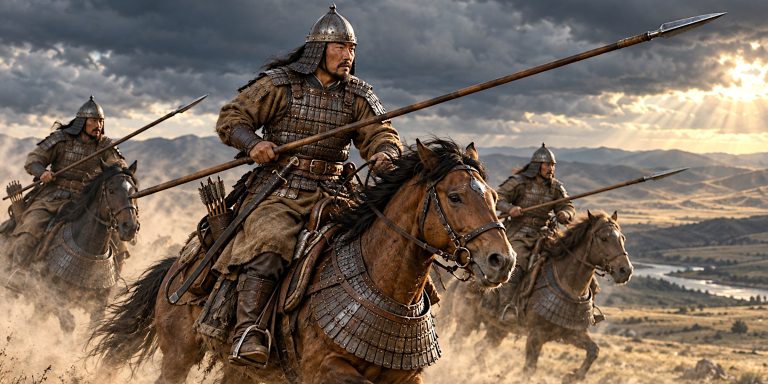
Osman’s force was less formal but highly mobile. It consisted largely of mounted ghazis, tribal warriors motivated by warfare, plunder, and frontier expansion.
Commanders
Byzantine Empire
George Mouzalon
- Senior Byzantine commander
- Trusted by Emperor Andronikos II
- Tasked with relieving pressure on Nicomedia
- Led the imperial expedition into Bithynia
Ottoman Beylik
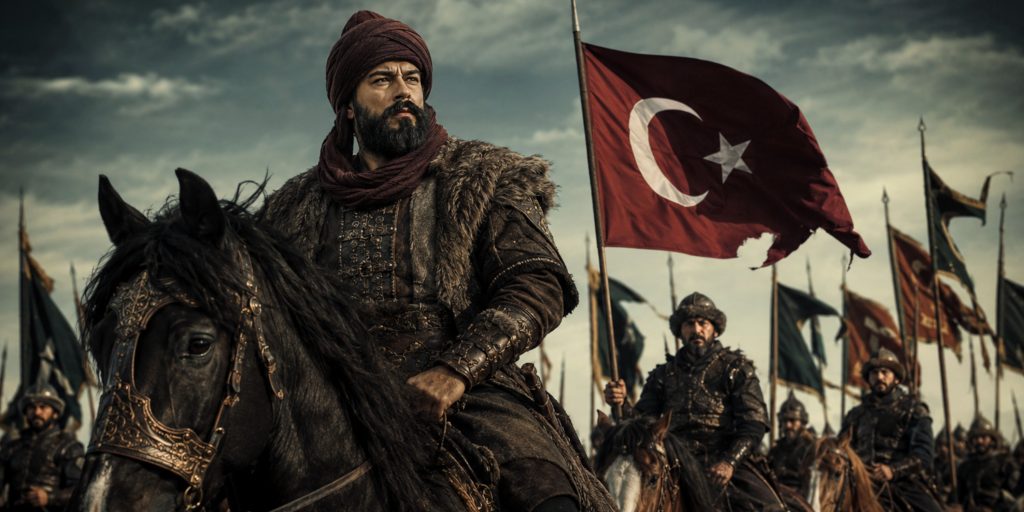
- Founder of the Ottoman dynasty
- Frontier war leader and tribal chief
- Skilled at exploiting Byzantine weaknesses
- Used mobility and local support to great effect
One of the fascinating aspects of Bapheus is that Osman appears not merely as a raider but as a battlefield commander capable of coordinating a substantial force. The battle marks his emergence as a serious regional leader.
Arms and Armour
The battle reflected the contrasting military traditions of Byzantium and the Turkish frontier.
Byzantine Arms
Sword Types
- Byzantine spathion
- Paramerion sabre
- Straight double-edged cavalry swords
Other Weapons
- Composite bows
- Spears and lances
- Javelins
- Maces
- Infantry shields
Byzantine Armour
- Mail hauberks
- Lamellar armour
- Iron helmets
- Scale defences
- Kite and round shields
Ottoman and Ghazi Arms
Sword Types
- Early Turkish kilij-style sabres
- Straight Turkic swords
- Steppe cavalry blades
The classic Ottoman kilij had not yet fully evolved, but curved sabres were becoming increasingly common among Turkish warriors.
Other Weapons
- Composite bows
- Light lances
- Spears
- Axes
- Maces
Ottoman Armour
- Quilted armour
- Lamellar protection
- Mail shirts
- Conical helmets
- Small cavalry shields
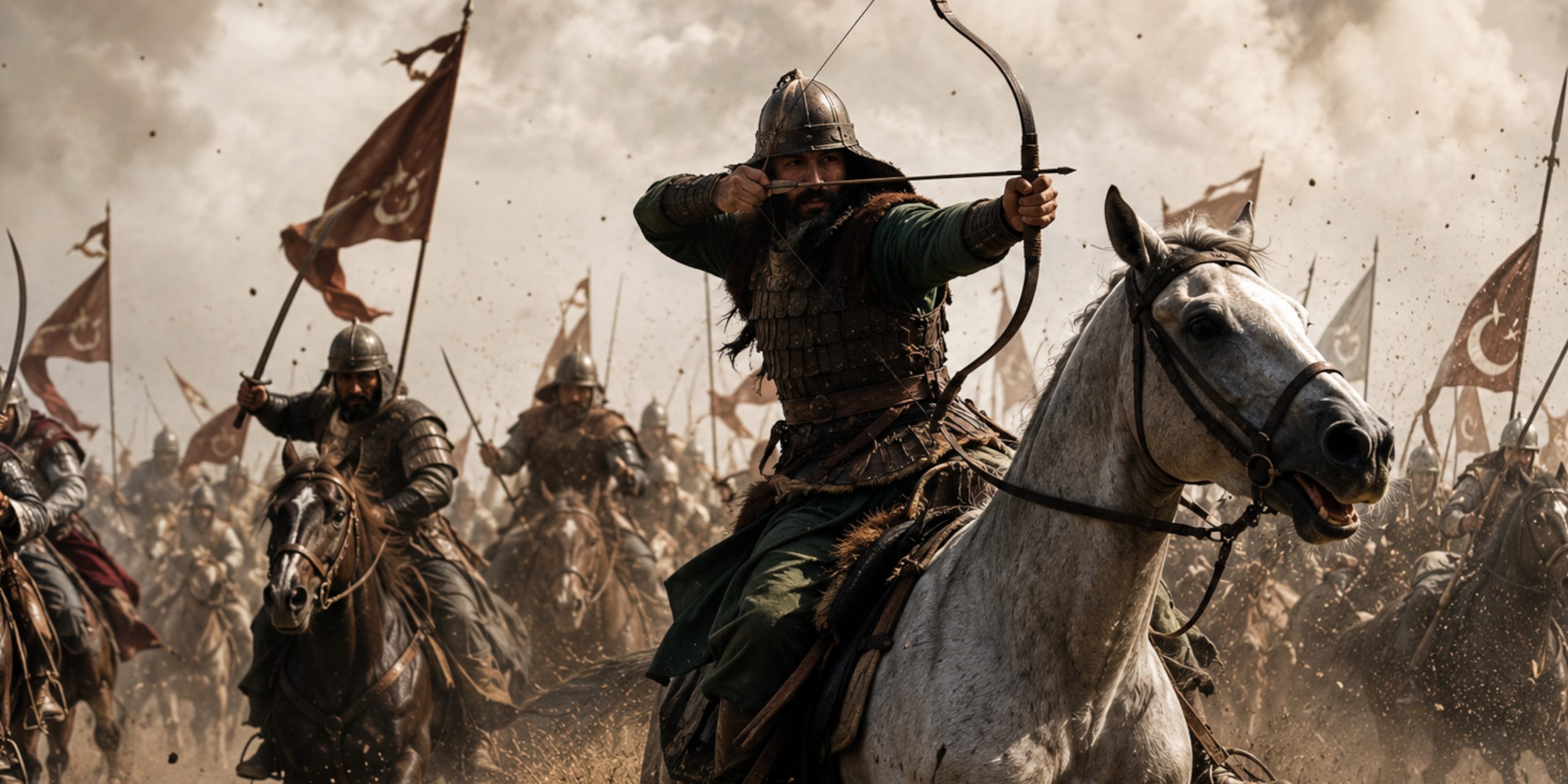
The contrast was striking. Byzantine soldiers generally carried heavier equipment. Ottoman warriors prioritised mobility, speed, and mounted archery.
As history repeatedly demonstrates, heavily equipped soldiers often discover that catching fast horse archers is rather like trying to catch smoke with a fishing net.
The Battle Timeline
Early July 1302
Byzantine authorities organise an expedition to restore control in Bithynia.
Mid-July
George Mouzalon advances towards Ottoman-controlled territory.
27 July 1302
The armies meet near Bapheus, close to Nicomedia.
Morning
Ottoman cavalry begin aggressive harassment attacks.
Midday
Mounted archers disrupt Byzantine formations and wear down imperial troops.
Afternoon
The Byzantine line begins to lose cohesion.
Late Afternoon
Ottoman cavalry launch stronger attacks against weakened positions.
Evening
The Byzantine army collapses and retreats towards Nicomedia.
Aftermath
Ottoman forces dominate much of the surrounding countryside.
How the Battle Was Fought
Our primary account comes from the Byzantine historian George Pachymeres.
According to his description, Osman used highly mobile cavalry tactics to pressure the Byzantine force continuously. The Ottoman horsemen avoided a straightforward collision with the enemy and instead relied upon mobility, missile fire, and repeated attacks.
The Alan cavalry initially offered resistance, but the Byzantines struggled to maintain cohesion.
As the battle developed, Ottoman pressure increased. Byzantine morale deteriorated, and eventually the imperial army withdrew in disorder.
The defeat itself was not catastrophic in terms of casualties. The strategic consequences, however, were profound.
Once the Byzantine field army retreated, the empire lacked sufficient military strength to restore effective authority across the region.
Contemporary Accounts
The Byzantine historian George Pachymeres provides the most important surviving description.
Writing about Osman and his warriors, he described how Turkish forces gathered in significant numbers and aggressively challenged imperial authority across the region.
Pachymeres portrays the battle as a serious setback for Byzantium and recognises the growing threat posed by Osman.
His account is especially valuable because it comes from a contemporary observer who witnessed the gradual collapse of Byzantine control in Asia Minor.
Archaeology and Evidence
Unlike battles such as Towton or Visby, Bapheus has left relatively limited archaeological evidence.
Several factors contribute to this:
- The precise battlefield location remains debated.
- Modern development has altered parts of the landscape.
- Systematic battlefield archaeology remains limited.
- Many combatants were lightly equipped cavalry, leaving fewer recoverable artefacts.
However, archaeology from the wider Bithynian region reveals the broader context.
Evidence includes:
- Byzantine fortification remains around Nicomedia and Nicaea.
- Settlement abandonment in vulnerable rural areas.
- Material traces of Turkish migration and occupation.
- Coin finds illustrating shifting political control.
Recent archaeological work across north-western Turkey continues to improve understanding of the frontier environment in which Osman operated.
Consequences of the Victory
The significance of Bapheus lies not in the scale of the battle but in its consequences.
Immediate Effects
- Byzantine prestige suffered
- Ottoman authority increased
- Local populations reassessed political loyalties
- Turkish settlement accelerated
Long-Term Effects
- Isolation of Nicaea and Nicomedia
- Expansion of Ottoman influence across Bithynia
- Increased recruitment of ghazi warriors
- Foundation for later Ottoman conquests
Many historians regard Bapheus as the first major milestone in Ottoman expansion.
It demonstrated that Osman could defeat a Byzantine field army and survive as more than a local tribal chief.
Why Bapheus Matters
When studying medieval history, there is a temptation to focus only on famous battles that decided kingdoms in a single day.
Bapheus reminds us that history often changes more quietly.
No emperor died here. No capital fell. No great empire disappeared overnight.
Instead, the battle exposed deeper trends already transforming Anatolia. It revealed a Byzantine Empire struggling to defend its provinces and an Ottoman state beginning to realise its potential.
Looking back with the benefit of hindsight, Bapheus feels less like a single battle and more like the first chapter of a much larger story.
The Ottoman Empire would eventually stretch across three continents. In 1302, that future remained unimaginable.
Yet on a summer day near Nicomedia, the path towards it became a little clearer.
Legacy
The Battle of Bapheus occupies a crucial place in Ottoman and Byzantine history.
For the Ottomans, it represented their first significant victory against imperial forces and helped establish Osman Bey’s reputation as a successful ruler and military leader.
For Byzantium, it highlighted the accelerating loss of Asia Minor, the empire’s traditional heartland and one of its richest provinces.
Within a few generations, the Ottomans would absorb much of north-western Anatolia and emerge as the dominant power of the region.
Bapheus was not the end of Byzantine resistance, but it was one of the clearest warnings of what was coming.