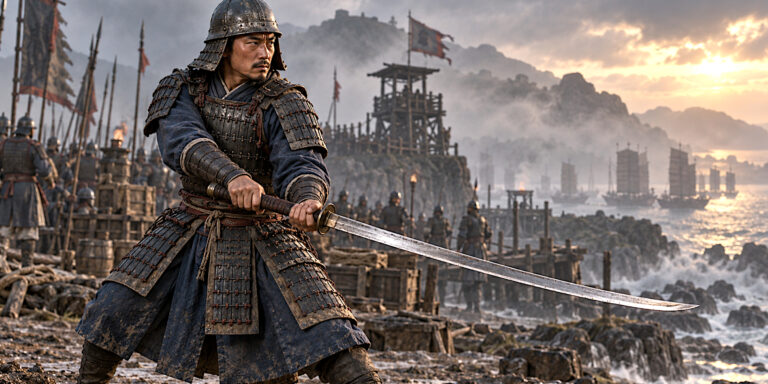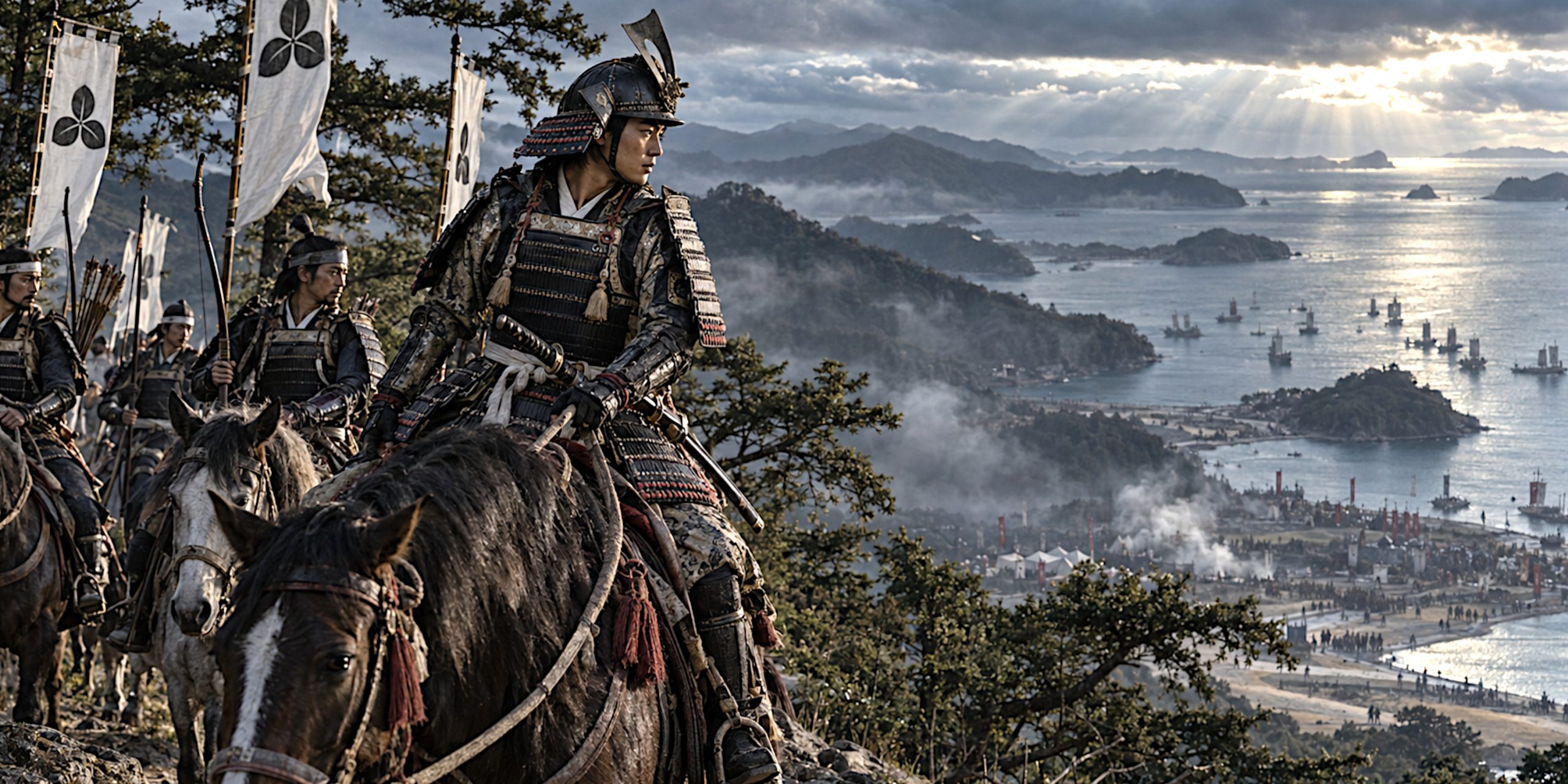
Minamoto no Yoshitsune was a genuine military commander whose victories helped destroy the Taira clan, yet much of what people think they know about him comes from stories written generations after his death.
The historical Yoshitsune was bold, ambitious and exceptionally successful during a short period of warfare. The legendary Yoshitsune was a beautiful young swordsman trained by supernatural beings, accompanied by the indestructible warrior-monk Benkei and betrayed by a cold-hearted brother. The two figures have become so thoroughly entangled that separating them requires a certain amount of gentle excavation.
What remains is more interesting than a simple tale of heroic virtue. Yoshitsune was a gifted commander who understood speed, surprise and psychological pressure. He was also politically inexperienced, willing to accept authority outside his brother’s control and perhaps rather too confident that military glory would excuse administrative disobedience. History contains many such men. Most are exhausting to work with.
Minamoto no Yoshitsune at a glance
| Detail | Information |
|---|---|
| Japanese name | 源 義経 |
| Born | 1159 |
| Died | 15 June 1189, traditional date |
| Childhood name | Ushiwakamaru |
| Father | Minamoto no Yoshitomo |
| Mother | Tokiwa Gozen |
| Clan | Seiwa Genji branch of the Minamoto |
| Half-brother | Minamoto no Yoritomo |
| Known for | Victories during the Genpei War |
| Principal campaigns | Uji, Ichi-no-Tani, Yashima and Dan-no-ura |
| Court positions | Lieutenant of the Left Gate Guards and kebiishi official |
| Traditional retainers | Musashibō Benkei, Satō Tsugunobu and Satō Tadanobu |
| Place of death | Koromogawa, near Hiraizumi |
| Historical reputation | Brilliant battlefield commander but poor political operator |
| Cultural reputation | Japan’s archetypal tragic warrior |
Japan in the age of Yoshitsune
Yoshitsune was born near the end of the Heian period, when the imperial court in Kyoto remained the formal centre of authority but provincial warrior families had become increasingly powerful.
The two most influential military lineages were the Taira, also called the Heike, and the Minamoto, also known as the Genji. These were not simple, unified national parties. Both consisted of extended families, regional allies, retainers and opportunists whose loyalties could shift according to local interests. Describing the Genpei War as a clean struggle between two clans is convenient, but medieval politics was rarely considerate enough to arrange itself so neatly.
The conflict that shaped Yoshitsune’s childhood began before he could remember it. His father, Minamoto no Yoshitomo, had fought alongside Taira no Kiyomori during the Hōgen Rebellion of 1156. The two later became enemies.
In the Heiji Rebellion of 1159 and 1160, Yoshitomo attempted to seize control of the court. His forces were defeated by Kiyomori, and Yoshitomo was killed while fleeing east. The Taira emerged as the dominant military family around Kyoto.
Yoshitsune was an infant when his father died. His half-brother Yoritomo was exiled to Izu, while Yoshitsune and his mother survived under very different conditions.
Childhood as Ushiwakamaru
Yoshitsune was the ninth son of Minamoto no Yoshitomo and the third son born to Tokiwa Gozen. In childhood he was known as Ushiwakamaru.
According to tradition, Tokiwa fled through the winter with her young children after Yoshitomo’s defeat. She eventually submitted to Taira no Kiyomori, who spared the boys. Later stories attributed this decision to Kiyomori’s affection for Tokiwa, although the surviving evidence does not allow us to recover his precise motives.
Ushiwakamaru was sent to Kurama-dera, a Buddhist temple in the mountains north of Kyoto. He was probably intended for a religious life, a sensible arrangement for the son of a defeated enemy. Removing a boy from secular politics was often more useful than killing him, particularly when that boy was still too young to have acquired allies.
Later literature transformed Kurama into the setting of Yoshitsune’s secret martial education. The young hero supposedly trained at night under Sōjōbō, king of the tengu, supernatural beings associated with mountains, swordsmanship and dangerous knowledge.
It is a marvellous story. It is not reliable biography.
There is no contemporary evidence that Yoshitsune received supernatural instruction, fought imaginary monsters or became an unmatched swordsman while still a child. The tale expresses something important about how later generations understood him: his abilities seemed so extraordinary that ordinary teachers were apparently insufficient.
Flight to Hiraizumi
As a young man, Yoshitsune left Kurama and travelled north to Hiraizumi in Mutsu Province. There he entered the protection of Fujiwara no Hidehira, leader of the powerful Northern Fujiwara.
Hiraizumi was no provincial backwater. During the twelfth century it was a wealthy political and cultural centre supported by gold production, long-distance trade and control of northern territories. Its temples and gardens consciously echoed the religious culture of Kyoto.
Hidehira’s decision to shelter Yoshitsune may have combined hospitality, political calculation and a desire to maintain useful connections with the Minamoto. Yoshitsune remained in the north until the outbreak of the conflict later known as the Genpei War.
This period of his life is poorly documented. We do not know precisely who trained him, how much military experience he acquired or when he formally adopted the name Yoshitsune. Later accounts filled the silence with adventures. Medieval storytellers were no more fond of an empty page than modern screenwriters.
Reunion with Minamoto no Yoritomo
In 1180, Prince Mochihito issued a call for resistance against Taira dominance. Minamoto leaders across Japan raised forces, although they did not initially operate under a single command.
Yoritomo established himself in the Kantō region after surviving an early defeat at Ishibashiyama. Yoshitsune travelled south and joined him, traditionally meeting his half-brother near the Kise River late in 1180.
The reunion is often depicted as a deeply emotional moment between separated brothers. It may have been. It was also a meeting between a rising political lord and a younger relative with no independent territorial base.
Yoritomo was building a disciplined network of eastern warriors whose loyalty was directed towards him personally. Yoshitsune entered that structure as a subordinate, not as an equal partner. This distinction would become painfully important.
For several years Yoshitsune remained away from the main fighting. His rise to prominence began after another Minamoto commander, Minamoto no Yoshinaka, captured Kyoto and then became a threat to both the court and Yoritomo.
The defeat of Minamoto no Yoshinaka
In early 1184, Yoritomo sent armies west under Yoshitsune and his half-brother Minamoto no Noriyori. Their immediate enemy was Yoshinaka rather than the Taira.
Yoshitsune’s forces crossed the Uji River under difficult winter conditions and entered Kyoto. Yoshinaka was driven from the capital and defeated at the Battle of Awazu, where he was killed.
The campaign established Yoshitsune as an effective commander. It also restored Yoritomo’s influence over the imperial capital without requiring Yoritomo to leave his base at Kamakura.
This division of responsibilities suited Yoritomo perfectly. He exercised strategic and political control from the east while commanders such as Yoshitsune and Noriyori fought in his name. Trouble began when Yoshitsune developed a direct relationship with the court and acted as though battlefield success gave him room for independent decisions.
The Battle of Ichi-no-Tani
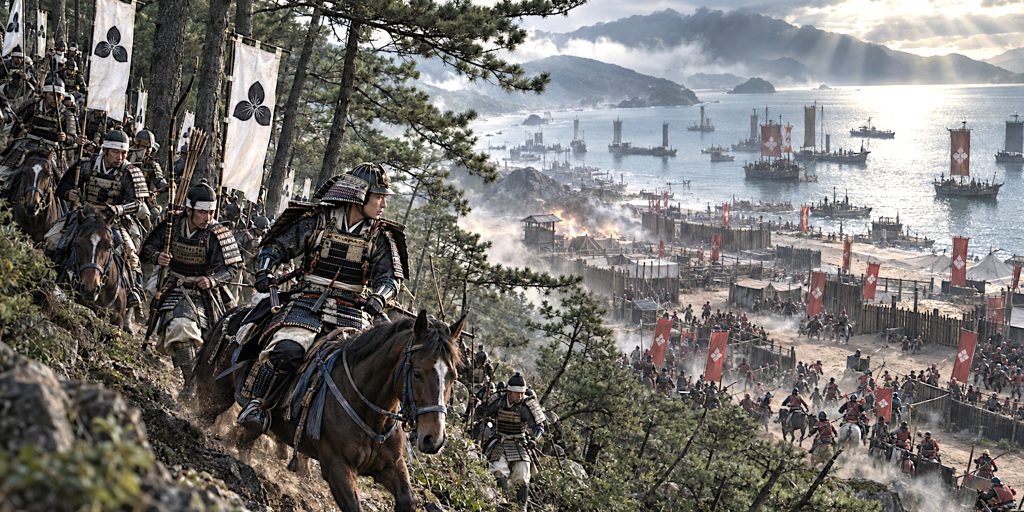
The Taira had established defensive positions around Ichi-no-Tani, west of present-day Kobe. In March 1184, Minamoto forces launched a coordinated attack.
The traditional account divides the army into separate columns. Noriyori attacked from the east, while Yoshitsune approached from the mountains. Yoshitsune then supposedly led a small mounted force down the precipitous slope at Hiyodorigoe and struck the Taira from an unexpected direction.
According to later war tales, Yoshitsune tested the descent by sending horses down the slope. Those that remained standing demonstrated that the route was possible. It is one of the most famous episodes in samurai history, combining audacity, animal experimentation and a somewhat relaxed attitude towards cavalry logistics.
The exact location and scale of the cliff descent remain disputed. The Tale of the Heike gives the episode dramatic force, but the battle probably involved a more complex series of attacks across a wide defensive area.
Yoshitsune’s contribution was nevertheless significant. The Taira position collapsed, many leading warriors were killed and the survivors withdrew by sea.
The Battle of Yashima
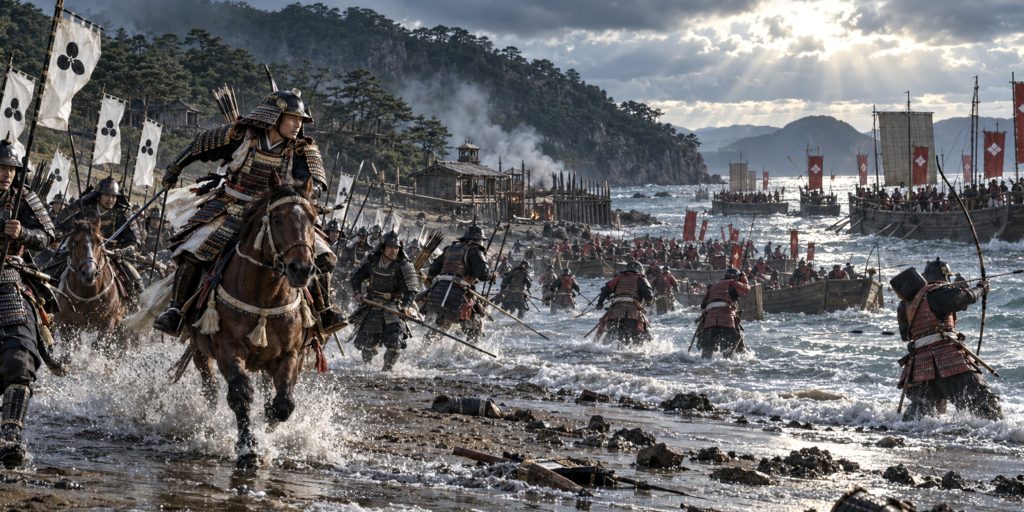
After Ichi-no-Tani, the war did not end. The Taira retained naval strength and established themselves around Yashima on Shikoku.
In March 1185, Yoshitsune crossed the Inland Sea during severe weather with a comparatively small force. Accounts differ over his numbers, but speed was more important than weight. After landing on Shikoku, he advanced rapidly and created the impression that a much larger Minamoto army had arrived.
The Taira abandoned their base and moved aboard their ships. When they realised the size of Yoshitsune’s force, fighting continued around the shore.
The Tale of the Heike places several celebrated episodes at Yashima, including the death of Yoshitsune’s retainer Satō Tsugunobu and the archery feat of Nasu no Yoichi, who supposedly struck a fan mounted on a distant Taira vessel.
Some details belong to literary tradition, but the operational achievement is clear. Yoshitsune crossed dangerous water, surprised the enemy and forced them from a defensible position before they could properly assess the threat.
Dan-no-ura and the destruction of the Taira
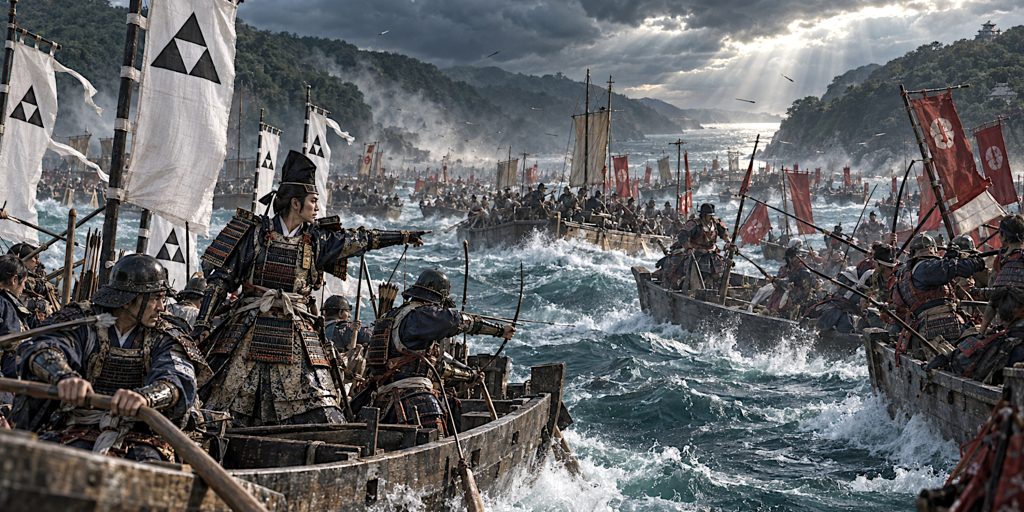
The decisive confrontation came at Dan-no-ura in the Shimonoseki Strait on 25 April 1185.
The Taira fleet carried the child emperor Antoku, members of the imperial household and the sacred regalia. Yoshitsune commanded Minamoto naval forces assembled from allied warrior groups, including men with local knowledge of the Inland Sea.
Later accounts describe the tide initially favouring the Taira before shifting towards the Minamoto. The importance of this reversal has sometimes been exaggerated, but currents in the strait certainly affected manoeuvring.
Traditional narratives also claim that Taguchi Shigeyoshi defected and revealed the location of the Taira command vessel. Whether this happened precisely as later described is uncertain.
The battle ended in catastrophe for the Taira. Leading members of the clan threw themselves into the sea rather than submit. Emperor Antoku drowned with his grandmother, Taira no Tokiko. Taira no Munemori was captured, and the Minamoto secured the imperial mirror and jewel. The sacred sword, commonly identified with Kusanagi, was lost in the water according to the traditional account.
Yoshitsune had helped bring the war to a decisive conclusion. At barely twenty-six years old, he stood at the height of his reputation. His descent was already beginning.
Yoshitsune’s military ability
Yoshitsune is frequently called a military genius. The description is understandable, although it requires qualification.
His recorded period of major command lasted little more than a year. He did not plan the entire Minamoto war effort, create Yoritomo’s eastern government or independently command all the forces attributed to him by later legend. Other leaders, particularly Noriyori, performed essential campaigning and logistical work.
Yoshitsune did demonstrate several valuable qualities:
- He moved forces quickly over difficult ground.
- He accepted considerable personal and operational risk.
- He understood the value of surprise.
- He attacked before opponents could consolidate their positions.
- He exploited local guides, sailors and allied contingents.
- He appears to have inspired strong personal loyalty among his immediate followers.
- He pursued defeated enemies rather than allowing them time to recover.
His methods were particularly effective during the fluid final campaigns of the Genpei War. Whether he would have been equally successful in a prolonged territorial campaign is impossible to know.
I find Yoshitsune most convincing not as an infallible genius, but as an instinctive offensive commander. Give him a difficult approach, unreliable weather and an enemy who believed itself secure, and he seems to have become positively cheerful.
Arms and armour
No surviving set of arms or armour can be securely identified as Yoshitsune’s personal equipment. Later temples, shrines and families preserved numerous objects attributed to famous warriors, but an honoured tradition is not the same thing as an unbroken provenance.
As an elite commander of the late Heian period, Yoshitsune would have been familiar with the following equipment.
| Weapon or armour | Likely role |
|---|---|
| Tachi | Curved sword suspended edge-down from the belt |
| Yumi | Asymmetrical Japanese longbow used on foot and horseback |
| Ya | Arrows with heads designed for warfare, signalling or specialised purposes |
| Naginata | Bladed polearm increasingly associated with foot combat |
| Hoko or yari-like spear | Thrusting polearms used by retainers and infantry |
| Tantō or short blade | Secondary weapon and utility blade |
| Ō-yoroi | Box-like lamellar armour developed for mounted archery |
| Kabuto | Multi-plate iron helmet with neck protection |
| Kote | Armoured sleeves, often providing greater protection to the bow arm |
| Suneate | Shin guards |
| Horo | Cloak-like battlefield device associated with mounted messengers and elites |
The tachi
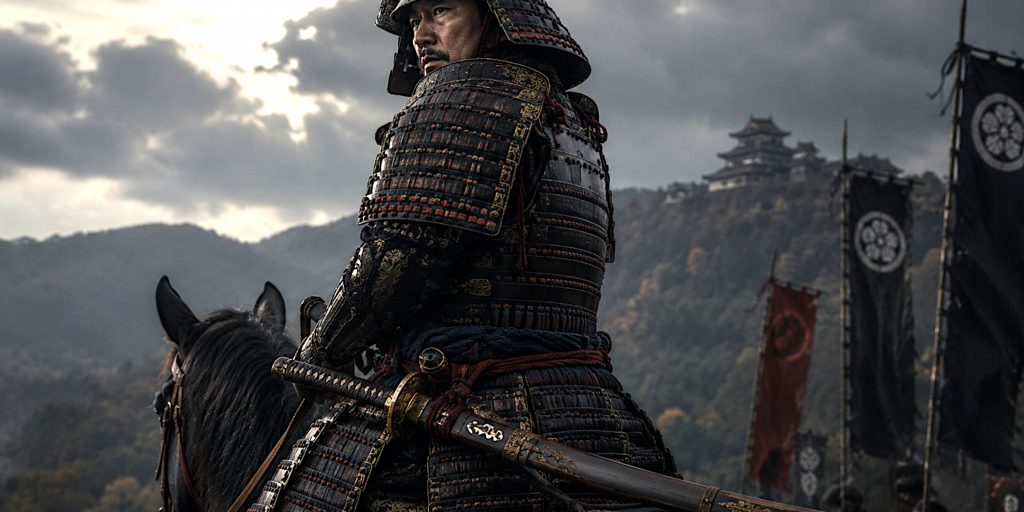
The principal sword associated with a warrior of Yoshitsune’s rank was the tachi. Unlike the later katana, it was suspended from the belt with the cutting edge facing down.
Late Heian tachi generally had a pronounced curvature and were suited to cutting from horseback or on foot. Swords of this period could be finely made and richly mounted, but they remained one part of a broader military system rather than the mystical centre of samurai warfare.
Yoshitsune is often portrayed as a supreme swordsman because of the stories surrounding his youth and his encounter with Benkei. The historical record gives us much stronger evidence for his ability as a commander than for personal swordsmanship.
The bow
The yumi was central to elite warrior identity. Mounted archery had enormous social and military importance, while battles often began with exchanges of arrows and challenges between recognised warriors.
Yoshitsune would almost certainly have received training with the bow. Even when commanding troops rather than fighting individual opponents, his status rested within a martial culture closely associated with horsemanship and archery.
Armour
High-ranking mounted warriors commonly wore ō-yoroi constructed from small iron and leather scales bound into rows, lacquered and joined with coloured lacing. The armour offered substantial protection while allowing a mounted archer to use a bow.
It was expensive, visually impressive and not especially pleasant for extended movement on foot. Medieval armour was designed to keep its wearer alive, not comfortable. Comfort was apparently thought likely to encourage idleness.
Yoshitsune and Benkei
Musashibō Benkei is inseparable from Yoshitsune in popular memory. He is presented as a huge warrior-monk who collected swords from defeated opponents and intended to claim one thousand blades.
According to legend, Benkei encountered the young Yoshitsune at Kyoto’s Gojō Bridge. Expecting another easy victory, he was defeated by the smaller and more agile swordsman. Benkei then became Yoshitsune’s devoted retainer.
The story appears in later literature rather than contemporary documentation. Even the identification of the bridge developed over time. Benkei may have been based on a genuine follower, but the giant warrior-monk of drama and art belongs largely to legend.
His final act is equally famous. At Koromogawa, Benkei supposedly defended the approach to Yoshitsune’s residence and died standing upright, pierced by arrows. This became known as the “standing death of Benkei”.
It is a perfect heroic image and should be treated as such. The absence of firm evidence does not make the story culturally unimportant. It simply places it in literature rather than secure biography.
Why Yoshitsune fell out with Yoritomo
The conflict between the brothers is often reduced to jealousy. Yoritomo supposedly resented Yoshitsune’s fame and ordered his destruction. This is satisfying drama, but it overlooks the political structure Yoritomo was trying to build.
Yoritomo expected his commanders and vassals to receive appointments, rewards and instructions through him. Yoshitsune accepted court offices from the retired emperor Go-Shirakawa without securing Yoritomo’s approval. He also exercised authority over eastern warriors in ways that could be interpreted as bypassing Kamakura.
Reports from commanders including Kajiwara Kagetoki further damaged Yoshitsune’s position. Kagetoki accused him of arrogance, recklessness and disregard for proper command. Later tradition turned Kagetoki into a convenient villain, so his charges cannot be accepted without question. Yet Yoritomo had practical reasons to be concerned.
The brothers represented two competing sources of power:
| Yoritomo’s position | Yoshitsune’s actions |
|---|---|
| Authority centred on Kamakura | Close involvement with the Kyoto court |
| Controlled rewards and appointments | Accepted court office independently |
| Required obedience from eastern vassals | Issued orders based on military command |
| Built durable provincial government | Relied heavily on personal reputation |
| Preferred political discipline | Favoured rapid and decisive action |
Yoritomo was not merely a spiteful older brother. He was creating a new political order and would not tolerate an acclaimed commander operating between Kamakura and the imperial court.
Yoshitsune, for his part, may not have understood how threatening his conduct appeared. Victory had made him famous, but fame was not a constitutional arrangement.
The Koshigoe Letter
After Dan-no-ura, Yoshitsune escorted important Taira prisoners towards Kamakura. He was refused entry and remained at Koshigoe, outside Yoritomo’s headquarters.
The celebrated Koshigoe Letter presents Yoshitsune appealing to Ōe no Hiromoto to intercede with Yoritomo. In it, he describes his service, his hardships and his bewilderment at being denied an audience.
A translated passage reads:
“Though innocent, I am blamed; though deserving, and guilty of no error, I have incurred His Lordship’s displeasure. What can I do but weep bitter tears?”
The text is recorded in the Azuma Kagami, a Kamakura chronicle compiled considerably later. Its precise authorship and wording remain debated. It may preserve the substance of a genuine appeal while also reflecting later literary shaping.
Whether every sentence came from Yoshitsune or not, the episode captures his political isolation. He believed military service had proved his loyalty. Yoritomo judged loyalty through obedience and control. They were using the same word while speaking quite different languages.
Rebellion, flight and Shizuka Gozen
By late 1185, the relationship had broken down completely. Yoshitsune obtained imperial authorisation to move against Yoritomo, but he failed to attract sufficient military support.
The court quickly shifted position when it became clear that Yoritomo remained stronger. Yoshitsune attempted to leave the capital by sea, but bad weather scattered his party. He then became a fugitive.
One of the most famous figures associated with his flight was Shizuka Gozen, traditionally described as a shirabyōshi dancer and Yoshitsune’s lover. She was captured and brought before Yoritomo at Kamakura.
According to the Azuma Kagami, Shizuka was ordered to dance at Tsurugaoka Hachimangū. During her performance, she sang of her longing for Yoshitsune:
“If only I could bring back the old days, winding back the reel of thread.”
The exact English wording varies by translation. The chronicle states that Yoritomo was angered by her public expression of loyalty, while his wife, Hōjō Masako, defended Shizuka’s feelings.
The later fate of Shizuka is uncertain. Accounts of her child and subsequent life differ, and legend has supplied several endings where documentation remains silent.
The barrier at Ataka
During Yoshitsune’s escape north, later tradition places him and his followers at the Ataka barrier. Disguised as travelling monks, they were questioned by the guard Togashi.
Benkei supposedly pretended that Yoshitsune was a servant and beat him to preserve the disguise. Togashi recognised the fugitives but allowed them to pass, moved by Benkei’s loyalty.
This episode became the basis of the Noh play Ataka and the Kabuki drama Kanjinchō. It is one of the defining stories of Benkei’s devotion, but its historical basis is uncertain.
The scene tells us less about precisely what happened during the flight than about the qualities later Japanese audiences admired: loyalty, self-control, compassion and the willingness to endure humiliation for one’s lord.
Yoshitsune’s final refuge at Hiraizumi
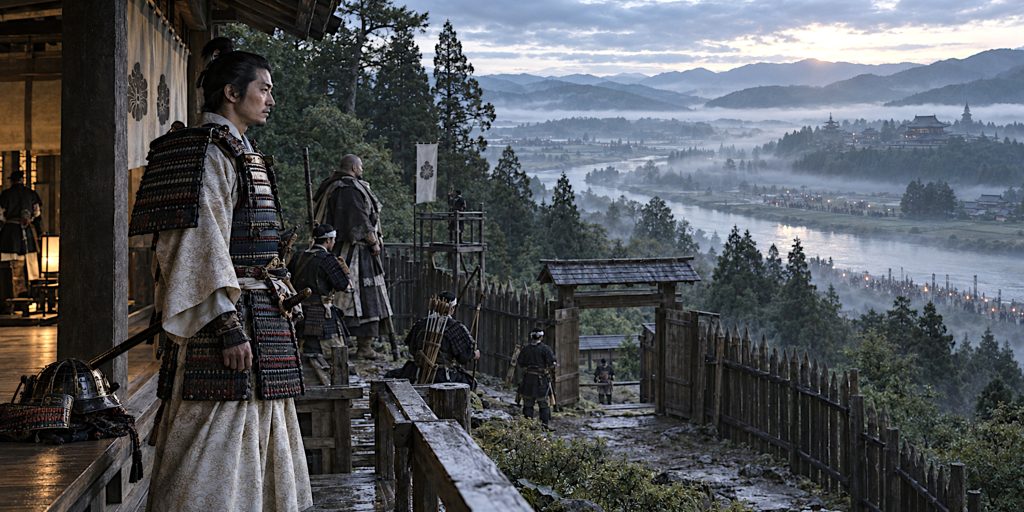
Yoshitsune eventually returned to Hiraizumi and received protection from his former patron, Fujiwara no Hidehira.
Hidehira died in 1187. According to later accounts, he instructed his sons to continue protecting Yoshitsune. His successor Fujiwara no Yasuhira faced sustained pressure from Yoritomo and ultimately chose submission over defiance.
In 1189, Yasuhira’s forces attacked Yoshitsune at Koromogawa. The Azuma Kagami records that Yoshitsune withdrew into a residence and killed himself after first killing his wife and young daughter. Later tradition assigns Benkei his famous final stand outside.
Descriptions of Yoshitsune committing formal seppuku should be used cautiously. Warrior suicide existed, but the highly codified ritual familiar from later periods should not simply be projected backwards into the twelfth century.
Yoshitsune was thirty years old.
His severed head was reportedly preserved, transported south and formally identified at Koshigoe. The chronicle describes onlookers weeping when it was displayed. Yoritomo then used Yoshitsune’s presence in the north as part of his justification for attacking the Northern Fujiwara, destroying their power later that year.
Even in death, Yoshitsune remained politically useful.
Timeline of Yoshitsune’s life
| Year | Event |
|---|---|
| 1159 | Born to Minamoto no Yoshitomo and Tokiwa Gozen |
| 1160 | Yoshitomo is killed following defeat in the Heiji Rebellion |
| Childhood | Sent to Kurama-dera and known as Ushiwakamaru |
| Before 1180 | Travels to Hiraizumi and enters Fujiwara no Hidehira’s protection |
| 1180 | Joins his half-brother Minamoto no Yoritomo |
| February 1184 | Helps drive Minamoto no Yoshinaka from Kyoto |
| March 1184 | Commands forces during the victory at Ichi-no-Tani |
| March 1185 | Conducts the rapid campaign against Yashima |
| April 1185 | Commands at Dan-no-ura, where the Taira are destroyed |
| June 1185 | Refused entry to Kamakura and associated with the Koshigoe Letter |
| Late 1185 | Breaks openly with Yoritomo and becomes a fugitive |
| 1187 | Reaches Hiraizumi under Hidehira’s protection |
| 1189 | Attacked at Koromogawa and killed or forced to take his own life |
| 1683 | The present Gikeidō memorial is established at Takadachi |
What the historical sources tell us
Reconstructing Yoshitsune’s life requires using sources written for different purposes and at different distances from the events.
The Tale of the Heike
The Heike Monogatari, or Tale of the Heike, developed from oral and written traditions concerning the fall of the Taira. Its surviving forms took shape after the war and were performed by travelling biwa players.
Its famous opening establishes the work’s Buddhist understanding of history:
“The sound of the Gion Shōja bells echoes the impermanence of all things.”
The work contains historical information, but it is also literature shaped by memory, religious thought and performance. Its speeches and dramatic scenes cannot automatically be read as eyewitness reporting.
The Azuma Kagami
The Azuma Kagami is the principal chronicle of the Kamakura shogunate. It covers events from 1180 onwards but was compiled during the later thirteenth century.
It preserves dates, appointments, disputes and documentary material unavailable elsewhere. At the same time, it reflects the political perspective of the Kamakura establishment and the concerns of its later compilers.
The Gikeiki
The Gikeiki, sometimes translated as the Chronicle of Yoshitsune, was compiled several centuries after Yoshitsune’s death. It provides many of the adventures now associated with his life, particularly his childhood, Benkei and his years as a fugitive.
It is essential for understanding the legend and hazardous when treated as straightforward evidence for the twelfth century.
Archaeology and historical sites
There is no securely identified grave, residence or personal weapon belonging to Yoshitsune.
Archaeology can illuminate the places through which he moved, but it rarely attaches an excavated object to one named medieval individual. A twelfth-century arrowhead found in a region associated with Yoshitsune remains a twelfth-century arrowhead, not “Yoshitsune’s arrow” because a display label has become enthusiastic.
Hiraizumi has produced extensive archaeological evidence of the Northern Fujiwara capital, including temple foundations, gardens, roads, residences and imported luxury goods. These discoveries demonstrate the wealth and sophistication of the community that sheltered Yoshitsune.
The traditional site of his death at Takadachi overlooks the Kitakami River. The surviving Gikeidō memorial dates from 1683, when Date Tsunamura, lord of Sendai, established a hall containing a wooden image of Yoshitsune. It is a place of commemoration rather than an intact twelfth-century structure.
The broader Hiraizumi cultural landscape is recognised as a UNESCO World Heritage Site. Its remains provide valuable context for Yoshitsune’s final years even when they cannot prove the later stories told about him.
Yoshitsune in literature, theatre and art
Yoshitsune’s death did not conclude his story. It liberated it from the inconvenience of further historical events.
Later writers, actors and artists developed an interconnected body of stories sometimes called the “world of Yoshitsune”. Major works include:
- The Tale of the Heike
- The Gikeiki
- The Noh play Ataka
- The Kabuki play Kanjinchō
- The puppet and Kabuki drama Yoshitsune Senbon Zakura
- Illustrated scrolls and woodblock prints
- Modern novels, films, television dramas, manga and games
Artists frequently portrayed Yoshitsune as youthful, elegant and almost delicate, particularly beside the enormous Benkei. This contrast strengthened the image of intelligence and agility overcoming brute force.
The Japanese expression hōgan-biiki describes sympathy for an underdog or defeated favourite. It derives from Yoshitsune’s title and the enduring public affection created by his downfall.
Did Yoshitsune survive?
Legends claim that Yoshitsune escaped from Hiraizumi and travelled farther north. Some stories take him to Hokkaido, while a much later theory identified him with Genghis Khan.
There is no credible historical evidence for either claim.
The Genghis Khan theory became particularly visible during the modern period and reflected romantic speculation rather than serious documentary or archaeological proof. The chronology, cultural context and available evidence do not support it.
Survival legends commonly gather around charismatic figures whose deaths seem unsatisfying. Yoshitsune was young, victorious and betrayed. An obscure escape was emotionally preferable to a severed head in a wooden container.
Where to explore Yoshitsune’s history
Kurama-dera, Kyoto
The temple traditionally associated with Yoshitsune’s childhood. The surrounding mountain landscape is central to stories of his training with the tengu.
Gojō Bridge, Kyoto
Connected by later tradition with Yoshitsune’s duel against Benkei. The present bridge and its precise location should not be mistaken for an unchanged twelfth-century setting.
Manpuku-ji, Koshigoe
Associated with Yoshitsune’s exclusion from Kamakura and the Koshigoe Letter. The temple preserves a strong local tradition concerning Yoshitsune and Benkei.
Tsurugaoka Hachimangū, Kamakura
Closely linked with Yoritomo’s government and the story of Shizuka Gozen’s performance.
Takadachi Gikeidō, Hiraizumi
A memorial hall near the traditional location of Yoshitsune’s death. The present structure was founded centuries later but remains one of the principal places connected with his memory.
Hiraizumi’s temples and archaeological sites
Chūson-ji, Mōtsū-ji and the surviving cultural landscape reveal the wealth of the Northern Fujiwara world in which Yoshitsune found refuge.
Museum collections
The Tokyo National Museum, Kyoto National Museum, British Museum and Metropolitan Museum of Art hold weapons, armour and artworks that illuminate the military culture or later representation of Yoshitsune. Objects directly attributed to him require careful scrutiny.
How should Yoshitsune be remembered?
Yoshitsune was neither the faultless hero of legend nor merely a reckless subordinate who received the predictable consequences of disobedience.
His victories helped end Taira power and contributed to the military supremacy from which Yoritomo built the Kamakura government. He displayed courage, speed and an unusual willingness to act under difficult conditions. His campaigns deserve serious attention without requiring supernatural sword lessons or impossible cavalry descents.
His political failure was equally real. Yoshitsune seems to have underestimated the importance Yoritomo placed on controlling appointments, rewards and military allegiance. He behaved like a celebrated imperial commander when Yoritomo expected him to remain a subordinate within the emerging Kamakura order.
I find it difficult not to feel sympathy for him. That is hardly original, since Japan has spent centuries doing precisely the same. Yet sympathy should not turn Yoritomo into a pantomime villain or Yoshitsune into a spotless martyr.
Yoritomo understood institutions. Yoshitsune understood momentum. One built a government; the other became a legend.
History usually remembers the founder. Culture, rather more romantically, chose the doomed younger brother.
Sources and further reading
- The Tale of the Heike, translated by Royall Tyler
- The Tale of the Heike, translated by Helen Craig McCullough
- Yoshitsune: A Fifteenth-Century Japanese Chronicle, translated by Helen Craig McCullough
- Jeffrey P. Mass, Yoritomo and the Founding of the First Bakufu
- Karl F. Friday, Samurai, Warfare and the State in Early Medieval Japan
- Stephen Turnbull, The Samurai Sourcebook
- Hiraizumi World Heritage information
- Gikeidō at Mōtsū-ji
- British Museum collection records concerning Yoshitsune and Benkei
Watch the documentary: