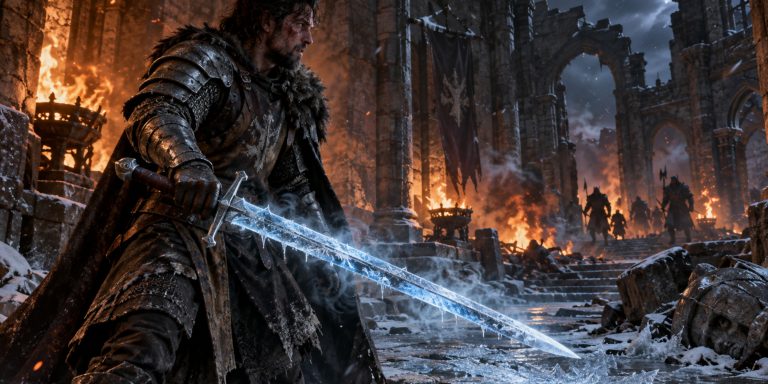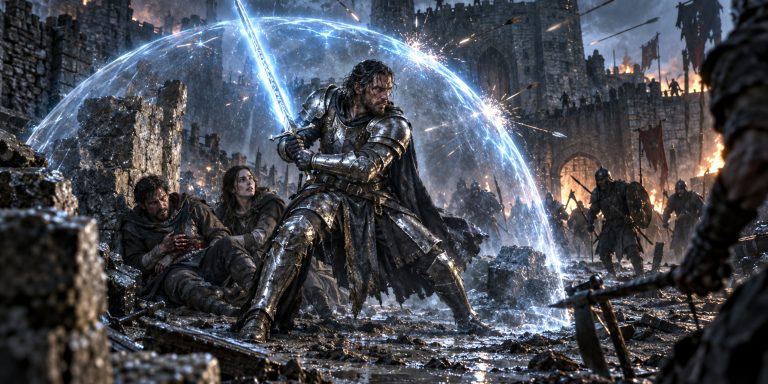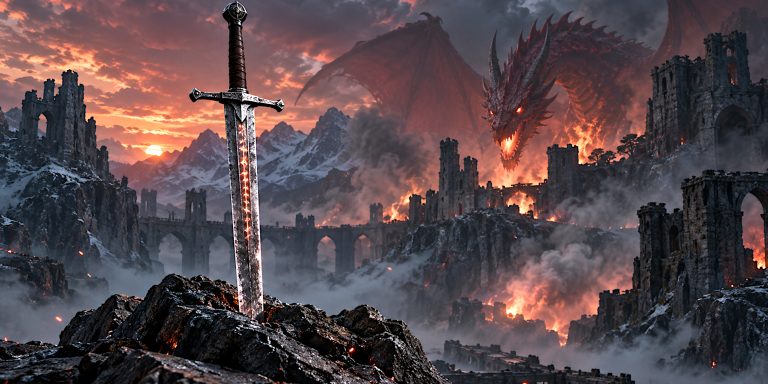
Fantasy has no shortage of famous blades. Sting glows. Andúril inspires armies. Nightblood eats souls. Then there is Licanius, a sword that somehow manages to feel both ancient and unsettling before anyone even draws it.
Unlike many fantasy weapons that exist simply because every hero needs a cool sword, Licanius sits at the centre of one of modern fantasy’s most intricate stories. It is a weapon wrapped in prophecy, morality and impossible choices. Every time it appears, readers know something significant is about to happen.
James Islington’s The Licanius Trilogy has earned praise for its complex time travel, layered characters and carefully constructed mysteries. The sword itself reflects all of those qualities. It is not merely a magical artefact. It becomes a physical representation of truth, consequence and destiny.
The first time I read the series I assumed Licanius would eventually become another legendary fantasy weapon that solves problems by cutting through them. It turns out the sword is far more interesting because, quite often, it creates even bigger problems.
What Is Licanius?
Licanius is the legendary sword that gives James Islington’s trilogy its name. Throughout the novels it is regarded with awe, fear and uncertainty, largely because few people fully understand its origins or true purpose.
The blade possesses extraordinary magical properties that separate it from ordinary enchanted weapons. Rather than simply making its wielder stronger, Licanius interacts directly with the world’s deepest magical systems and its spiritual foundations.
As the trilogy unfolds, readers gradually realise that nearly every major mystery surrounding the world’s history is somehow connected to the sword.
That slow revelation is one of the series’ greatest strengths. Every answer simply creates another fascinating question.
Physical Appearance
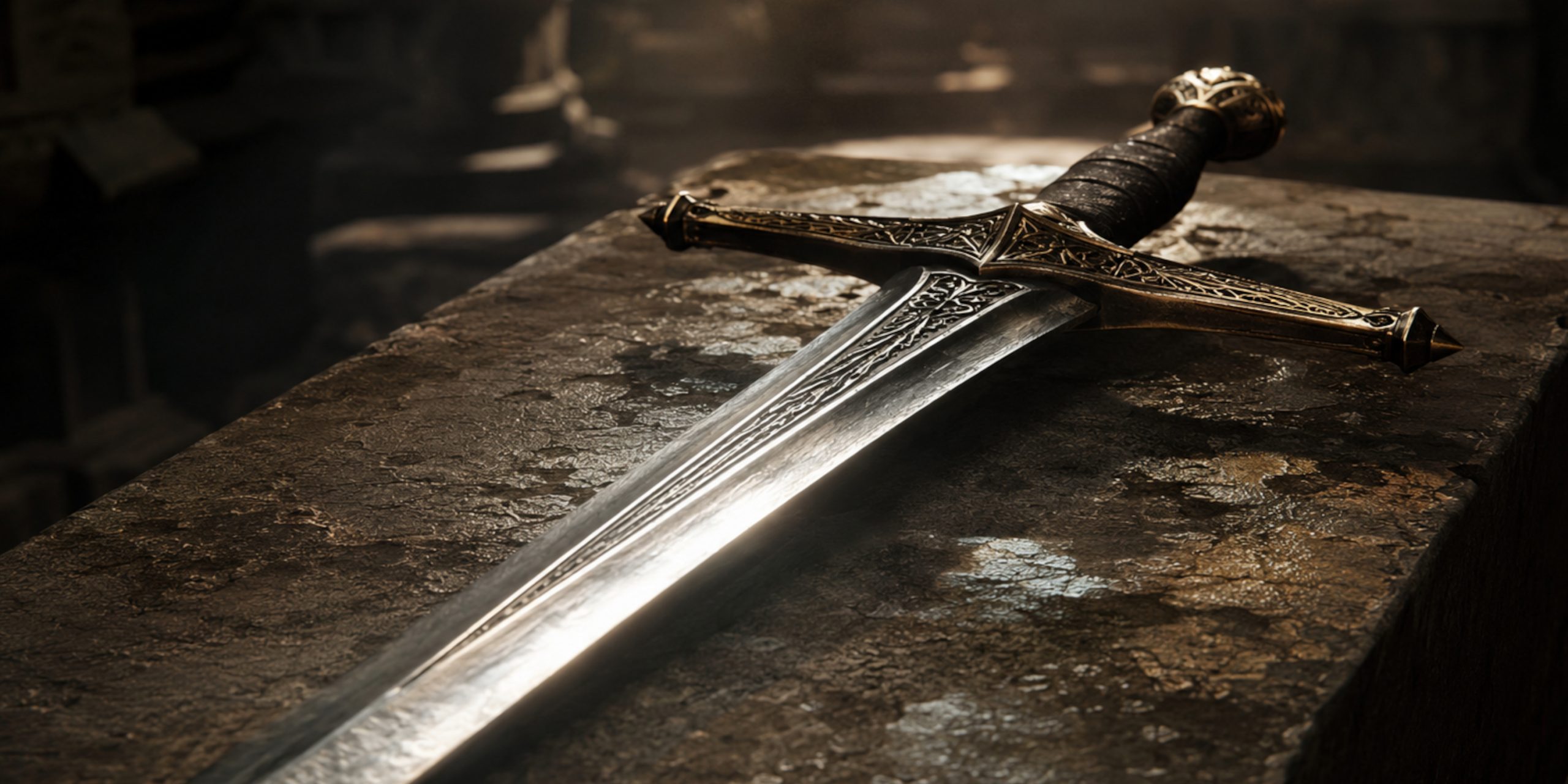
Islington deliberately keeps parts of Licanius mysterious, allowing readers to imagine much of its appearance while revealing enough detail to make it memorable.
The sword is generally described as:
| Feature | Description |
|---|---|
| Blade | Long, elegant and unnaturally flawless |
| Construction | Ancient craftsmanship beyond modern understanding |
| Edge | Exceptionally sharp with supernatural qualities |
| Aura | Carries an unmistakable magical presence |
| Condition | Appears untouched by age or corrosion |
Unlike many fantasy weapons decorated with extravagant jewels and impossible ornamentation, Licanius feels restrained. That understated appearance arguably makes it even more intimidating.
It gives off the impression that it has no need to advertise its power.
The Origins of Licanius
One of the trilogy’s central mysteries concerns where Licanius actually came from.
The novels gradually reveal that the sword’s creation is deeply intertwined with events stretching across centuries of history, involving powerful magical figures whose decisions shaped the world itself.
Because The Licanius Trilogy revolves around hidden truths and carefully constructed revelations, many aspects of the sword’s creation remain deliberately obscured until late in the story.
This measured approach rewards patient readers. Rather than explaining everything immediately, Islington lets the mythology build naturally through conversations, historical discoveries and shifting perspectives.
By the time the full picture emerges, Licanius has accumulated enough legend that the reality feels appropriately monumental.
What Powers Does Licanius Have?
Licanius possesses abilities unlike almost any other sword in fantasy literature.
Its powers are closely tied to the world’s magical laws rather than functioning as simple enchantments.
Among its remarkable qualities are:
- Extraordinary magical potency.
- The ability to affect spiritual and metaphysical forces.
- Connections to immortality and death.
- Interactions with powerful magical beings.
- Influence over events far beyond conventional combat.
Importantly, Licanius is not a weapon that anyone can simply pick up and master.
Its significance depends just as much on the individual wielding it as on the sword itself.
That relationship between object and owner becomes increasingly important as the trilogy progresses.
The Meaning Behind the Sword
One reason Licanius stands out among fantasy weapons is its symbolic importance.
The sword continually raises uncomfortable questions.
Can destiny be escaped?
Are people truly free to choose?
Can someone overcome the mistakes of their past?
These themes run throughout the trilogy, and Licanius repeatedly becomes the object through which those questions are explored.
Instead of representing victory, it often represents responsibility.
That distinction makes it feel unusually mature compared with many fantasy artefacts.
Licanius and Time
It would be impossible to discuss the sword without mentioning one of the trilogy’s defining ideas.
Time.
James Islington builds one of fantasy’s most ambitious explorations of causality, prophecy and predestination.
Licanius exists within that framework rather than outside it.
The sword’s history cannot be separated from the complex web of timelines that define the series. Events surrounding the blade often carry meaning across generations, making it feel almost detached from ordinary chronology.
Trying to map every connection on a whiteboard is an entertaining challenge.
Keeping track of them all without notes? Less so.
Major Characters Connected to Licanius
Several of the trilogy’s central figures become closely associated with the sword during the story.
These relationships are never straightforward.
Each character approaches Licanius with different motivations, shaped by their understanding of history, morality and destiny.
That variety prevents the sword from becoming tied to a single heroic archetype.
Instead, it becomes something every major faction wants to understand, protect or control.
Why Licanius Is Different from Other Fantasy Swords
Many fantasy weapons become famous because they grant overwhelming combat power.
Licanius earns its reputation for entirely different reasons.
| Traditional Fantasy Sword | Licanius |
|---|---|
| Symbol of heroic victory | Symbol of moral consequence |
| Primarily a combat weapon | A catalyst for world-changing events |
| Clear good versus evil | Constant moral ambiguity |
| Straightforward magical powers | Deep metaphysical significance |
| Often explains history | Creates historical mysteries |
This complexity explains why many readers continue discussing the sword long after finishing the trilogy.
Its importance grows with every revelation.
Themes Reflected by Licanius
The sword reinforces several major themes throughout the trilogy.
Fate Versus Free Will
Can people escape prophecy, or are they simply fulfilling it without realising?
Licanius constantly challenges both characters and readers to consider that question.
Redemption
Many of the series’ most compelling moments revolve around whether people deserve forgiveness after terrible actions.
The sword frequently appears during those moments of judgement.
Truth
History within The Licanius Trilogy is fragmented, misunderstood and manipulated.
Licanius often represents the difficult search for genuine truth rather than comforting myths.
Sacrifice
Power in Islington’s world almost always comes at a cost.
The sword embodies that principle better than nearly any other object in the series.
How Powerful Is Licanius?
Power in fantasy is often measured by destructive capability.
Licanius refuses to fit neatly into that category.
It is unquestionably among the most significant magical artefacts in modern fantasy, but its greatest strength lies in how it influences people, history and reality itself.
A sword that changes the course of civilisation is arguably more dangerous than one that merely wins battles.
Licanius in Modern Fantasy
Although The Licanius Trilogy is much newer than classics such as The Lord of the Rings or The Wheel of Time, its central sword has already secured a distinctive place in fantasy literature.
Readers frequently praise Licanius because it avoids becoming another legendary weapon whose purpose is simply to defeat increasingly powerful villains.
Instead, it becomes inseparable from the philosophical questions driving the story.
That gives it lasting appeal beyond its magical abilities.
Legacy
Licanius demonstrates how fantasy weapons have evolved.
Older fantasy often treated legendary swords as symbols of kingship or military power.
Modern fantasy increasingly asks what power costs and whether anyone should possess it in the first place.
Licanius captures that shift beautifully.
It is mysterious without becoming vague, powerful without feeling invincible and symbolic without ever losing its role as an actual weapon.
Few fantasy swords manage to balance all three qualities so successfully.
For readers who enjoy layered storytelling where every answer reveals another mystery, Licanius remains one of the most rewarding legendary blades in contemporary fantasy. It asks bigger questions than most magical swords ever attempt, and that is exactly why it continues to linger in readers’ minds long after the final page.