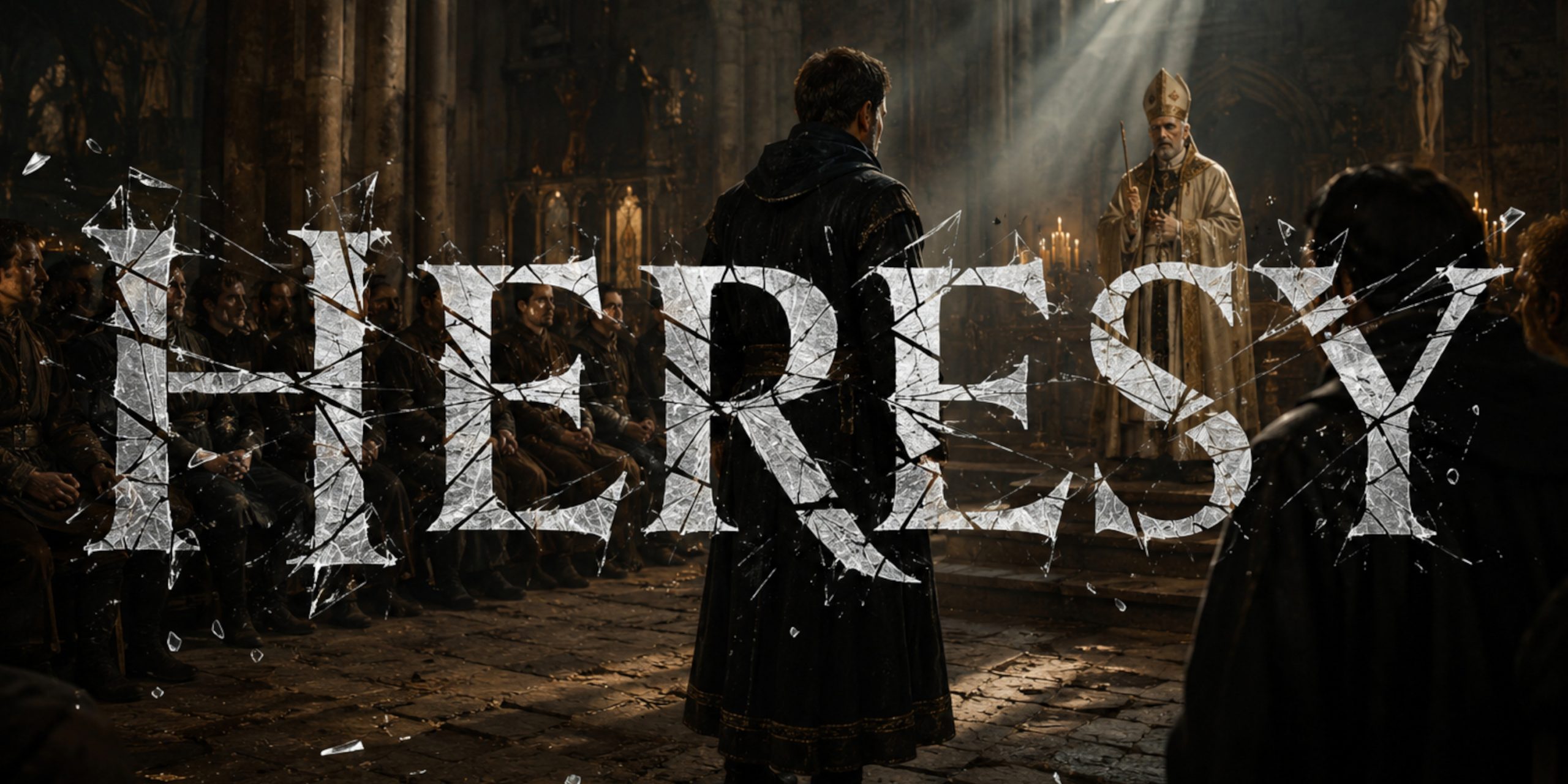
Religion in Kingdom Come: Deliverance 2 is not just background decoration. It is woven into politics, law, education, medicine, warfare and the way ordinary people understand the world around them.
The early 15th century setting places Henry in a kingdom standing on the edge of a religious earthquake. Churches dominate town skylines, priests hold influence over communities, and accusations of heresy can destroy reputations faster than a badly timed insult in a tavern.
Modern players enter this world knowing how history develops, but the characters do not. For them, faith is not an abstract belief system. It explains storms, sickness, victory, failure and whether their soul is safe after death.
That makes religion one of the most interesting forces behind the world of KCD2.
Historical Setting: Bohemia Before the Hussite Wars
Kingdom Come: Deliverance 2 takes place in 1403 Bohemia, a period of political chaos within the Holy Roman Empire.
The kingdom is divided between supporters of:
| Figure | Role | Position |
|---|---|---|
| King Wenceslaus IV | King of Bohemia | The disputed ruler struggling to maintain authority |
| Sigismund of Luxembourg | Wenceslaus’ half-brother | Seeking control and greater influence |
| Bohemian nobles | Regional power holders | Divided by loyalty, ambition and survival |
At the same time, dissatisfaction with the medieval Church is growing. Many people remain deeply religious, but criticism is increasing around:
- Wealthy clergy living comfortably while preaching humility
- Church involvement in politics
- Sale of indulgences
- Corruption among some religious officials
- Distance between elite Church leaders and common believers
It is important to remember that most reformers were not trying to destroy Christianity. Many wanted what they saw as a return to a more honest version of it.
The Church as a Medieval Superpower
The Church in KCD2’s world is effectively a second government.
Its influence stretches across:
- Education and universities
- Marriage and family records
- Charity and hospitals
- Diplomacy
- Law courts
- Land ownership
- Moral authority
A noble might command soldiers, but a priest could influence how a whole village viewed that noble.
Getting condemned by the Church was not just awkward. It could affect alliances, inheritance, social standing and political survival.
Medieval reputation management was brutal. Imagine social media cancellation, except instead of losing followers you might lose your lands and possibly your head.
Priests, Monks and Everyday Faith
For ordinary people in medieval Bohemia, the local priest was often one of the most important figures in their lives.
A priest could be:
- A spiritual guide
- A community leader
- A teacher
- A record keeper
- A political messenger
Monasteries were also centres of knowledge and production. Monks copied manuscripts, preserved learning, brewed alcohol, managed estates and provided medical care.
The image of medieval Europe as completely ignorant is misleading. Much of the intellectual life of the period was connected directly to religious institutions.
Heresy: The Most Dangerous Word in Bohemia
Few accusations carried more danger than being called a heretic.
A heretic was someone accused of holding beliefs that opposed official Church doctrine. However, the meaning was often complicated because religious disagreements mixed with politics.
An accusation could come from:
- Genuine theological disputes
- Personal rivalries
- Political struggles
- Attempts to weaken enemies
In a world where salvation was considered the ultimate concern, challenging religious authority was not treated as a harmless opinion.
Jan Hus and the Coming Storm
One of the most important figures behind KCD2’s historical world is Jan Hus.
Hus was a Czech theologian and preacher who criticised corruption within the Church. Influenced partly by the ideas of English reformer John Wycliffe, Hus argued for changes including:
- Greater moral responsibility among clergy
- Reduced Church corruption
- Religious teaching accessible to ordinary people
- Reform rather than abandonment of Christianity
His ideas gained major support in Bohemia.
In 1415, years after the events of Kingdom Come: Deliverance 2, Hus was executed for heresy. His death helped trigger the Hussite Wars, a massive religious and political conflict that transformed the region.
For players exploring KCD2, this means they are walking through a society moments before everything changes.
Religion and Political Power
Faith and politics were impossible to separate.
A ruler needed religious legitimacy. Churches needed protection from powerful nobles. Alliances often formed around a mixture of genuine belief and practical advantage.
The conflict between Wenceslaus and Sigismund shows this perfectly. Their struggle was about royal authority, but religious tension created another layer of division.
People chose sides because of:
- Family loyalty
- Personal ambition
- Political survival
- Religious conviction
Usually, it was a messy combination of all four.
Medieval people were complicated. A knight could sincerely believe in God, donate money to a monastery and still spend Wednesday hitting someone with a mace over a border dispute.
Churches and Architecture in KCD2
Religious buildings help create the atmosphere of Kingdom Come: Deliverance 2 because they represent more than places of worship.
A church was often the strongest, tallest and most impressive structure in a settlement.
They acted as:
- Meeting locations
- Symbols of community identity
- Displays of wealth
- Centres of information
The investment poured into churches can seem surprising today, but medieval communities viewed them as bridges between earthly life and eternity.
Morality and Player Choice
The Kingdom Come series works because Henry is not dropped into a simple world of heroes and villains.
Religion follows the same approach.
A corrupt priest does not mean everyone in the Church is corrupt. A reformer questioning authority is not automatically a modern revolutionary.
The game world reflects a society where people disagree, compromise and contradict themselves.
Henry encounters a civilisation trying to balance tradition with change.
How Accurate Is KCD2’s Portrayal of Religion?
The series has always aimed for a grounded interpretation rather than fantasy medieval storytelling.
Its strongest historical touches include:
- Showing religion as part of normal daily life
- Presenting political and religious tensions together
- Avoiding a simple “Church good” or “Church bad” approach
- Highlighting social hierarchy and reputation
The medieval Church produced scholars, artists and charity networks. It also held enormous power and contained individuals who abused that power.
Both things existed at the same time, which is what makes the period interesting.